
'If anything happened out of the normal, there would be instantaneous ECAM, EICAS warnings, the master caution or master warnings going off.'
'It would be like a Christmas tree in the cockpit if things start going wrong.'
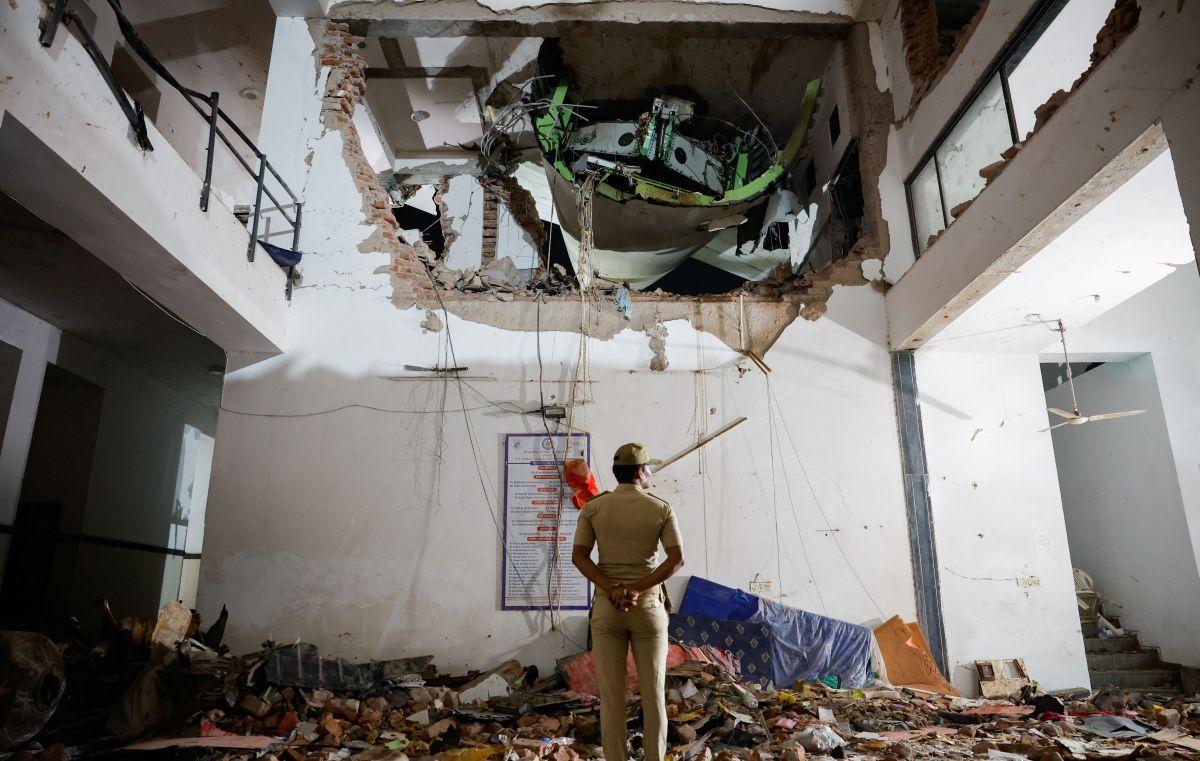
From flying MiGs in the Indian Air Force to investigating fatal air crashes with India's first AAIB team, Captain Kishore Chinta -- now Chief Pilot at Sirius India Airlines -- brings rare insight from cockpit to crash site.
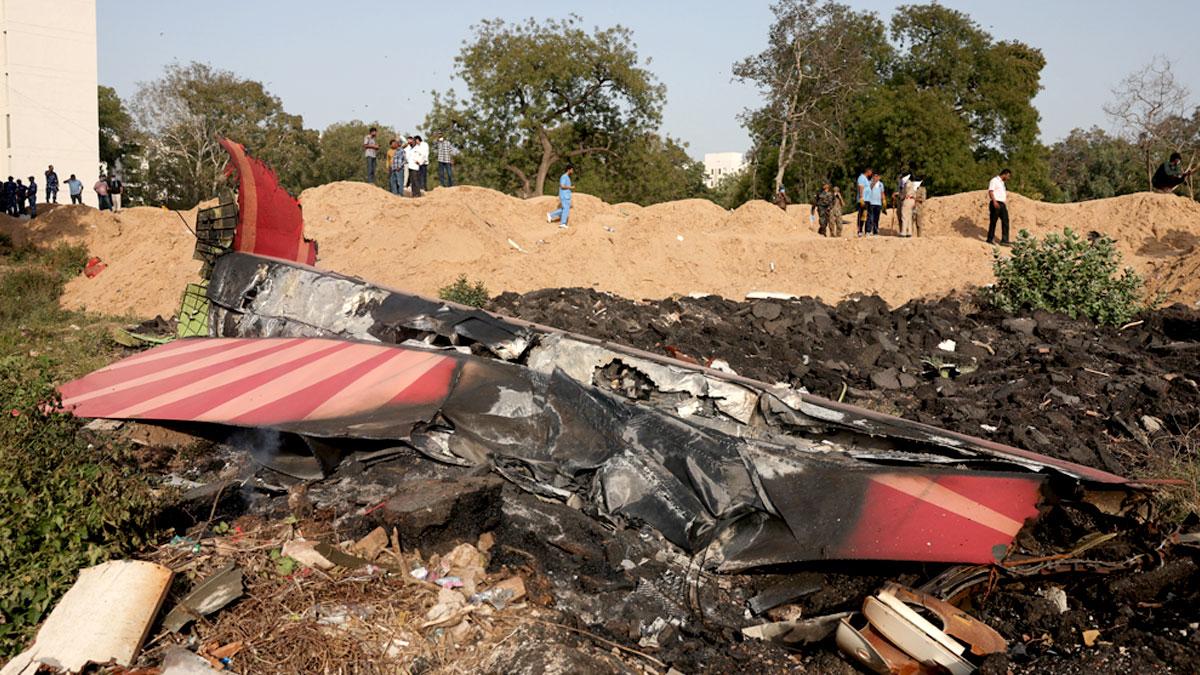
In the concluding part of this interview with Prasanna D Zore/Rediff, Captain Chinta zeroes in on what troubles many aviators: With the probe into the Boeing 787 crash in Ahmedabad -- which killed 260 people -- led by an IPS officer rather than an aviation expert, he fears crucial operational judgments may be missed.
He also stresses the investigation must dig deep into whether software glitches, not just physical faults, could have triggered fuel cutoff signals that shut down both engines. Above all, he calls for microscopic scrutiny to truly uncover what brought the aircraft down.
The FAA's original advisory on this locking issue was just a SAIB (Special Airworthiness Information Bulletin), meaning it was purely advisory and not mandatory. Air India said it was not mandatory, so they did not undertake it.
The AAIB doesn't sharply criticise why it was never escalated into an airworthiness directive (AD).
Isn't this a crucial gap in the report's analysis that regulators, Boeing and other operators could otherwise slip past?
Once again, the AAIB is just stating factual information that in 2018 there was an advisory, and Air India did not mandatorily check. Whether that was a contributing cause towards the actual crash that happened will come out in the final report.
Like I said, it's (AAIB's preliminary report) a fact finding mission only at the preliminary report stage. They will delve into it even further. Whether not mandatorily checking that had any impact on the final outcome will come out in the final report.
Given the situation, should the AAIB have more forcefully examined this regulatory and airline level decision making related to the SAIB?
I'm sure they will go into every aspect of it. It is too premature to say what they will and what they will not do. Let's be fair to the AAIB. The data was only downloaded on June 26, and we're looking at just two weeks beyond that.
What could have taken AAIB so long till June 26 to download the data? Reports suggested that within three days they had all the CVR (Cockpit Voice Recorder) and DFDR (Digital Flight Data Recorder) in its possession.
The aft EAFR (Electronic Aircraft Flight Recorder) was recovered within the first 36 hours. But the forward EAFR was recovered by end of the day on June 15 or June 16. June 15 was when the NTSB (National Transportation Safety Board -- US aviation accident investigation agency) team also reached Ahmedabad.
At that point, I'm sure they would have assessed the condition of the EAFRs physically and decided that they needed more in-depth equipment from NTSB to actually download the data. So the EFRs were moved to Delhi on June 23 and the downloading of data was done on June 24.
The AAIB preliminary report also mentions that the cables required to download the data from the memory card of the forward EFR arrived on June 23 from NTSB.
So that explains the gap.
That explains the gap. What is more important is that the data was downloaded. The reasons for the delay will all be documented in terms of a diary of action of the AAIB. They have to literally maintain a day-wise diary of action on each day what was done. I'm sure all that will come out in the final report.
In the preliminary report itself, would you have liked to see granular detail on what cockpit warnings were active, like ECAM (Electronic Centralised Aircraft Monitor) or EICAS (Engine Indicating and Crew Alerting System) messages or oral alarms?
Shouldn't that be crucial to understanding why the pilots didn't instantly grasp the thrust loss source?
I'm sure the pilots would have grasped what was happening. It's not possible that some warning was not there. If anything happened out of the normal, there would be instantaneous ECAM, EICAS warnings, the master caution or master warnings going off. It would be like a Christmas tree in the cockpit if things start going wrong.
A lot of people ask, why didn't the pilots pull up the wheels (the undercarriage) after takeoff?
Boss, three seconds after leaving the ground, if all my cockpit warning lights are flashing like a Christmas tree, am I going to worry about retracting the wheels -- or about getting those damn engines working again?
The most crucial thing in such situation is, you've got to prioritise what matters most in the moment, and that's survival.
Yes, I would have loved to have the AAIB preliminary report actually have a time stamp as they've put for specific events. It really doesn't take rocket science to paraphrase the complete time stamp of each and every event which happened.
So and so time, this was transitioned. This was corroborated by ECAM warning in the cockpit recorded on the FDR. And this was the CVR recording. So you have a time stamp to correlate each of those aspects which should have been done as part of the preliminary report without leaving out any details.
That is the only cause of concern among all the aviators -- that the preliminary report had very specific information reported, like one conversation between both the pilots. 'Why did you cut off?' 'I didn't do it.'
That leaves a little ambiguity on the context in which that question was asked and who asked that question. Those are aspects which leave a little bit of doubt, leading to further speculation among the aviation community.
What would you have liked to see in the preliminary report? Do you find any flaws or gaps in the preliminary report?
I wouldn't say it is flawed, but I definitely feel more information should have been there. Like we just discussed, the entire CVR transcript and the FDR transcript with the timestamp would have augured well and given us a stamp of transparency of the whole investigation.
Also, names of subject matter experts would have helped assuage the concerns of the aviation community that there is someone leading the investigations from the pilot community who's qualified on type (certified to operate that specific aircraft model like Boeing 787 in this case) to assess the actions of the pilots from flight operations and pilot point of view
Whether laid down SOPs (Standard Operating Procedures), flight crew training manual guidelines, the checklists were all followed or not would be an assessment more relevantly done by a pilot who's qualified on type.
They mention nine names in the preliminary report.
In all those names -- none of them is a pilot. If you ask anyone in the aviation community, they would definitely ask, do you have a non-aviation person heading such a sensitive inquiry?
I'm not questioning the capabilities of the AAIB or the investigation in charge, but the aviation community at large would like to have had someone more qualified in aircraft accident investigation to be the actual investigation in charge.
The chief investigator (Sanjay Kumar Singh) should have definitely been someone who's qualified on the airplane. That is how normally an NTSB or any other agency would have handled things.
Based on everything that's included, what key technical aspects would you like to see in the final report that the AAIB will produce and how long will it be before we get to see the final report?
All of us now know that the engines powered down and that was the key cause of loss of lift on that aeroplane. We know all the speculations of flaps and bird strikes and engine surge, all that is now ruled out.
What revolves now is why those fuel control switches transitioned from on to cut off.
Did they physically move? The flight data recorder will not record physical movement. It will record a signal of 'on' to 'cut off'.
Is there a possibility of the fuel control switches due to an electrical fault or electrical mismatch or something in the software leading to the fuel cutoff switches sending a signal of cutoff without having them being physically moved?
But isn't the fuel control switch well-cased? There are a lot of safety mechanisms before anybody can actually move the switch or switch it off.
Exactly. So did the switches physically move or not? Is there a possibility that there was a software glitch or some other fault causing the engine computer to give a signal for the fuel cutoff switches to shut off fuel to the engines?
These aspects will have to be very deeply investigated. At this stage, there can be no mention of it. It only mentions that they transitioned from on to cut off and then from cut off to on -- all the transitions which have been recorded on flight data recorder.