
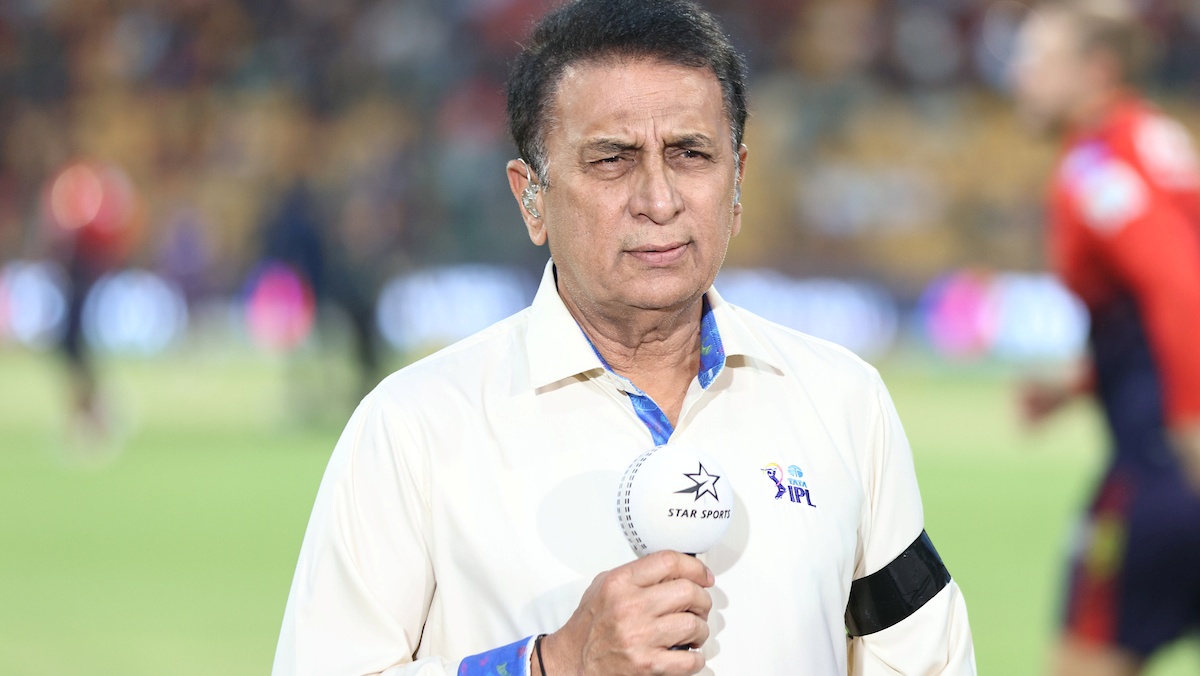
In the wake of India’s recent military strikes across nine locations in Pakistan and Pakistan-occupied Kashmir—launched two weeks after the terror attack in Pahalgam—cricket legend Sunil Gavaskar has opened up about his vivid memories of the 1965 India-Pakistan war.
As a teenager during that period, Gavaskar recalled a time of nationwide alertness, unity, and personal sacrifice.
Gavaskar, widely regarded as one of the finest batters to have played the game, recalled how, as a teenager, life during the war was shaped by constant caution and national solidarity.
“I remember a lot about 1965," Gavaskar was quoted as saying by Sports Tak. “I was 15-16 years old, and when the war was ongoing, the Indian public was instructed to cover their windows after lighting lamps in the evening. We used black cloth to ensure no light was visible from outside. Those whose houses faced the sea were advised to use as little light as possible, preferably only torches and lamps."
He vividly recalled the frequent sound of sirens and the uncertainty that accompanied them. “Sirens would go off frequently. At that time, we couldn’t always tell if it was a mock drill or something else. But I clearly remember covering the windows and ventilation with black cloth. We were told to go outside as little as possible. Shelters were created in residential areas where people had to go after the sirens went off. These shelters were usually in basements. We were told that if your society had a basement, you should go there if you get to hear the sound of a siren," he added.
Gavaskar also remembered the collective sacrifices made by citizens in response to an appeal by then Prime Minister Lal Bahadur Shastri, who asked Indians to voluntarily ration their food.
“There was no fear in the mind of any Indian during the 1965 war. People received all the updates through All India Radio, as television was not very common then. The economic situation of the country was not very strong at that time, so Prime Minister Lal Bahadur Shastri had appealed to people to eat only one meal a day," Gavaskar said.
“My father said that we would eat less food. We would no longer have both chapati and rice in one meal. It would be either chapati or rice. However, the government did not make this mandatory; we did it ourselves," he added.