
People close to Shanghvi reveal he is known to make surprising moves both inside and outside the pharma industry.


'The trajectory of the disease will keep increasing because of the population density being very high.'
Industry body Assocham on Tuesday said the Indian pharma industry would grow at 11 per cent to touch Rs 60,000 crore (Rs 600 billion) in 2007-08 from Rs 39,000 crore (Rs 390 billion) in 2003-04, when drugs worth $65 billion would go off patent.
We give you a perspective of the Indian pharma industry by carrying out a SWOT analysis.
With the new patent regime impending, the focus on the exports market can save Indian companies from any unlikely event post-2005.\n\n\n\n

Neither pharma nor IT would have become the stars of the economy without the active but largely invisible hand of the Indian State, says Ajit Balakrishnan.

'If the almost literally heart-stopping Suez block has any positive outcome, it is to be hoped that it will accelerate the setting up of a fab (perhaps Taiwanese) in India,' asserts Rajeev Srinivasan.

South-east Asian countries are emerging as preferable destination for India's pharma companies to expand their business as they share similar patient population and disease profile and moreover, have a conducive environment for their operations like easy market approach without any regulatory uncertainty, the survey of Indian pharma firms highlighted.

Industry fears tougher US stance on IP after President Donald Trump asserted that foreign countries must pay a fair share for drug development costs. Aneesh Phadnis reports.

The Budget will obviously be crucial. But US President Donald Trump may have even more of an influence than Finance Minister Arun Jaitley when it comes to sentiment, argues Devangshu Datta.

The focus will be on tackling the unfinished agenda requiring immediate attention like tax structure for solar projects, uniform tax rate on state-organised and state-authorised lotteries, taxing non-potable alcohol besides certain changes in the law, extension for NAA and rate rationalisation.

In a nearly 25-minute televised address to the nation, Modi said implementation of the lockdown will be strictly ensured in its second phase and detailed guidelines will be brought out on Wednesday to ensure that outbreak does not spread to new areas.
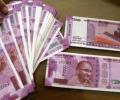
With India's imports exceeding exports, weak rupee does more harm than good. Analysts, however, say that rupee depriciation is positive for export-oriented sectors such as IT services, pharmaceuticals, textiles and automobiles

Indian companies have made acquisitions of $1 billion so far in January

IT, pharma and FMCG stocks are the top performers in 2013.
.jpg)
The report comes at a time when the government is trying to clear pending FDI proposals, which include various planned investments in this sector.

US election results may not reverse Indian markets' bearish trend, says Devangshu Datta

The Paytm employee, who tested positive for the contagious disease with flu like symptoms on Wednesday, came in touch with 91 people in Gurgaon, an official said, citing his counterpart in the suburban town.

The fees for facility inspection of foreign companies have been reduced

Nothing is going to dramatically open up on May 3. There will be too many ifs and buts and terms and conditions and guidelines in leading one's life in various zones, reveals Sheela Bhatt.
The European Medicines Agency's review is the second setback to Alkem Laboratories

Govt bans brands with annual sales worth Rs 3,728 crore.

Six Indian women have made it to Asia's most powerful women list released by Forbes.

Companies that are developing biosimilars (for regulated markets) or have portfolio of new chemical entities (NCEs) under development.

Devangshu Datta highlights the silver lining for the long-term investor.

In 2008, Daiichi Sankyo had bought the entire 34.82 per cent stake in Ranbaxy from its promoters, Malvinder Mohan Singh and family, for $4.2 billion. Currently, Singh is executive chairman of Fortis Healthcare.
Once tipped to emerge as the biggest exporter, the pharmaceutical industry is yet to acquire the scale of those in software services, says Krishna Kant.

Unlike India, the US is a free-pricing market.

'He is seeking to harness the power of Indian Diasporas to national (support for India in global capitals) and political (enhance the Bharatiya Janata Party's support base) ends.'

The company has been developing donor-derived stem cell platforms.

The order, which came on Monday, stated that revenue authorities cannot split the agreement when the parties to the agreement considered the royalty and technical knowhow as a single package.
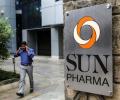
Sun Pharma stock has appreciated at 35% a year for 20 years
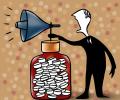
Only 11 antibiotics in clinical trials have received qualified infectious disease product status from the US FDA, of which five are Wockhardt's drugs.

In a surprise announcement in April, Sun and Ranbaxy -- at that time owned by Japan's Daiichi -- declared an all-stock deal to create India's largest and world's fifth-largest drugmaker in an over $4 billion deal.
Since 2013, the FDA has banned around 30 Indian drug manufacturing units for various violations

It should cover mandatory expenses, insurance premiums and loan installments for six months to a year.
 © 2026 Rediff.com - Advertise with us - Disclaimer - Privacy Policy - Sitemap - Feedback - About us - Terms of use - Grievances