
Chief Justice of India Surya Kant issued a clarification on his 'parasites' remarks, stating that he was misquoted by the media and that his comments were directed at individuals entering the legal profession with fake degrees, not the youth of the nation.
A group of lawyers and activists have petitioned the Chief Justice of India to retract recent Supreme Court remarks that cast doubt on the legitimacy of environmental pleas against developmental projects.

Chief Justice of India (CJI) Surya Kant likened some unemployed youngsters to cockroaches, saying they become media, social media, and RTI activists and attack the system. The comments were made while hearing a petition from a lawyer seeking senior advocate designation.

An activist in Mathura, India, protested the pollution of the Yamuna River by dressing as a cockroach and staging a demonstration at the municipal corporation office.

The Supreme Court has modified its previous order regarding three academics involved in a controversial NCERT textbook chapter on corruption in the judiciary, allowing government bodies to make independent decisions about their association with the academics.

The viral rise of the Cockroach Janta Party reflects growing frustration among Indian youth over unemployment, politics, and economic challenges, sparking nationwide debate online.
The Supreme Court has declined the Centre's request to postpone the hearing on petitions challenging the constitutional validity of the 2023 law, which excludes the CJI from the committee responsible for appointing election commissioners, stating the matter is of utmost importance.

Cockroach Janata Party, which according to Dipke had 201,000 followers on X, came about following a controversy over Chief Justice of India Surya Kant using "parasites" and "cockroaches" while pulling up a lawyer for his plea seeking senior designation.

Rahul Gandhi, Leader of Opposition in Lok Sabha, has strongly dissented on the selection process for the next CBI director, alleging bias and lack of transparency in the government's approach.

Asking the parties to participate in the mediation proceedings with an open mind, the apex court said they may not make any statements in the public and may not go on social media about the dispute.
The Supreme Court granted interim bail to two Delhi riots accused, while addressing concerns about conflicting views on bail under the Unlawful Activities Prevention Act (UAPA). The court referred the question of law on whether prolonged incarceration can override UAPA restrictions to a larger bench.

The post-mortem report of Twisha Sharma, who died in Bhopal, indicates 'antemortem hanging by ligature' as the cause of death, along with multiple blunt force injuries. Police investigation and family accusations continue.
The CJP's rapid rise on social media reflects growing digital dissent and youth frustration with issues like unemployment and exam-paper leaks.

The Supreme Court Bar Association has expressed deep concern over an Andhra Pradesh High Court judge reportedly sending a young advocate to judicial custody for a procedural lapse, urging the Chief Justice of India to take cognisance of the incident.

The Supreme Court has overturned a Delhi High Court order that had suspended the life sentence of former BJP MLA Kuldeep Singh Sengar in the 2017 Unnao rape case, instructing the High Court to reconsider the plea.
The Supreme Court has expressed strong displeasure over statements made by politicians regarding the Shiv Sena symbol row case, cautioning them about making irresponsible comments.
The Supreme Court is reviewing a plea challenging the 2025 SHANTI Act, which caps liability at Rs 3,000 crore for nuclear plant incidents, raising concerns about victim compensation and operator accountability.

The Centre has extended the tenure of CBI chief Praveen Sood by one year, marking his second extension in office. The decision follows a meeting of the selection committee headed by Prime Minister Narendra Modi.

The Supreme Court granted bail to the wife of the alleged 'kingpin' of a Rs 3,700-crore scam and directed that no court shall de-freeze the assets attached by the probe agencies in the case till the trial in the FIRs against the accused are concluded.
The Supreme Court overturned a Delhi High Court order that had suspended the life sentence of former BJP MLA Kuldeep Singh Sengar in the 2017 Unnao rape case, instructing the High Court to reconsider the plea.
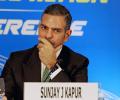
The Supreme Court has urged the Kapur family, including Rani Kapur and Priya Kapur, to resolve their dispute over the family trust through mediation, appointing a former Chief Justice to oversee the process.
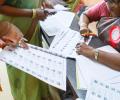
The Election Commission is preparing to launch the third phase of the Special Intensive Revision (SIR) of voters' lists, potentially covering 22 states and Union Territories with approximately 40 crore electors.

The Supreme Court of India has voiced concerns about the potential consequences of individuals questioning religious practices in constitutional courts, warning it could lead to the fragmentation of religions and civilisation. A nine-judge Constitution bench is hearing petitions related to discrimination against women at religious places and the scope of religious freedom.
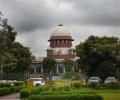
The Supreme Court of India has observed that the practice of excommunicating Parsi women for entering into interfaith marriages is prima facie discriminatory, emphasising that the right of conscience is a birthright.
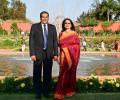
The Supreme Court has appointed former Chief Justice of India Sanjiv Khanna as the sole mediator to resolve a dispute involving businessman Ashokbhai Haribhai Gajera and others in a case linked to textile market projects in Surat. The case involves allegations of siphoning off Rs 1,900 crore and forging documents.
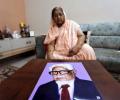
The Supreme Court has disposed of Teesta Setalvad's plea for passport release, advising her to reapply with a travel itinerary. The case relates to alleged fabrication of documents in the 2002 Gujarat riots.
Chief Justice of India expresses concern over the increasing number of digital arrest scams, highlighting a recent case where an elderly woman was defrauded of her retirement benefits.
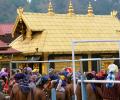
The Shabari story in the Ramayana found mention before a nine-judge constitution bench of the Supreme Court on Wednesday while hearing petitions related to discrimination against women at religious places, including the Sabarimala temple in Kerala.
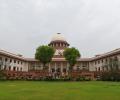
The Supreme Court of India is hearing petitions related to discrimination against women at religious places, including the Sabarimala temple in Kerala, and the scope of religious freedom practised by multiple faiths.
Chief Justice of India Surya Kant has cautioned against the uncritical adoption of Artificial Intelligence in the judiciary, emphasising the need to balance technological advancements with human intellect and ethical considerations.

He will hold the office till February 9, 2027.
The Supreme Court has stated that roads cannot be blocked for religious activities and that while religious denominations have autonomy in worship, the government can interfere if secular activities are affected.

Karnataka Chief Minister Siddaramaiah has called for the establishment of a Supreme Court bench in South India to improve accessibility to justice. Speaking at a conference on Artificial Intelligence in the judiciary, he also highlighted the need to address algorithmic bias and ensure judicial independence in the age of AI.
Chief Justice of India Surya Kant cautioned against the uncritical adoption of AI in the judiciary, emphasising the need for human judgement and ethical considerations in judicial decision-making.

Justice Surya Kant, who was elevated as a judge of the Supreme Court on May 24, 2019, would have a tenure of over 1.2 years as the CJI. He is due to retire on February 9, 2027.
Supreme Court judge Justice B V Nagarathna has cautioned against the over-reliance on Artificial Intelligence (AI) in the judiciary, emphasising the need for judicial independence from algorithmic influence. She stressed that AI should only serve as a tool and not replace human judgement, which is guided by legal reasoning, constitutional values, and a deep sense of justice.

Tata Trusts announced that the trustees of the Bai Hirabai Trust will initiate proceedings to alter restrictive clauses in its trust deed, specifically those prohibiting non-Zoroastrians from serving as trustees. This decision follows a challenge by former trustee Mehli Mistry regarding the appointments of Venu Srinivasan and Vijay Singh, who allegedly did not meet the original Parsi Zoroastrian faith and residency criteria.
Supreme Court judge Justice B V Nagarathna stated that judicial independence in the modern era includes freedom from algorithmic influence, emphasising that AI should only assist judges, who must ultimately decide based on constitutional values and human judgment.

Chief Justice of India Surya Kant has recused himself from hearing petitions challenging the constitutional validity of the 2023 law regarding the appointment of election commissioners, citing a potential conflict of interest.
Supreme Court judge Justice B V Nagarathna stated that judicial independence in the modern era is not just freedom from external power, but also from algorithmic influence, while speaking at a conference in Bengaluru.
 © 2026 Rediff.com - Advertise with us - Disclaimer - Privacy Policy - Sitemap - Feedback - About us - Terms of use - Grievances