
Researchers at IIT have developed a novel and cost-effective method for tracking surgical instruments in 3D using standard 2D video, potentially improving the precision and accessibility of minimally invasive surgeries.

NITI Aayog Member Rajiv Gauba has detailed an extensive deregulation agenda, moving India towards a 'permitted unless prohibited' principle to dismantle new forms of the Licence Raj and clear 'regulatory cholesterol' for businesses.

The University of Sheffield has announced a major milestone in the push for greener aviation as it produces its first report from testing a new sustainable aviation fuel (SAF). The research is helping support the faster rollout of low-carbon jet fuels.

The National Senior Athletics Federation Competition witnessed a national record being broken twice in the men's 100m race, along with other impressive performances in long jump and 10,000m races.
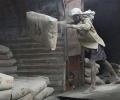
A new study suggests that using basalt rock instead of limestone in cement production could significantly reduce carbon dioxide emissions, offering a pathway to a greener construction industry.

Researchers have discovered that Delhi's urban forests are significant carbon sinks, storing substantial amounts of carbon in trees and soil, with the potential to generate revenue through carbon credits. The study highlights the importance of preserving and expanding these forests to combat climate change.
The national record in the men's 100m race was broken twice within minutes at the National Senior Athletics Federation Competition. Ancy Sojan won the women's long jump with a meet record, and Seema achieved the Commonwealth Games qualification mark in the women's discus throw.

Andhra Pradesh has launched India's first quantum reference facility, aiming to build a sovereign hardware ecosystem and boost indigenous manufacturing of advanced computing systems.
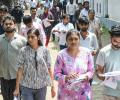
rediffGURU Nayagam PP, career counsellor and founder of EduJob360 explains why cracking the UPSC exam is a dream for lakhs of young Indians.

India's top track and field athletes will compete in Ranchi for a chance to represent the country at the 2026 Commonwealth Games in Glasgow. The event marks the first time the Athletics Federation of India will conduct SRY Gene Tests at the national level to ensure fair competition in the women's category. The meet will also serve as trials for the inaugural Asian U23 Championships.

Researchers at IIT Guwahati have developed a framework for designing earthquake-resistant 3D-printed concrete walls, potentially revolutionising construction in seismic zones.

Three milestones in three days signal India's growing mastery in next-generation strategic technologies spanning nuclear deterrence, hypersonic propulsion and precision stand-off strike capability.

'Science today is very interconnected, and that helped me become part of the Muon g-2 team.'

TARA is India's first indigenous modular glide weapon, capable of transforming conventional unguided warheads into long-range precision-guided weapons.

'Mobius made EMs investable and India his most enduring belief.'
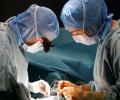
Doctors at AIIMS, Delhi, have successfully performed a simultaneous pancreas-kidney transplant after 18 years, marking a significant advancement in organ transplantation in India. The surgery was performed on a 30-year-old patient with end-stage renal disease caused by Type 1 diabetes.

'In investing, poor sentiment is always a good vintage to build a portfolio.'

An expert from the ICMR's National Institute of Virology addresses concerns about hantavirus cases detected on a cruise ship, stating there is no immediate public health threat to India and that the cases appear isolated.

The Delhi government is developing a drone policy focused on creating research clusters, establishing testing facilities, enabling drone use in traffic management, and providing subsidies to support the drone ecosystem.

Andhra Pradesh is set to launch India's first indigenously built, open-access quantum computers, marking a significant step towards building a sovereign quantum hardware ecosystem. The initiative aims to position the state as a global hub for quantum technology and enable applications in various sectors.

'Infertility and reproductive health challenges, much like other chronic conditions, are rising globally.'
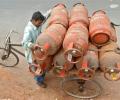
Researchers at CSIR-NCL have developed a technology for producing dimethyl ether (DME) as an alternative to liquefied petroleum gas (LPG), potentially reducing India's reliance on imports and enhancing energy security.

The World Anti-Doping Agency (WADA) will assess the performance of India's National Dope Testing Laboratory (NDTL) in the coming months, a process described as routine by the National Anti-Doping Agency (NADA). WADA President Witold Banka expressed satisfaction with the facility after a recent visit, while India is also in the running to host the next WADA Global Education Conference.
The Centre has allowed companies to begin lab testing immediately after filing applications instead of waiting for detailed scrutiny, in a move to expedite approvals for manufacture, or import of new drugs.

Vertex Group has launched its 'Responsible AI Lab' with a Rs 100 crore investment in research and development, focusing on ethical, transparent, and accountable AI solutions for businesses.

Once operational, Ghatak could undertake deep-strike missions, penetrating heavily defended airspace to hit high-value targets without placing pilots at risk.

Delhi LG Taranjit Singh Sandhu addressed the Global Confluence 2026, emphasising the importance of maintaining a human element at the heart of digital nation-building. He highlighted India's digital transformation and the role of technology in improving lives, while urging a focus on inclusive development and national security.

In many ways, this is only the beginning -- of a new chapter in India's nuclear story, and of a future where its vast thorium reserves could finally power its ambitions.

Governance uncertainty and leadership visibility gap are likely to keep the stock under pressure in the near term, said Nomura in a report.

Platform-style partnerships between global investors and Indian developers are expected to gain further traction over the next few years. This comes as institutional capital increasingly shifts from one-off asset acquisitions to scalable, long-term strategies.

On World Health Day 2026, discover plants that improve health naturally, boost immunity, purify air and enhance well-being. Do read the simple gardening tips as well.

Learners in India prefer to pursue newer courses, such as Gen AI by building apps and code using the technology, along with learning about it.
'There are certain sovereign AI domains where we must build capabilities using our own data, our own language models, and make our own attempts at global models.'

'Within six months I expect petrol, diesel, and electric vehicles (EVs) to reach cost parity,' says Union Minister for Road Transport and Highways Nitin Gadkari.

'The next phase of India's IPO cycle will be defined by quality, pricing discipline and investor selectivity.'
IIT Delhi, in collaboration with the University of Exeter, is developing cutting-edge sports technology, including wearable ultrasound sensors for injury prevention and helmets that can detect concussions in real-time, potentially revolutionising athlete safety and performance.
On the back of an aggressive asset monetisation push, the government will press the throttle on the build-operate-transfer (BOT) model - under which private developers fund highway construction - for future highway development, Union Minister for Road Transport and Highways Nitin Gadkari said.

At the heart of this debate is Section 3(d) of the Patents Act, a safeguard designed to prevent drugmakers from extending monopoly protection through trivial modifications to existing medicines.

'The BJP is keeping its options open and that the final decision is still tightly held.' 'That is consistent with the party's tendency to preserve suspense, avoid premature factional conflict, and use leadership selection as a way of resetting internal hierarchies.'

In a region increasingly shaped by competition and coercion, such collaboration strengthens security without confrontation, builds capacity without dependency and promotes order without domination, points out Dr Kumar.
 © 2026 Rediff.com - Advertise with us - Disclaimer - Privacy Policy - Sitemap - Feedback - About us - Terms of use - Grievances