
Amid concerns over dangerous side-effects of the Oxford's COVID-19 vaccine, India is evaluating all serious adverse events post-vaccination to determine the causality aspects of Covishield and Covaxin, an expert associated with the process said on Saturday.
A study conducted by the Indian Council of Medical Research (ICMR) has observed that COVID-19 vaccination did not increase the risk of unexplained sudden death among young adults in India, the government informed Parliament on Friday.
According to a report by the National AEFI Committee, a 68-year-old man died due to anaphylaxis (severe allergic reaction) after being vaccinated on March 8, 2021.

The Union health ministry said in a statement on Monday that over 23,000 adverse events have been reported since the vaccination drive involving Covishield and Covaxin vaccines started in the country and of these 700 cases were reported to be serious.
The Centre, however, noted that the last national serosurvey findings have shown that over 70 per cent of the population is still susceptible to the disease.

The government cannot be held liable to compensate for the deaths due to an adverse event following immunisation (AEFI) post administration of Covid-19 vaccines, the Centre has told the Supreme Court.
The study titled 'Serendipitous COVID-19 Vaccine-Mix in Uttar Pradesh, India: Safety and Immunogenicity Assessment of a Heterologous Regime' has been uploaded on medRxiv, a preprint server and is yet to be peer reviewed.

Choubey said till February 4 total 81 AEFIs, which is 0.096 per cent of the total beneficiaries who have been administered Covaxin, have been reported.

A number of Indian medical experts on Monday supported calls from an eminent British Indian cardiologist for a full safety review into the use of Oxford/AstraZeneca's Covid-19 vaccine, administered in India as Covishield, over feared serious side effects such as heart attack and stroke.
A bench of Justices L Nageswara Rao and B R Gavai said bodily autonomy and integrity are protected under Article 21 of the Constitution.
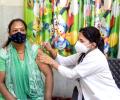
A group of public health experts, including doctors from All India Institute of Medical Sciences and members from the national taskforce on COVID-19, have said that mass, indiscriminate and incomplete vaccination can trigger emergence of mutant strains and recommended that there is no need to inoculate those who had documented coronavirus infection.

India has flattened its Covid-19 graph and 146 districts have reported no new case of the viral disease in the last seven days, 18 in 14 days, six in 21 days and 21 districts in the last 28 days, Union Health Minister Harsh Vardhan said on Thursday.

'he Centre has not issued any mandate, the stand of centre is that it should be 100 per cent but it is not a mandate'

'Scientifically the effect and change of Delta plus has to be watched through our INSACOG system. This has to be detected and we have to see its presence in the country'

Those intending to undertake international travel for education purposes, joining employment and as part of the Indian contingent to the Tokyo Olympics will be allowed to take the second dose of Covid vaccine Covishield prior to the prescribed time interval of 84 days after the first dose.

'There is no emergency of a third wave that we are rushing for booster doses.'

Vardhan noted that COVID-19 infection among those vaccinated would be very mild and not progress to an advanced stage.

Based on this price, state governments, private hospitals, industrial establishments, etc would be able to procure vaccine doses from the manufacturers.
Private hospitals can charge up to Rs 250 per dose of COVID-19 vaccine, official sources said on Saturday as India prepares to vaccinate people aged above 60 years and those over 45 with comorbidities from March 1.

The next phase of the COVID-19 vaccination drive for people above 60 years and those aged 45 and above with comorbidities will begin from March 1 and registration on the Co-WIN2.0 portal will open at 9 am on Monday.

The first dry run of the vaccination drive took place across 125 districts covering all States/UTs on January 2. The dry run was also conducted to familiarise the state, district, block, and hospital-level officers on all aspects of the COVID-19 rollout.

As India gears up to vaccinate people above 60 years of age and those over 45 years with comorbidities against COVID-19 from March 1, the Union health ministry on Friday said the facility of on-site registrations will be available so that eligible beneficiaries can walk into identified vaccination centres, get themselves registered and get inoculated.

Prime Minister Narendra Modi will flag off the first phase of the pan India roll-out of COVID-19 vaccination drive at 10.30 am via video conferencing.

The first COVID-19 vaccine shots in India were given on Saturday to nearly two lakh frontline healthcare and sanitary workers as Prime Minister Narendra Modi rolled out the world's largest inoculation drive against the pandemic that has caused 1,52,093 deaths and upended millions of lives in the country.
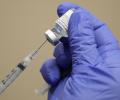
As the country eagerly awaits an expected coronavirus vaccination drive in January, at least 125 intended beneficiaries each in four states who had registered on the Co-WIN App were on Monday sent SMSes informing them about the time and place of their 'COVID-19 vaccination' under a mock-drill to administer the shots at designated centres.
 © 2026 Rediff.com - Advertise with us - Disclaimer - Privacy Policy - Sitemap - Feedback - About us - Terms of use - Grievances