
A study by IIT Gandhinagar researchers reveals that urban greening alone is insufficient to reduce heat stress in Indian cities, highlighting the need for climate-responsive planning that considers humidity, ventilation, and urban compactness.

An analysis of 138 Indian cities reveals that urban greening should consider humidity and airflow for effective cooling, emphasising climate-responsive strategies over one-size-fits-all approaches.

India's newly formed Artificial Intelligence Governance and Economic Group (AIGEG) is set to advocate for a unified legal framework for AI companies, including developers of large language models and chatbot systems, alongside broader operational rules.
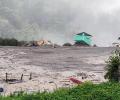
A new study identifies flash flood hotspots in India, highlighting the influence of land features, rainfall, and the growing impact of climate change.
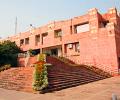
The National Institutional Ranking Framework (NIRF) has released a list of top Indian universities across categories.
Nielsen will fund several Nielsen Awards annually at the institute to enable undergraduate students to participate in international conferences, workshops and internships.

The move is expected to benefit the expanding energy sector of India in reducing its carbon footprints.

Modi said the government aimed at spreading digital literacy across rural India.

In Gujarat, of the 12.5 million hectare of area under cultivation, while six million is dependent on rainfall, two million is covered by groundwater, a bulk of which is said to be in north Gujarat. Scanty rainfall in the last one and half years has not only depleted groundwater level but also affected dams.

'Wastewater containing excreted material can tell us how a community is doing in a particular area pertaining to any epidemic, pandemic, and other bacterial and viral diseases.'
 © 2026 Rediff.com - Advertise with us - Disclaimer - Privacy Policy - Sitemap - Feedback - About us - Terms of use - Grievances