
According to the research arm of the country's largest lender State Bank of India, with stability in the currency, the RBI Governor is likely to lower the marginal standing facility rate, at which the RBI lends to the banks, once the lenders exhaust their overnight repo borrowing limits.

The new rates will be effective from May 9.

The International Monetary Fund (IMF) on Tuesday slashed India's growth forecast for 2022-23 (FY23) by 80 basis points to 7.4 per cent, citing less favourable external conditions and rapid policy tightening by the central bank. In its update to the April World Economic Outlook, the IMF said that though a global recession in 2022 was ruled out with a growth estimate of 3.2 per cent, the balance of risks was squarely to the downside, driven by a wide range of factors that could adversely affect the global economic performance. "The risk of recession is particularly prominent in 2023, when in several economies growth is expected to bottom out, household savings accumulated during the pandemic will have declined, and even small shocks could cause economies to stall.

Punjab National Bank (PNB), the country's third largest lender, followed its peers to lower its benchmark rate, giving in to the government's wish that rates needed to fall to boost consumer lending.
Majority of the experts expect a 25 basis point reduction.

Infosys was the top gainer in the Sensex pack, rising over 2 per cent, followed by Bajaj Finance, HCL Tech, Tata Steel, Tech Mahindra and NTPC. On the other hand, Maruti, Sun Pharma, HUL and ITC were among the laggards. Nifty rose 122.15 points to 17,343.55.

Automobile retail sales in India increased by 37 per cent in April on a low base of COVID-hit April last year, automobile dealers' body FADA said on Thursday. Total sales across categories rose to 16,27,975 units in April, as compared to 11,87,771 units in the year-ago period. On a year-on-year basis, all vehicle categories including passenger vehicles and two-wheelers were up as compared with April last year.
The State Bank of India on Saturday hiked its benchmark prime lending rate by 0.50 per cent from 12.25 per cent to 12.75 per cent.
Housing Development Finance Corporation has increased loan rates by 75 basis points for new customers. It has hiked its prime lending rate (PLR) by 50 basis points to 14 per cent.

Housing Development Finance Corporation, India's largest mortgage financier, today increased its retail prime lending rate by 50 basis points to 14.25 per cent. This is the first time HDFC is increasing its PLR in two years.

Morgan Stanley on Thursday became the latest brokerage to question the valuations of Indian equities and downgraded them from 'overweight' (OW) to 'equalweight' (EW) and recommended taking some money off the table. "We move tactically EW on India equities after strong relative gains - we expect a structural multi-year earnings recovery, but at 24 times forward price-to-earnings (P/E) we look for some consolidation ahead of US Fed tapering, an RBI hike in February and higher energy costs," Morgan Stanley equity strategists, led by Daniel Blake and Jonathan Garner, said in a note on Asia Pacific markets. The brokerage has upgraded Indonesia to OW, while maintaining an EW stance on China and UW on Taiwan.

The operating environment is unpredictable, but if the bank can't give a clear picture of what's in store, calling the bottoming out of its asset quality stress is nearly impossible.
The increase raises the bank's benchmark advance rate to 13.75 per cent from 13.25 per cent. The revised floating reference rate for consumer loans, including home loans, will be 10.75 per cent.
The Reserve Bank has kept the key policy rates unchanged, while the Cash reserve Ratio (CRR) has been cut by 25 bps to 4.25%.

The monetary authority said it was worried on three fronts with regard to inflation as well as the economy.
.jpg)
RBI is scheduled to unveil its credit policy on June 3.

According to SBI Ecowrap, every $10/barrel increase in oil price results in additional import bill of $8 billion.
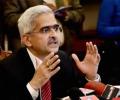
Many analysts over the past week have said the RBI has legroom to cut rates to the tune of 65 bps by June and some like Barclays and BofA have also spoken about the likelihood of an inter-meeting cut.
The primary focus of monetary policy remains the containment of inflation and anchoring of inflation expectations.

The revision in rate is for deposits of up to five years and will be effective from Sept 07, 2012.

They own 27.5% in top 75 listed firms; investments bounce back after falling two straight quarters

In a bid to support revival of sectors hit most by the Covid-19 pandemic, Reserve Bank of India on Friday decided to open a separate liquidity window of Rs 15,000 crore for certain contact-intensive sectors like hotels and restaurants, tourism and aviation ancillary services.
'The rate cut could have been higher in the current economic conditions which would have had a stronger impact on business sentiment and spurred investment in a big way.'

Distribution yields could rise, but risk of Covid, higher interest rates remain.

Wall Street brokerage Bank of America Securities has pencilled in lower than the consensus retail inflation for the current fiscal year at 5 per cent, but higher than the previous forecast of 4.7 per cent. Stating that the June print will be critical for the future trajectory -- after the extremely high 6.3 per cent print in May, the brokerage in a report on Friday revised upwards its forecast by 30 bps to an yearly average of 5 per cent for the year to March 2022. "Though the June print will be critical for future trajectory, beyond near-term, we find some comfort from our analysis of four key factors that are likely to influence CPI inflation the most.
The country's largest private sector lender, ICICI Bank, on Thursday slashed its benchmark lending rate by 50 basis points to 15.75 per cent, a move that would benefit the bank's home, auto, consumer and corporate loan borrowers.

'As valuations of large-caps appeared to be out of whack, investors started lapping up quality mid-caps and small-caps, which were available at relatively comfortable valuations.'

CRR remains unchanged at 4%; first repo rate cut since May 2013.

While lending rates have been jacked up on an average of 5-10 bps by private sector lenders like HDFC Bank, Axis Bank, Kotak Mahindra Bank and Yes Bank since January, almost all the PSBs have been increasing their bulk deposit rates in the range of 15 bps to 125 bps.
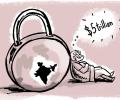
India is much better placed today to deal with future waves of the pandemic relative to the first wave, RBI deputy governor Michael Patra said.
Reserve Bank on Tuesday raised key interest rates by 25 basis points, its 13th such hike since March, 2010.
The truckers' strike, which entered the second day, can push inflation by 50 basis points on account of shortage of perishable goods and panic buying by traders, said economic think tank National Council for Applied Economic Research (NCAER).

Indian companies are expected to dole out an average increment of 9.1 per cent in 2022, higher than the pre-COVID-19 increment in 2019, as companies are focusing on retention of talent through rewards. According to the 2022 Workforce and Increments Trends Survey by Deloitte Touche Tohmatsu India LLP, the average India 2022 increment is expected to go up to 9.1 per cent from eight per cent in 2021. Moreover, the 2022 projected increment is higher than the pre-COVID-19 increment in 2019 by 50 basis points (bps).
In the last three years, public sector banks have responded to the RBI's policy rates more strongly than private banks.

If this turns into reality, India's gross domestic product (GDP) growth will be the lowest since 2012-13, which could severely hit job creation and income growth in the near term.

The average wholesale price inflation for FY14 will come at 5.3 per cent, while the consumer price inflation will average under 9 per cent, which would be a five-year low, the brokerage said.

The Reserve Bank remains laser-focused to bring back retail inflation to 4 per cent over a period of time in a non-disruptive manner, Governor Shaktikanta Das stressed while voting for status quo in interest rates, as per minutes of the October policy meeting released on Friday. The central bank has been mandated by the government to ensure the Consumer Price Index (CPI) based inflation is at 4 per cent, with a band of 2 per cent on either side. The retail inflation, which was above 6 per cent during May and June, has started moving down and stood at 4.35 per cent in September.
 © 2026 Rediff.com - Advertise with us - Disclaimer - Privacy Policy - Sitemap - Feedback - About us - Terms of use - Grievances