
Das said banks have passed only 0.29 per cent in rate cuts to their borrowers as against 0.75 per cent cuts in interest rates by the Reserve Bank till June.

The government's move to freely supply coronavirus vaccines to the states for universal inoculation and extend free rations to help the poor tide over the pandemic will only add an additional 40 bps of GDP to fiscal deficit, says a report, which also called for more transparent vaccine distribution plan for efficient vaccine allocation to the states.

The minutes of the December MPC meet reveal members felt the current spike in the headline inflation rate was due to a temporary supply shock on the food front, expected to moderate by the second quarter of 2020-21.

"In view of the festival season and extending the benefits to customers across all segments, we have reduced our MCLR by 10 bps across all tenures," the bank said in a statement.
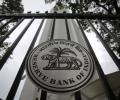
The Reserve Bank of India on Friday decided to keep the benchmark interest rate unchanged at 4 per cent but maintained an accommodative stance as the economy is yet to recover from the impact of the second Covid wave.

Equity markets halted their two-day rally on Friday, with the Sensex tumbling 714.53 points amid weak global equities and selling in index majors Infosys, ICICI Bank, HDFC Bank and Reliance Industries. Continuous foreign fund outflows also dented sentiments. The BSE benchmark Sensex tanked 714.53 points or 1.23 per cent to settle at 57,197.15. During the day, it plummeted 776.96 points or 1.34 per cent to 57,134.72. The NSE Nifty also declined 220.65 points or 1.27 per cent to 17,171.95.

Citing the massive surge in Omicron infections and the resultant impact on overall economic activities in the March quarter, Swiss brokerage UBS Securities has revised downwards its India's growth forecast for the current financial year to 9.1 per cent from 9.5 per cent earlier. However, UBS Securities does not see the third wave impact extending to the next financial year as it has revised upwards its real GDP forecast to 8.2 per cent, up from 7.7 per cent earlier, expecting the real GDP growth to remain well above the historical average. The World Bank pegs it at 8.3 per cent, unchanged from its June assessment, saying the recovery is not broad-based yet.

Mortgage lender HDFC Ltd on Wednesday announced an increase in its benchmark lending rate by 5 basis points (bps), a move that will make loans dearer for both existing and new borrowers. This is the third hike effected by HDFC in the last one month. "HDFC increases its Retail Prime Lending Rate (RPLR) on housing loans, on which its Adjustable Rate Home Loans (ARHL) are benchmarked, by 5 basis points, with effect from June 1, 2022," the housing finance company said in a statement.

India's GDP is estimated to grow at 7.4 per cent in the financial year 2022-23 with rising prices triggered by the Russia-Ukraine conflict posing as the biggest challenge to the global economic recovery, Ficci's Economic Outlook Survey released on Sunday said. According to the survey, the Reserve Bank of India (RBI) is likely to start a rate hike cycle in the second half of 2022, while a repo rate hike of 50-75 bps is expected by the end of the current fiscal. The RBI is expected to continue supporting the ongoing economic recovery by keeping the repo rate unchanged in its April policy review, the survey said.

'Spends are likely to increase from the current levels because recovery is yet to fully be over.'
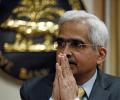
'Three external members of the first MPC are respected researchers with excellent academic background, but there is no harm in considering academicians with diverse backgrounds such as finance and labour along with economists for this body,' recommends Tamal Bandyopadhyay.

The State Bank of India SBI has raised the benchmark lending rate by 50 basis points to 12.25 per cent.

In its Third Quarter Review of Monetary Policy 2012-13, the Reserve Bank of India has reduced the policy repo rate under the liquidity adjustment facility (LAF) by 25 basis points from 8.0 per cent to 7.75 per cent with immediate effect.

For Tata Consultancy Services (TCS) - India's largest and the world's second-largest IT services provider - the attrition rate touched an all-time high of 17.4 per cent in Q4FY22. The management, following the announcement of the Q4 results, has warned that the attrition situation could become even worse before any improvement. According to analysts, the short term, the attrition rate at TCS could even touch 20 per cent.

The Insurance Regulatory & Development Authority has capped the charges from the fifth year to around four per cent of the annual premium paid.

'The no-rate cut policy and preference to wait for the Budget and clarity on the fiscal front demonstrate RBI Governor Shaktikanta Das is maturing in his new role,' notes Tamal Bandyopadhyay.

Sliding for the fourth straight day, the BSE Sensex shed 152 points in choppy trade on Wednesday amid mixed global cues ahead of the US Federal Reserve's policy decision.

Among the key concerns of the Street is market share losses in growth segments, led by higher competitive pressures.

'Marginal rates will definitely affect the consumer's decision in entering a new transaction, but in reality, they don't affect much because banks/financial institutions have come up with step-up EMIs: 50% of home loans which exceed 15 years in India are prepaid, within 7-8 years.' 'This doesn't happen anywhere in the world.'
Spending through the credit card in March 2022 jumped 48 per cent year-on-year to top Rs 1 trillion -- five months after it had hit the same figure for the first time in October 2021, buoyed by festive season expenditure. The jump has been driven by the pickup in consumption as the pandemic recedes. Expenditure in March, at Rs 1.07 trillion, was up 24.5 per cent over February, the data put out by the Reserve Bank of India (RBI) showed.

Select the exact category by matching your investment horizon to the portfolio duration, suggests Sanjay Kumar Singh.

The Reserve Bank of India on Friday hiked its key short-term lending and borrowing rates to banks by 25 basis points to combat rising inflation, a move that could signal hardening of commercial lending rates.

Powered by a rally in index heavyweight Reliance Industries, equity benchmark Sensex broke its four-session losing run to close above the 55,000-mark on Thursday despite a weak trend overseas. Investors made a cautious return to IT, pharma and bank stocks after their recent sell-off. However, a depreciating rupee and persistent foreign fund outflows capped the gains, traders said. Overcoming a lacklustre start, the 30-share BSE Sensex surged 427.79 points or 0.78 per cent to close at 55,320.28.

Prices of food items like cereals, pulses, and edible oils rose or remained steady in May, a Reserve Bank of India (RBI) report said, indicating there could be another higher inflation print. However, it observed that the Monetary Policy Committee's (MPC's) surprise move to increase interest rates bodes well for its credibility. The RBI's monthly State of the Economy report, released on Tuesday, citing high frequency food price data from the Ministry of Consumer Affairs for the period May 1-12, said the increase in the prices of cereals was primarily because of the surge in wheat prices.

State Bank of India hikes lending rates, and other banks pick up the signal.

In twin blows to Indian economic revival, higher food prices drove retail inflation to a five-month high of 7.4 per cent while factory output fell for the first time in 18 months. The second consecutive month of rise in consumer price index (CPI)-based inflation will add to the pressure on the Reserve Bank of India (RBI) to again raise interest rates to tame high prices. Inflation has been above the targeted zone for the ninth month in a row and as per statute, the RBI will now have to explain to the government in writing why it failed to keep prices below 6 per cent.

Interest rates on all loans linked to MCLR stand reduced by 5 bps with effect from May 10, 2019: SBI

BofA Securities has revised its year-end Nifty target from its earlier projection of 16,000 to 14,500 now - down over 6 per cent from the current levels. Fast tightening monetary conditions, slowing growth/fears of US recession and the likely Nifty EPS (earnings per share) cuts, BofA Securities said, are the key headwinds for the markets in the near-term. However, clarity on macro and monetary policy outlook in the US/India, it said, is the silver lining that could see markets bottom out by August/September 2022.

Given the relevance of bank deposits for Indian savers, whether the regulator would permit linking savings interest rate to a repo-like structure needs to be seen, as a move of this nature could increase volatility in savings also.
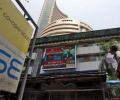
Analysts believe that investors should look at stocks that hit 52-week lows only if they have a dividend paying track record, are debt-free and have sound fundamentals.

Market benchmarks gave up intra-day gains to close in the red for the sixth session on the trot on Friday, capping a bruising week which saw a massive dash for safety amid rate hikes by global central banks and fears of slowing growth.
The Reserve Bank on Wednesday cut the repo and reverse repo rates by 50 basis points each with immediate effect.

The US Federal Reserve on Wednesday (local time) raised interest rates by 75 basis points (bps) or three-quarters of a percentage point in the boldest move since 1994.

Shaktikanta Das is a master of the finest balancing act who listens to all but takes his own decisions, discovers Tamal Bandyopadhyay.

Despite its recent underperformance, gold must be a part of your portfolio.

As the second wave of the Covid-19 pandemic abates, India's automakers are hopeful of a quick recovery in sales volumes, led by better rural sentiment, low interest rates, improved availability of finance and a gradual uptick in business and economic activity. In fact, companies have started to ramp up production already, encouraged by high order books and the growing preference for private transport in both rural and urban areas as a means to avoid infections. In early April, the industry had been bullish as the sales trend for March showed that the effects of the Covid-19 pandemic had been left behind. The total vehicle sales had grown by 77 per cent, albeit on a lower base, and for the past few months, sales had consistently touched 300,000 units per month.

Citing the impact of the second wave of the pandemic over the economy and consumer sentiment, Swiss brokerage Credit Suisse has lowered its nominal GDP growth forecast by 150-300 bps to 13-14 per cent, but expects a stronger recovery in the second half as it sees the lockdowns having limited impact on tax collections. Last month, Neelkanth Mishra, the co-head of equity strategy for Credit Suisse Asia Pacific, and India equity strategist, had told PTI that he expected the real GDP to fall to 8.5-9 per cent in FY22 due to the more severe pandemic attack. The virus case load has crossed the 25-million mark, death toll from the same is nearing 2.9 lakh mark, which is one of the highest in the world as the test positivity rate has been around 15 per cent for long.
The Reserve Bank may announce cut in policy rates up to 50 basis points soon as inflation has been on way downward for past three successive weeks, bankers said.

The reason why private banks will play the deposit pricing game strategically is the weakening of banks' deposits base given the competition from MFs and insurance companies due to tax-savings schemes.

According to the research arm of the country's largest lender State Bank of India, with stability in the currency, the RBI Governor is likely to lower the marginal standing facility rate, at which the RBI lends to the banks, once the lenders exhaust their overnight repo borrowing limits.
 © 2026 Rediff.com - Advertise with us - Disclaimer - Privacy Policy - Sitemap - Feedback - About us - Terms of use - Grievances