
Does voter deletion controversy expose critical gaps in ECI verification procedures and safeguards protecting electoral roll integrity?
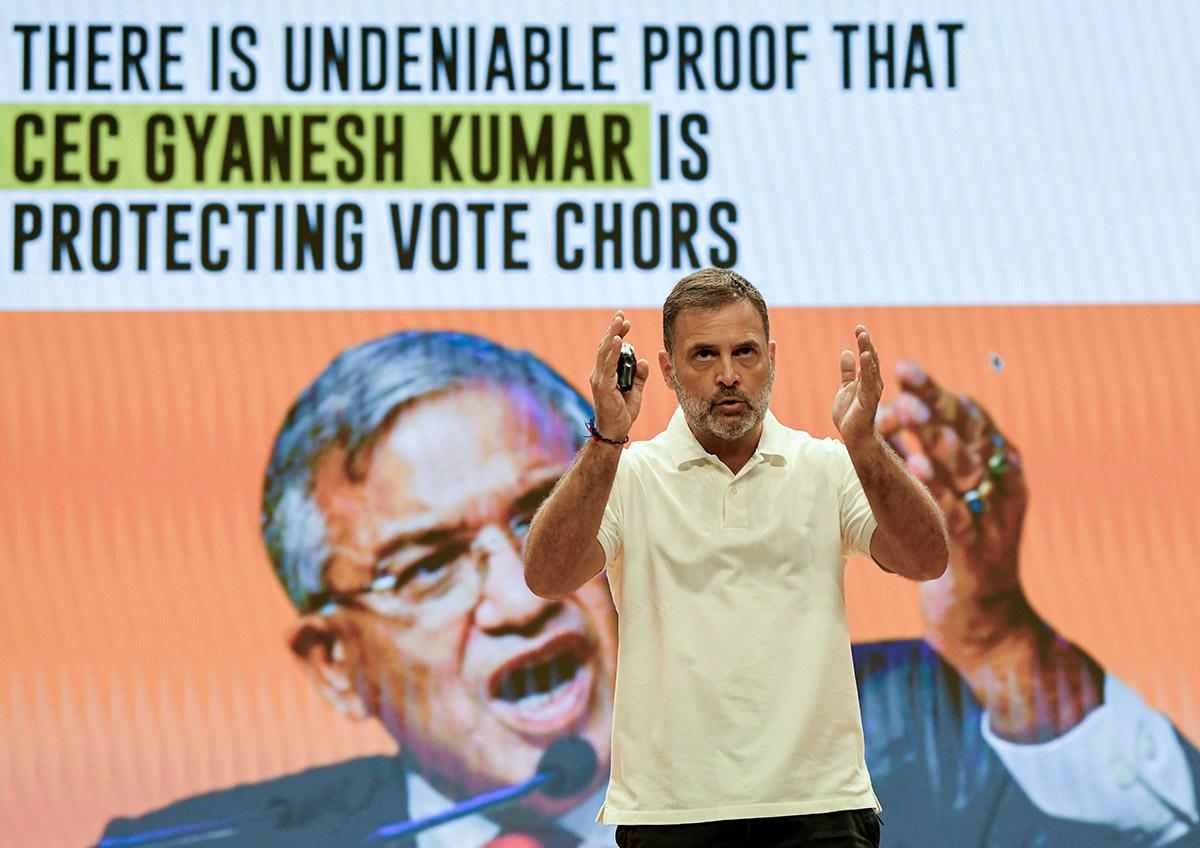
On September 18, 2025, Congress leader Rahul Gandhi triggered off a fresh political storm when he accused the Election Commission of India (ECI) of enabling what he called 'large-scale vote theft.'
At a press conference at the Congress headquarters in New Delhi, the leader of the Opposition in the Lok Sabha claimed that Bharatiya Janata Party workers were systematically filing deletion requests against Congress voters, and that with 'just a few clicks' these voters' names were vanishing from the rolls.
Congress President Mallikarjun Kharge backed the charge, alleging that the BJP had misused Form-7 -- the official form for objecting to or requesting deletion of names from electoral rolls -- to disenfranchise citizens en masse.
Karnataka Minister and Congress leader Priyank Kharge went a step further, recalling how the Karnataka CID had written 18 letters to the ECI -- asking for destination IPs, device ports, OTP trails -- during earlier roll revisions, warning of suspected 'vote chori' but, according to him, the concerns were ignored.
But here is the critical question -- and one that ought to be under the scanner far more than the allegations of who filed the deletions: After these deletion requests were made, did the Electoral Registration Officers (EROs) and Booth Level Officers (BLOs) actually follow the mandatory verification steps prescribed by the Election Commission?
Not just in the case of the Aland assembly constituency in Karnataka's Kalaburgi district but while deleting name/names of any/all the voters across India?
In other words:
Under Indian election law, it is not the applicant who has the right to delete a voter's name. Only an ERO, after verification, has the statutory power to accept or reject a deletion. The BLO is mandated to verify on the ground.
The affected voter must be given notice and a chance to be heard. If these steps are skipped, wrongful disenfranchisement can indeed occur -- not because the online portals are insecure, but because field-level safeguards are not enforced.
This article explains the controversy, the ECI's rebuttal, the rules governing voter deletions, and the protections (at least on paper) that prevent arbitrary disenfranchisement.
The Congress Allegations
At his September 18 press conference, Rahul Gandhi alleged that BJP supporters had been filing mass Form-7 applications using 'benami' mobile phones and 'special software' to target Congress voters for deletion.
He cited one case where a person allegedly 'got up at 4 am, filed two deletions, and went back to sleep' -- an illustration, in his view, of how easily the system could be gamed.
Mallikarjun Kharge sharpened the charge further, saying: 'Form-7 was misused by BJP to delete voters en masse'.
Priyank Kharge highlighted that despite repeated warnings by the Karnataka CID -- 18 letters in total -- the ECI had not acted to plug the loopholes.
The Opposition's narrative is that the BJP weaponised the system of objections, overwhelming the rolls with deletion requests that targeted Congress supporters and voters hostile to the ruling BJP.
The ECI's Rebuttal
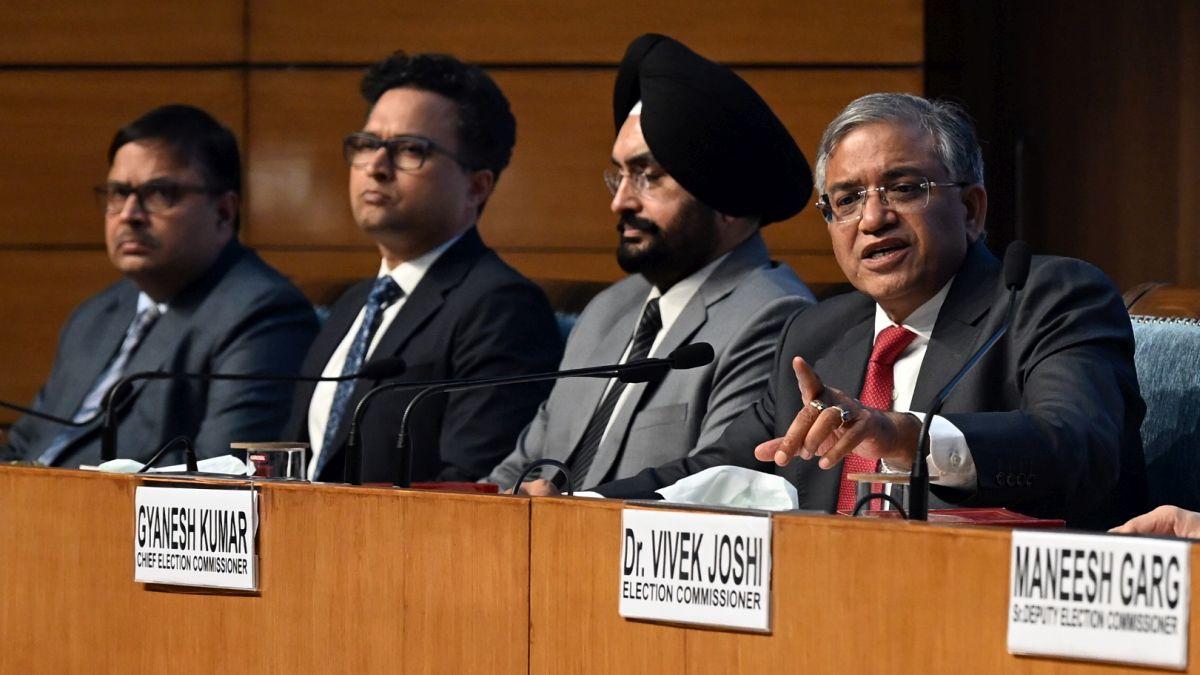
The Election Commission quickly issued a statement denying Rahul Gandhi's claim. 'Vote deletion can't be done online,' it clarified..
The ECI's point is technically correct: Submitting Form-7 online (via NVSP or state CEO portals) does not directly strike off a voter's name. It merely creates an application/objection that must be processed. The final decision rests with the ERO, after verification.
But here lies the perceptual gap: While the ECI insists that only verified deletions can happen, the Opposition points to real-world cases where deletions allegedly occurred without proper verification.
What Exactly is Form-7?
Form-7 is the statutory form under the Registration of Electors Rules, 1960 for:
The official ECI guidelines on Form-7 are here: Form-7 instructions, NVSP (external link).
The form itself (almost a standard one barring few exceptions here and there across states), as used by CEO Delhi, is available here: Form-7 PDF (external link).
The form requires details of the voter whose deletion is sought (name, EPIC number if available, part/serial number in the roll), the reason (death, shifted, duplicate, not an ordinary resident, etc), and the applicant's own details and signature.
Importantly, the bottom section of Form-7 -- titled 'To be filled by Electoral Registration Officer' -- includes:
This structure itself makes clear: filing Form-7 is not deletion. The ERO must decide.
How Deletions Actually Work (Step by Step)
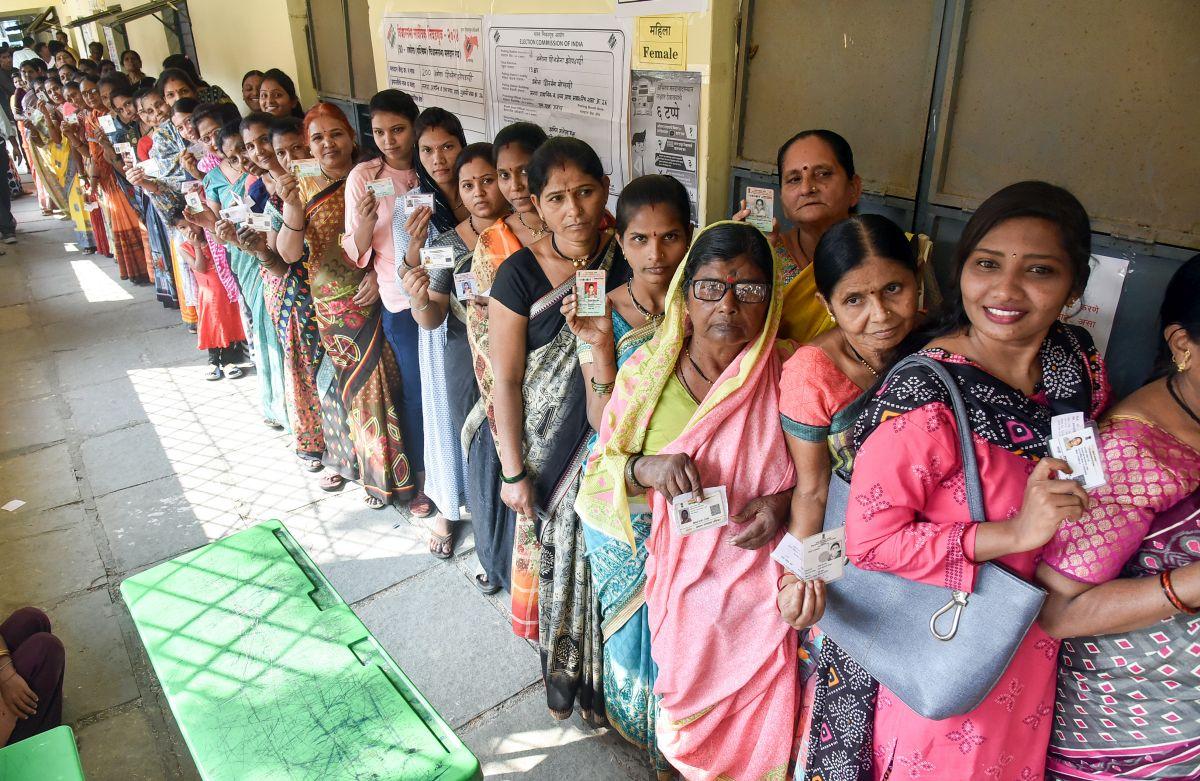
The process of voter deletion, under ECI rules, is as follows:
Are BLO Visits Mandatory?
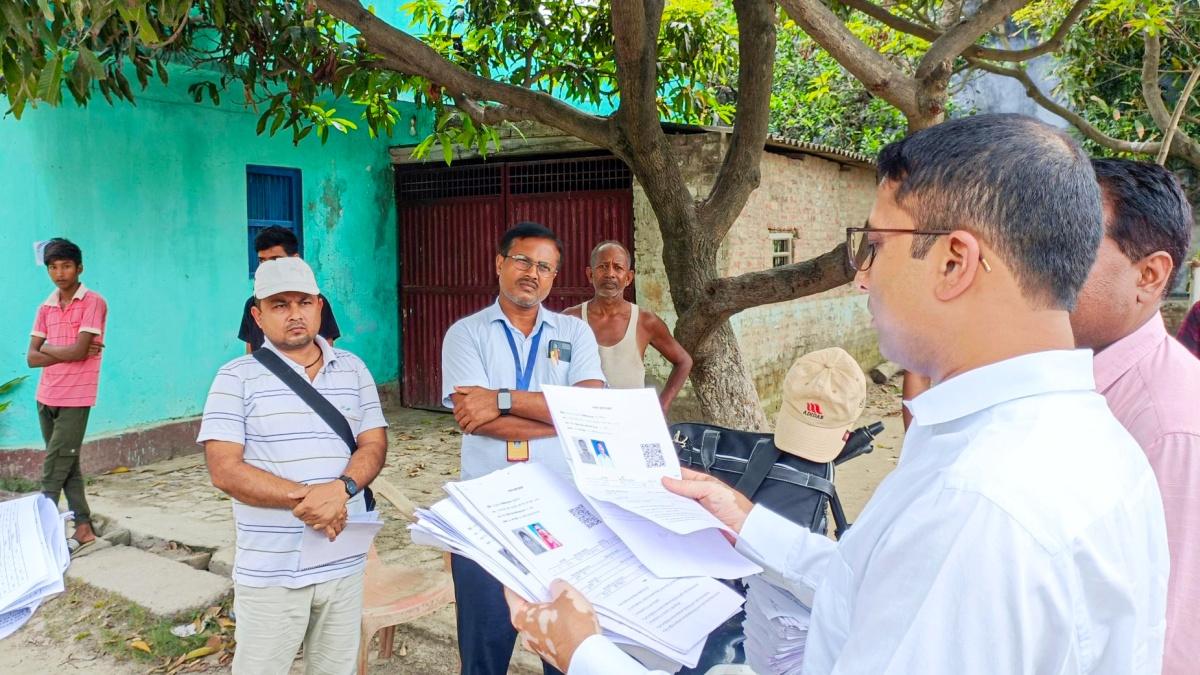
This is where Rahul Gandhi's charge bites deepest. The ECI's manuals repeatedly use the word 'shall' for BLO verification. For example:
Do Voters Get a Chance to Remedy Wrongful Deletion?
Yes, at least on paper. The rules provide safeguards:
But these protections are meaningful only if notices are actually delivered and if BLOs conduct real household visits. In practice, wrongful deletions can happen when these steps are skipped or rushed.
The Perception Gap
So where does this leave the controversy?
The debate over Rahul Gandhi's 'vote theft' allegation should not be reduced to a technicality over whether deletions can be done online. The more urgent question is whether EROs and BLOs are following the mandatory procedures laid down in the Registration of Electors Rules, 1960 and the ERO Handbooks.
Also, the ECI can help expose those trying to manipulate the electoral lists with the intention of manipulating election outcomes if only it were to provide the destination IPs, device ports and OTP trails that the Karnataka CID has been asking for.
Since the Karnataka CID has made this request one safely assumes that the ECI has stored and saved this data on its servers.
If BLOs are not visiting households, if notices are not being served, and if EROs are signing off without quasi-judicial scrutiny, then wrongful deletions are possible -- not because of online forms, but because of failure to enforce the field-level safeguards.
The ECI is right that 'vote deletion cannot be done online.' But the Congress is also right to worry that mass Form-7 filings can, if unchecked, skew rolls.
The real answer lies in holding the EROs, BLOs, the state election commissions and the Election Commission of India accountable to the mandatory safeguards that already exist.