
'We've always followed the rules. But when the rules change overnight, where does that leave us?'
Outside US consulates in India, a growing number of Indian H-1B workers can now be seen waiting with folders of documents, travel bags, and phones open on their visa portals.
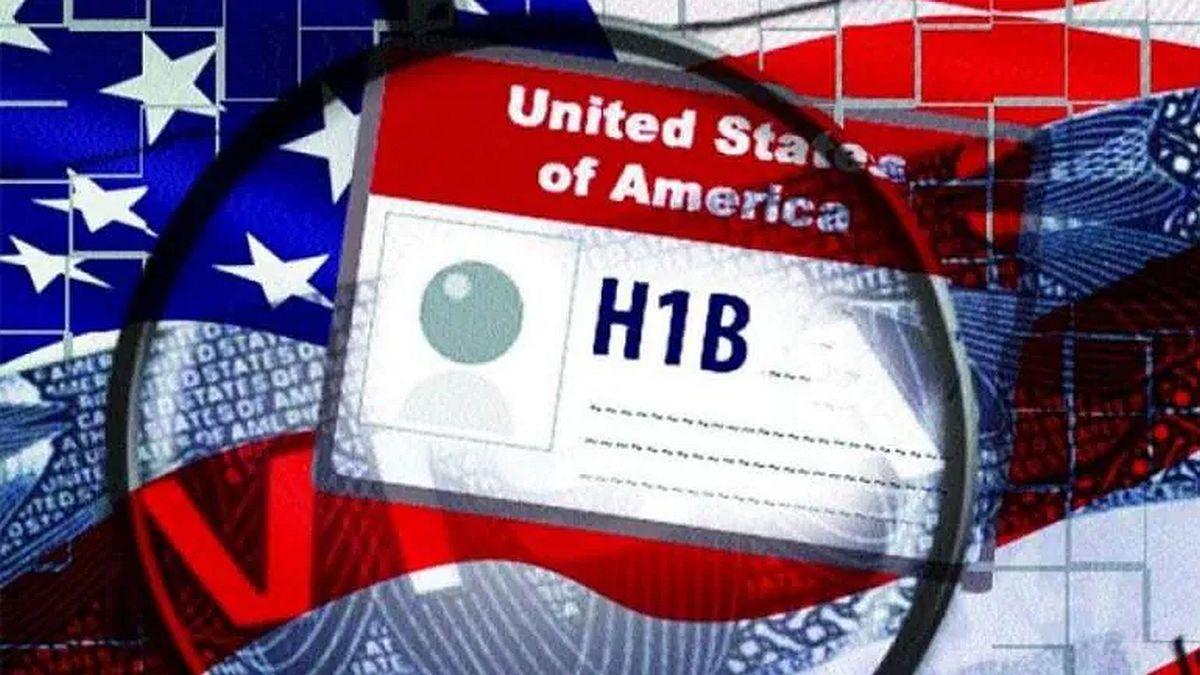
What began as a steady trickle of disrupted appointments in early December has turned into a widespread wave of cancellations that has caught many professionals by surprise.
The H-1B visa allows American companies to hire foreign professionals for specialty jobs that require specific skills and is awarded to holders of bachelor's degree or higher.
It is one of the most commonly used visas in the technology, engineering, science, research and healthcare sectors.
Most of these Indian applicants had planned their trips months in advance, coordinating family visits, work leave, and international flights around tightly scheduled visa interviews for renewal.
Instead, many find themselves stranded in India, unable to return to their jobs in the United States because their appointments were abruptly cancelled by the US consulates or pushed far into the future.
For the affected workers, the problem isn't simply of delay. It is the suddenness, the lack of notice, and the uncertainty of when they will be able to resume their lives in the US.
The disruptions began almost immediately after the US state department introduced a new requirement for consular officers to review applicants' social media and online presence as part of the security vetting process.
American consulates across India appear to be adjusting at different speeds, resulting in inconsistent rescheduling decisions -- some pushing interviews by weeks, others by more than four months.
Raghav Subramani, a software engineer from San Diego, arrived in Chennai expecting a straightforward renewal. "I flew almost 20 hours to get here," Subramani tells Rediff. "At the airport, I saw an e-mail saying my appointment was cancelled."
"Now I have been given a new date which is in March. No explanation, nothing. It feels like my life has been paused without my consent," Subramani adds.
Outside the US consulate in Hyderabad, the atmosphere is no different.
Long lines form at dawn, even though many people do not know whether their appointments will still exist by the time they reach the entrance.
Ishani Krishnamurthy, a data analyst from Austin, says her interview has been pushed to 2026. "I planned this trip down to the hour," she says. "Now they want me to wait for four months. My job, my apartment, everything I've built in the US is at risk."
The worse is the case of H-4 dependents visa holders.
Among them is Deepa Venkatesan, who travelled with her two children for their visa renewals.
Her husband remains in the United States.
"We came for a simple stamping," Deepa says. "Now I'm stranded with the kids. Their school starts next month back in California. I don't know how to explain this to them."
Many applicants describe a growing sense of helplessness, made worse by the lack of clear communication.
The US embassy in India issued a stern notice instructing applicants not to come on their original appointment dates and warning that they would be denied entry if they did.
For applicants already in India with expiring visas, the announcement offered little reassurance.
The cancellations have also created a financial strain.
Round-trip tickets to India, especially during the peak holiday season, often cost thousands of dollars. For many, those tickets cannot be rescheduled without penalties.
Vikram Ramaswamy, a cloud infrastructure lead from Denver, says he has been living out of a hotel for the last three days.
"I thought this would be a three-day trip," he says. "Now I'm paying rent in the US, hotel fees in India, and I have no idea when I'll get to fly back."
Some applicants appealed to airlines for compassion.
In one publicly shared message to Lufthansa on X, a professional explained that their company advised them not to return to the US due to the uncertainty.
The airline responded that customers must call their service centre for assistance, leaving many unsure whether they will receive any relief.
The delay in appointments from US consulates in India has led to inconsistency adding to the sense of confusion.
Harish Mahalingam, a systems architect from New York, showed his consulate account screen with disbelief. "My appointment from January got moved to April 2026," he says. "This is not a delay. This is a breakdown."
The sense of frustration has sometimes turned to anger. One applicant, speaking quietly but firmly, said he felt dehumanised by the process.
"It's like we don't exist," says S Gopinath, an engineer. "No one explains anything. You wake up, check your account, and your whole life plan is gone."
Some applicants worry about losing their jobs despite following every requirement.
Under H-1B rules, many cannot work remotely from outside the United States.
Employers may hold positions temporarily, but extended absences complicate payroll, compliance, and project timelines.
Sanjana Venugopal, a product designer stuck in Chennai, says her employer is trying to accommodate her situation but cannot wait indefinitely. "My manager is supportive, but the company has deadlines," she says. "I don't want to be the reason my team falls behind."
Parents face even greater pressure. School sessions in the United States resume in January for many districts.
Families who travelled for short trips now risk missing months of classes.
"We can't keep our children in limbo," says Narayana Sharmila, an H-4 parent waiting in Hyderabad. "They ask when we are going home. I don't know what to tell them."
As frustration mounts, some applicants question the timing of the new rules. They ask why the rollout happened during the peak travel season when so many Indian H-1B workers return home.
Others express concern that the system no longer feels predictable.
"We've always followed the rules. But when the rules change overnight, where does that leave us?" asks R Manivannan, a software engineer from Atlanta.
In online forums and community groups, applicants share coping strategies: Refresh the consulate portal every hour, monitor for early slots, keep social media profiles accurate and accessible, and contact attorneys immediately after cancellations.
But these strategies offer little relief for those already stuck.
As the days drag on, uncertainty is the toughest part.
Many H-1B workers say they can endure long waits if necessary but want transparency and notice.
"We are not asking for special treatment," says Vijay Kumaraswamy, a cloud security analyst stuck in Chennai.
"We are just asking for fairness and clarity. We make plans. We have families. We deserve to know what's going on."
For now, many remain stranded, caught between two countries -- unable to return to their lives in the United States, yet unable to move forward in India.
Without clear timelines or guidance, their futures remain suspended in a bureaucratic spiral that shows no signs of resolving soon.
Names and locations of interviewees have been changed to protect their identity.