
The MiG-21's sharp silhouette and supersonic roar will live on in the memories of those who flew it, those who maintained it, and those who watched it streak across the sky as a symbol of India's strength, asserts IAF veteran Air Commodore Nitin Sathe (retd).
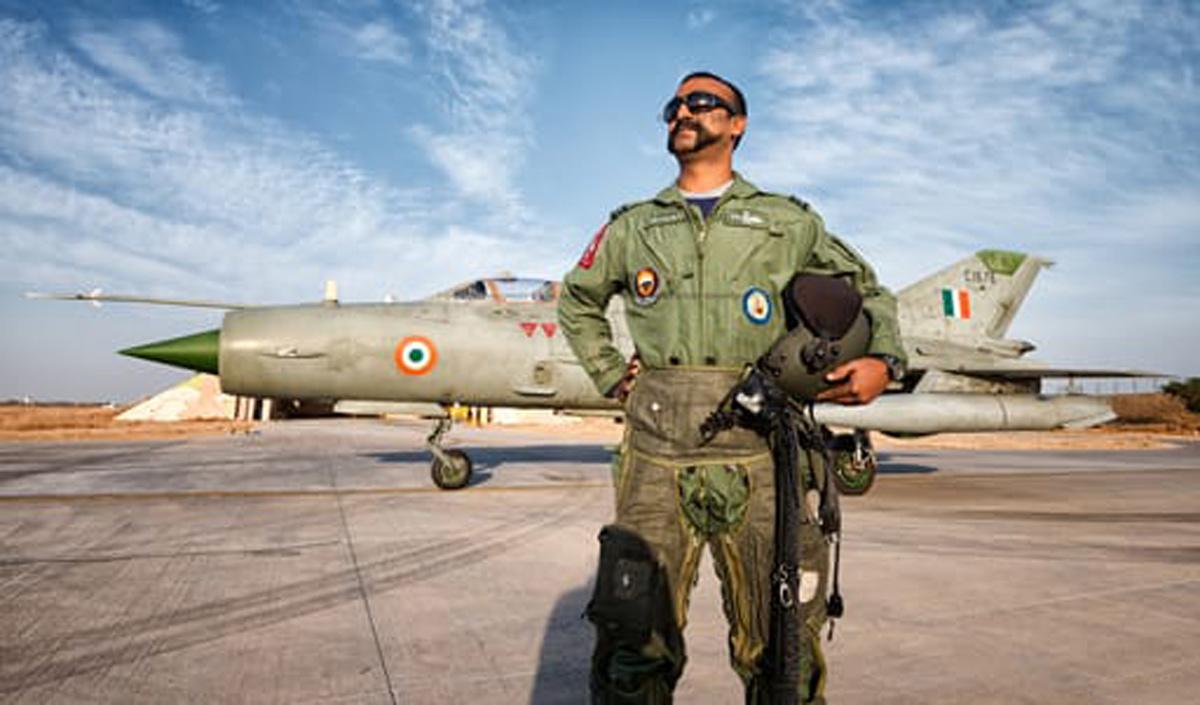
It was what we cadets referred to as a 'Kisser' landing -- the main wheels settling on the tarmac with the softest touch, marked only by a faint squelch of rubber meeting concrete and producing a swirl of smoke.
To me, it was a sweet end to a good training sortie.
My instructor was very keen that I graduated to fly the fighters as soon as I got commissioned as a Pilot Officer, and often filled me up with anecdotes and experiences of flying the best fighter in the world -- as he put it -- The MiG-21.
As of now, we were training on the Polish Iskra, which was a little brother of the MiG that ruled the IAF skies.

I walked into the debriefing room, head held high and a smile on my face-after all, it had been a good sortie-especially the landing.
What followed was a detailed debrief of each manoeuvre carried out that morning.
My instructor seemed to be quite happy, but not as happy as I had expected him to be.
'Just one minute,' he called out as I was exiting the room. 'How was your landing?'
'Aah, umm... I think it was quite nice,' I said, not wanting to pat my back too hard.
'The MiG you'll soon fly won't tolerate such landings,' he warned. 'It needs to be brought down hard and firm -- try what you did today, and it'll simply drop out of the sky!' His hands cut through the air, mimicking the jet slamming onto the runway.
The MiG certainly was an unforgiving aircraft. 'I hope you aren't trying to join the transport fleet', he said with a chuckle dismissing me.
I joined neither fighters nor transports but went on to fly helicopters -- where landings were a completely different art! Yet, I was fortunate to serve at fighter bases and forge lasting friendships with the men who flew them.
This story is neither about me nor about the helicopter or about my friends.
It is about the MiG-21 which is all set to retire from the IAF on September 26, 2025.
The MiG-21 served the Indian Air Force for nearly six decades. When it was first inducted in 1963, it marked the dawn of a new era -- one where supersonic flight became routine for India's frontline fighter force.
Over the years, more than 800 MiG-21s and their variants entered service, making it one of the most widely operated combat aircraft in IAF history.
Few records can match this feat, and it will be a long time before any single type achieves such dominance again, as the air force now transitions into an era of 4th, 5th, and even 6th generation aircraft.
The MiG as a machine has evoked many a contrasting emotion.
From being called a flying coffin to being loved by those who flew it, the aircraft was involved in making young pilot officers like us into hardened gung-ho fighter pilots who had no fear of anything except God, maybe.
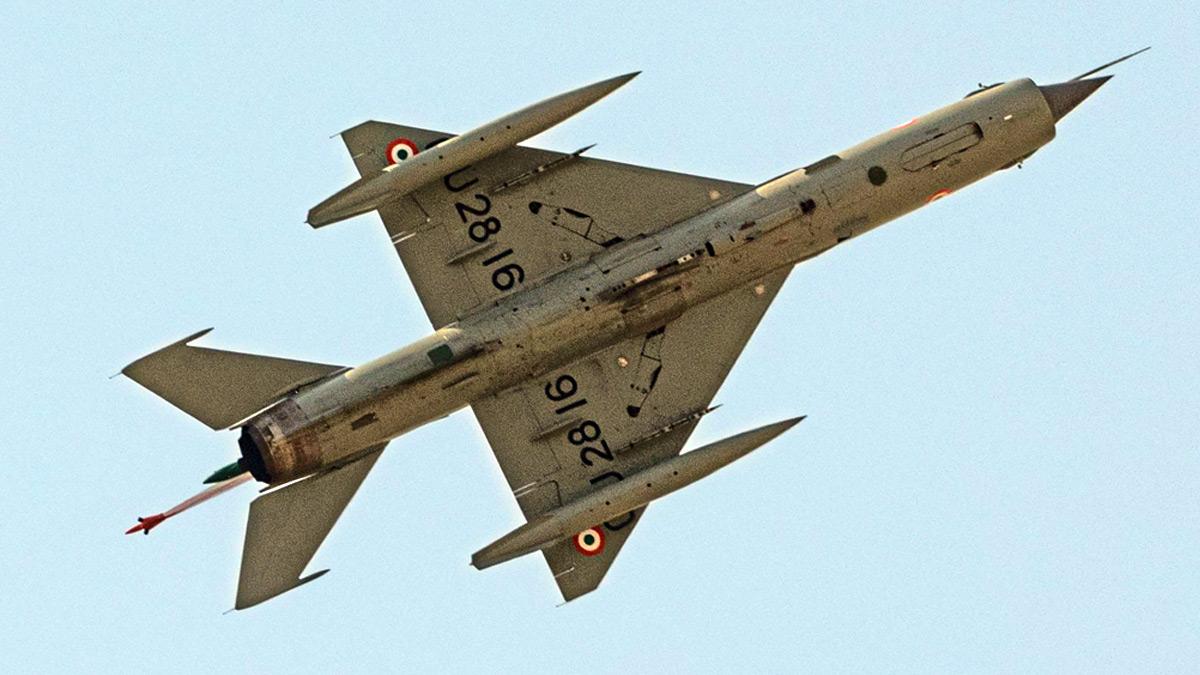
Shaped like an arrow with 'true Delta Wings', the aircraft was an aerodynamist's dream.
Thin wings meant that it had to have high takeoff and landing speeds and could accelerate very fast like a rocket.
The joke that went around was that the designers had first made the airframe and fitted a powerful engine on it; after which they had a difficult time to put in a cockpit, which could barely accommodate a pilot.
This was the case with most of the Russian fighters of that era -- cramped cockpits, poor air conditioning and ergonomics.
Post the 1962 debacle, the Indian government, in search of a modern fighter to deter the regional threats looked around for a low-cost but effective machine.
The Soviets were only too happy to offer us their tried and tested supersonic MiG-21 which could fly twice the speed of sound.
Not only did India buy the machine but inked a deal to manufacture it under license at the Hindustan Aeronautics Limited.
This was a landmark decision in Indo-Soviet defence collaboration which lasts even today.
This deal was also a turning point in India's aerospace development and gave us a distinctive edge over our adversaries.
It wasn't simple for the pilots who went for their initial training on the aircraft in gthe erstwhile Soviet Union.
They were to get used to the high acceleration, speeds, rates of climb and the maneuverability of the aircraft.
The aircraft had the highest takeoff and landing speeds as compared to any other fighter of that era (and still hold this record!) and required superior handling skills.
Indian fighter pilots proved their mettle right away, quickly adapting to this new generation aircraft. Their performance left the Russian instructors impressed.
Flying training in India commenced in 1965, just before the war. The role of this aircraft in this war was limited since the pilots were just about getting combat ready.
The IAF, however, did manage to rattle their Pakistani counterparts with just the presence of the MiG-21 in the inventory.
The MiG-21 was originally designed by the Soviets to counter the high-flying U-2 reconnaissance aircraft that threatened their skies.
India, however, saw the aircraft's potential beyond interception.
The IAF requested modifications that allowed the MiG-21 to perform in air defence (AD), offensive counter-air (OCA), and ground-attack (GA) roles, turning it into a truly multirole fighter -- one capable of standing against the more sophisticated western technology and winning the air war.
Its moment of truth came in the 1971 War. On both the western and eastern fronts, MiG-21s struck hard -- destroying enemy aircraft in the air, striking ground targets, and providing close air support to the Indian Army.
They were also tasked against naval assets near Chittagong, crippling Pakistani logistics by sinking or damaging boats and disrupting supply lines.
In the Eastern Theatre, the MiG-21 established air superiority within the first three days.
Pakistani F-86 Sabres were no match for its supersonic speed and missile armament.
By the end of the war, the IAF had shot down over 70 Pakistani aircraft, of which 28 were Sabres, many falling victim to the MiG-21.
It was here that the aircraft earned its enduring nickname -- the 'Sabre Slayer'.
Two names stood out in this campaign: Squadron Leader M A Ganapathy and Flight Lieutenant B S Ghumman, both awarded the Vir Chakra.
Ganapathy achieved one of the most celebrated kills during the Battle of Boyra on November 22, 1971, downing a PAF Sabre and cementing the MiG-21's reputation.
Ghumman displayed exceptional courage and flying skill in combat, adding to the aircraft's tally and legend.
In the period after the war, the IAF slowly and steadily sharpened its arsenal, inducting other MiG variants like the MiG-23, MiG-27 and the MiG-29, besides going in for the ultra-modern French Mirage 2000.
The MiG-21 now got inducted into a training role. The MOFTU (MiG Operational Flying Training Unit) came into being, training rookie pilots just commissioned, helping them to hone their skills on this fast and furious machine before they graduated on to other Russian variants.
Operational MiG-21 squadrons also continued training for combat and helped in guarding our skies, manning ORP's (Operational Readiness Platforms) during this period.
Many bases along the western as well as the eastern borders maintained vigil, with armed aircraft ready for quick take-offs at the end of runways.
Many 'scrambles' -- quick reaction missions -- were undertaken by these aircraft to counter threatening postures by the enemy.
Come 1999 and the Kargil War. By this time, the MiG was well past its prime but operational in many squadrons in the air force.
17 Squadron, flying photo recce and armed missions under command of then Wing Commander B S Dhanoa (later the chief of air staff) flew multiple missions during this crisis.
Battle damage assessment (BDA) missions showed how the IAF destroyed pin-point targets --Pakistani bunkers on high mountain tops camouflaged in snow.
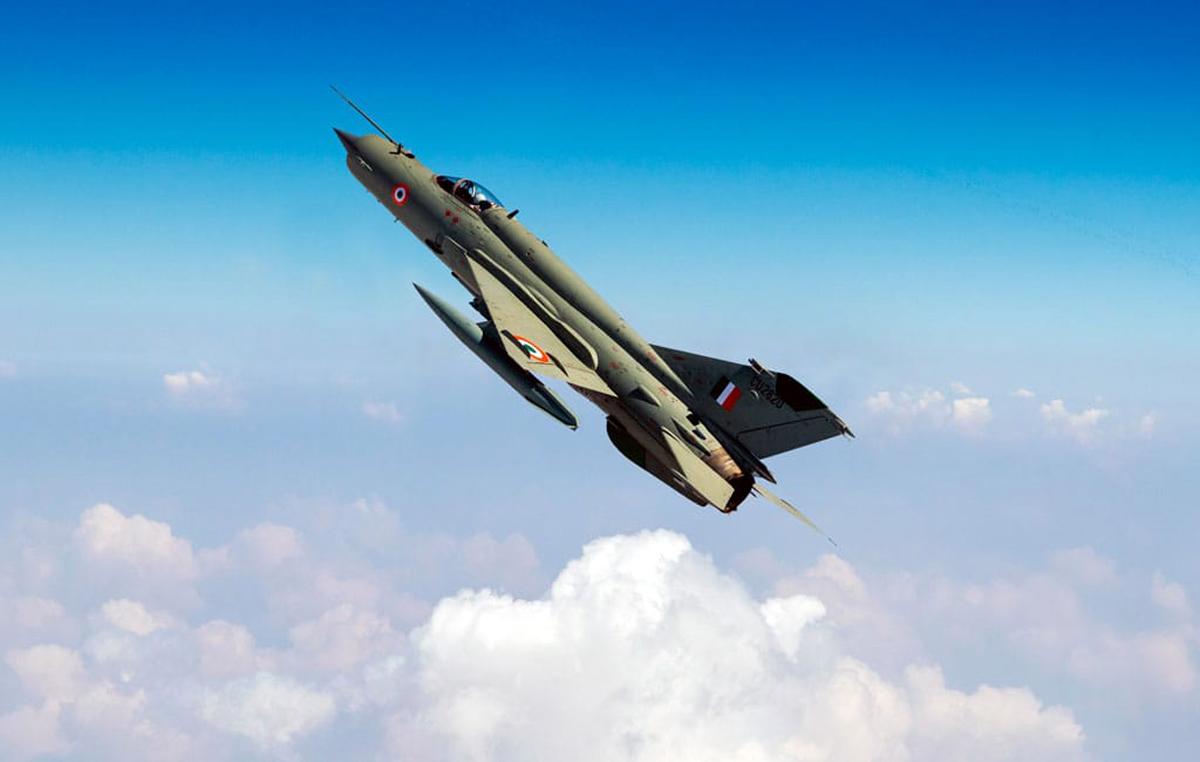
The last of the modifications carried out on the MiG-21 was to fit it with improved avionics and beyond visual range (BVR) missiles, something that even the Russians had not done to their fleet.
This aircraft was named 'BISON' and continued to serve the IAF till date, the fleet slowly reducing in numbers as we graduated to the SU-30s, Rafales and the Tejas.
Pilots Speak
An old saying in the IAF of those times went like this -- 'If you can fly the MiG-21, you can fly anything.'/p>
Ask any MiG-21 pilot, and you will hear stories that range from awe to exasperation.
A veteran from the 1980s tells me, "The aircraft was demanding -- its landing speeds high, cockpit visibility limited, and its delta wing design unforgiving at low speeds. Every pilot had to be precise -- there was little room for error."
Yet, despite the challenges, the aircraft inspired fierce loyalty. Its raw acceleration and climb rate gave pilots confidence in combat.
In dogfights, its small size and agility made it a difficult target.
Many who transitioned to Jaguars, Mirages, or Sukhoi's later would still fondly recall the MiG as their true master.
A serving Air Marshal speaks very fondly of his days in the cockpit.
"Fantastic and magnificent aircraft! You can play with it, but you can't mess with it!"
Recalling his days mastering air combat, he says: "Combat itself wasn't the real challenge -- the bigger challenge was getting hold of an aircraft without a painted tail! Against the vast expanse of sky, such an aircraft was almost invisible, giving the pilot a distinct edge in battle."
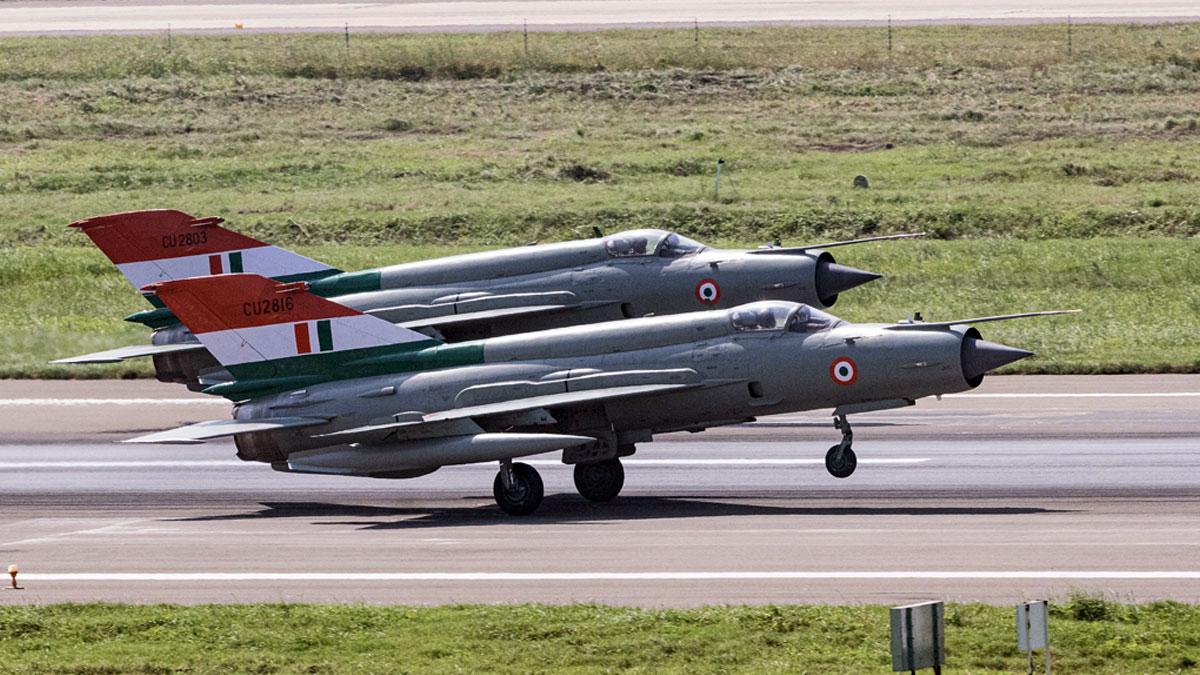
To aid identification and debriefing after sorties, most MiG-21 tails were painted in bright colours and unique patterns.
"Among these, my personal favourite was the polka-dot design -- it lent the jet a playful, almost sporty flair amidst the serious business of combat training."
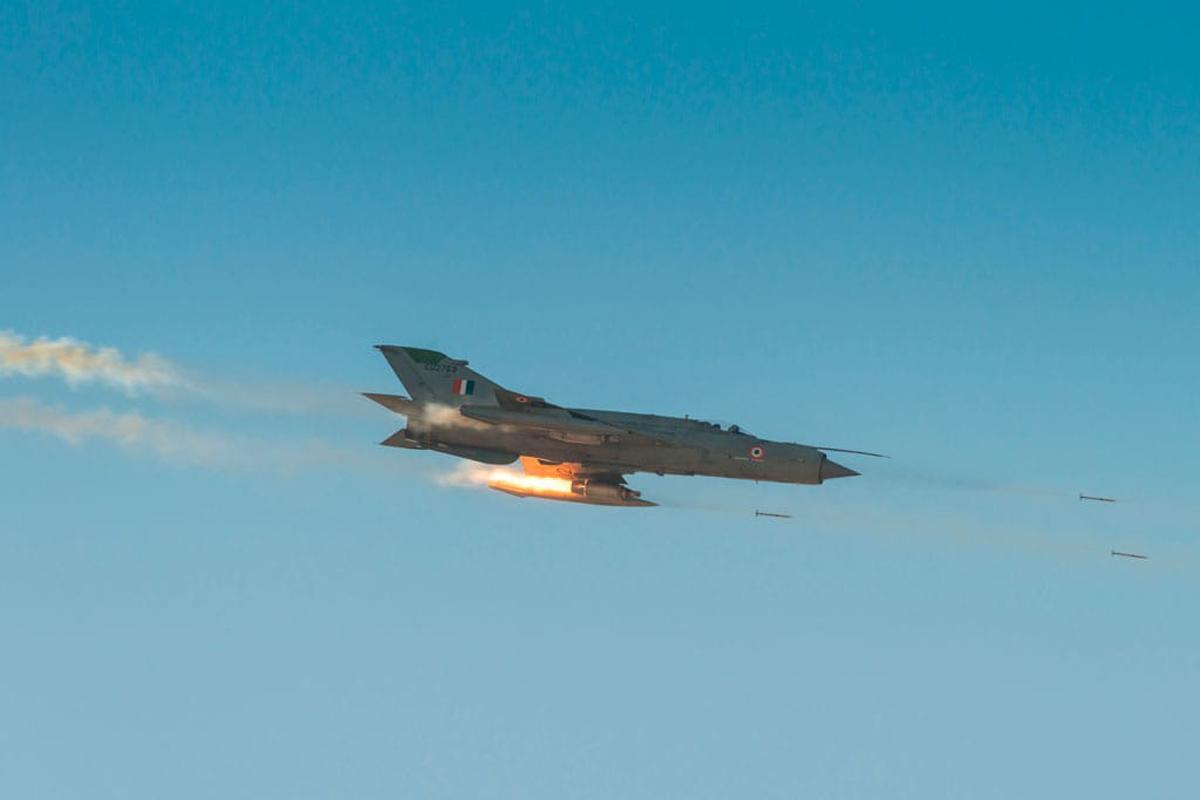
Veteran Air Marshal Saju Balakrishnan, who recently retired as Commander-in-Chief of the tri-service Andaman and Nicobar Command with over 5,000 MiG-21 sorties, speaks of the aircraft with deep admiration:
"I first saw the MiG-21 as a cadet at the National Defence Academy. With its afterburner blazing, it looked like a stallion straining at the leash -- an image that inspired many of us to opt for fighters."
Flying the Type 66 and 69 was another matter.
"The aircraft was always ahead of us, leaping past planned speeds and heights despite the instructor's shouts. Only after a few solos did the beast begin to feel manageable, even enjoyable."
Combat and firing phases were tougher still. The MiG-21 was now a weapon, demanding precision to outmanoeuvre enemies and hit targets.
"With basic instrumentation and avionics, everything depended on skill and instinct -- seat-of-the-pants flying that stayed with us even on newer aircraft."
"With the Bison, the game changed again. We had to master radar work, identify foes 70 km away, and train guns and missiles on them. At TACDE -- the mecca of fighter flying -- one had to upskill several notches to take the aircrafts to the limits of its envelope and earn the coveted badge."
"Every sortie on the MiG-21 was special. Once, in the northern Himalayas, we strayed into weather, broke cloud, and suddenly found ourselves over Tibet, scrambling back into our airspace. In combat training, near-misses with aircraft flashing past were a stark reminder of the razor's edge we flew on."
"If I had to describe the MiG-21 in one line, I'd call it a wild beast -- difficult to tame, harder to master."
Saju also recalls a unique record he holds -- the shortest-ever MiG-21 sortie. Just airborne in a trainer, his aircraft ingested birds and flamed out.
Training took over, and he landed straight ahead, losing a wheel in the process. The sortie lasted all of three seconds, still a world record!
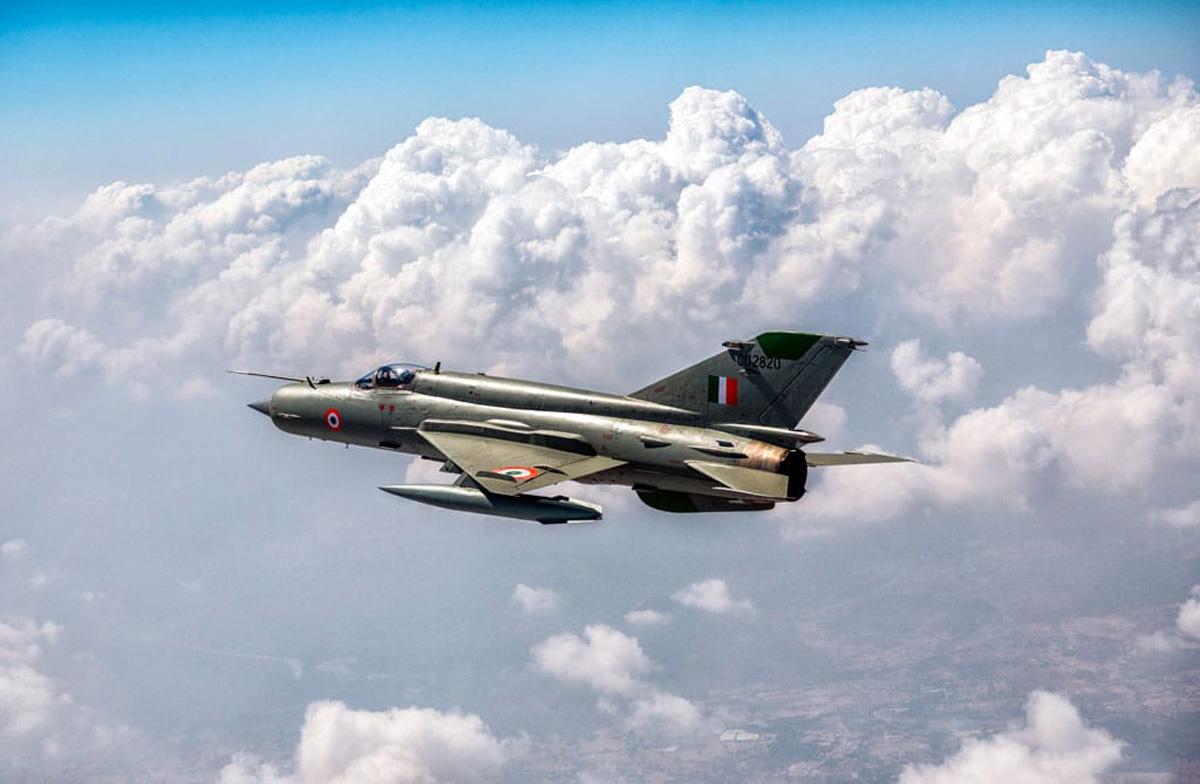
An Ode to the Technicians: The Unsung Heroes
The MiG-21's glory is often told through the pilots who flew it, but its heartbeat was sustained by the men on the ground.
With grease-stained overalls, sleepless nights, and unmatched dedication, they turned an unforgiving machine into a dependable warrior.
Every sortie, every dogfight, every victory in the air carried their invisible signatures.
The MiG-21 may have been the Sabre Slayer in the skies -- but on the ground, it was these tireless technicians who gave it wings.
Keeping the MiG-21 flying for six decades was no small feat. As the aircraft aged, it was the dedication of motivated technicians that ensured they were always ready on the flight line.
Wing Commander P V S Prasad, who retired in 2009 after spending most of his career on the MiG-21, recalls:
"When I joined my first unit, TACDE at Jamnagar, my Commandant told me -- 'Son, this aircraft is retiring, you'll see more modern machines in your career.' Ironically, I retired before it did! No two MiGs were ever the same -- even identical variants had their quirks, just like human beings."
Wing Commander K Dinesh Nair adds perspective on how demanding the aircraft could be:
"The design was not ergonomic at all. Fixing a single leak often meant removing multiple pipes and components, and sometimes the reassembly caused new leaks. To access the engine, we had to remove the entire tail fuselage. It was backbreaking work -- but it turned our technicians into experts, capable of performing tasks usually done at the factory."
Yet, despite the challenges, there was a simplicity to the MiG-21. Its basic instruments and controls made routine maintenance straightforward, even if the heavy jobs were labour intensive.
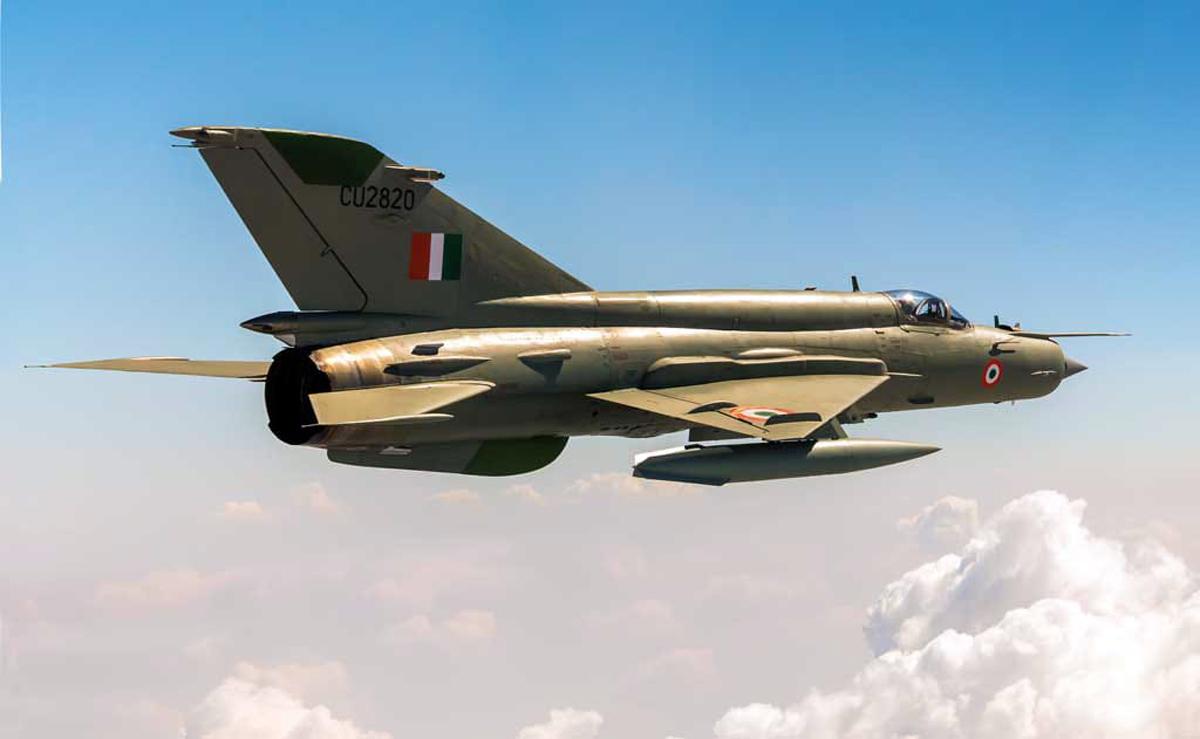
For generations of IAF fighter pilots, the MiG-21 was not just a machine but a rite of passage. It was the aircraft that turned them from cadets into warriors.
The last MiG-21 has flown. Its place on the flight line has been taken by sleek new fighters bristling with digital avionics and precision weapons. But legends do not fade easily.
The MiG-21 is etched in India's military history as both hero and villain. It demanded sacrifice, but it also delivered glory.
It was unforgiving, but it also inspired unmatched loyalty.
As the sun sets on its service, one truth stands tall: The MiG-21 was not just an aircraft. It was a chapter of the Indian Air Force's soul.
Its sharp silhouette and supersonic roar will live on -- in the memories of those who flew it, those who maintained it, and those who watched it streak across the sky as a symbol of India's strength.
The MiG-21 may be gone from our skies, but its memories will never die.
A helicopter pilot who served the Indian Air Force for 35 years, IAF Veteran Air Commodore Nitin Sathe is a frequent contributor to Rediff.
You can read his earlier articles here.
Photographs curated by Anant Salvi/Rediff
Feature Presentation: Aslam Hunani/Rediff