
10 Heroes of the 1965 War which ended on September 23, 60 years ago.
India, still recovering from defeat in the 1962 War with China, valiantly defeated Pakistan's aggression from Kutch to Punjab to Kashmir and thwarted then Pakistan president Ayub Khan's attempt to capture Kashmir.
'India was in no position to wage another war in 1965, having suffered a morale-shattering defeat in 1962. The Indian Armed Forces were in the middle of a modernisation and expansion phase and therefore not fully trained or battle-ready,' Nitin Gokhale writes in his book 1965 -- Turning the Tide.
Pakistan had superior aircraft and tanks at that time, but Indian soldiers and pilots fought fierce battles that stood out for bravery -- notably at Asal Uttar, Dograi, Chawinda, Haji Pir -- and plucky aerial dogfights to thwart Pakistan's evil designs.
Sixty years later, we salute their exceptional courage.
1. Lieutenant Colonel Ardeshir Burzorji Tarapore, Param Vir Chakra
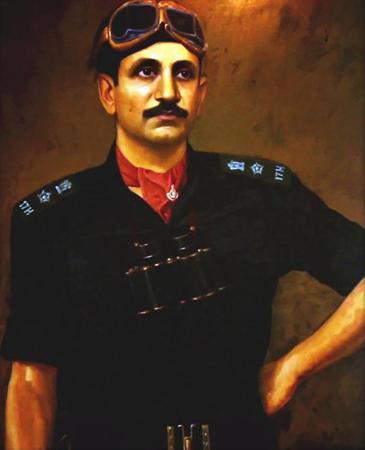
The biggest tank battle since World War II was fought in the Sialkot sector of Pakistan. Under Colonel Tarapore's leadership, 60 enemy tanks were destroyed in fierce battles that are part of military folklore.
Leading from the front and unmindful of being wounded, the colonel refused to be evacuated and continued to fight for six days before he died a hero's death on the battlefield.
The fearless commanding officer and his men fought tank battles for six days inside Pakistan and captured Phillora, Chawinda, Wazirwali, Jassoran, Buttar Dograndi.
In the battle of Chawinda, he led the tanks twice into the middle of the enemy's killing ground. In the battle of Phillora, 23 enemy tanks lay scattered, mauled and burning.
On the evening of September 16, his tank was hit by a shell. He and his intelligence officer Captain Jasbir Singh along with two jawans died in the attack.
He died in the tank that he loved, surrounded by men that adored him.
Colonel A B Tarapore was cremated on the battlefield in Jassoran at 0930 on September 17, 1965. His ashes were brought back to Pune.
For his valour he was decorated with the highest war-time gallantry medal, the Param Vir Chakra posthumously.
2. Company Quarter Master Havildar Abdul Hamid, Param Vir Chakra
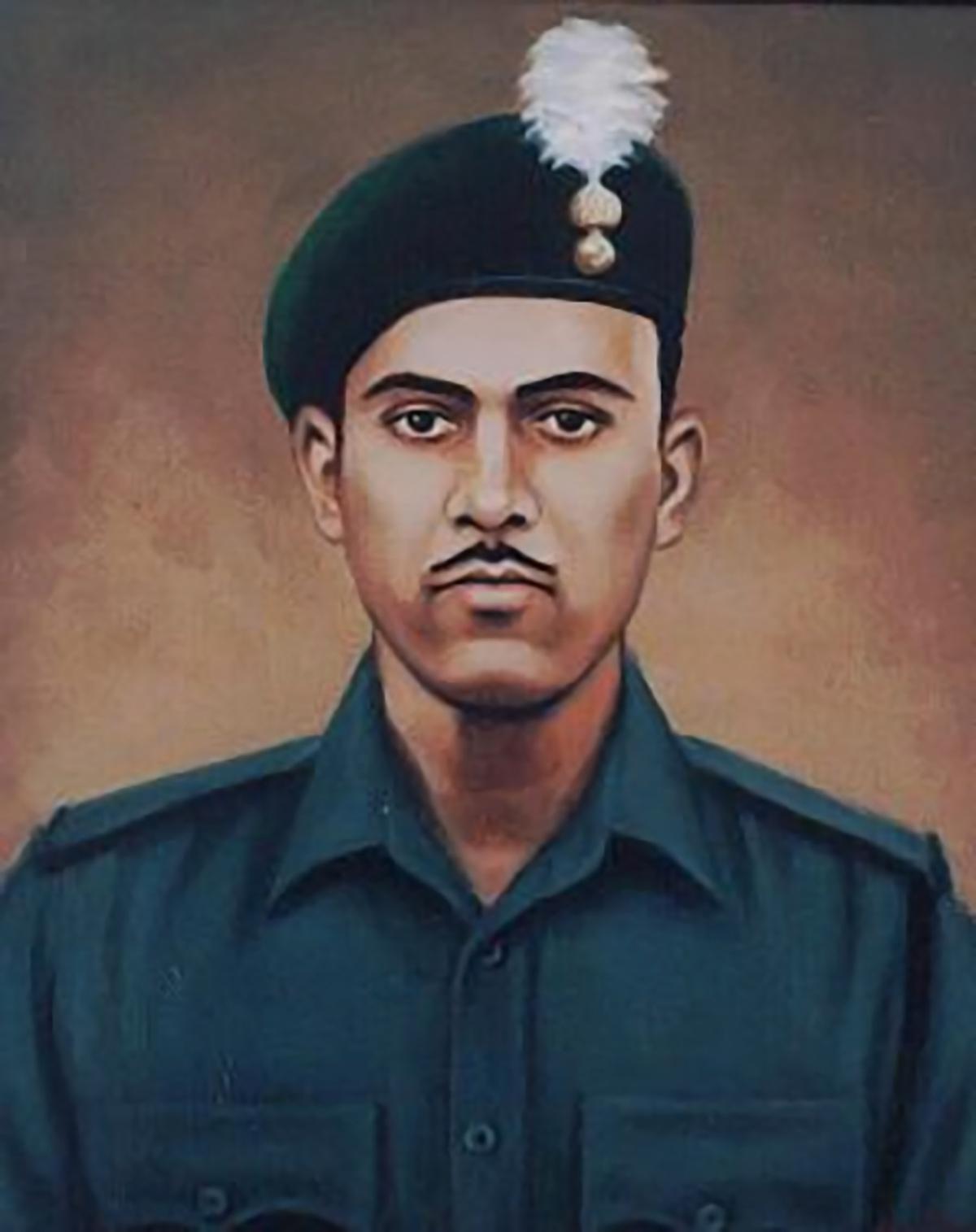
Displaying remarkable courage in the famous Battle of Assal Uttar (Befitting Reply), he destroyed eight tanks with only a recoilless gun mounted on a Willy's jeep.
'Never in the history of warfare have so many tanks been destroyed by a single man,' wrote Rachna Bisht Rawat in her book The Brave: Param Vir Chakra Stories.
Abdul Hamid died on the battlefield on September 10, 1965 -- the day of the largest tank battle in post-second World War history.
His grave and a memorial to the Battle of Asal Uttar are situated in Khemkaran, Punjab.
3. Chaman Lal, Railwayman, only civilian awarded Ashok Chakra in 1965 War
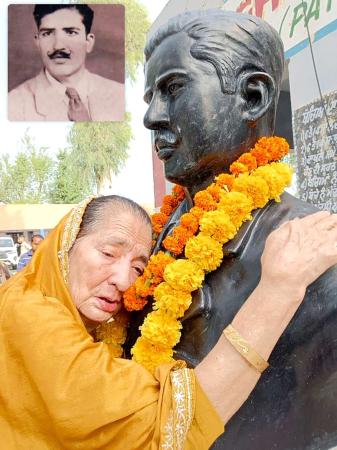
Posted as a railway fireman on a goods train, he quickly decoupled a diesel-carrying carriage at Gurdaspur station after it was hit by a Pakistani fighter aircraft on September 13, 1965.
His extraordinary courage and dedication to duty prevented the remaining wagons and goods from exploding in flames and saved numerous lives.
He unfortunately perished in the air attack and was awarded the Ashoka Chakra posthumously.
4. Lieutenant Colonel Desmond E Hayde, Maha Vir Chakra
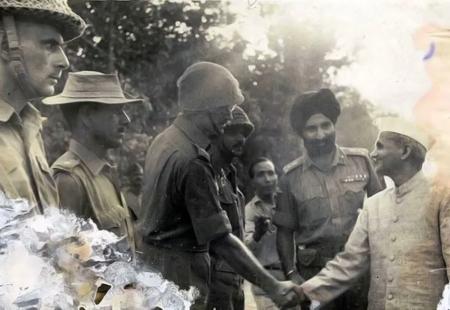
The officer led his men to victory in one of the toughest battles ever fought by the Indian Army.
In the epic battle, 86 Indian soldiers died fighting a better fortified Pakistan army before raising the Indian flag in Dograi, on the outskirts of Lahore.
550 men of the 3 Jat battalion defeated an enemy which had double the number of soldiers.
Lieutenant Colonel Hayde made only two demands of his men.
'Ek bhi aadmi pichhe nahin hatega! (Not a single man will turn back!)'
The second: 'Zinda ya murda, Dograi mein milna hai! (Dead or alive, we have to meet in Dograi!)'
For what they accomplished that night, 3 Jat received three Maha Vir Chakras, four Vir Chakras and seven Sena Medals.
For his personal courage and exemplary leadership, Lieutenant Colonel Hayde was awarded the Maha Vir Chakra, the second highest honour in battle.
He is also perhaps the only soldier to be painted by the famed M F Husain on the battlefield.
He retired from the army as a brigadier and passed away on September 23, 2013.
5. Major Ranjit Dyal, Maha Vir Chakra
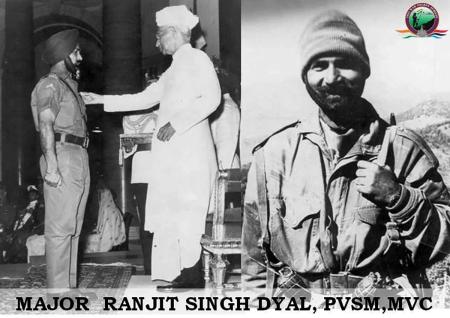
Major Ranjit Singh Dyal from 1 Para Special Forces led the capture of Haji Pir Pass.
On 25 August, Major Dyal led an assault and captured Sank. Two days later, he captured Ledwali Gali and night marched through difficult terrain to capture the Pass on August 28.
Despite intense enemy machine gun and mortar fire, he led two platoons in a swift and decisive attack, causing the enemy to retreat in disarray.
Haji Pir Pass located in the Pir Panjal mountain range was returned to Pakistan in accordance with the Tashkent Agreement, the peace treaty mediated by the Soviet Union.
Lieutenant General Dyal was later General Officer Commanding Southern Command and served as lieutenant governor of Puducherry and the Andaman and Nicobar Islands. He passed away in 2012.
Read the account of his valour here
6. Lieutenant Colonel Salim Caleb, Maha Vir Chakra
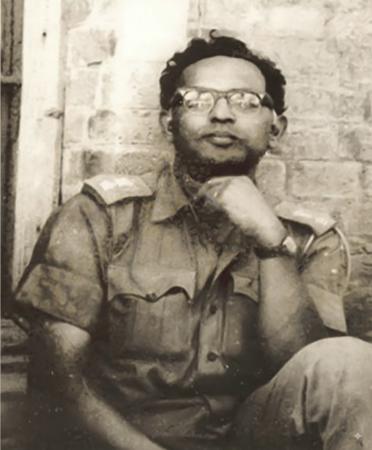
As the commanding Officer of the 3rd Cavalry, he led his men to destroy 15 Pakistan Patton tanks and capture nine in Khem Karan, Punjab.
The Khem Karan sector saw fierce tank battles. India destroyed 70 Pakistan Patton tanks in the battle. 25 Pakistan tanks were found abandoned with their engines running and wireless sets on it, according to an account by Ramamohan Rao, Principal Information Officer, Government of India during the war.
In the face of intense and prolonged enemy fire, Lieutenant Colonel Caleb displayed immense resoluteness to inspire his officers and men to fight ferociously.
India's armoured brigade in the sector was led by Brigadier Thomas Theograj. The commanders were Lieutenant Colonel Arun S Vaidya, and Lieutenant Colonel Salim Caleb.
Lieutenant Colonel Vaidya was awarded the Maha Vir Chakra in the 1965 and 1971 Wars for two of the toughest tank battles fought by the Indian Army. He was later the 13th chief of army staff.
Tragically, he was assassinated in 1986 by Sikh terrorists for planning Operation Blue Star to flush out militants holed up inside the Golden Temple.
Lieutenant Colonel Caleb rose to the rank of major general and died aged 90 in 2015. His father and brother also served in the army.
7. Squadron Leader A B Devayya, awarded the Maha Vir Chakra, 23 years after the war
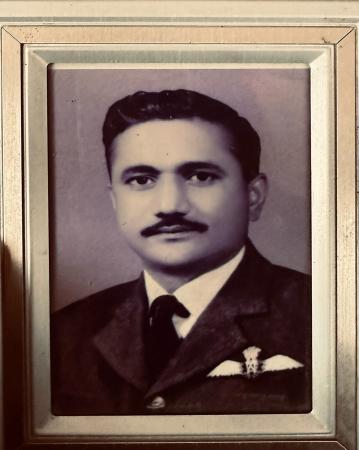
The fighter pilot was awarded the Maha Vir Chakra for exceptional bravery against perilous odds in the intense aerial dogfight with a superior Pakistani fighter jet in Sargodha.
Despite sustaining damage to his aircraft, he skilfully outmaneuvered the enemy and shot down the F-104 Starfighter, forcing the Pakistani pilot to eject.
Tragically, his own aircraft also crashed deep inside enemy territory.
'Devayya would have remained an unsung hero had it not been for John Fricker's Battle for Pakistan: The Air War of 1965 (published in Pakistan in 1979), which narrated the story of this air battle,' writes General Ian Cardozo in a captivating account of Squadron Leader Devayya's bravery in his book Beyond Fear: True Stories on Life in the Indian Armed Forces.
'It was only in 1980 that Group Captain Taneja, VrC, read Fricker's account about the details of Hussain's [PAF pilot] admission of being shot down by an IAF Mystere over Sargodha on the morning of 7 September 1965,' adds Gen Cardozo.
His name was recommended for the Maha Vir Chakra and he was awarded the medal eight years later.
8. The Keelor Brothers, Vir Chakras, Vayu Medal
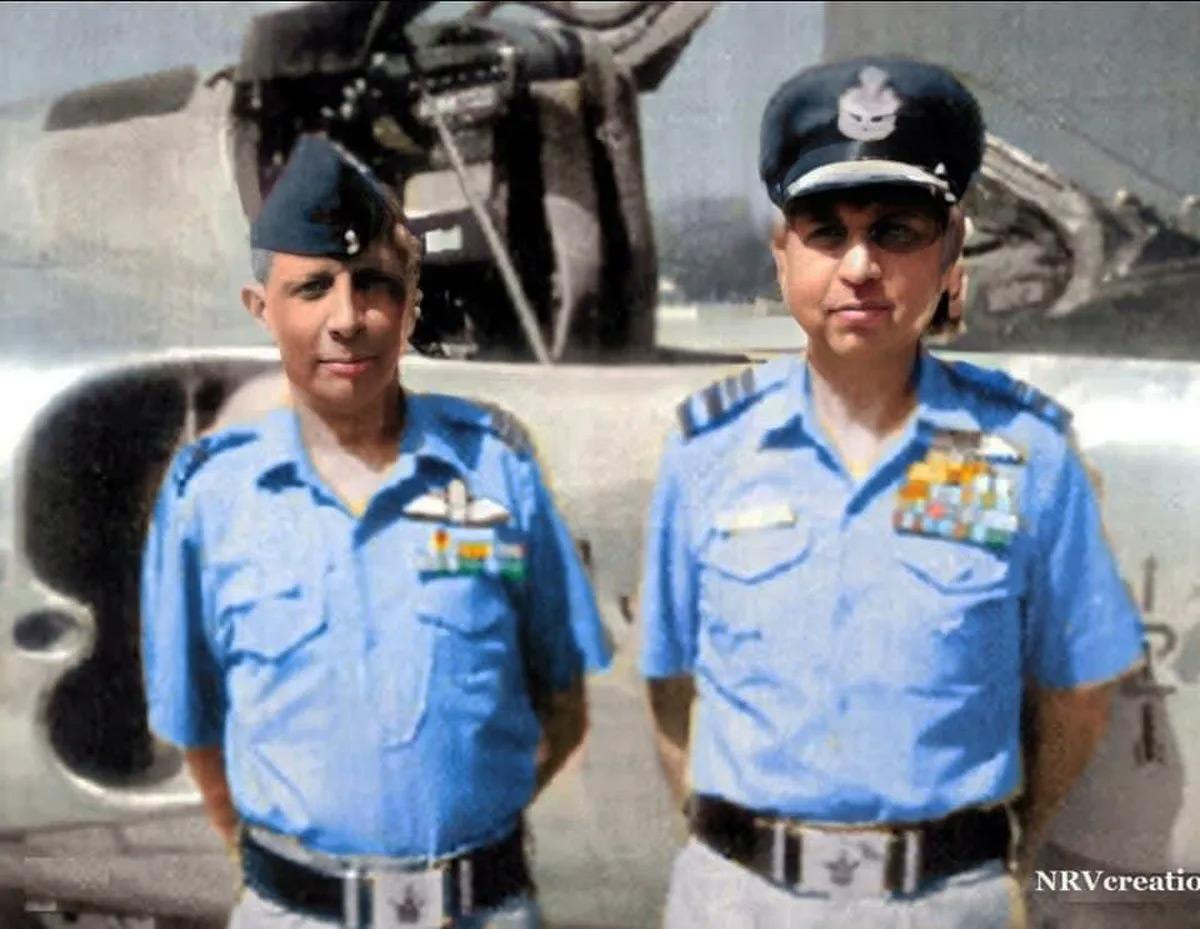
Indian Air Force fighter pilots Squadron Leaders Trevor and Denzil Keelor became household names in India during the war.
Famously known as the 'Keelor Brothers', the pilots shot down superior Pakistani Sabre jets, 10 days apart, during the 1965 War.
The heroic feat won them the sobriquet 'Sabre-Slayers' and etched their names in history.
Wing Commander Trevor Keelor passed away in 2002.
Air Marshal Denzil Keelor was also awarded the Kirti Chakra in 1978.
He died on August 29, 2024, aged 91.
9. Lieutenant General Harbaksh Singh, Vir Chakra, Padma Bhushan, Padma Vibhushan
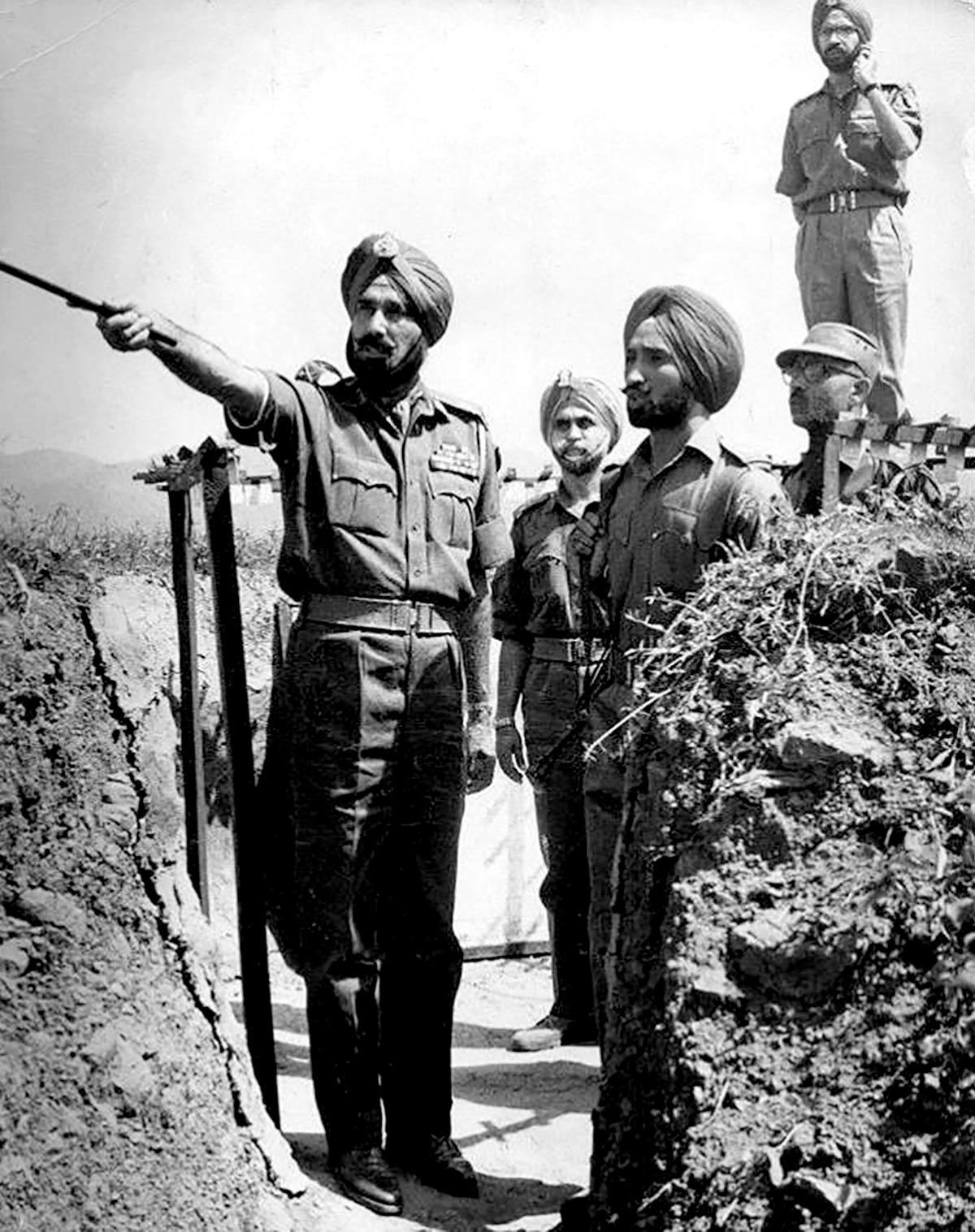
One of the Indian Army's legendary commanders, the officer was GOC, Western Command during the war. He had the largest number of troops under his command and disobeyed the then army chief to take on a superior Pakistani armoured column.
His decision proved right and the Indian Centurion tanks outgunned the more modern Pakistani Patton tanks in the battle at Khem Karan, that turned the tide of the war.
Read the account here.
His leadership was critical to transforming a defeated army after the 1962 China debacle into a formidable striking force in the 1965 War.
Former Punjab chief minister Captain Amarinder Singh served as his aide-de-camp during the war.
The general passed away in 1999.
10. Major General Rajinder Singh 'Sparrow', Maha Vir Chakra
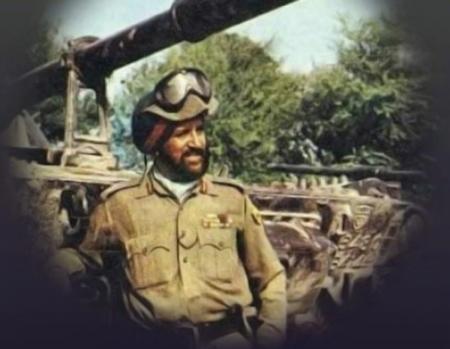
The officer commanded 1 Armoured Division which was engaged in the biggest tank battle since the Second World War.
He led his formation in victory in the battle of Phillora and was awarded the second Maha Vir Chakra.
He received his first Maha Vir Chakra for action in the 1948 War.
At the time of the ceasefire, 1 Corps held around 500 square kilometres of Pakistani territory.
Lieutenant Colonel Tarapore's regiment, the Poona Horse, fought under 1 Armoured Division.
Photographs curated by Manisha Kotian/Rediff
Feature Presentation: Aslam Hunani/Rediff