
'It can be two months, a year, or even five years. We need to be prepared.'
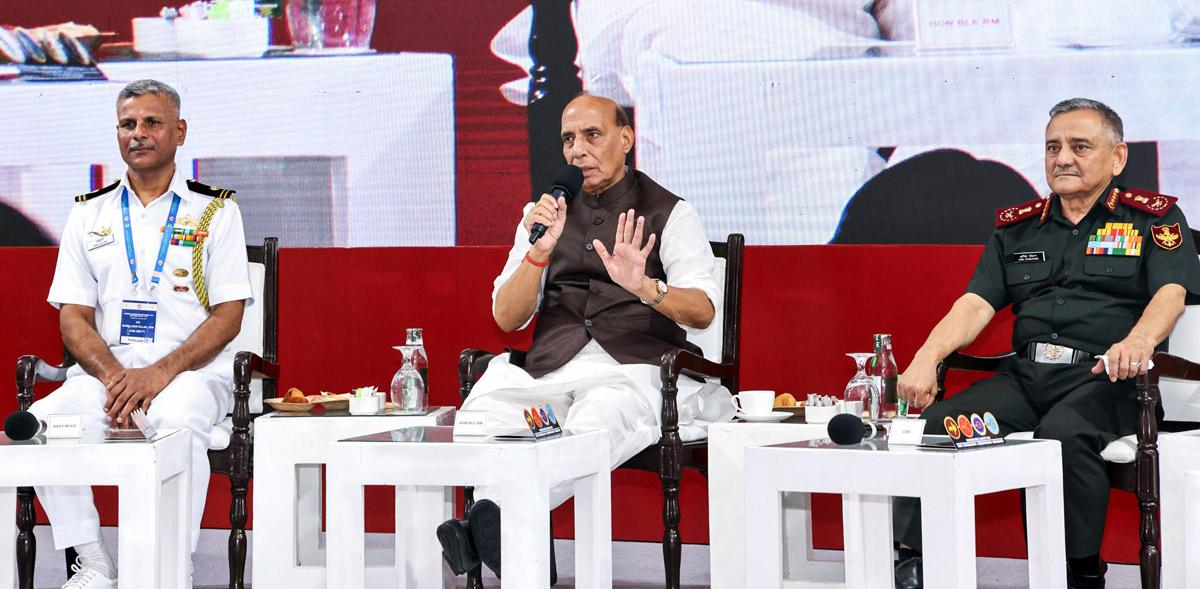
India's planned defence shield system under Mission Sudarshan Chakra -- announced by Prime Minister Narendra Modi in his Independence Day address -- could be rolled out in two phases over the next five and 10 years, with Defence Minister Rajnath Singh stating on Tuesday that a committee was examining the project and would prepare an action plan.
Addressing the combined commanders' conference in Kolkata, Singh urged the military leadership to adopt a proactive approach and work towards building the Sudarshan Chakra system.
"A committee has been formed to examine the project and prepare a realistic action plan," he said, suggesting that a medium-term plan for the next five years and a long-term plan for the next 10 years should be drawn up to make it a reality.
Under Mission Sudarshan Chakra, Modi has pledged that by 2035 the country's national security shield would be expanded, strengthened, and modernised, ensuring full protection of all critical sites -- both strategic and civilian, including hospitals, railways, and centres of faith -- through new technological platforms.
Modi has also emphasised that the mission would deliver a weapon system capable not only of neutralising enemy attacks but also of striking back with multifold force.
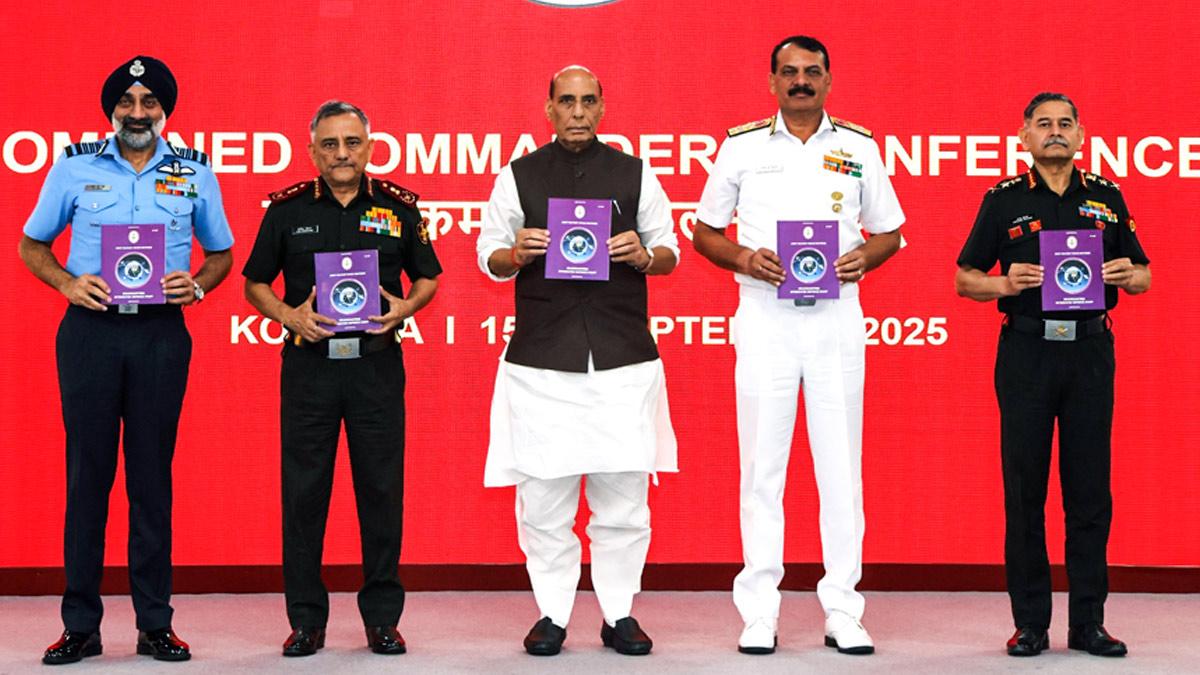
Describing the proposed system as India's version of the American Golden Dome initiative -- the recently announced layered missile defence system -- Chief of Defence Staff General Anil Chauhan had said in August that it would demand extensive integration of capabilities, developing supporting infrastructure, and using big data, artificial intelligence, and large language models.
The CDS also stressed that the system would rely on a network of sensors distributed across land, air, sea, and space to achieve its intended capabilities.
Also on Tuesday, the defence minister noted the nature of warfare was constantly evolving, with recent global conflicts highlighting the central role of technology in military affairs.
"Wars of today are so sudden and unpredictable that it is extremely difficult to foretell their duration," the minister pointed out.
"It can be two months, a year, or even five years. We need to be prepared," he said, stressing that the country must maintain sufficient surge capacity -- the ability to rapidly scale up defence production during war or crisis.
Calling on the armed forces to look beyond traditional concepts of war and prepare for unconventional threats -- spanning information, ideological, ecological, and biological warfare -- the defence minister stressed the need for constant assessment of how global changes affect the country's security system.
Photographs curated by Anant Salvi/Rediff
Feature Presentation: Ashish Narsale/Rediff
