
Tensions began soon after Indian authorities proposed flying the American black-box experts to a remote military facility, even as US officials intervened, citing safety and security risks.
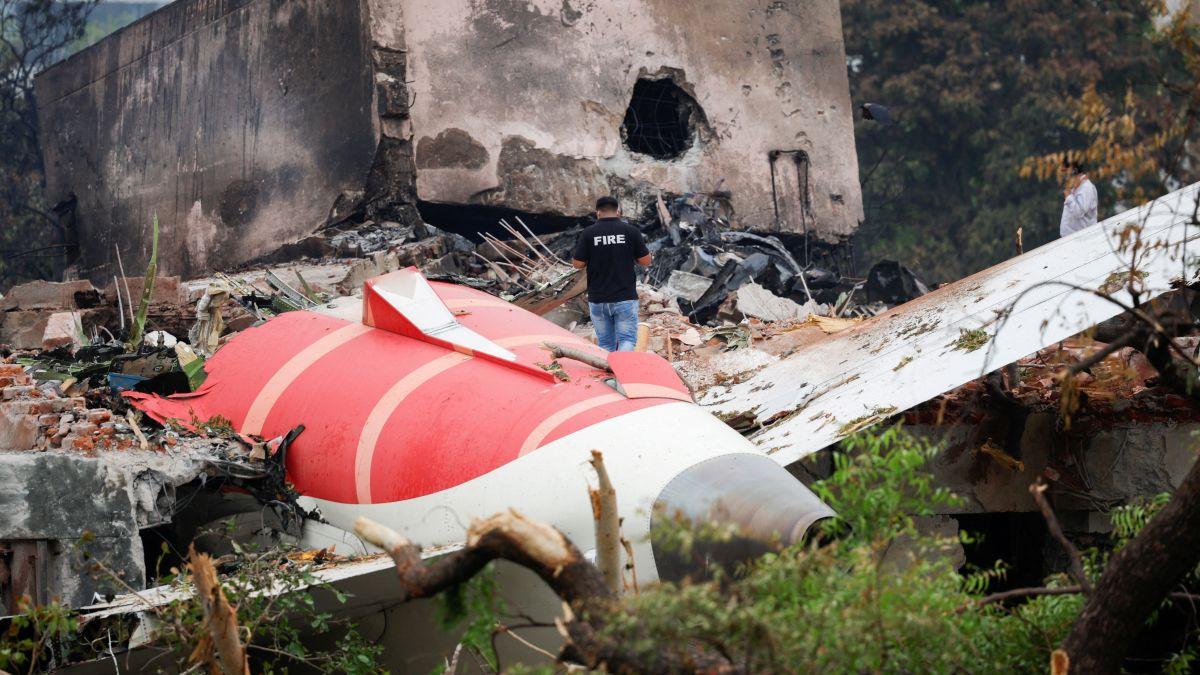
Friction, unease and mistrust have marked the ongoing probe into the Air India Flight 171 disaster, as American and Indian officials clashed over how to handle key evidence from the country's worst aviation tragedy in years, The Wall Street Journal newspaper reported.
According to The Wall Street Journal, friction surfaced soon after US investigators arrived in India following the June 12 crash of a Boeing 787 Dreamliner that killed 260 people -- all but one, who miraculously survived, of the 242 onboard the ill-fated AI 171 and 19 who were killed when the plane crashed into a local medical hostel.
Tensions began soon after Indian authorities proposed flying the American black-box experts to a remote military facility, even as US officials intervened, citing safety and security risks.
Jennifer Homendy, chairwoman of the US National Transportation Safety Board (NTSB), 'made a flurry of calls' to senior Trump administration officials in Washington, including Sean Duffy, the US transport secretary, and executives from Boeing and GE Aerospace, the newspaper said. She ultimately instructed her team 'not to get on' the military aircraft arranged by Indian officials.
The Wall Street Journal quoted Homendy urging Indian authorities to extract the black-box data 'at their facility in Delhi or at the NTSB's lab in Washington', adding that her 'only goal' was to help India understand what had gone wrong.
Her firm stance prompted American diplomats to intercept the NTSB team at the airport, ensuring they stayed in New Delhi rather than travelling to the remote site proposed by Indian investigators.
Indian investigators later agreed to carry out the data analysis in Delhi, using specialised US-supplied equipment.
The episode, The Wall Street Journal noted, was 'a high point of tension' in a probe already strained by 'suspicion and poor communication'.
Indian officials, led by G V G Yugandhar of the Aircraft Accident Investigation Bureau (AAIB), reportedly bristled at the perceived interference. 'We're not a Third World country,' Yugandhar told the Americans, insisting India had the same technical capability to decode the recorders, the report said.
The US team, meanwhile, grew frustrated by delays. Tension between the US' NTSB and Indian investigators at one point reached so high that Homendy even threatened to withdraw support for the probe, the report noted.
'We're champing at the bit to get the data,' one US Federal Aviation Administration official was quoted as saying. American investigators believed the information could reveal whether a technical fault or human action caused the sudden loss of engine thrust that sent the plane crashing near Ahmedabad airport.
Behind the diplomatic skirmishes, though, lay competing priorities: The Americans' focus on rapid data recovery and safety implications for the Boeing fleet, and the Indians' emphasis on maintaining control of the inquiry and protecting national aviation credibility.
With both sides guarding their turf, the quest for answers to one of India's deadliest air tragedies remains entangled in operational and procedural urgencies as much as aviation science.