
His inheritance was a double-edged sword because the NDA was understandably interested only in highlighting that part of the RJD's tenure in government that evokes kidnapping, extortion, and lawlessness.

'Be warned. The faces may have changed. But the people are still the same,' Union Home Minister Amit Shah told a rally in Darbhanga last month. 'Jungle raj will try to return wearing different clothes. The responsibility for keeping them out is yours.'
The clothes have certainly changed. Tejashwi Yadav addressed public meetings in colourful T-shirts and jeans. White khadi is out. And the Union home minister's remarks highlight exactly what he wants to show -- that the Rashtriya Janata Dal is under new management.
New? Maybe not so much. Everyone in Patna is talking about Sanjay Yadav, Bihar's high-value import from Haryana. Tejashwi says Sanjay Yadav is 'his philosopher, guide and tuition teacher'. But others, including his sister Rohini Acharya, say he is much more than that.
Sanjay and Tejashwi met through Akhilesh Yadav around 2011. (There's something about Haryanvi talent that the RJD attracts like a magnet. Lalu Prasad's right-hand man and former Union minister Prem Chand Gupta was originally from Hisar and started out as an exporter-importer who made his money in Hong Kong and later turned Lalu Prasad's advisor.)
Sanjay was living a quiet life in Mahendragarh, Haryana, with a computer science background until he was thrown into the hurly burly of Bihar politics.
If at least some of Tejashwi's six sisters and one brother, Tej Pratap, are to be believed, Sanjay is responsible for driving a stake through the family's heart especially after he was given a Rajya Sabha seat in 2024, overriding the claim of Abdul Bari Siddiqui, a long-time Lalu Prasad loyalist.
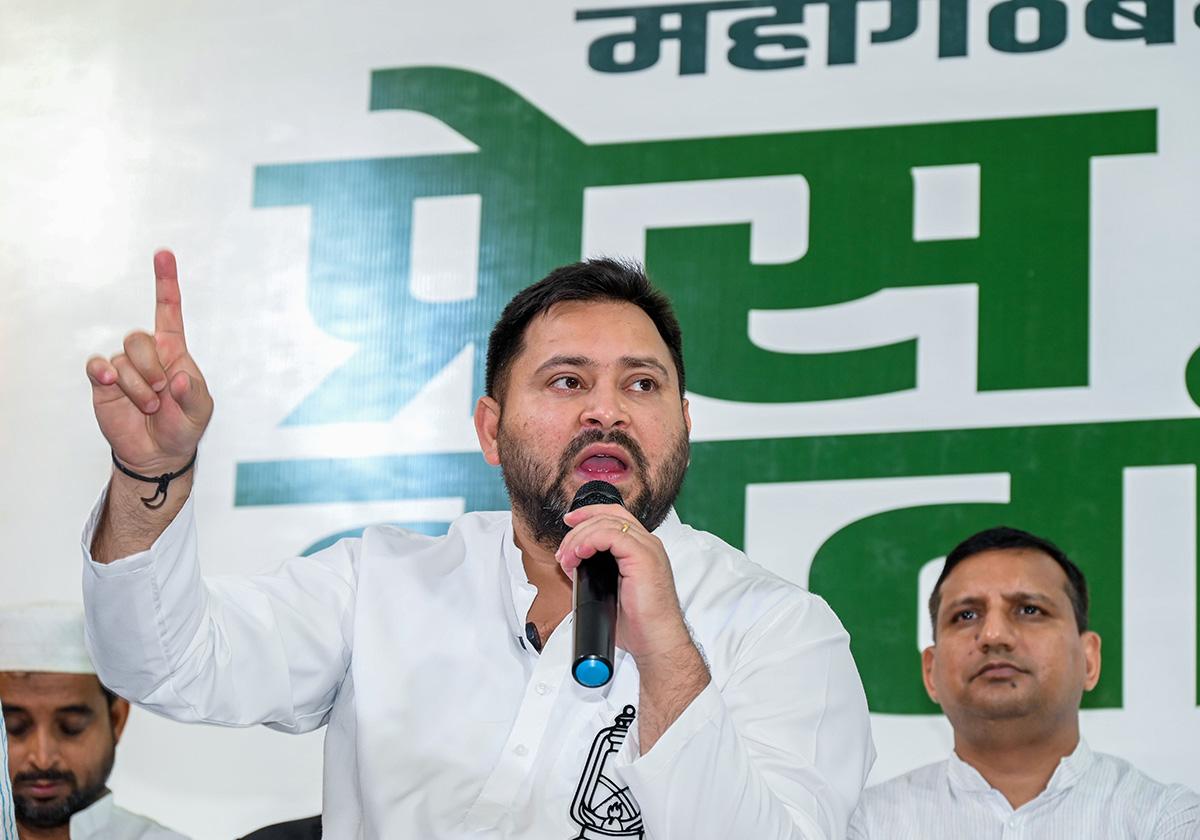
Tejashwi was four months old when his father became chief minister of Bihar. He went to school in Delhi but dropped out in Class 10 to pursue professional cricket.
In school, he met his wife, then his classmate, Rachel Godinho (now Rajshri Yadav), also from Haryana. The two married despite family opposition.
Now in his 30s, he said at rallies: 'I'm just a young person but I understand the ambitions and thirst of young people. My chacha, who is chief minister, is ill. You tell me: Will you let people from Delhi and Gujarat run Bihar? Or will a Bihar ka lal (Bihar's darling) run your state?'
The crowds are not big but the response is enthusiastic.
The RJD is seeing a subterranean shift -- allegedly at the behest of Sanjay -- though the moves are measured and cautious.
Tejashwi is still projected as the true inheritor of Lalu Prasad's legacy. This was most evident at the lineup on the dais at his election meetings.
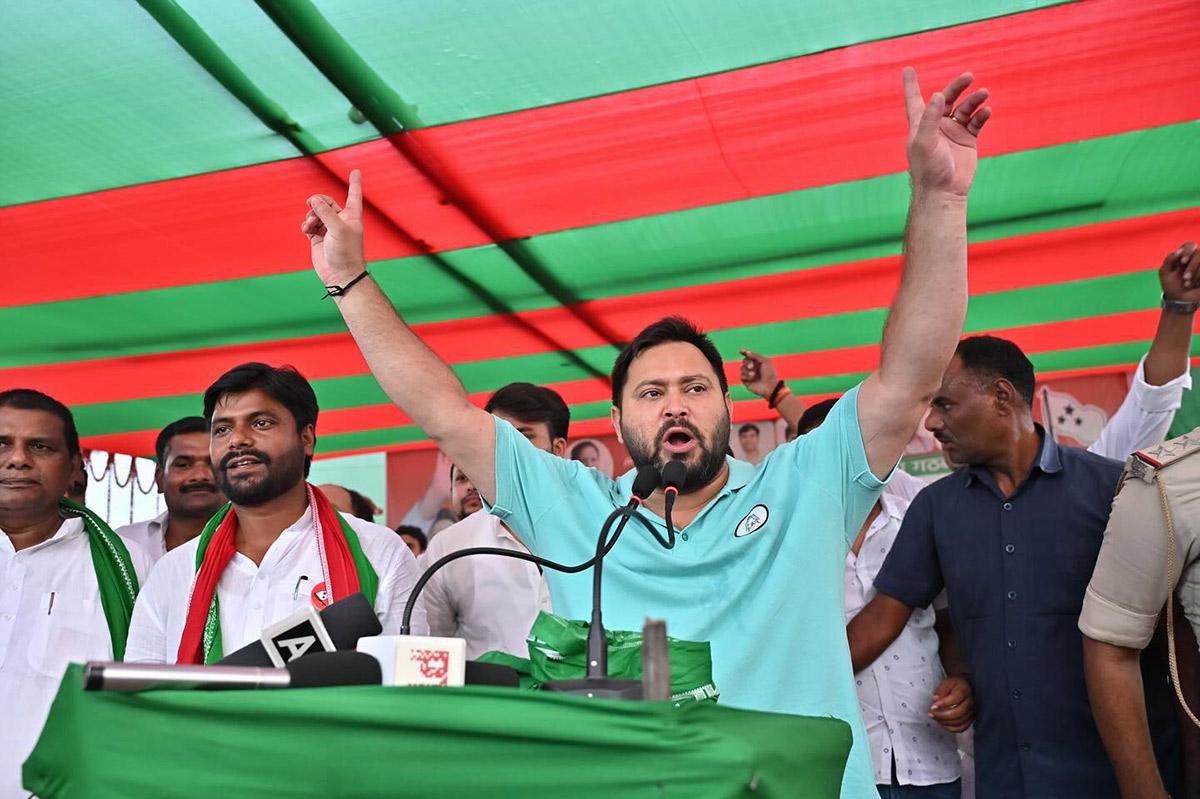
Election meetings of the Janata Dal-United and Bharatiya Janata Party have central and state leaders on the stage. The RJD has mukhias (village headmen), suggesting the organic organisational link between the party and Bihar's villages is intact: Unlike the Congress.
The otherwise fragmented Yadav community seems to have consolidated behind him. The Muslims, lacking a statewide alternative to fend off the BJP, see Tejashwi as their best bet.
One of them said: "Field Yogi Adityanath or Amit Shah from the RJD -- you'll see, they'll get every single Muslim vote."
But his inheritance was a double-edged sword because the National Democratic Alliance was understandably interested only in highlighting that part of the RJD's tenure in government that evokes kidnapping, extortion, and lawlessness.
The NDA identifies Lalu Prasad's contribution to the actualisation of social justice and empowerment with the present family-dominated RJD. That is only part of the truth.
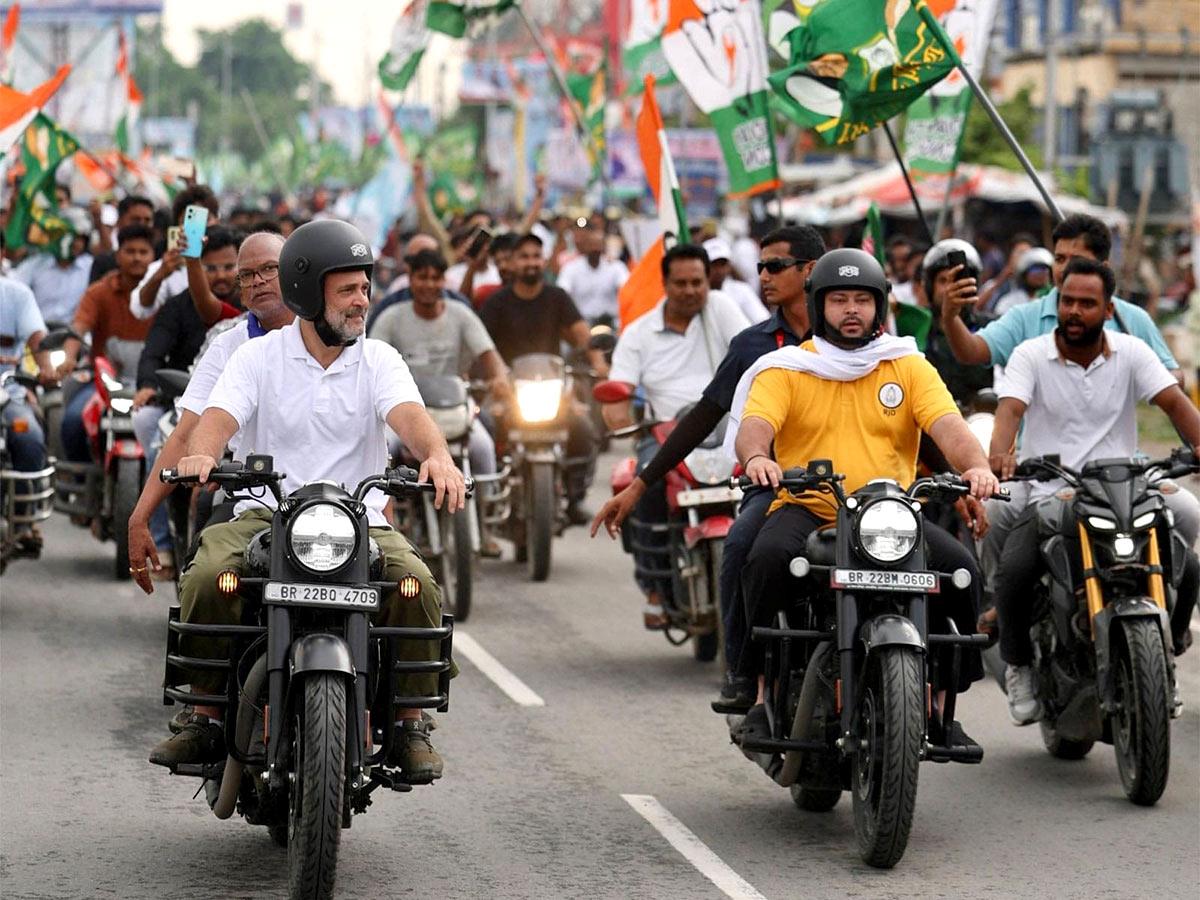
In this year's assembly elections, Tejashwi allocated 36 per cent of the RJD's tickets (51 of 143) to Yadavs, who constitute 14.26 per cent of the population. The Muslims, 17.70 per cent of the population, received only 19 seats, around 13 per cent of the total, the same as in 2020.
But it is the inclusion of other castes in the RJD list of nominees that is remarkable. In the past Bhumihars could not have thought of the RJD as a political possibility. This time, six candidates contested on the RJD ticket were Bhumihars, a community traditionally hostile to Lalu Prasad's party.
Surajbhan Singh, a strongman of Mokama, joined the RJD this year and fielded his wife from the seat (he is debarred from contesting because of a criminal conviction).
Sagar Rai, with a background in the Indian Police Service, is also a Bhumihar candidate fielded by the RJD.
What is more, Tejashwi took advice from his colleagues and stooped to conquer the mercurial and unpredictable Mukesh Sahani, the leader of the Nishad and Mallah communities, by offering him deputy chief ministership.
In the Gaura Bauram seat, he forced the RJD candidate to stand down in favour of Mr Sahani's Vikasheel Insaan Party at considerable cost.
He must get one chance -- "people do want to try him out at least once,"; says Sunil Kumar, who runs a small store in Patna's Bakergunj. He doesn't reveal his caste but it is not hard to guess. He tries to hide it. But the sense of longing is palpable.