
Trade, defence cooperation and regional strategy had long formed the backbone of India-US ties, but the latest rift shows how quickly those pillars can be shaken by personal grievances and political optics.
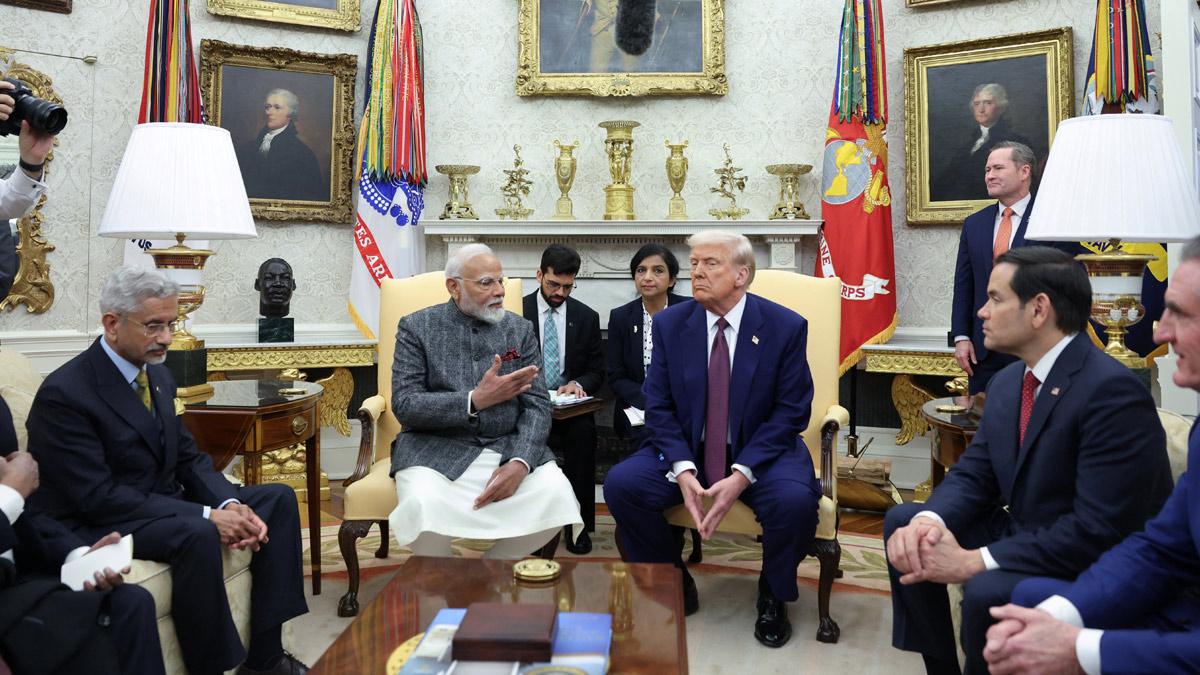
A chain of personal slights, diplomatic flashpoints and policy disagreements over the past few months has brought one of Washington's most important Asian relationships to its lowest point in years.
According to Bloomberg (external link), those tensions came to a head this week when US President Donald Trump announced a 50% tariff on Indian exports to the United States -- 'half of which includes a penalty for purchases of Russian oil.'
The rupture began in May after India and Pakistan agreed to a ceasefire to end four days of armed clashes. Trump publicly claimed credit for brokering the truce -- a claim that infuriated officials in New Delhi.
In a 17 June phone call, reports Bloomberg, Prime Minister Narendra Modi told Trump that India 'does not and will never accept mediation' and made it clear the ceasefire had been arranged directly between India and Pakistan 'upon Pakistan's request'.
What followed only deepened the mistrust.
Trump's plan to host Pakistan army chief Field Marshal Asim Munir for lunch at the White House on June 18 was seen in New Delhi as legitimising a military establishment that, in India's view, continues to back terrorist groups.
Modi, Bloomberg reported, declined an invitation to drop by the White House after the G7 summit, with aides pointing both to the Pakistan meeting and to a long scheduled trip to Croatia.
Bloomberg noted that 'once Trump began publicly attacking India... it was clear the episode marked a turning point in the broader relationship.' His criticisms were not confined to the ceasefire spat.
As Washington ramped up pressure on countries buying Russian oil, India found itself in the firing line. Trump's threats to penalise such purchases added a new and combustible dimension to the already strained ties.
Trade frictions also came to the fore. Negotiations faltered over access for genetically modified crops, agricultural market openings, and the removal of retaliatory tariffs imposed by India.
On July 30, Trump unveiled a 25% 'reciprocal' tariff on Indian goods, casting it as a necessary response to what he described as unbalanced trade. Bloomberg noted this announcement triggered 'a spiral in ties over Russia that led to the higher duties this week.'
In unveiling the 50% tariff, Trump lashed out at India's economic model, branding it a 'dead' economy with 'obnoxious' trade barriers.
He also accused New Delhi of showing 'little concern for Ukrainians killed in battles with Russia' -- remarks that underscored how geopolitical differences over the Ukraine war had bled into bilateral trade policy.
By Bloomberg's account, the sequence of disputes -- from the bruised egos over ceasefire credit, to the optics of the Pakistan meeting, to the oil-related penalties -- transformed what had been a working, if occasionally uneasy, partnership into open confrontation.
This deterioration in the India-US relationship marks a sharp reversal from earlier phases of engagement between Modi and Trump, when both leaders publicly emphasised personal rapport and mutual strategic interests.
The current tensions, however, appear rooted less in structural policy differences than in a series of incidents that were interpreted in New Delhi as slights or provocations.
Trade, defence cooperation and regional strategy had long formed the backbone of India-US ties, but the latest rift shows how quickly those pillars can be shaken by personal grievances and political optics.
According to the Bloomberg report the tariff move was not an isolated act of economic protectionism -- it was the culmination of months of accumulated resentments on both sides, sharpened by disagreements over Pakistan, Russia and the terms of global commerce.