
The Delhi high court on Monday set aside a CIC order directing disclosure of details related to Prime Minister Narendra Modi's bachelor's degree, saying only because he was holding a public office, it did not render all his 'personal information' to public disclosure.
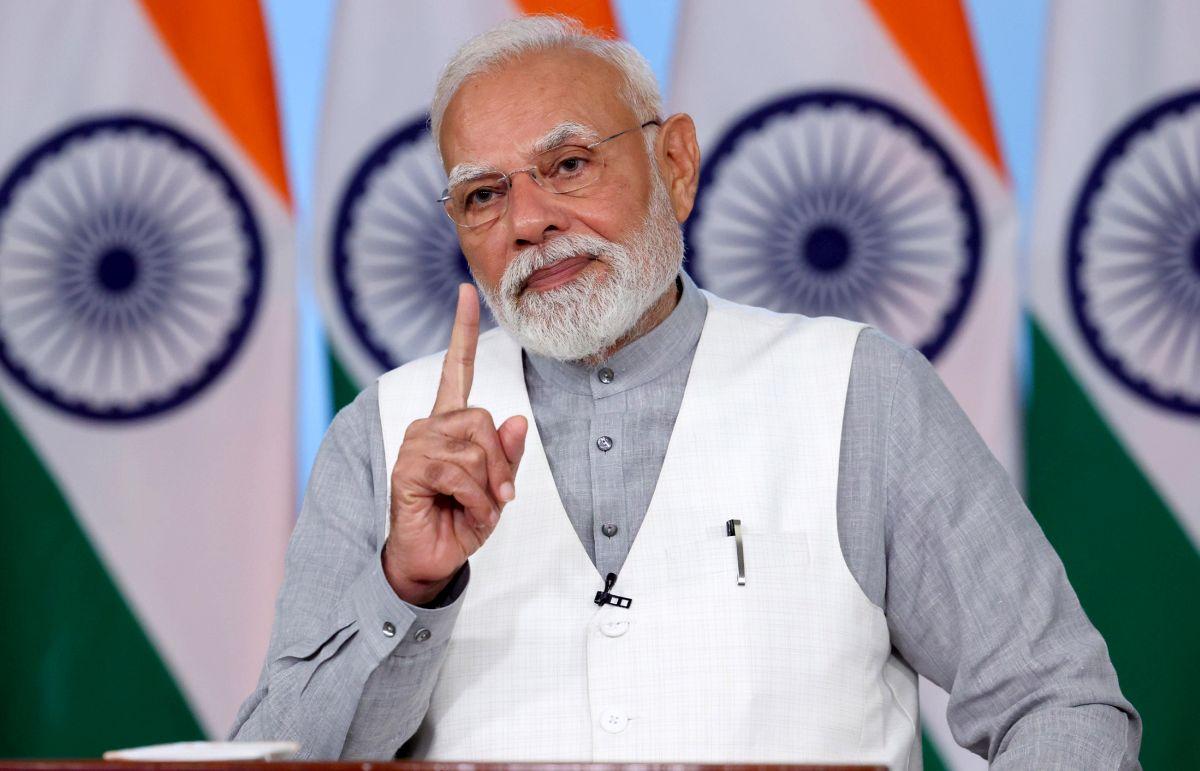
Justice Sachin Datta ruled out any 'implicit public interest' in the information sought, and said that the RTI Act was enacted to promote transparency in government functioning and 'not to provide fodder for sensationalism'.
Following an RTI application by one Neeraj, the CIC on December 21, 2016, allowed inspection of records of all students who cleared the BA exam in 1978 -- the year Prime Minister Modi also passed it.
'Something which is of interest to the public' is quite different from 'something which is in the public interest', the judge said.
The judge opined the educational qualifications were not in the nature of any statutory requirement for holding any public office, or discharging official responsibilities.
The situation might have been different, had educational qualifications been a pre-requisite for eligibility to a specific public office, the judge said, calling the CIC's approach 'thoroughly misconceived'.
"The mark sheets/results/degree, certificate/academic records of any individual, even if that individual is a holder of public office, are in the nature of personal information. The fact that a person holds a public office does not, per se, render all personal information subject to public disclosure," the order said.
Observing things would be different if a particular educational qualification was a criteria or prerequisite for holding a public office or any post, the bench said in the present case 'no public interest is implicit in the disclosure of the information as sought vide RTI application'.
The fact that the information sought was of a public figure did not 'extinguish privacy/confidentiality rights over personal data', unconnected with public duties, the court added.
"This court cannot be oblivious to the reality that what may superficially appear to be an innocuous or isolated disclosure could open the floodgates of indiscriminate demands, motivated by idle curiosity or sensationalism, rather than any objective 'public interest' consideration," the order said.
The ruling noted any disregard of the mandate of Section 8(1)0) of the RTI Act in such a context would 'inexorably' lead to demands for personal information concerning public officials or functionaries spanning the entire gamut of public services, without any real 'public interest' being involved.
"The RTI Act was enacted to promote transparency in government functioning and not to provide fodder for sensationalism," the court said.
The legal framework does not permit the disclosure of marks and grades to any third party as there is an implicit duty of trust and confidentiality in handling students' academic records, the court said.
On Monday, the verdict found no implicit public interest with respect to the information sought under the RTI application and said the educational qualifications were not in the nature of any statutory requirement for holding any public office or discharging official responsibilities.
The judge said merely because the information sought related to a public figure, did not extinguish privacy or confidentiality rights over personal data, which were unconnected with public duties.
Solicitor General Tushar Mehta, who appeared for DU, sought the CIC order to be set aside but said the university had no objection in showing its records to the court.
"University has no objection in showing the record to the court. There is a degree from 1978, bachelor of art," Mehta said.
In a 175-page ruling, the court said the data with regard to the details of the degree, results, marksheets, etc., of students was 'personal information' which was specifically exempted from disclosure under RTI Act.
The court said it could also hardly be disputed that a university owed a duty of care towards its students, who entrust the varsity with personal information (academic records, personal data, etc.) with a reasonable expectation of confidentiality and fair use.
This parallels relationships traditionally recognised as fiduciary, such as a doctor-patient, lawyer-client, trust-beneficiary, etc., the verdict added.
*****
HC sets aside CIC order to disclose info on Smriti Irani's educational records
The Delhi high court on Monday set aside an order of the Central Information Commission (CIC) directing the Central Board of Secondary Education to provide copies of the Class X and XII records of Bharatiya Janata Party leader Smriti Irani.
Justice Sachin Datta said her educational qualifications were not in the nature of any statutory requirement for holding any public office or discharging official responsibilities.
The court, as a result, allowed the petition of Central Board of Secondary Education (CBSE) challenging the CIC's January 17, 2017 order which directed it to 'facilitate inspection of relevant records and provide certified copies of documents selected by the appellant free of cost, except personal details in admit card and mark sheet.'
The CIC orders were stated to be 'de-hors' or out of scope of the provisions of the RTI Act.
In Irani's case, the high court similarly found 'no implicit public interest' with respect to the information sought through the Right To Information (RTI) application.
"Again, the educational qualifications concerned are not in the nature of any statutory requirement for holding any public office or discharging official responsibilities," it held.
The court said public interest under Section 8(1)(j) of the RTI Act required an element of overriding necessity for disclosure to protect or promote a significant public cause.
"It needs to be emphasised that disclosure of academic details sans any overriding public interest, would amount to an intrusion into the personal sphere which is constitutionally protected post K S Puttaswamy (supra). The fact that the information sought pertains to a public figure does not extinguish privacy/ confidentiality rights over personal data, unconnected with public duties," it said.
Justice Datta further said 'what may superficially appear to be an innocuous or isolated disclosure' could open 'floodgates of indiscriminate demands, motivated by idle curiosity or sensationalism' instead of an objective 'public interest' consideration.
"The RTI Act was enacted to promote transparency in government functioning and not to provide fodder for sensationalism," the court said.
The CIC's direction to the private school to trace the roll number of the public functionary concerned (whose personal information was sought) and provide the same to the CBSE was held to be 'completely de-hors the provisions of the RTI Act'.
The RTI application was filed by one Mohd Naushadudin seeking certain information from the CBSE, including 'whether the (then) Union HRD Minister Smriti Irani has cleared the matriculation examination in the year 1991 and intermediate examination in the year 1993 from your Board?'
'If yes,' the plea said, 'then I want xerox copies of her class X and XII admit card (hall ticket) and mark-sheet.'
The public information officer denied the requested information after which the RTI applicant filed a first appeal before the First Appellate Authority of CBSE which upheld the PIO's decision.
Dissatisfied with the outcome, the RTI applicant filed a second appeal before the CIC which directed the CBSE to provide the information.