
'The CBI did a wonderful job of tracking down the killers, but at the end of the day, all the hard work went for a toss.'
'If we had caught them alive, the operation would have been successful completely.'
Nagesh Kukunoor's new SonyLiv series The Hunt: The Rajiv Gandhi Assassination Case has revived the controversy on why the operation to capture alive Sivarasan, the LTTE terrorist, who plotted the Rajiv Gandhi assassination was delayed and eventually botched up.
Then captain Raveendranath led the NSG team to nab Sivarasan. This is what he recalled about the events of August 19-20, 1991.
This interview was first posted on Rediff on July 18, 2007.
Major Ravi, a recipient of the President's medal for gallantry, left the Indian Army to be a military consultant for many Indian films. He then became a filmmaker, a desire that he had carried within him for a long time.
His first film (Punarjani) was for children with Pranav, Mohanlal's son, as the hero. It won Pranav the Kerala state award for acting. His first major feature film was Keerthichakra, a film on militancy in Jammu and Kashmir, starring Mohanlal.
A former commando with the National Security Guard, Major Ravi led the team that broke into the house where Sivarasan -- the LTTE terrorist who masterminded former prime minister Rajiv Gandhi's assassination in May 1991 -- was hiding in Bangalore.
When Rediff's Shobha Warrier met Major Ravi after he made Keerthichakra, he had said, "I, Captain Ravi was the first to break into the house where Sivarasan was hiding in. Now, so many people are making films on that, but one day, I will make a film on that operation and there will not be any lie in it; only the facts."
Mission 90 Days on the Rajiv Gandhi assassination starred Mammootty enacting what Major Ravi did in real life.
You had told me you were in Palghat when you were called to join the operation to arrest Rajiv Gandhi's assassins.
Will you take us through what happened?
I was driving to Palghat and had just reached home. That was when I got a call from my commanding officer asking me to go and join the Special Investigation Team in Madras. I immediately went and joined the team.
The CBI (Central Bureau of Investigation) conducted the investigation. Whenever there is an operation, that is, catching someone physically, we commandos do that. We were not involved in the investigation; we were involved only in the physical operation.
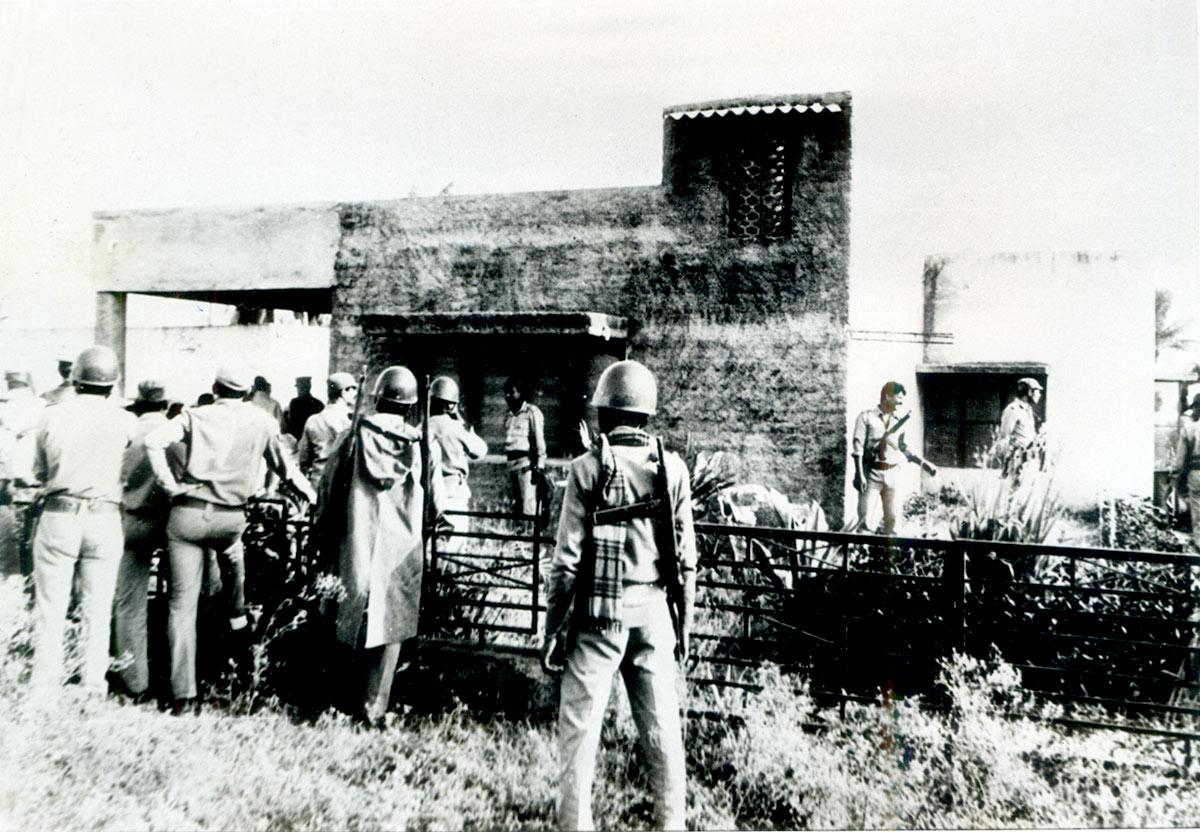
Once the SIT team tracked down Sivarasan in Bangalore, we commandos reached there, ready for the operation.
You knew Sivarasan and the others were inside that house?
Yes, but SIT chief (D R Karthikeyan) was in Hyderabad. He wanted to make it doubly sure about the operation. But as far as we were concerned, we felt there was no use in the operation if the surprise element was lost.
As you led the operation team, did you call the SIT chief in Hyderabad?
No, no. All the senior CBI officers were present, and they were calling the chief. He said he would come the next morning and only then did we need to go ahead with the operation. He could have given the order, but that didn't happen.
What could be the reason why he asked you to wait?
There is no reason. He wanted to be there when the operation happened. Every senior officer would like to be on the spot and personally supervise an operation. But in certain circumstances, when you do an operation, the man on the spot should be given the permission to operate according to his plan. But that didn't happen because he (D R Karthikeyan) wanted to plan it and do it himself.
He asked for more commandos to come. More commandos hardly make any difference. So, we had to wait for at least 36 hours.
As you waited, did you have an inkling that you would not be able to catch them alive as they were all LTTE members?
We were hoping we would be able to catch them alive even if a couple of our guys got killed. He (Sivarasan) had an AK-47, a pistol and a cyanide vial in his mouth. We had more weapons and antidote for the cyanide.
As the person who led the team, was the 36-hour wait very frustrating?
Waiting is always frustrating for commandos because waiting doesn't make any sense to us.
In any action, the surprise element has to be there. The enemy should not know you are there. Since he (Sivarasan) knew we were outside because of the public gathering there, the surprise element was lost.
It is not that I am the first person who is talking about this delay. So many books and statements have already come out. I have also shown it in my film. Because it is a film, it has become a matter of discussion. Now, everybody is asking, why such a long wait?
Basically, my film shows who Rajiv Gandhi was and why somebody came here and killed him. Indian security forces were not ready to accept the fact that somebody came from outside and killed our former prime minister.
The CBI did a wonderful job of tracking down the killers, but at the end of the day, all the hard work went for a toss.
If we had gone inside and caught them alive, the operation would have been successful completely.
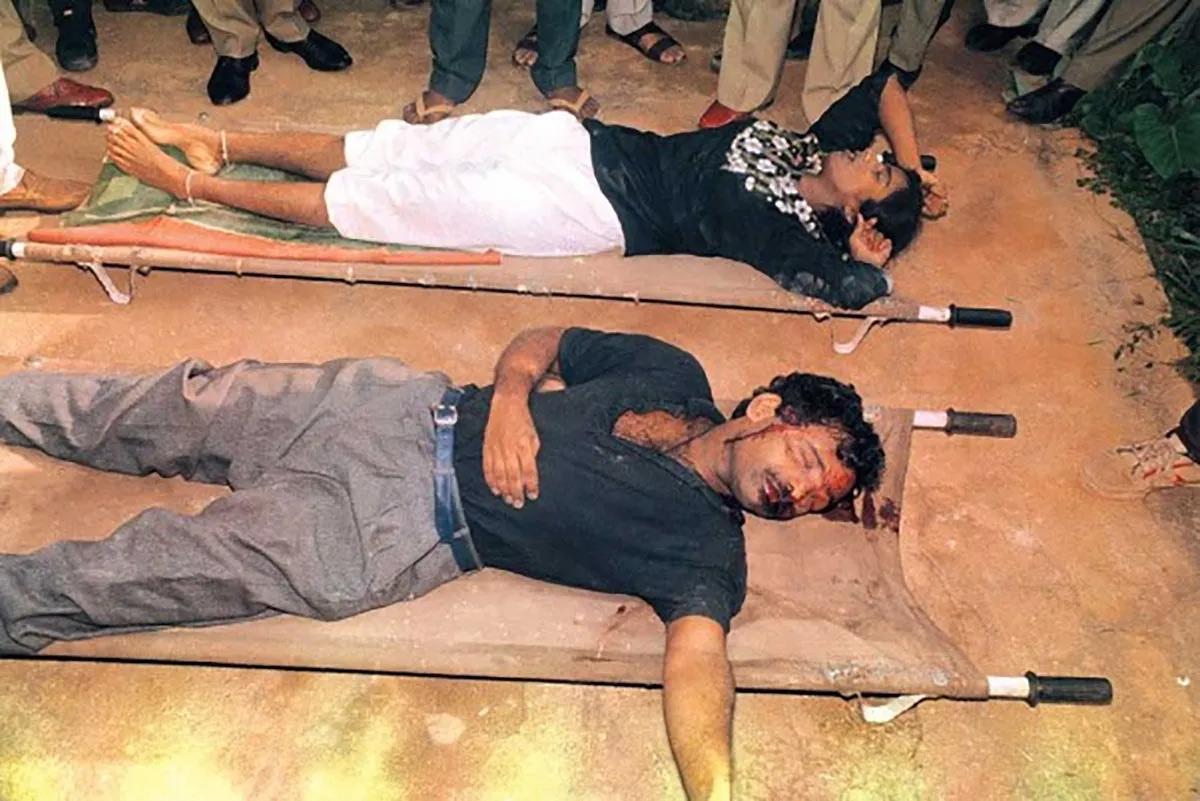
How was it for you people barging in after 36 hours and seeing the dead bodies?
It was an insult to us. We felt very bad. For professional commandos, it was frustrating. We could have done the same thing 36 hours ago. Then, there would have been some fire-fighting and we would have caught them alive. We could have done the operation with some satisfaction.
What happened was, they fired at us, still we didn't get the permission to go in. In the firing, one of our men got injured, one police person got killed. At the end of the day, what do you have? You got nothing and one of your men got injured.
After you came out of the house, how did you react?
My commanding officer and all the seniors were there. I threw down my helmet and walked off.
But the hero of Mission 90 Days reacts differently...
Yes, in the film, he expresses his frustration. That exactly was in my mind, but I couldn't express it. When you are in uniform, you have to maintain certain discipline. Only if I showed what I felt inside, would the public know. That was why Mammootty spoke like that.
The SIT chief also wrote a book. He wrote it from his point of view, and I made the film from my point of view. They write books and I make films. So, all of us are conveying our points of view.
There is nothing that nobody knows or is new in the film. Everything about the operation is known to everyone.
Now, everybody is talking about the delay. Did you expect this kind of reaction from people?
Yes, definitely. That was because when you see the frustration of commandos on screen, as we waited, the public would understand what kind of mood we were in. Waiting, waiting, waiting... for what?
Is this frustration a reason why you left the army?
No. I got a lot of satisfying moments in my army life. When I earned my pension, because of my passion for films, I thought I would be a filmmaker. I want to convey patriotism through my films which is what I did through Keerthichakra. I wanted to do it in Hindi but nobody had the faith in a military man directing a film. Finally I made it in Malayalam.
Did you expect a film in which the story happened in Kashmir, to be a huge hit in Kerala, a place so far away from Kashmir?
If you convey a message through a film realistically and honestly, I think the public will accept it. I also showed them that army men might look tough but they are basically soft inside.
Do you wish you had made Mission 90 Days in Hindi so that it would have had a wider audience?
I really wanted to make the film in Hindi. I feel North Indians do not know what happened in the operation, how much the CBI struggled to do the investigation in just 90 days. I would love to make it in Hindi.
Did anyone from the CBI or the SIT team call you after the film was released?
No. I think the media started calling Karthikeyan for his reaction. But I must tell you there is nothing controversial in the film. Everybody knows that there was a delay of 36 hours.
Photographs curated by Manisha Kotian/Rediff