
'The rescue of 17 children represents exemplary police action that merits considerable appreciation.'
'However, this encounter was profoundly unfortunate because somebody has lost his life.'
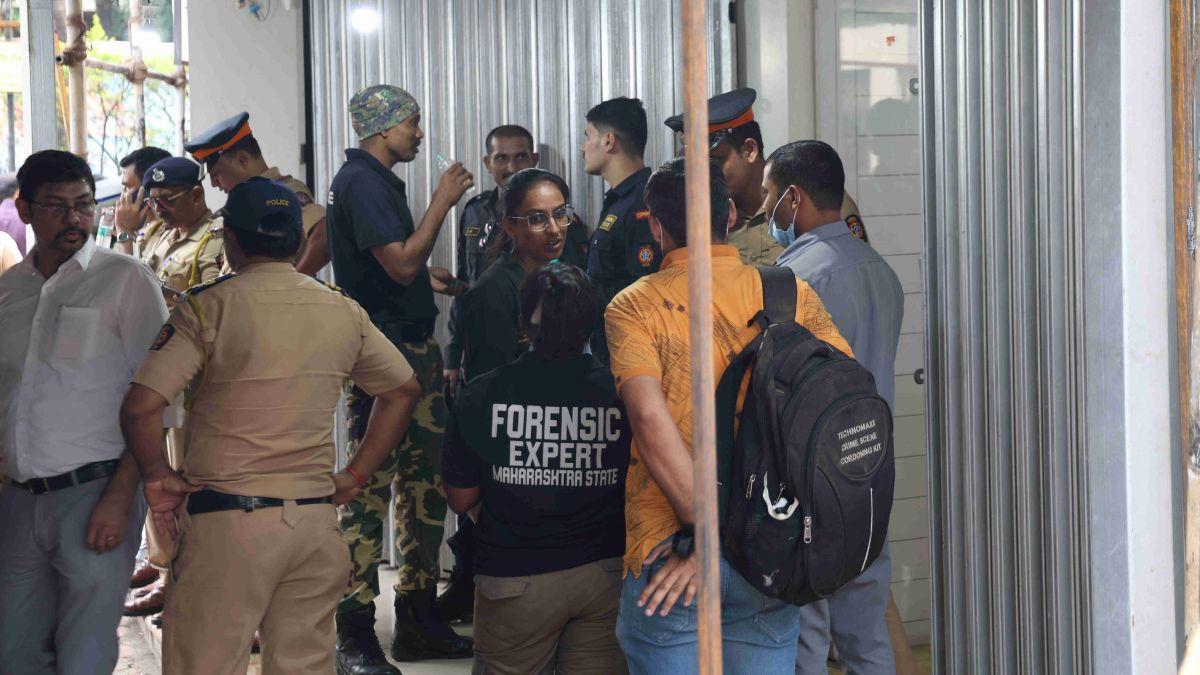
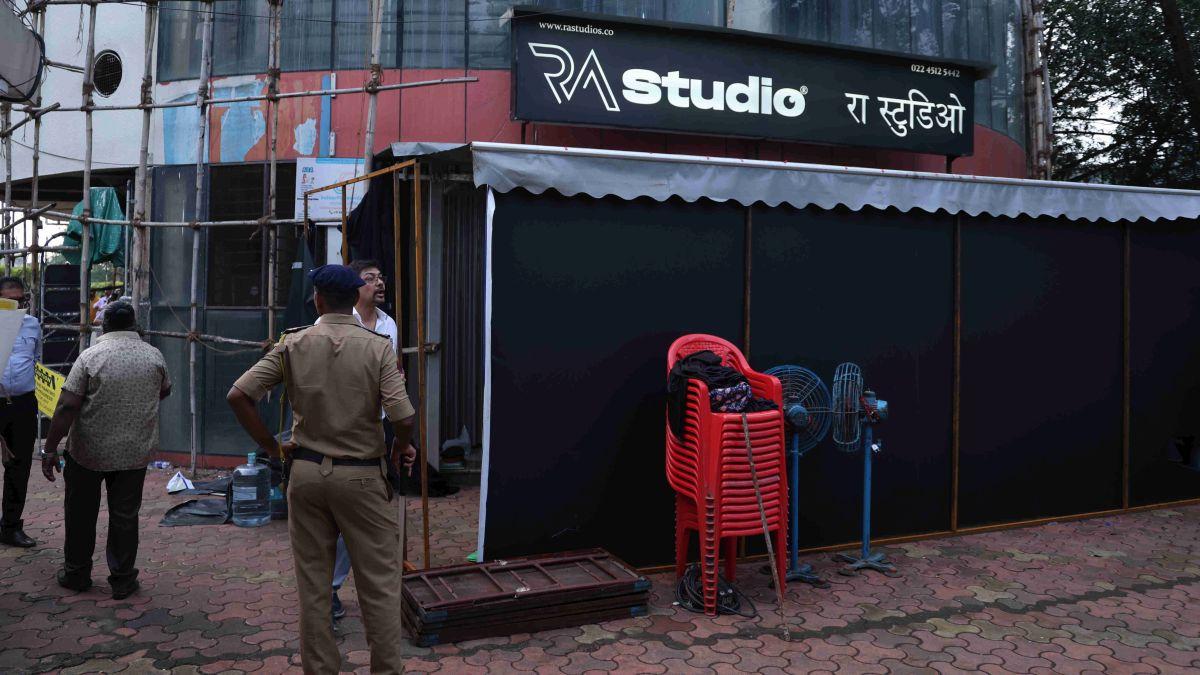
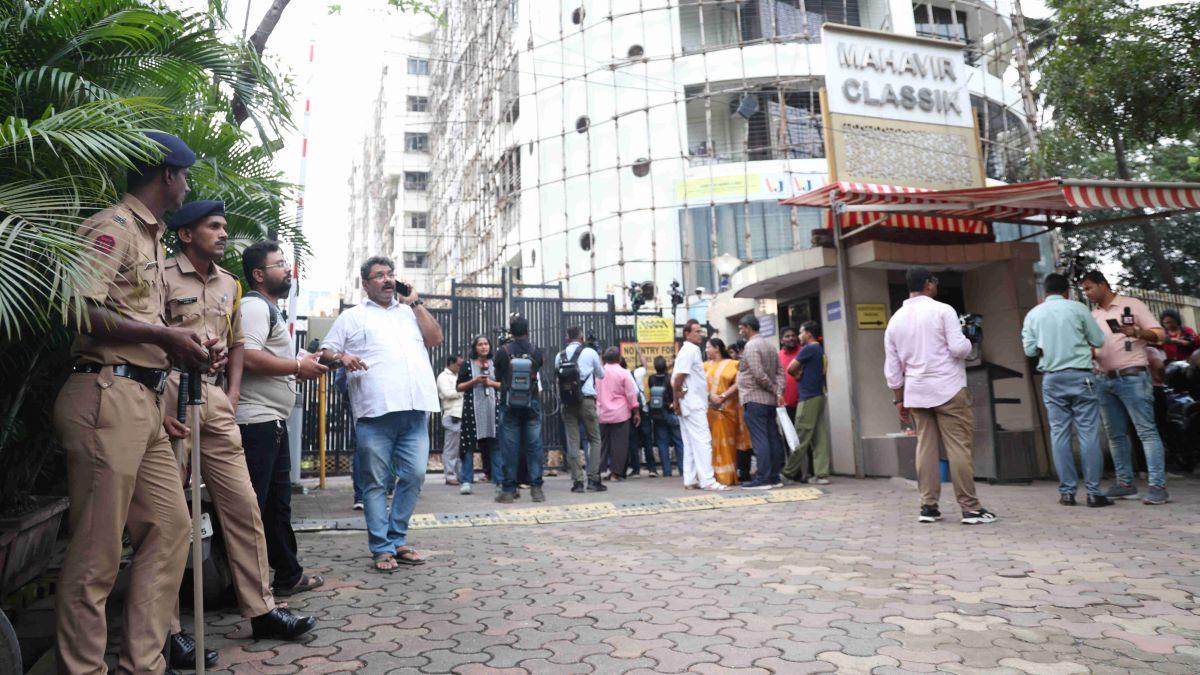
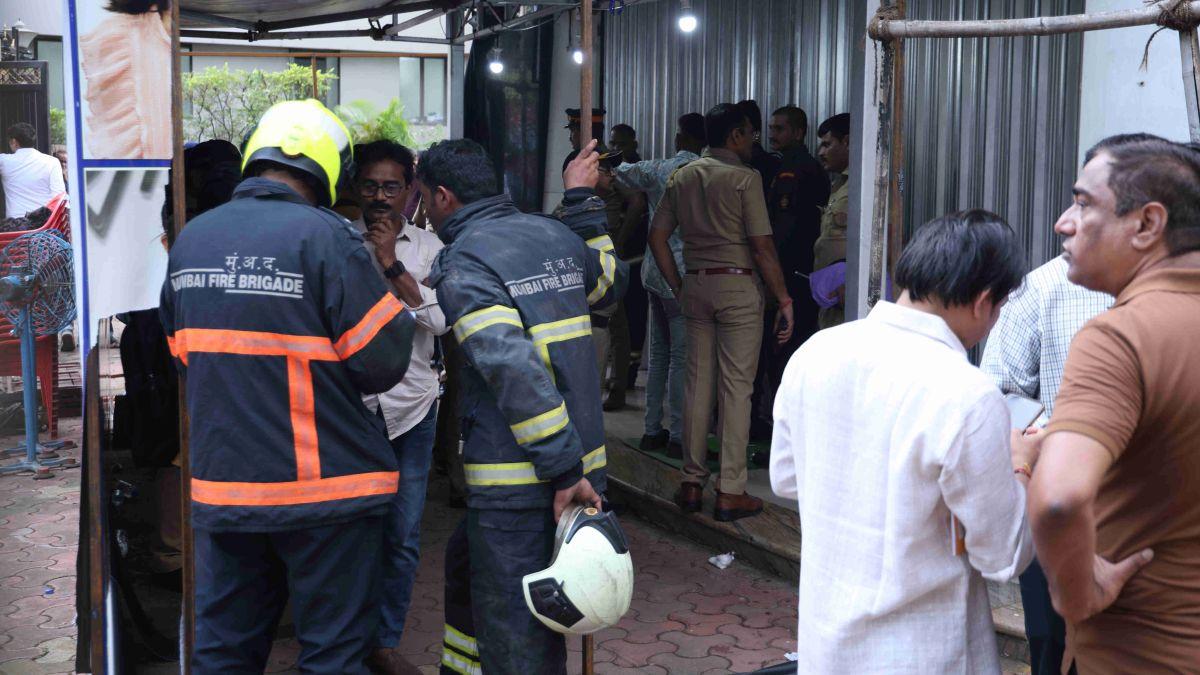
Former Maharashtra education minister Deepak Kesarkar, in an interview with Prasanna D Zore/Rediff, has broken his silence on the Mumbai hostage crisis, in which Rohit Arya held 17 children captive at a Powai studio before being shot dead by the police.
Arya, who claimed the Maharashtra education department owed him Rs 2 crore for work on the Swachhta Monitor project, had staged hunger strikes and repeatedly sought payment since January 2024.
Kesarkar defends his tenure's handling of the matter, claiming that Arya failed to comply with mandatory documentation requirements.
Could you clarify the nature of Rohit Arya's involvement in the Majhi Sundar Shala or Swachhta Monitor project? Was he officially contracted or informally engaged?
He was officially engaged to provide guidance for the scheme. However, certain complications arose during implementation. We discovered that he had created websites and collected money directly from students, which is strictly prohibited under government schemes.
The departmental officers raised legitimate objections to these practices, which subsequently created significant complications in the matter.
Are you suggesting that Rohit Arya collected funds from students fraudulently?
Whether one characterises it as fraudulent or unintentional, I cannot definitively say. However, he did collect money directly from students through a website he had established.
And these were funds that ought to have been paid by the government of Maharashtra?
The fundamental principle is that when the government is providing remuneration for services rendered, no additional charges should be collected from students whatsoever.
I endeavoured to persuade him that a mistake had occurred and that we should move forward constructively.
I convened meetings with the department to explore how he might be assisted, but he proved extremely reluctant to comply with the various documentation requirements that are mandatory for processing any government payment.
What was the issue then?
Indeed, he appeared to labour under the misapprehension that the budget provision made was exclusively earmarked for him. Ordinarily, when budget provisions are made, they are designated for the expenditure category, not for any particular individual. This represented another fundamental misunderstanding in the matter.
Why was there no formal resolution or response to Arya's repeated attempts to recover his dues before the crisis escalated, as he alleged before he was shot dead?
He has alleged that he made repeated attempts. However, over the past year, he has not been in contact with me at all. He may well have attempted to contact the department -- I cannot speak about that definitively.
Previously, when he did approach me (Deepak Vasant Kesarkar held the position of Maharashtra's education minister for approximately two years, from August 2022 until December 2024, when a cabinet reshuffle saw Dada Bhuse appointed as his successor in the School Education portfolio.), I arranged meetings between him and departmental officials.
As a minister, when somebody makes such demands, the most appropriate action I can take is to facilitate dialogue between the concerned party and the department.
Did he contact you directly? How many times did you meet him, and when did these meetings occur?
Whenever he came to meet me, I invariably made myself available. I did not avoid him in any manner. However, one must understand how government processes function. The papers and documentation that are required must be submitted properly. Otherwise, no payments can be processed. These formal compliances are essential, and regrettably, he was not fulfilling these requirements. That was the crux of his problem.
Did Rohit Arya ever threaten you or any government official that he would resort to such extreme measures if his dues were not paid?
No, he did not. However, one must understand something fundamental: When one has outstanding dues against the government, the proper recourse is to approach the judiciary and declare one's dues if the authorities are not responding.
This (taking children as hostages which Rohit Arya did) is certainly not the manner in which such matters should be conducted. While I cannot comment authoritatively on his mental state, the methods he was adopting were most certainly not appropriate.
What amount did the government of Maharashtra or the education department owe him?
I do not know the precise figure. However, I am aware that the department had already paid him some advance on the project.
Do you believe the education department under your tenure maintained adequate grievance redressal systems for vendors and independent contractors?
Most certainly. We have received no other complaints of this nature. This is the only case, and the difficulties arose precisely because he was not complying with the requisite documentation.
What was your initial reaction when you learnt that someone connected to your former department had taken such drastic action and held 16 children hostage?
The safety of the children was paramount. When I received the telephone call from the police, I immediately suggested that the department should contact the relevant officials who could provide him with relief, if possible. Those departmental officials would be best positioned to understand what he was seeking.
I am no longer serving in that department, but had I been in a position to provide him with some relief, I would have done so myself. When I was education minister, I did arrange meetings between him and government officials.
How do you respond to public sentiment that this represents a failure of governance, not merely law enforcement?
This is not a failure of government. He was exceedingly adamant about not complying with the required documentation.
I endeavoured to convince him in every possible manner, because I am quite sensitive about such matters. However, formal compliance is non-negotiable in government processes.
What message would you convey to others who feel unheard or financially wronged by government systems?
Proper systems are in place for addressing grievances. If one is not receiving an appropriate response, one can approach the judiciary. These mechanisms exist precisely for such purposes.
Would you be amenable to a public inquiry or audit into the Swachhta Monitor project?
All our schemes are subject to audit as a matter of course. This is properly audited -- there is no question about it.
Government officials are exceedingly particular about compliance with documentation requirements. It was a straightforward question of compliance with documentation, which he was not prepared to fulfil.
Had he complied, the matter would have been resolved expeditiously. Even after a year had elapsed, he could have approached the appropriate channels prior to resorting to such measures. This was an extraordinarily drastic step.
The loss of life is deeply unfortunate.
Indeed, somebody losing his life is most unfortunate. I have always maintained sympathy for him and consistently attempted to assist him throughout this process.
Do you have words of commendation for the Mumbai police's action?
The rescue of 17 children represents exemplary police action that merits considerable appreciation. However, this encounter was profoundly unfortunate because somebody has lost his life. I maintain sympathy for him and always endeavoured to help him to the best of my abilities.
I regret that I am not presently in Mumbai. Had I been in the city, I would have immediately proceeded to the location where this hostage crisis took place.
I am currently in my constituency, engaged with important election-related meetings, which prevented me from devoting proper attention to this matter -- something I genuinely regret.
Photographs: Sahil Salvi