
'Nitish Kumar previously held tight control over key ministries, but this concession (giving the home portfolio to the BJP) reflects either his weakened political position or a pragmatic acknowledgment of the BJP's growing dominance.'

"Nitish Kumar's advancing age, deteriorating health, and the absence of a credible second-line leadership have left the JD-U facing an uncertain future, despite its once formidable electoral presence. This mirrors a wider national trend in which regional satraps are gradually ceding space to larger national parties," explains Election Researcher Ashish K Ranjan in an interview to Rediff's Archana Masih on the BJP's Bihar breakthrough, the decline of regional heavyweights and how direct cash transfers to women is shrinking the space for fair electoral competition.
After ruling in a coalition with the JD-U, the BJP is in its most dominant position in Bihar since 2005.
An example of this is Nitish Kumar offering the crucial home portfolio to the BJP for the first time in 20 years.
What does this indicate? Is the BJP going to be the dominant decision-maker and play the upper hand in Bihar?
Is Nitish loosening his grip on the affairs of the state and slowly being eased out? How will this change Bihar?
For the first time in Bihar's electoral history, the Bharatiya Janata Party has emerged as the largest party in the Bihar assembly.
The BJP had long been a partner of Nitish Kumar's Janata Dal-United since the early years of their alliance, but the political equation changed in 2014 when both parties contested the Lok Sabha elections separately.
The following year, in 2015, the JD-U joined hands with its long-time rival, Lalu Prasad Yadav's Rashtriya Janata Dal, to form the Mahagathbandhan (MGB) against the BJP-led National Democratic Alliance (NDA). The MGB won decisively, and despite the peak of the Modi wave, the BJP failed to secure Bihar, finishing third with 53 seats.
In 2017, the BJP and JD-U reunited and jointly contested the 2020 assembly election. The BJP won 74 seats, emerging as the second-largest party after the RJD. Notably, the BJP contested only 110 seats while the RJD contested 144, yet the BJP secured the highest vote share -- 42.56 percent in the constituencies it contested.
In the 2025 election, the BJP finally became the largest party in the state, winning 89 seats with 48.44 percent of the vote in the seats it contested.
The BJP's performance is remarkable in two ways.
First, this is the first time the party has become the number one political force in Bihar, the only state in the Hindi belt, the cow belt, and across North India, East India (except West Bengal), and West India where it had never previously led an assembly.
Second, the BJP's rise coincides with a visible decline in the JD-U.
Nitish Kumar's advancing age, deteriorating health, and the absence of a credible second-line leadership have left the JD-U facing an uncertain future, despite its once formidable electoral presence. This mirrors a wider national trend in which regional satraps are gradually ceding space to larger national parties.
There is no doubt that the BJP's assumption of greater control within the Bihar government marks a fundamental shift. The transfer of the home portfolio to the BJP after 20 years signals a clear change in the power balance within the alliance.
Nitish Kumar previously held tight control over the key ministries, but this concession reflects either his weakened political position or a pragmatic acknowledgment of the BJP's growing dominance.
In effect, the senior partner has become the junior partner, not only numerically but also in terms of political authority, even while retaining the chief minister's post.
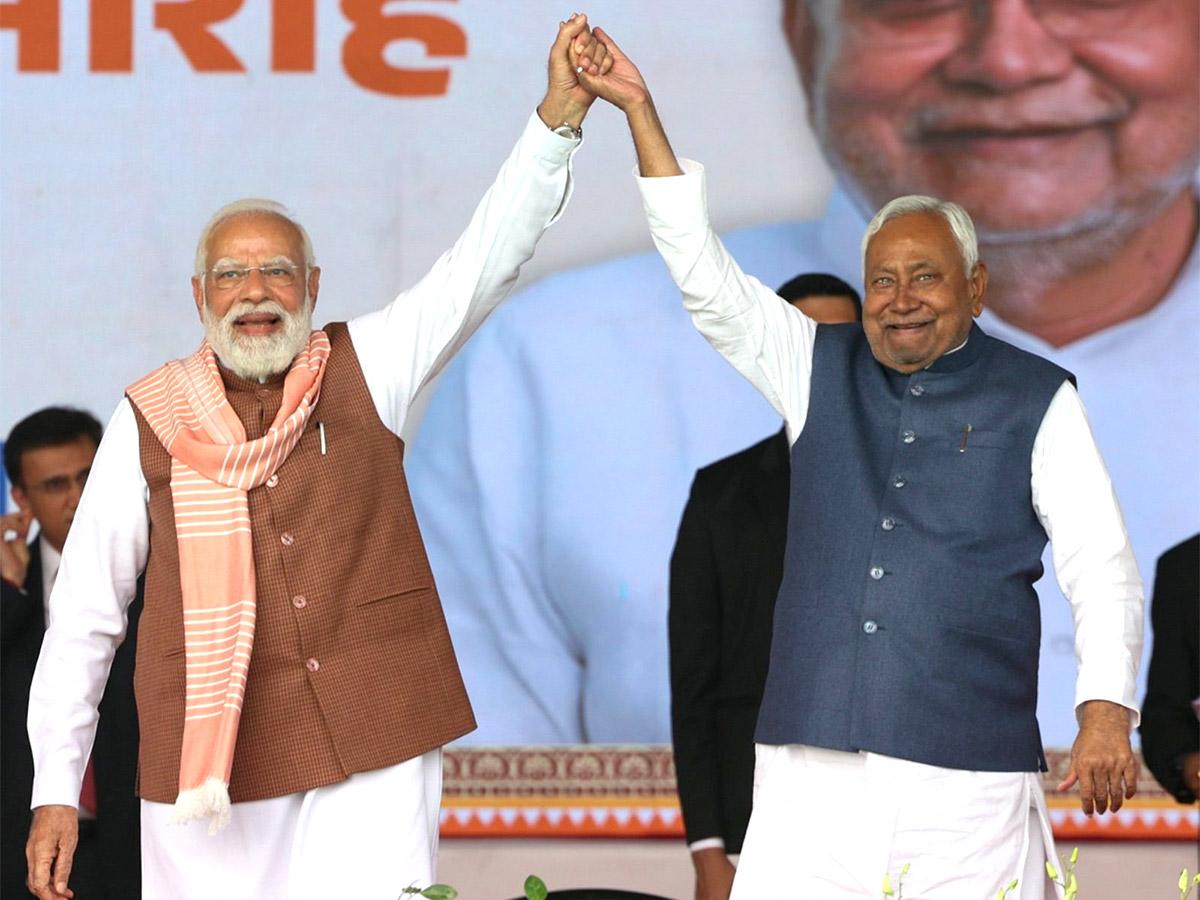
What has been your biggest takeaway from the Bihar verdict?
The 2025 Bihar verdict marks the end of an era of balanced coalition politics in the state -- an era in which the two major national parties, the BJP and the Congress, typically played junior roles to powerful regional actors.
It signals the beginning of unmistakable BJP dominance in India's third-most populous state, completing the party's consolidation across the Hindi heartland and fundamentally reshaping the power equation that has defined Bihar politics for more than three decades.
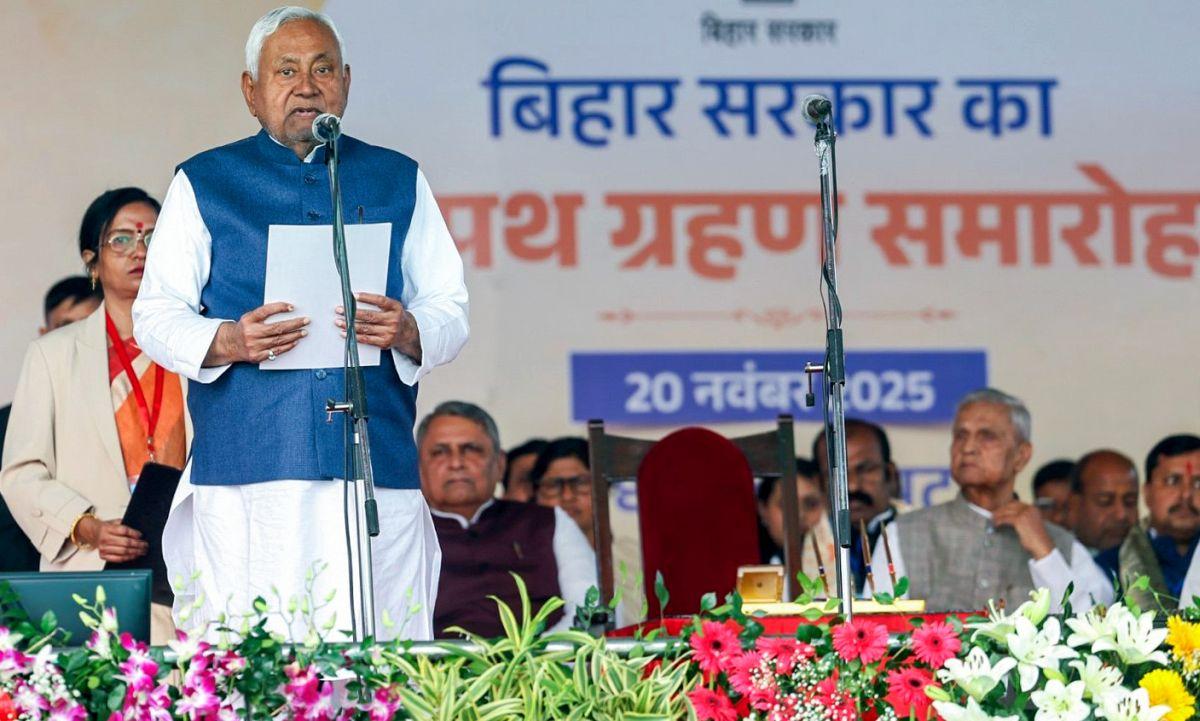
Three major takeaways from the Bihar verdict:
1.The BJP's historic rise as the state's leading electoral force
As noted earlier, the BJP has become the number one party in Bihar -- one of the few major states (along with Andhra Pradesh, Kerala, Tamil Nadu, Telangana and West Bengal) where it had never previously topped an assembly election.
This is significant because Bihar, a politically charged state dominated by two regional parties since 1990, has now seen a national party claim the top position for the first time.
The BJP has finally broken through in a state long shaped by regional and caste-driven politics. This victory will not only galvanise its cadre and leadership, but also consolidate and expand its social base, firmly establishing the BJP as the senior partner within the NDA in Bihar.
2. Shrinking space for third forces
Over the past decade, political bipolarity has become the dominant pattern in most Indian states. Bihar, like Punjab, had been an exception, with nearly one-fourth of the vote share consistently going to parties outside the NDA and the Mahagathbandhan.
In 2025, this figure has fallen to one-sixth -- clear evidence that Bihar is becoming a bipolar state, with limited space for third forces.
Importantly, the MGB's vote share has remained virtually unchanged across the last three elections -- the 2020 assembly polls, the 2024 general election, and the 2025 assembly election -- hovering around 38 percent.
This indicates that the NDA's rise is coming largely at the expense of the 'Others', not from any significant erosion in the MGB's support.
3. Women voters and the 'money mandate'
Recent elections in West Bengal (2021), Madhya Pradesh (2023), Maharashtra and Jharkhand (2024), and now Bihar (2025) reveal a clear pattern: In each case, the incumbent government directly transferred cash into women's bank accounts -- and all of these governments were re-elected with strong vote shares (48% in WB, 48% in MP, 48% in MH, 44% in JH, and 47% in Bihar).
With women constituting nearly half of the electorate, targeted cash transfers have the potential to decisively shift electoral outcomes, even with a small swing of 5 percent.
This trend also points to a broader democratic concern: The shrinking space for fair electoral competition.
While Opposition parties can only promise welfare schemes, only incumbents have the fiscal capacity to transfer money directly into voters' accounts. This creates an inherent imbalance.
When one side controls state resources and can deploy them strategically before elections, the playing field becomes uneven, giving the ruling party a clear advantage and undermining the principle of free and fair democratic competition.
Feature Presentation: Aslam Hunani/Rediff