
'Only because of the absence of a dedication record in writing, how can such properties be treated as located on misappropriated government land?'

Last week, the Supreme Court of India stayed some of the provisions of the Waqf (Amendment) Act 2025, passed by Parliament in April amending the original Waqf Act of 1995.
Akramul Jabbar Khan, a retired Indian Revenue Service officer and co-director of the watchdog NGO Waqf Liaison Forum, has been monitoring the working of Waqf Boards since his retirement more than a decade ago. He would despair at the way these boards neglected precious land donated over the centuries for the good of the community.
However, the government's Waqf (Amendment) Act has left Khan pessimistic about whether any good can now come out for Muslims from Waqf lands.
Jyoti Punwani spoke to him about his views on the interim Supreme Court order.
Part one of a two-part interview:
As someone who's been monitoring the functioning of the Waqf Boards, how do you view the Supreme Court's interim order on the Waqf (Amendment) Act?
This interim order has been given under the inherent power of the court provided by Article 142 of the Constitution. Article 142 empowers the court to pass orders 'necessary for doing complete justice in any matter pending before it.' I need not add that justice must be seen to have been done if it has to carry any value.
An interim order is also given to prevent irreparable harm. Going through this order, I fear irreparable harm on many counts is likely to be done to the community.
What makes you say that?
The basis of the Waqf (Amendment) Bill was the false narrative about the supposedly immense powers that the Waqf Board has; the myth that wherever it lays its finger, that property becomes Waqf land.
The Supreme Court order has not examined this allegation; instead of questioning it, its order affirms this narrative.
In Parliament, the government has repeatedly acknowledged that various government departments have taken over Waqf Board lands. But the reverse has never been claimed.
The reality is that Waqf Boards most often don't even claim their own lands when they are encroached upon.
The most glaring defect of this order is that the court has simply accepted the government's statement that Waqf properties have increased from 18 lakh acres to 29 lakh acres.
What's the basis of this claim? It is not reflected in the wamsi.nic.in, (Waqf Management System of India) Project, the only authorised digitised inventory of Waqf properties.
Because of digitisation of Waqf records, multiple structures (parts of the same Waqf) have been listed as different properties. This, coupled with the slow pace of digitisation, has led to a seeming increase in volume. But the totality of Waqf institutions remains the same.
Where's the government land in these properties?
The Amendment abolished the concept of 'Waqf by user', ie, recognition of a property as Waqf based on its long term use for religious purposes, even though it may not have been registered as such.
The court refused to stay this abolition, saying it was meant to prevent encroachment of government properties.
Should the court have stayed this abolition?
Yes.
Roughly 50% of all Waqf properties fall under 'Waqf by user'. No documents may be available for these, but the information relating to these properties is all there in the land revenue department and other historical records.
Thanks to the Land Record Scheme introduced in 1580 by Raja Todar Mal, finance minister under Akbar, which continued to be followed by the British, we have a foolproof record of the extent and ownership of all properties.
When there is a masjid which has been there for centuries, how can you say there's no document to show that it's a masjid? The Waqf Nama may not have been written or preserved, but revenue records are there to support the existence of the particular property.
In towns and villages, you may have huge graveyards and Eidgahs. Historical records honestly consulted would show such properties being donated by local landlords or persons of charitable disposition.
Only because of the absence of a dedication record in writing, how can such properties be treated as located on misappropriated government land? These are 'Waqf by user' lands.
This concept was prominently affirmed by the Supreme Court in the Babri Masjid case, where the court accepted that the Babri Masjid was a masjid because namaz had been held there for long. The principle was: 'Once a masjid, always a masjid'.
Irreparable harm will be done if the government takes over such properties.
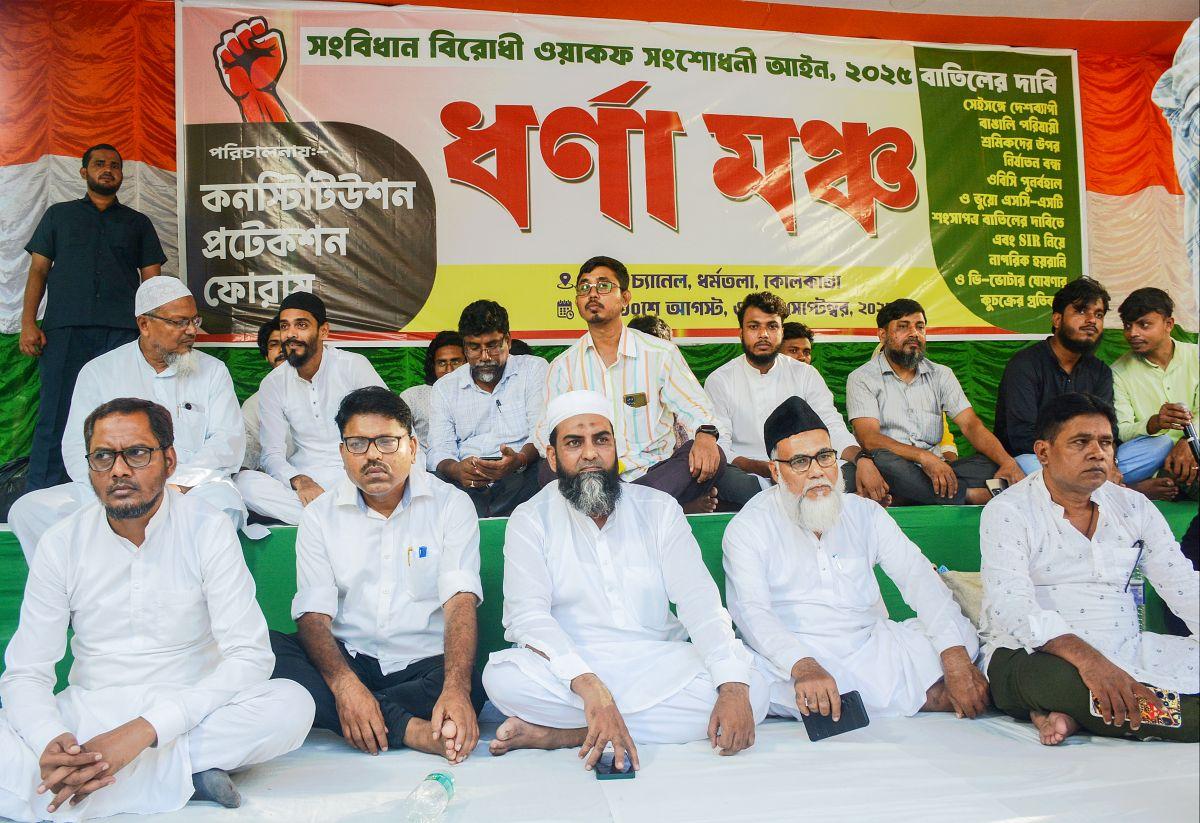
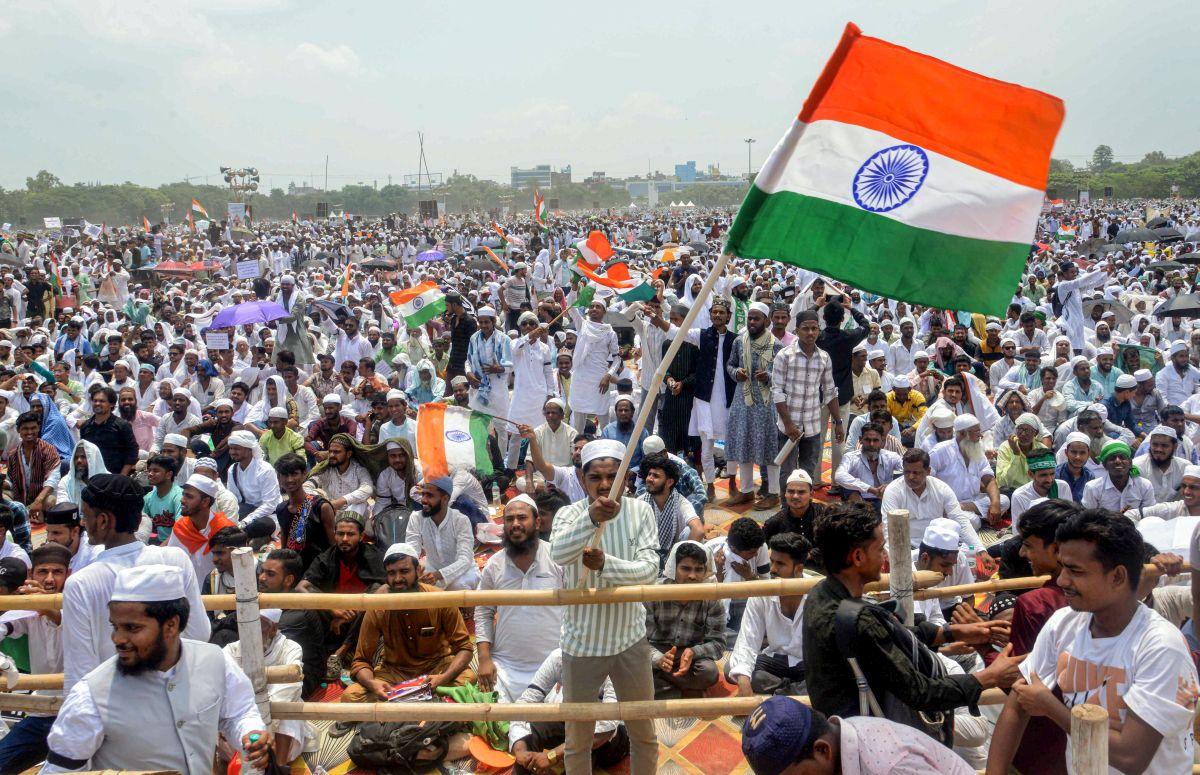
The petitioners had said the Bill violates minority rights as well as the right to equality (Article 14), and Article 26, which guarantees every religious denomination the right to establish and maintain institutions for religious and charitable purposes, and the right to manage its own affairs in matters of religion.
The court seems to have upheld the government's attempt to manage Waqf properties.
Yes, the Supreme Court has upheld the government's right to interfere in the management of Waqf properties, saying that is a secular function, whereas, it has argued, managing mandirs is not a secular function because that involves pujas and other rituals.
But Waqf administration is also a religious matter: There are Quranic ayaats (verses) and Hadees (sayings of the Prophet) regarding charity and how to manage it. Besides, a masjid, an Eidgah or a graveyard are all places of religious observance.
Also, mandir management under various state laws, and gurdwara prabandhan (under the Shiromani Gurdwara Prabandhak Committee) both deal with aspects of security, control, and management, same as the Waqf Act does. These too should be considered secular matters. Yet, there is no interference by the State in those properties.
This is differentiation between religions, and this has been approved by the court.
 IMAGE: Akramul Jabbar Khan
Did it come as a surprise that the court allowed non-Muslims to be included in Waqf Boards?
It is unfortunate that the Supreme Court has allowed non-Muslims not only on Waqf Boards but even on the apex body managing Waqf land, i,e., the Central Waqf Council. Shockingly, the court has left an alibi for the government to appoint a non-Muslim as the council's CEO by saying 'as far as possible' he should be Muslim. I'm sure non-Muslims will be appointed even where there are Muslim officers available.
The court has said this provision of appointing non-Muslims will ensure 'greater inclusivity and transparency'. But why are our Hindu brothers being deprived of the benefits of this principle?
There have been land scams in temples too, the latest being the famous Shri Shaneshwar Devasthan in Shanishingnapur, where the Maharashtra government has dissolved the entire board of trustees and appointed the district collector as administrator. The relevant GR cites corrupt practices (external link), mismanagement and scams relating to funds.
In Tamil Nadu, temple scams have been probed by the CBI. More than 50,000 acres of temple land in Tamil Nadu have vanished (external link) under government watch. All this despite senior IAS officers heading temple administration.
It's not that we are against Hindus. In fact, I've seen orders in Waqf matters given by Hindu judges which have moved me to tears, the way they've been written. Even a maulana wouldn't have done justice as well as some of these Hindu judges have.
But the head of the Waqf board -- after all, these are lands given up for Allah -- must be one who understands Islamic theology and the way waqfs are meant to operate.
The best thing would have been for the government -- if it was honest in its intentions -- to have brought in a Uniform Endowment Act for all religious bodies across the board. This would have been a precursor to the UCC (Uniform Civil Code), the government's pet project.
On the one hand, there are millions of acres of land lying with religious bodies, on the other, there's so much poverty. A carefully crafted uniform Act would do a world of good.
Feature Presentation: Aslam Hunani/Rediff