
'My biggest fear about AI is that humans are going to rush to deploy it before AI is ready.'
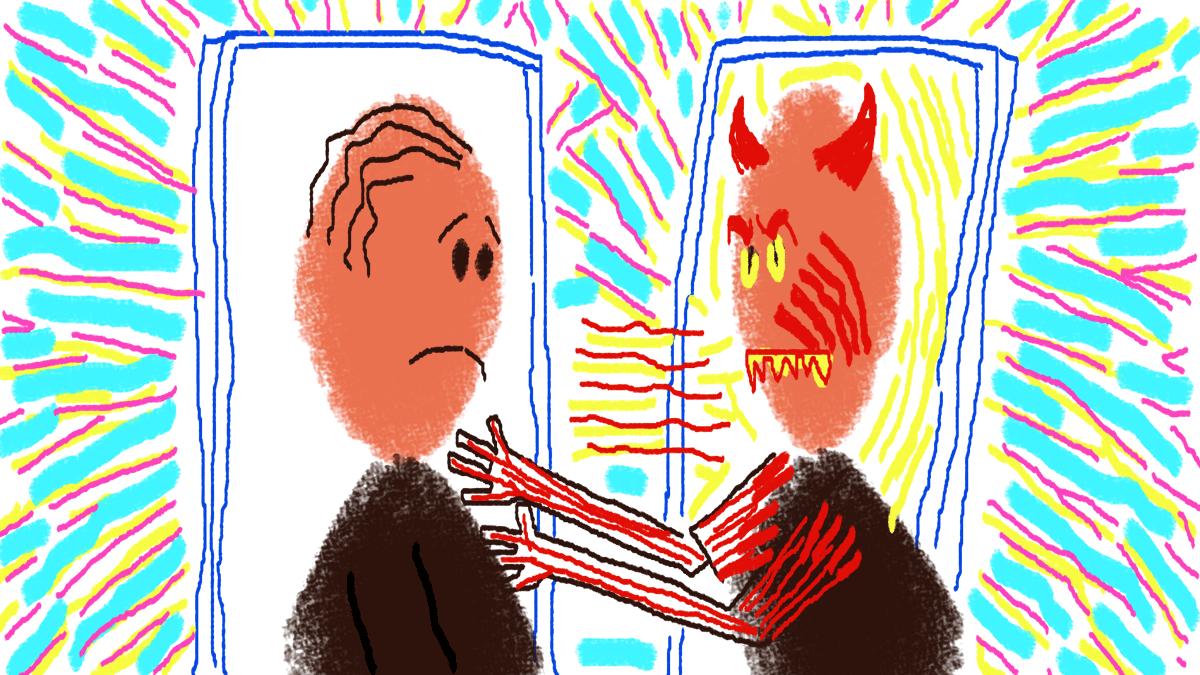
Early this year when investors were queuing up to pump in billions of dollars on AI companies in the west, Nobel Laureate Geoffrey Hinton, described as the 'godfather of AI' said, 'It makes me very sad that I put my life into developing this stuff, and that it's now extremely dangerous and people aren't taking the dangers seriously enough.'
In 2023 Dr Hinton resigned from Google saying, some of the dangers of AI chatbots were quite scary. 'Right now, they're not more intelligent than us, as far as I can tell. But I think they soon may be.'
In September 2026, Dario Amoati, CEO of Anthropic, called for a slowdown of AI development. Interestingly Elon Musk and Sam Altman also agreed with him.
Should there be a slowdown on AI development?
Is AI research by American companies going in the right direction?
Should human beings be worried?
Professor Balaraman Ravindran is head of the Department of Data Science and Artificial Intelligence (external link) (DSAI), the Wadhwani School of Data Science and Artificial Intelligence (external link) (WSAI), the Robert Bosch Centre for Data Science & Artificial Intelligence (external link) (RBCDSAI) and the Centre for Responsible AI (external link) (CeRAI) at IIT Madras.
"Our goal is to periodically inform the UN and other policymakers on what the actual scientific evidence tells us about the state of AI and the impact of AI, and not look at fear-mongering and not make any hypothesis," Professor Ravindran tells Rediff's Shobha Warrier in the concluding part of a two-part interview.
Key Points
- 'Saying that AI has only scary outcomes is really fear-mongering.'
- 'It is a narrative set by the West because they want to control a moat. They want to keep scaring others away from using AI so that they have the superiority.'
- 'What is the economic value for building artificial super intelligence? Without that clarity, pushing for that is going to give rise to all kinds of challenges.'

AI And Job Losses
People say AI can massively disrupt the global economy.
It can.
For example, the BPO industry is significantly threatened. So, it has an economic impact.
A whole bunch of people are potentially going to lose their livelihood or will have to settle for new skills.
It's not that they can't find another job, they can re-train to do something else in the AI pipeline.

If a technology is going to create unemployment, and disrupt the economy, is that the technology the world wants?
Again, let me go back to Industrial Revolution.
Then, we did have a disruption in the society, of individual money making ability, earning ability and so on and so forth. But at the end of the day, the technology was for the benefit of people.
 IMAGE: Professor Balaraman Ravindran. Photograph: Kind courtesy Professor Balaraman Ravindran
Beyond Fear Mongering
We hear a lot of scary stories about AI...
AI can have a huge impact on people, but nobody wants to talk about it as there is no margin for profit in the media for such stories.
Saying that AI has only scary outcomes is really fear-mongering.
It is a narrative set by the West because they want to control a moat. They want to keep scaring others away from using AI so that they have the superiority.
There is so much more AI is bringing to the table.
Using AI, there are a lot of things that can be done in India and in the global South.
If all these big people putting in billions of money into the Open AIs and Anthropics of the world, can also say, 'okay, we have decided that as a community, we are not going to fund research into superintelligence. We want to fund only research that builds AI that is of direct benefit to humanity'.
So, the problem is not with the technology.
Why are we not building more and more efficient nuclear weapons?
Why are we not doing human cloning?
Why are we not pushing the boundary on cloning?
Why have we not even mutated ourselves into a different species by now?
There are some things in which there is an ancillary cost which is not worth venturing into.
Does it mean AI as a technology is not helping? It is.
Biggest AI Risk
When you look at the entire scenario of AI development, as a person who has been doing research on AI all your career, what do you feel right now?
My biggest fear about AI is that humans are going to rush to deploy it before AI is ready.
Not that AI will do something, but humans are going to rush to do things with AI before AI is ready.
And that is exactly what is happening. The technology is not ready. But you're trying to make it do so many things.
Of course, you have to try to push the envelope if you want to do research.
But the question is, what are you pushing the envelope towards?
What is the human value for doing this?
What is the economic value for building artificial super intelligence?
Without that clarity, pushing for that is going to give rise to all kinds of challenges like this.
You are one of the members on the independent scientific panel the UN has constituted on AI....
Whatever I have told you is in my personal capacity, and I'm not talking on behalf of the UN scientific panel.
Yes, the UN has constituted an independent international scientific panel on AI.
Our goal is to periodically inform the UN and other policymakers on what the actual scientific evidence tells us about the state of AI and the impact of AI, and not look at fear-mongering and not make any hypothesis.
AI For Global South
Not to look at regulation?
Not to look at regulation also. There is a UN body called the Global Dialogue on AI which has participation from all member States of the UN. Anything that the UN does has to have the concurrence of all the member States.
We are only 40 individual experts, and we don't even represent our country. We are in the panel because of our individual expertise.
Our goal is to give input to this Global Dialogue as well as to any government that wants to read it on the scientific basis of everything that is happening.
Will the report have an impact on any of what is happening now?
Hopefully. For example, BRICS has called for a multilateral regulation, which I believe China is supporting the UN to be the body to drive it.
We are putting out our scientific reports in the hope that they will be used as the basis for any recommendations that come out. But there is no guarantee
Feature Presentation: Ashish Narsale/Rediff





