
The Deepa Thoon controversy, if not allowed to die a natural death, could take the election focus away from the anti-incumbency impacting the DMK and into the secular space.
Stalin would love to have it that way, all over again, after the three past elections, points out N Sathiya Moorthy.
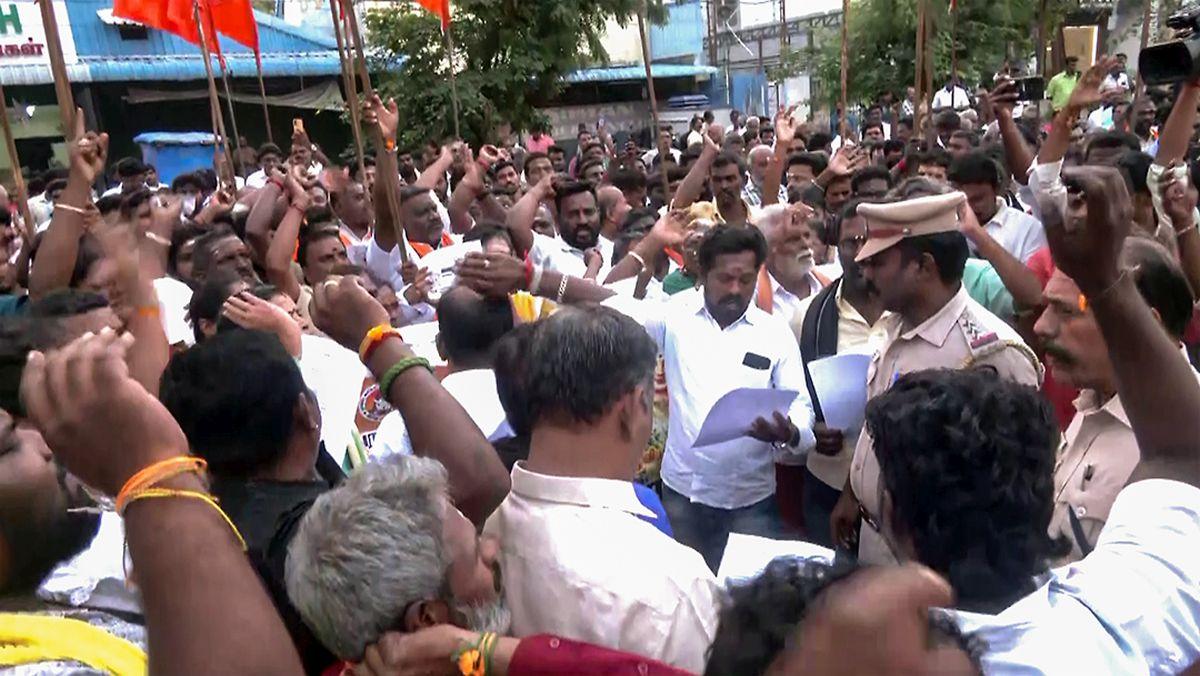
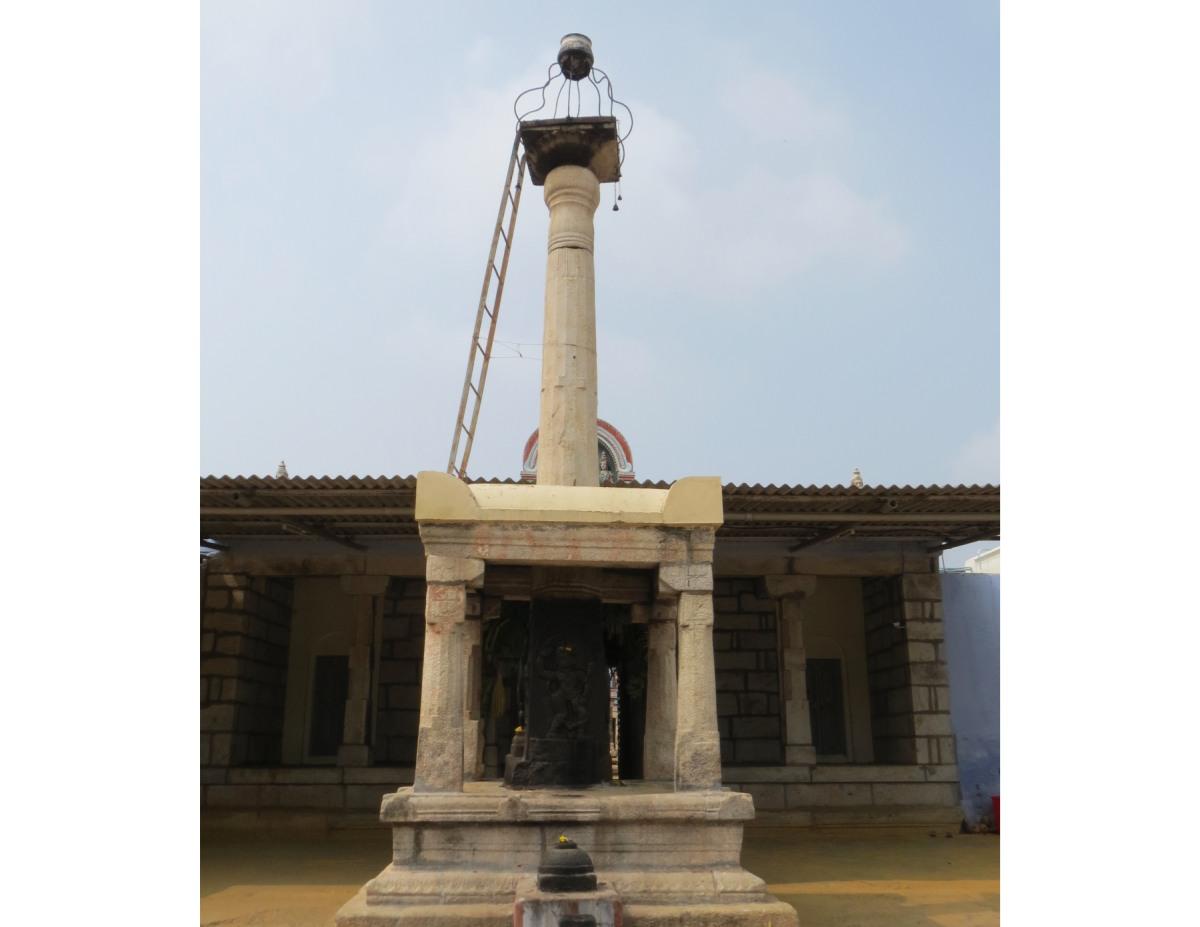
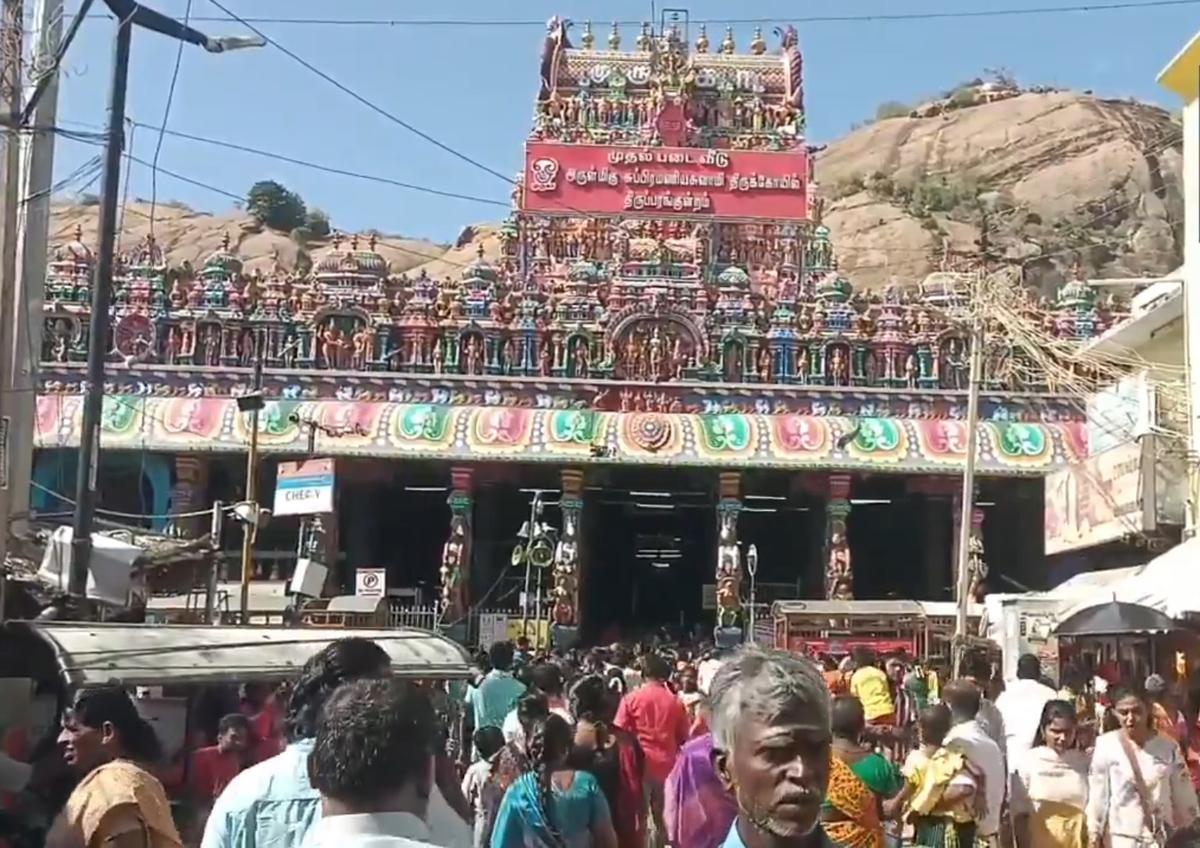
By not following the Madras high court directive to allow a private petitioner to light a lamp atop a stone pillar on the Thirupparakundram hills in Madurai district, did the Dravida Munnetra Kazhagam-ruled government in Tamil Nadu actually thwart possible attempts to politicise what essentially was a religious issue, if at all -- and which blew up into a full-fledged communal incident the likes of which Tamil Nadu has not seen?
Or, did officials of Chief Minister M K Stalin's government commit contempt of court?
If allowed, it is now argued, the situation could have led to the possibility of Hindu protestors damaging a Muslim dargah that was on their way to what the protestors called a Deepa Thoon, or sacred pillar for lighting the traditional lamp.
It is also claimed that the only pathway to the pillar passes through the dargah property, and encroaching upon it, to reach the Deepa Thoon, without adequate permission, even under a valid court order, was not on.
Together, they conjure up a repeat of the Ayodhya demolition of December 6, 1992. The Karthigai Deepam controversy has the potential to polarise the Tamil community, that too ahead of the Tamil Nadu assembly elections in the first half of next year.
Slowly but surely, the controversy has transcended the question of lighting a lamp, an auspicious event in the Tamil month of Karthigai (November-December) that is also unique to Tamil Nadu.
Hence, critics of the demand for lighting the lamp at the Deepa Thoon also argue that like the annual Jallikattu bullfight, it is a Tamil festival and not just a Hindu festival.
They may have a broad point as they cite instances across the state wherein Hindus and Muslims especially have been participating in each other's social and local community functions and have a traditional role to play in many of them.
Despite the polarising political space over the past years, these social customs have prevailed. Communal instances have been fewer and far between in the state.
Critics of the Deepa Thoon demand claim that it is a reflection on the social harmony that continues to prevail in the state.
They attribute this communal harmony also to the way Islam entered Tamil Nadu, and Kerala.
It was not through the sword and battles, but through trade -- that too, with the patronage of local rulers, starting with the legendary Cheras, Cholas, Pandyas and Pallavas. And it began happening almost after the religion was born in the seventh century, as Arab traders took to the new religion and carried it aboard their trading vessels.
But these critics have no convincing response to the why of targeted killing of Hindutva activists by militant Islamic groups over the past decades.
It peaked with the Coimbatore serial blasts on February 14, 1998, from which then Union home minister L K Advani, escaped, as if by divine blessing.
Today, the Deepa Thoon controversy is caught in procedural matters involving the higher judiciary and higher politics.
It goes beyond the belief-based overnight eruption of religious enthusiasm. Instead, it is seen as an opportunity for kickstarting a controversy, where none otherwise may have existed.
They number a legion, yes, but Hindu believers in the state have all along kept their religious and socio-political behaviour far apart.
It has miffed the Hindutva strategists, be it in distant Delhi, or in the confines of their organisational offices in the state, as to how the all-believing Hindus in Tamil Nadu could offer prayers to their gods in their local temples in the morning hours, and then go straight to the polling booths and vote for the 'anti-god, anti-Hindu' DMK.
This owes to the fact that the early Hindutva groups in Dravidian Tamil Nadu had over-simplified their premise and hence conclusion, on the way to reach the heart of the local population.
They thought big, they thought as the larger Hindu groups.
But in rural Tamil Nadu all along, the family deity and community deity have taken precedence over more identifiable Hindu gods.
It remains so to date. This no-nonsense, innocent people do not connect to religious politics, and will be happy if they are left alone and peacefully.
They are Hindus because the Census and the Constitution say so. And disputes like the Deepa Thoon controversy has the hidden possibility of things going out of control, in the larger Hindu scheme of things, as against the pro-activism of the Hindutva brigade.
But over the decades, none of them has said that they are not Hindus. Yet, you peel the skin, immediately their customised caste identities erupt.
Some social scientists attribute the suppression of their real identity as the cause for continuing caste violence and honour killings in Tamil Nadu.
It is thus that the early Hindutva groups got it wrong when they used up the Mandaikad riots (1982) in Kanyakumari district and the Meenakshipuram conversions (1981) in neighbouring Tirunelveli district as their launch pads for 'disruptive politics'.
That was after the Vivekananda Rock mid-sea controversy with the local Christian community, again in Kanyakumari district, in the 1960s.
Today, the Vivekananda Rock Memorial is a huge tourist attraction, yet none of these issues, along with the later-day importation of the annual Ganesh Chathurthi festival, connected with the local masses.
That way, this one is Season Three of Thirupparakundram controversy. Only months ago, the Hindutva forces in the state had kickstarted a dispute over the existence of a dargah alongside a Hindu temple.
When it was pointed out that temples, mosques and churches have been co-existing in the same locality/street for generations and centuries, the issue simply fizzled out.
Later came a further controversy over animal sacrifice in the dargah near one of Hinduism's holy places in the state, whose numbers are countless.
The political identity stood out when Union Home Minister Amit A Shah attended a conference on the issue in Madurai.
The Deepa Thoon issue is the third in a row -- and in quick succession.
Interestingly, the Hindutva groups had begun realising the need to redirect their energies away from 'north Indian' temples and gods, if they have to succeed on a political plank deriving from a religious controversy.
Unacknowledged, it also owed possibly to the secularisation of the state BJP leadership, if only over the past couple of decades.
It was thus that present-day Union Minister of State L Murugan as the state BJP president at the height of the Covid lockdown, undertook a Vel Yatra to the six famed abodes of Lord Murugan, including Thirupparakundram, at times defying a police ban, to condemn cheap criticism of the famed Tamil hymn, Kanda Sashti Kavasam, by an unknown peripheral anti-god group.
Other than giving free publicity to the group, whose musical performance had died a natural death without anyone noticing when launched on YouTube months earlier, the Vel Yatra achieved precious nothing. The succeeding 2021 assembly election was evidence thereof.
Before the Vel Yatra, Murugan and the state BJP had tried their luck with the Aandal controversy involving Tamil poet and lyricist Vairamuthu, who then used to identify with the DMK.
It related to Vairamuthu sort of questioning Sri Aandal's birth, citing a western scholar, at a function organised by the famed Vaishnavite temple in Srirangam, where the only Vaishnavite woman poet-saint among the 12 Alvars, belonged.
The protest, while being loud in the media, did not shake the earth. Evening participants, both aged men and middle-aged women, in the daily protests across the state, came mostly from the Vaishnavite-Brahmin community while the non-Brahmin Vaishnavites, numerous in number, looked the other way.
The protests died a sudden death after an anti-Hindutva group threatened a counter-protest, for the other side belittling Aandal's birth, only because she was supposedly born to a Dalit woman, with another Alvar, Periyalvar, a Brahmin, becoming her foster father.
The situation is different today. The Hindutva organisations, starting with the ruling BJP at the Centre, are well-entrenched in most parts of the state, especially in the south and the west. The BJP may have only small units in parts of the state, yet they are there, and the party's flag flutters everywhere.
Though fronted by Rama Ramagopalan, the Deepa Thoon controversy derives its strength and purpose from the BJP's politico-electoral strategy.
Whether it would stir the 'Hindu conscience' more than already, or would consolidate 'peace-loving 'secular voters' (as different from political parties) will remain a moot question.
What still remained in the socio-political sphere on the Thirupparakundram sphere attracted national limelight after Justice G R Swaminathan at the Madurai bench of the Madras high court passed an order for the petitioner to lit a lamp atop the Deepa Thoon at the evening hour, when the very same customary rituals would be performed in the Murugan temple at the foothills and the Uchchi Pillayar temple for Lord Ganesha atop.
Incidentally, the Karthigai Deepam festival is celebrated with the lighting of traditional lamps, some of them huge, only in the temples of Lord Shiva, Lord Murugan and Lord Ganesha, the latter two being the progeny of the former.
The most famous of them is in the Lord Arunachaleswar temple for Lord Shiva in northern Tiruvannamalai, where all lakhs of devotees gather on the auspicious day.
A pro-active judge known for his sharp verdicts against the state government in particular, Justice Swaminathan cited his personal inspection of the place, and ruled that he too believed that the Deepa Thoon used to be functional, and should be put to the purpose for which it was supposedly erected in the first place.
A judge's calendar is generally full, and Justice Swaminathan still understood the urgency of the matter. He posted the case and heard it five times in a single month, November, before passing his order.
In the course of it all, he also hauled up the Madurai district collector and the police commissioner, for contempt of court, for not carrying out the court's order.
The Thirupparakundram temple and all Hindu edifices on site come under the Hindu Religious & Charitable Endowments (HR& CE) edpartment, and hence the state government became a party to the issue.
Backed by the temple priests' association, the government argued that it is they who had the last word in the matter.
It was submitted that even if it had to be done atop the Deepa Thoon, the traditional right to light the holy lamp, both at the foothills and the Uchchipillayar temple, belonged to the temple priests.
What's more, the petitioner had not argued that the Deepa Thoon did not stand on government-owned property, and hence a private citizen had no right in the matter.
However, a counter-argument, citing a purported publication of the state archaeological department in 1981, submitted that there were Naicker dynasty (1529-1815) inscriptions on the Deepa Thoon, to prove their claim that it was always a place to light lamps.
However, there does not seem to have any credence to the argument that the privy council in London had ruled on the subject over a century ago.
It was a tripartite issue when the British district collector claimed that the Madras Presidency government owned the land on which the temple and the dargah atop stood.
The privy council ruled out any ownership of the government. It upheld the temple board's (devasthanam) ownership of the temple and the hill and that of the local committee, over the dargah.
The temple came under the government after the Justice Party administration in the mid-1920s created the Hindu Religious Endowments Department, rechristened as Hindu Religious and Charitable Endowments Department, in the 1950s, post-Independence.
But there was not even a mention of the Deepa Thoon in the privy council ruling.
The question thus arises if a judicial officer, even if a high court judge, was qualified enough to adjudicate on a matter that is in the realm of archaeological expertise.
Citing the Supreme Court's handling of the Ayodhya case, the other side thus argues that the high court too should have relied on veterans from the state archaeological department to get at the truth, the whole truth and nothing but the truth.
There is a further question of the desirability, if not legality, of Justice Swaminathan ordering 50 CISF personnel to accompany the petitioner and his team, whose names were seemingly left to his choice.
The question is raised as to who was responsible for law and order -- whether the CISF or the state police -- if the compliance of the court order had led to mob violence in a place of worship.
Though delayed, the district collector promulgated Section 144 ban against crowding in the area, which also becomes a part of the contempt proceedings.
For all that matters, after losing the case before Justice Swaminathan, the HR&CE department moved an appeal before a division bench, which again upheld the single judge's order.
The state authorities are also faced with suo motu contempt proceedings, initiated by Justice Swaminathan, for not carrying out the court's order, as the temple authorities stuck to tradition, and did not light a lamp atop the Deepa Thoon.
Justice Swaminathan ordered the contempt proceedings a few hours before the lighting of the lamp was scheduled to take place.
It was then left to the government lawyers to point out that the so-called cause for contempt had not occurred.
They waited until after the 6 pm marker for the lamp to be lit when Justice Swaminathan initiated the contempt proceedings.
As it turned out, a day after the court controversy, Justice Swaminathan, appearing at a public function, remarked, as if in jest, that the lamp could not be lit (at the Deepa Thoon) earlier, but he could do so to mark the inauguration of the year's music season in one of Chennai's famed sabhas, as the chief guest.
The state government has since moved the Supreme Court, appealing against the division bench of the high court upholding the single judge's order.
If this made national headlines, it was accompanied by the DMK and alliance MPs taking up the matter in both Houses of Parliament.
The government, especially through Minister of State L Murugan from Tamil Nadu, responded -- but the debate, if it was one, led to nowhere, as was only to be expected under the circumstances.
On the ground, all sides are making a political cause and effect analysis, before they could move forward -- or, backward.
Even while accusing the ruling DMK of politicising the matter to retain its minority vote-bank, state BJP leader Nainar Nagendran and the ever-controversial H Raja courted arrest after trying to break the police cordon in the foothills.
That was even before the petitioner, Rama Ramagopalan, not a BJP man but leading a Sangh affiliate, had reached the site from the high court. That is a story by itself.
On the domestic front, the battle lines are drawn. The BJP and also its AIADMK ally have hailed the court order while the DMK and its secular allies are finding many ways to question it.
Eyebrows were once again raised in and on AIADMK chief Edappadi K Palaniswami backing the Hindutva brigade on this issue, after having split with the BJP ahead of last year's Lok Sabha polls, precisely for such posturing by the ruling party at the Centre through the past ten-plus years.
The AIADMK lost its traditional share of secular votes one more time, after the 2019 Lok Sabha and 2021 assembly elections.
Caught in his traditional silence is the TVK's actor-politician founder Vijay, who is yet to give his response one way or the other.
This is after his long ago declaring that the BJP was his 'ideological enemy' but was focussing all criticism only on the 'political enemy', namely, the DMK.
Truth be told, Vijay's silence along with periodic rumours of the Congress ally either pressuring or wanting to part company with the DMK leader, to join hands with the TVK, may have (only) strengthened the ruling party's minority vote-bank, better than they might have feared, especially after the arrival of Joseph Vijay, a Christian with his new-brand politics and new promises against political corruption, et al.
That by itself is saying a lot, as the Deepa Thoon controversy, if not allowed to die a natural death, could take the election focus away from the anti-incumbency impacting the ruling party, and back to the 'secular space'.
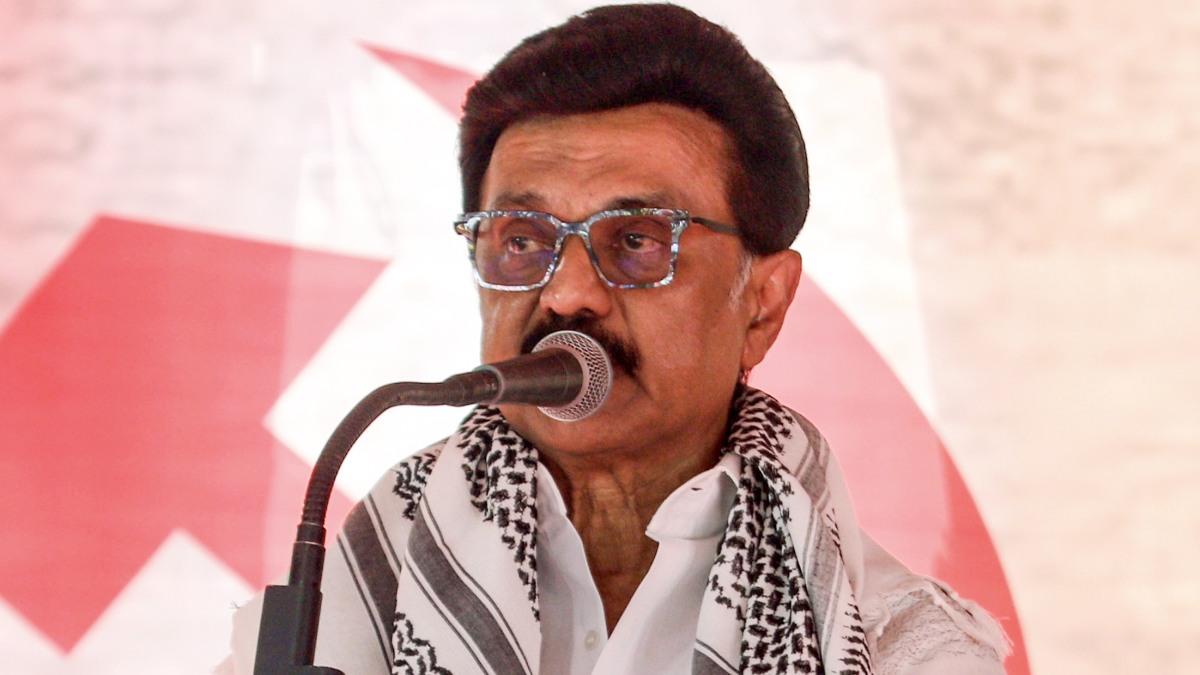
Stalin would love to have it that way, all over again, after the three past elections.
Of course, Stalin has also moderated his position further on controversial issues -- even while being firm on ideology -- by asking the voters if they wanted development and peace, or want to lose both, if the Hindutva forces are allowed to have their way.
In the midst of all this, a whisper campaign has revived over the district administration and the police force's alleged failure to keep the chief minister updated as much and as early as should have been.
Names are being mentioned and memories are being drawn about their past failures.
All of it has led to the old controversy that Stalin is being run by a few officers he trusts, and that they are misleading him, if only to cover their tracks -- and that of their favourites, many of whom they had placed in key positions across the state.
The idea is to paint Stalin as an 'inefficient' chief minister unlike predecessors Jayalalithaa and Karunanidhi. The AIADMK's EPS used to regale over it in his election rallies that he had launched a year earlier, but had moved away from it, in between.
N Sathiya Moorthy, veteran journalist and author, is a Chennai-based policy analyst and political commentator.
Feature Presentation: Rajesh Alva/Rediff