
Operation Sindoor has not yet been formally called off.
What was the crying need to send a team when it was known that there could be a match with Pakistan? asks Vice Admiral Biswajit Dasgupta (retd).
I stopped watching cricket ever since it stopped being a gentleman's game.
This metamorphosis started when the short game format overshadowed the Test match format.
The final nail in the coffin was the commercialisation of cricket leagues and players being bought at auctions.
One still thought that a degree of gentlemanliness and decency would prevail when teams sported national colours. That alas, was not to be.
As far as India and Pakistan are concerned, everything is war.
This is a legacy of Partition and this history of animosity between the two countries started even before the countries were divided on the basis of religion.
This distrust, animosity and deep hatred, perpetrated over generations by brainwashing children in Pakistan through textbooks, madrasas and religious leaders, is not going to go away for the foreseeable future.
At the cost of upsetting artists, sportspersons and such other people who think games, cultural interaction and people-to-people exchanges can reduce mistrust and animosity between the two countries, I maintain that such niceties don't work with the likes of Pakistan where deception, terror and violence are the major instruments of State policy, where the writ of generals and mullahs run and where the man on the street has no voice.
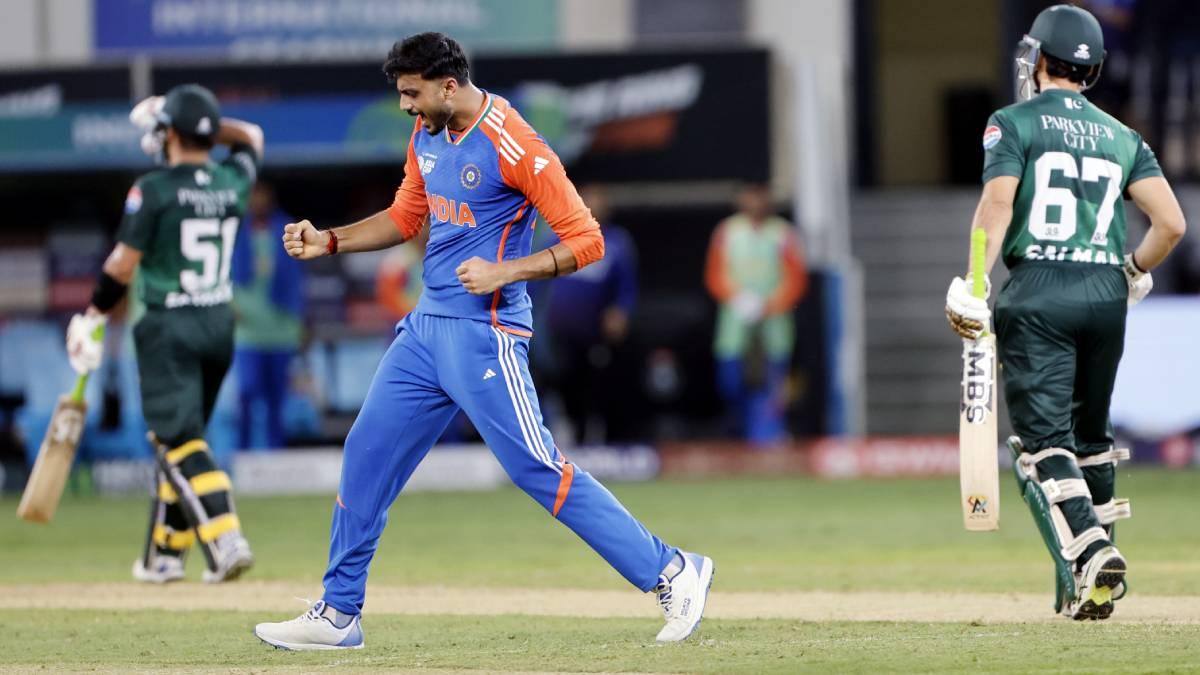
Coming back to this silly cricket controversy related to the Asia Cup in Dubai -- that the Indian team thrashed the Pakistanis hard was bad enough; they even refused to shake hands with the Pakistani team, adding insult to injury.
The Indian team members have reportedly refused to share a stage where the Pakistani chairperson of the Asian Cricket Council, Mohsin Naqvi, was to be present.
Was this all premeditated or it just happened on impulse?
The latter is rather hard to comprehend.
This has created controversy and discomfort.
The Pakistan team has threatened to pull out of the Asia Cup tournament.
Reminds me of the strategic soldier -- how soldiers conduct themselves during international missions may have international ramifications beyond their pay grades.
The Indian captain, Suryakumar Yadav, is all of 35 years old and it is unlikely that he would have a deep strategic understanding of what effect the team's conduct could have internationally.
Is it therefore likely that the Indian team received advice from some quarter?
The two countries just fought a kinetic war. Operation Sindoor has not yet been formally called off.
These are two nations in perpetual conflict. What was the need to play Pakistan in the Asia Cup?
What was the crying need to send a team when it was known that there could be a match with Pakistan?
And why was there no condition specified that India should not play Pakistan during the tournament, if that was the prevailing sentiment?
When water and trade are stopped, why not sport?
Once in the tournament, was it right to court controversy?
An undeniable fact is that all descriptions of national, regional and international sports bodies make huge amounts of money if India and Pakistan play each other.
Spectators come to see war, not cricket.
Betting soars, not to mention other nefarious schemes that are well-known; and for which many international cricketers have been blacklisted in the past.
Quite naturally, ticket sales as well as TV and online viewership plummet without these two teams.
Hence, could decisions be taken to send teams to play each other even if overall bilateral relations decidedly demand not doing so?
This is a hugely curious matter -- and simply not cricket.
Vice Admiral Biswajit Dasgupta (retd) is a former commander-in-chief of the Indian Navy's Eastern Naval Command.
Feature Presentation: Ashish Narsale/Rediff