
If the US' renewed closeness with Pakistan ends up strengthening Pakistan's military, it will clearly show that Washington no longer wants a strong India and could be ready to let China dominate Asia, notes Colonel Anil A Athale (retd).
Henry Kissinger once remarked that to be an enemy of the US is dangerous, but being a friend is fatal! Narendra Modi's India is the latest country to discover the truth of this assertion by one of the most astute minds of our times.
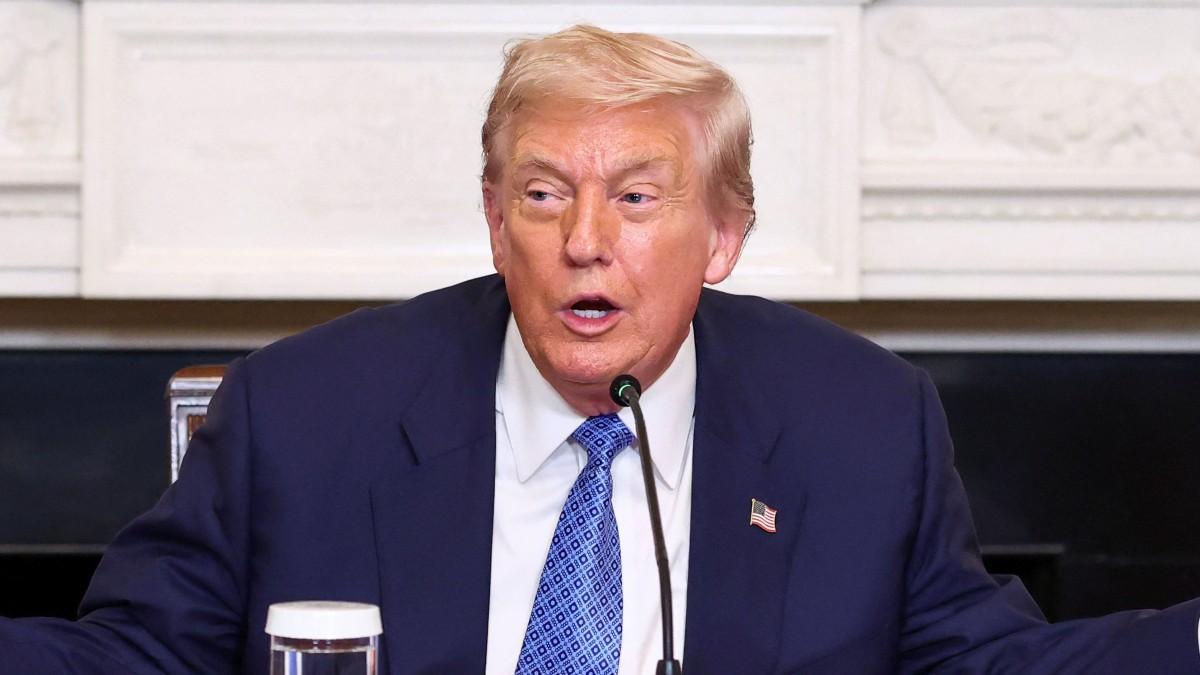
President Donald Trump's tariff tantrums by imposing 50% tariff on Indian commodity exports on dubious grounds is being explained away by some of his bhakta as a negotiating tactic.
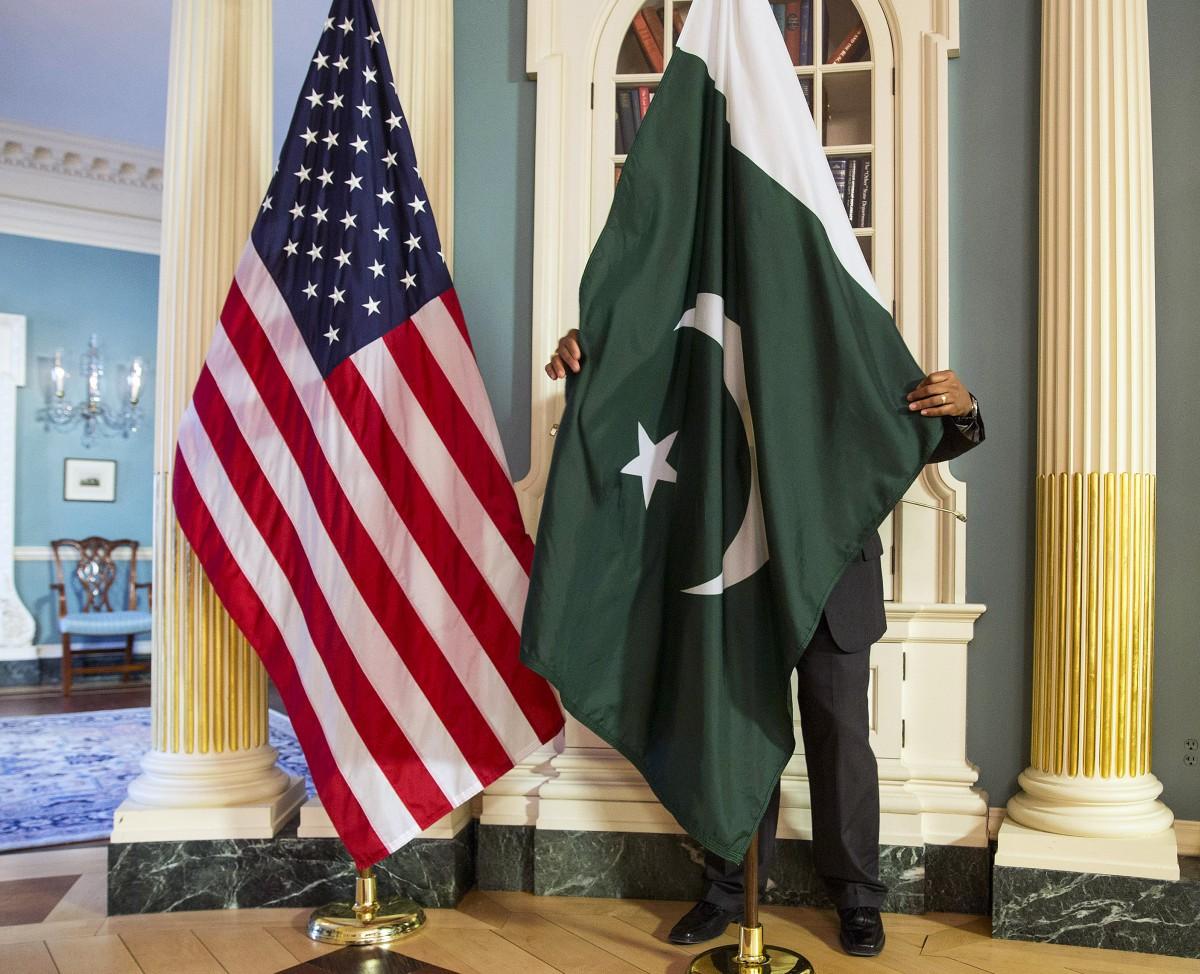
It may well be so, but it will be fatal for India to ignore the latest cosying up the US is doing under Trump's watch with Pakistan.
Coming on the heels of Operation Sindoor this is indeed a déjà vu moment for many Indians.
It seems we are back to the 1980s when our turbulent neighbour was supported by both the US and China.
At that time this was explained away as part of the duo's strategy against the Soviet Union. But today with the Soviet Union no longer in existence and its successor Russian Federation a pale shadow of the mighty USSR, the US resuming weapon supplies to Pakistan doesn't have a fig leaf to hide US intentions.
The US is out to undermine India militarily and economically. This knocks the bottom out of recently created organisations like QUAD (India, US, Australia and Japan).
I was fortunate to study US policy documents at the John F Kennedy Archives in Boston in 2003.
The 1960s was a tense period in Sino-US relations. President John Kennedy had collected some of the finest American minds in his government. This group worked out on a long term strategy to deal with China.
The study anticipated the rise of China in the coming century and recommended that the US engage with China economically while containing it militarily.
This twin policy has been faithfully followed by both the Democrats and Republicans right till Trump's arrival.
It is in this context that India-US relations changed from 'estranged democracies' to 'engaged democracies'.
In my over 30 years engagement with US think-tanks, the US State Department et al, there was a clear understanding that India will not toe the American line in toto. But powerful India, with its size and potential, was an existential check for China in Asia.
This American approach was bipartisan and relations between India and the US continued to improve both under President George W Bush and President Barack Obama.
Another facet of US support for India's rise was a clear realisation that the US was no longer the sole superpower and needed an ally like India.
This logical understanding was at the root of steady India-US relations of the last 25 years.
As a corollary to this understanding, the US began disengaging from Pakistan. It kept relations at an economic level so as to not give the Chinese a free run.
The current American flirtation with Pakistan, if it results in bolstering Pakistan's military capability, will be seen as a deliberate inimical act.
If this is to happen, the only conclusion one can draw is that the US no longer needs a strong India since it has decided to accept China's domination of Asia.
More than India, this would set alarm bells ringing in Taiwan in particular and the rest of South East Asia in general.
India has weathered the era when Pakistan was supported by both the US and China. It can weather the present situation as well.
But this knocks out the bottom from a strategic calculation of steady American support to India's rise.
As shown in the WTO and BRICS grouping, India and China did find themselves on the same page on global economic issues.
India did have differences with China on some geopolitical issues, but with the possibility of a US-China détente on the horizon, we have no choice but to re-examine our approach.
It is too much to expect any deep strategic thinking from Trump's advisors who seem to resemble a cast from a B grade movie. But it may well turn out that the US is looking at a return of the Cold War era, a duopoly world balance with China replacing the USSR.
However, it must be remembered that all through the Cold War, the USSR was only half a superpower. It was economically weak.
In the new duopoly balance, China is equal of the US economically. The Chinese weakness is in the military domain.
It is here that a militarily strong India is a force multiplier for the US. With moves to undermine India, both economically and militarily, the US is digging its own grave.
Sadly, none of these measures by Trump can reverse the de-industrialisation of the US that took place in the 1990s.
It was corporate greed that shifted manufacturing out of the USA. China's economic rise is directly attributed to export of American capital and technology.
Now that the chickens have come home to roost, the US seems to have woken up to the threat to its dollar and ultimate wellbeing.
The spree of imposing tariffs can have no effect on the astronomically high labour costs in the US.
The only real alternative for the US to maintain its economic dominance was though innovation and generation of new tech.
Much of the talent for new tech/innovation was provided by Indians and other Asian migrants. Hounding out non-white migrants has shut that door for the US.
The targeting of India will please China and signals that the US is no longer interested in containing it. This will mark a major shift in the US policy of more than 60 years standing.
It will be instructive to see the long term trajectory of US-China relations to appreciate the seismic shift this may entail.
It is quite likely that the Chinese would prefer a duopoly world balance rather than the current trend towards multi-polarity.
In the near future, resumption of American military aid to Pakistan, if it materialises, would be a signal that the US has given up the contest with China.
India has no choice but adjust to the new reality and plough a lonely furrow. The future is full of challenges as well as opportunities.
Colonel Anil A Athale (retd) is a military historian and author of Let the Jhelum Smile Again (1997) and Nuclear Menace The Satyagraha Approach (1998).
His earlier columns can be read here.
Feature Presentation: Rajesh Alva/Rediff