
BJP strategists are missing something somewhere, and they have not acknowledged it, to be able to repair it in good time, points out N Sathiya Moorthy.
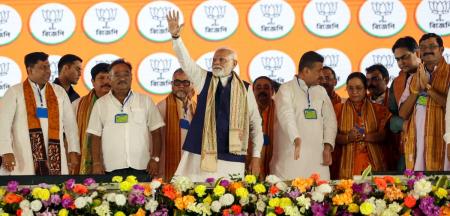
Independent of the political frills being propagated by Prime Minister Narendra Modi and Home Minister Amit Shah, a determined chief minister in an Opposition-ruled state can use, misuse and abuse the Constitution 130th Amendment Bill, when enacted, to arrest Union ministers and ministers from BJP-ruled states, to try and render their ouster.
That even the prime minister and chief ministers of third states cannot escape the ordeal is another aspect that the framers of the draft Bill did not seem to have taken into account.
Prima facie, the new law aims to cleanse the political system of the likes of former Tamil Nadu DMK minister Senthil Balaji, who was re-inducted by Chief Minister M K Stalin after the Supreme Court had granted him bail, with the ED-initiated corruption case against him pending before the trial courts.
It is another matter that the Supreme Court had separately ruled that there was no Constitutional provision that barred Stalin from continuing with Senthil Balaji after his arrest and imprisonment, but once out on bail, the latter was faced with the embarrassing situation in which the apex court indicated its desire to have him out or to face a formal order in the matter.
Senthil Balaji quit for a second time in months, under near-similar circumstances.
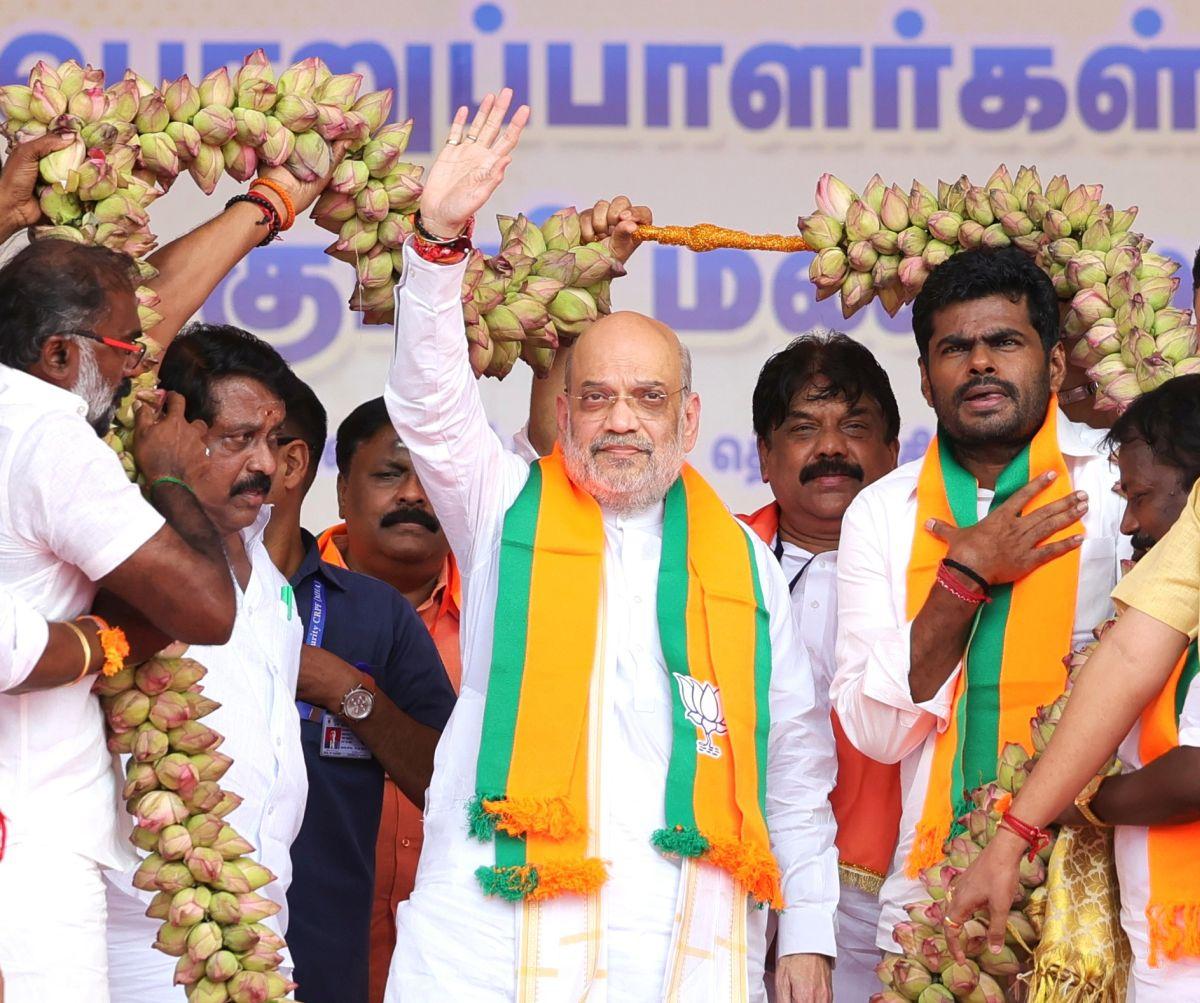
Whatever the political reason and moral justification for such a law, Modi in West Bengal and Shah in Tirunelveli did leave behind the impression that it was all aimed at embarrassing the anti-BJP parties in power in the two poll-bound states -- nothing more, nothing less.
But the reverse too can happen if the new law is enacted, as it lays down a 30-day continuous stay in prison for an alleged offence requiring a five-year term as the only criterion for ministers losing their jobs.
Already, Shah in Tirunelveli has indicated the possibilities as he reiterated for one more time that Stalin was heading the 'worst corrupt government' in the country.
Given the Tamil mood on Centre-State relations over the past couple of years, BJP strategists should guard against such moves as they may intend not causing a consolidation of votes in the DMK's favour, that too when anti-incumbency is palpable.
The reasons are not far to seek.
With Indira Gandhi's arrest in 1977, the post-Emergency Janata Party government of then prime minister Morarji Desai lost the narrative, leading to her freedom the very next morning, and returned to fight her way back to power earlier than expected, in elections 1980.
At the state-level, the AIADMK's Jayalalithaa, another hate-object after her five-year rule from 1991, regained the script when the successor government of DMK patriarch M Karunanidhi had her arrested on specific charges of corruption in 1996, and had her in prison for a month without bail.
Not only did Jaya return to power in 2001, but she also won from carefully chosen four constituencies across the state, with a high court ordered stay on her conviction and sentence in the Tansi land deal case.
That the case and also Jayalalithaa's political career took a different course after the Supreme Court's intervention is another matter altogether.
But the point is that the new Constitution Amendment Bill may be half-baked as it does not preclude or prevent ministers who had lost their positions under this law, from contesting and returning to power, in good time.
Yes, in the interim, the likes of DMK's Deputy Chief Minister and Stalin's son Udhayanidhi, could face the music in cases registered against him at multiple police stations for his controversial speech that Sanatana Dharma or Hinduism should be 'eradicated like malaria and dengue'.
Of course, Udhayanidhi is now protected by Supreme Court orders, but then the likes of BJP Chief Minister Yogi Adityanath of UP too make it to such a list, drawn up by Opposition-ruled states, where too police complaints are 'pending investigation'.
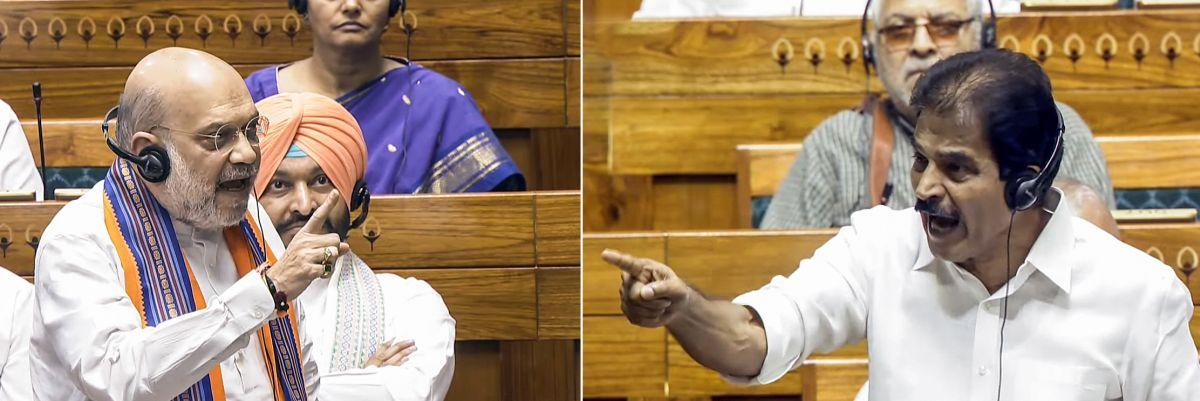
If someone still thought that state governments dare not arrest Union ministers, then they are wrong or their memory is short, or both.
In 2001, the Jayalalithaa-initiated midnight arrest of Karunanidhi was accompanied by the arrest of two Union ministers, Murasoli Maran and T R Baalu, both from the DMK, who were members of the Vajpayee Cabinet.
It took then Union law minister Arun Jaitley's public hinting of 'central intervention' for Jaya to free the two ministers -- but that was due to the fact that she was only months into her second term in office.
There is no clarity in the matter, either under the law, or through court orders.
Constitutionally, the question should be addressed, hence, what if Jaya had not freed the two Union ministers and not dropped the cases against them, for obstructing police officers, when Karunanidhi was being taken for interrogation.
Her government could have trumped up more cases against the two, to have them in prison for a month, or charge them with offences punishable with a minimum prison term of five years.
For now, experts in media columns are discussing only the Constitutionality of the proposed law, especially in the context of the federal structure.
Leaders like Stalin have also called for revisiting the 'federal debate' to restore the powers of the states, which is not confined to the present issue.
For their part, all Opposition parties, both national and regional, have condemned the new draft as a further tool for 'political vendetta' after the ED, IT and CBI have allegedly failed to meet the rulers' political expectations.
Hidden in such a construct is also the loyalty of such leaders as Senthil Balaji (400-plus days in jail) and Delhi's former AAP deputy chief minister Manish Sisodia (500-plus days in jail), who did not wilt under pressure.
All of it means that the BJP strategists are missing something somewhere, and they have not acknowledged it, to be able to repair it in good time.
N Sathiya Moorthy, veteran journalist and author, is a Chennai-based policy analyst and political commentator.
Feature Presentation: Aslam Hunani/Rediff