
Luckily for us, a Russia that is desperate to stay relevant in an emerging multipolar world finds in India a reliable geostrategic partner.
The Russian proximity to India also keeps China from exploiting its economic dominance vis a vis Russia, points out Colonel Anil A Athale (retd).
While much attention was focused on President Trump's tariff tantrums, many Indians have ignored the American provocations carried out through overt and deliberate patronising of Pakistan.
Much more than economic issues of trade, the Trumpian US is provoking India by literally poking its fingers into our eyes.
There is obviously much more at stake than trade and tariffs. It is a crude way of showing US anger at our actions on 10th May 2025 when we called not Pakistan's, but the US' nuclear bluff by attacking the Nur Khan base, reportedly the home of Pakistan's nukes.
The USA under Trump crossed a dangerous red line as far as Indian security is concerned when he hobnobbed with the self-styled Field Marshal Asif Munir (a religious bigot to boot) and facilitated his takeover of the Pakistani State and control of nuclear weapons.
Pakistan is the only nuclear weapon possessing country where the military is in control of its nukes. In all other nuclear weapon States it is the political head who controls the doomsday weapons. Military men by training and inclination are prone to use force and a concept like deterrence that relies on 'threat' rather than actual use is alien to them. And that is in the best of circumstances.
When the USA promotes and facilitates control of nuclear weapons by a known jihadi, it is creating a grave security threat to India and danger to the rest of the world as a nuclear fallout will not be confined only to the Indian subcontinent.
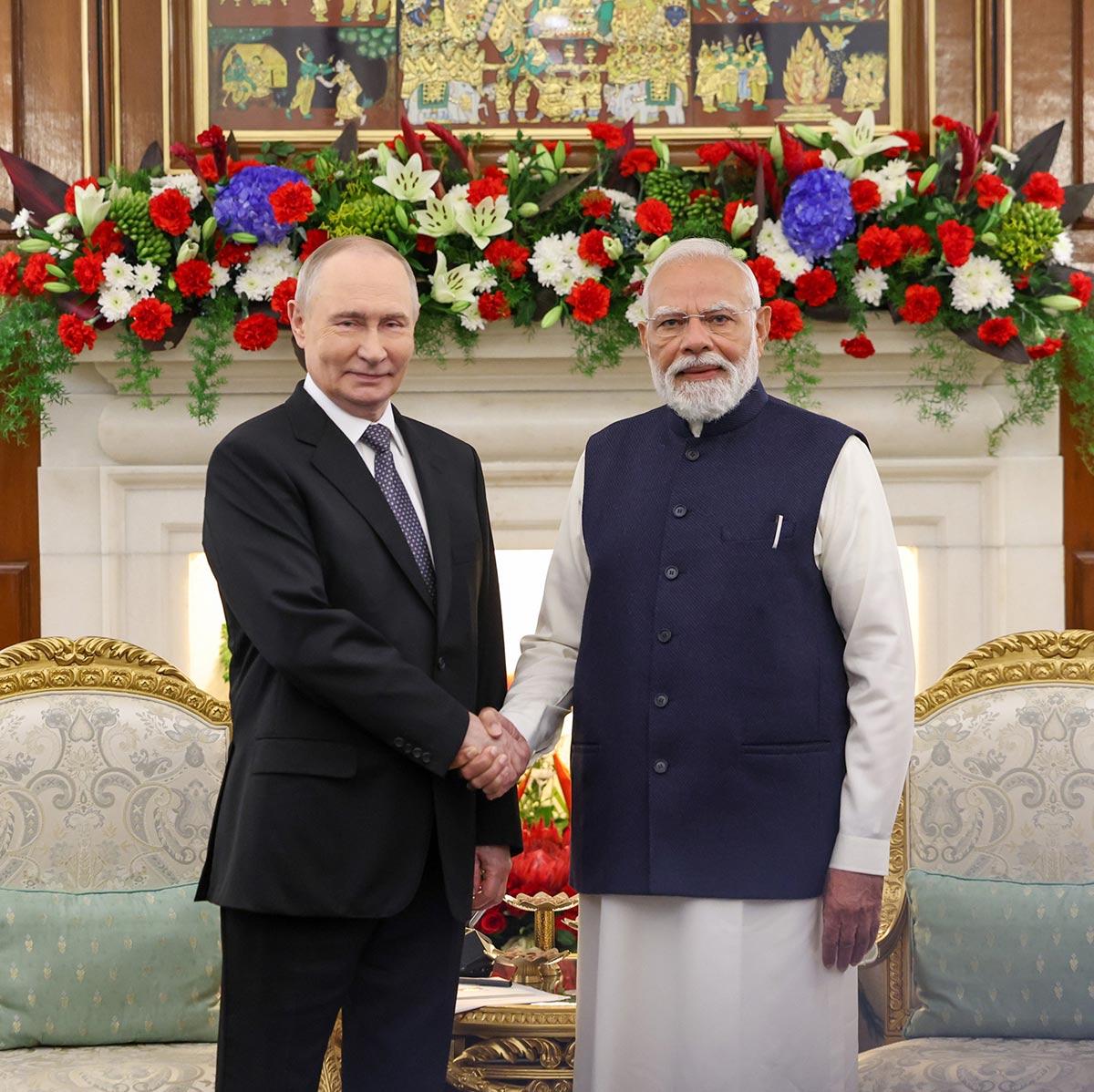
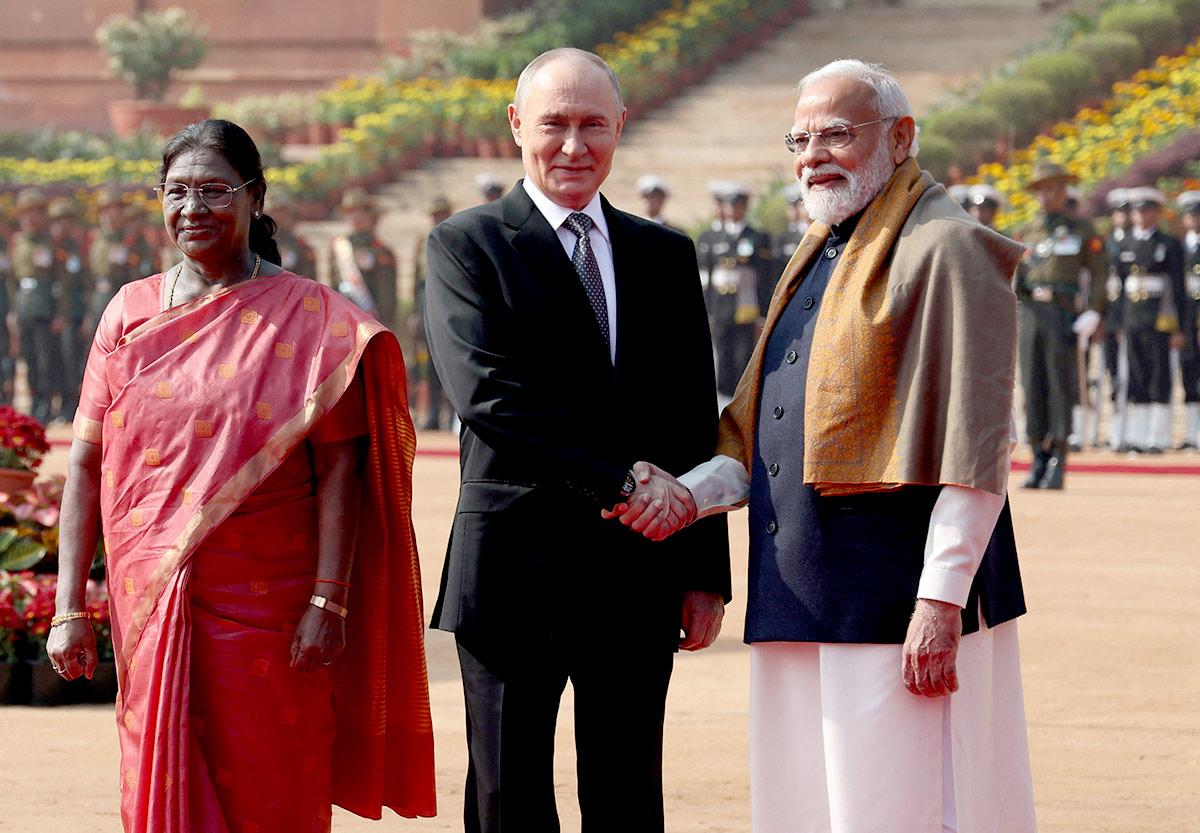
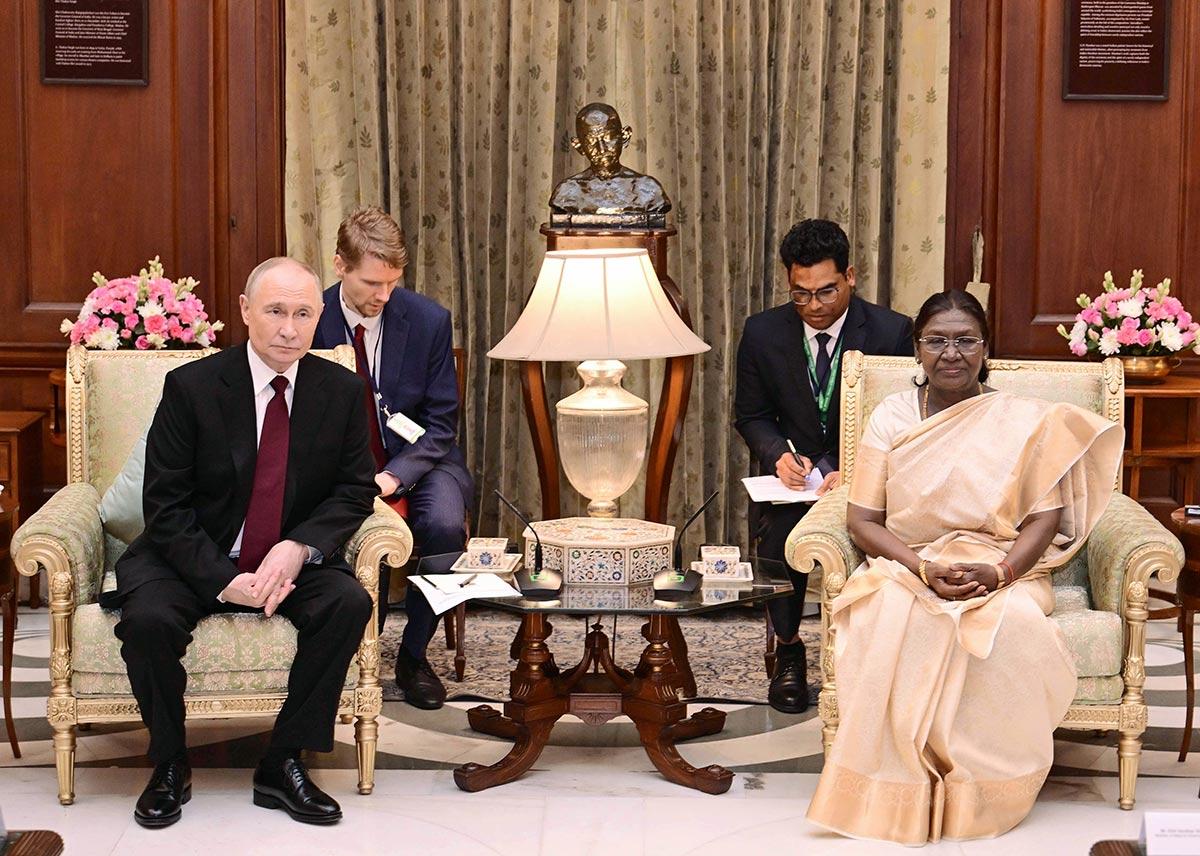
This was the backdrop when President Vladimir Putin of Russia and Prime Minister Narendra Modi met in Delhi on December 4 and 5, 2025. To appreciate the enormity of the challenge faced by India, a brief look at Pakistan's journey to a nuclear weapon State needs to be understood.
Basically, Pakistani nuclear weapons are a by-product of the Cold War. In 1974 when India went nuclear in all but name, it was regarded as an ally of the then Soviet Union.
To counter India, the US (and its ally then) China created the Pakistani nuclear arsenal.
But post the dissolution of the Soviet Union, not foreseen by most, it became a liability.
However, soon the Pakistani nukes were re-purposed to act as a deterrent against Iran.
Given Pakistan's lack of infrastructure, the Pakistani nukes were always in control of its patron, the US.
The recent events brought back memories of my meeting at the US state department with a US official in May 2003.
Twenty two years ago, Pakistan was ruled by a military dictator General Pervez Musharraf, a darling of the US establishment.
Many of us were worried at that time that Musharraf, the architect of the Kargil adventure, may well think of using nukes against India.
I asked the state department diplomat directly if the Americans controlled Pakistani nukes so that they are not used against us.
The diplomat in question, a scholar of ancient Indian history (he had a doctorate from Deccan College, Pune), did not give a direct answer but instead gave a meaningful smile.
I drew my own conclusions and conveyed this to our government of the day. As I did more research on the subject, one realised that Pakistani nukes were actually US proxy nukes.
One does not doubt that Pakistan, over time, with the help of a German centrifuge plant, indeed has enriched uranium. But to move from that to developing a usable, deliverable nuclear device is a long way off.
Pakistan does not have a worthwhile industrial base, engineering manpower and even basic metallurgical back up, so it is incapable of producing the trigger for the device or miniaturise it to fit on a missile.
Despite its propaganda, it is fair to say that while Pakistan indeed has nuclear devices, these are bulky and dependent on US supplied F-16 aircraft for use against India.
The US supplied F-16s are firmly under American control through spares and treaty restrictions.
What angered the US is the fact that during Operation Sindoor, India showed that it can hit the F-16s even before they can take off from Pakistani airfields.
This was achieved through the combination of satellite monitoring and the Russia-supplied S-400 air defence system.
During Operation Sindoor, India showed how it used a defensive system like the S-400 in an offensive role.
The S-400, deployed well within Indian territory, took out Pakistani aircraft 300 km inside Pakistan.
In classical nuclear war terminology, India showcased its ability to launch a 'pre-emptive strike' on Pakistani nuclear delivery vehicles like the F-16s.
There is nothing new in this US strategy as throughout the 20th century, the US played this game of nurturing Pakistan as its cat's paw in the Middle East.
In the US scheme of things, the boundary of responsibility between its central command and Indo-Pacific command runs along the India-Pakistan border.
Thus its central command deals with Pakistan while its Pacific command based in Hawaii deals with India.
All those years the Pakistani 'threat' to India was the seen as collateral damage of US policy in the Middle East.
Otherwise, Pakistan, one tenth of India in all respects, was incapable of posing any security threat to India.
It was US and later Chinese arms that made this possible.
Kashmir was used by the collective West as a pressure point against India.

Ever since August 5, 2019 when India removed Article 370 and carried out the formal integration of Kashmir, the West has lost a pressure point against India.
The post Operation Sindoor abrogation of the Indus water treaty has further eroded Pakistan's role as a proxy against India.
Pakistan has to now think twice before it needles India since its very livelihood on agriculture is now controlled by India though water.
By promoting a hardliner Islamic ideologue like Field Marshal Asif Munir, the US is attempting to restore Pakistan's role as a proxy to control Indian behaviour.
The Saudi-Pakistan 'alliance' and linking Pakistani nukes to Saudi defence was aimed at Iran and its likely nuclearisation.
But like during the earlier Cold War period, the fallout on India is substantial.
The US has decided to arm Saudi Arabia with the latest F-35 stealth aircraft. It is most likely that these will be operated by Pakistani pilots and will be available to it during emergencies like Operation Sindoor.
In a sense of deja vu, this is exactly what happened in the 1970s and 1980s.
US supplied weaponry to Jordan, Turkey and Saudi Arabia was always available to Pakistan.
In this sense, we are back to the old binary of the Cold War.
With Pakistan in possession of nuclear weapons, the reverting to old habits by the US can be dangerous. India has no choice but to respond quickly to the emerging threat and cannot wait till next year when Trump suffers a reversal in mid-term elections in the US, loses control of the US Congress and becomes a toothless tiger.
President Putin's visit to India had this major dimension that went beyond the public discourse.
Thanks to Trump and his courting of Pakistan, the India-US strategic partnership is all but dead.
As India discovered during the Cold War, it is futile to focus on a proxy. To safeguard its basic security India has no option but to deal with the forces who support the proxy, namely the United States of America.
Luckily for us, a Russia that is desperate to stay relevant in an emerging multipolar world finds in India a reliable geostrategic partner.
The Russian proximity to India also keeps China from exploiting its economic dominance vis a vis Russia.
Colonel Anil A Athale (retd) is a military historian and author of Let the Jhelum Smile Again (1997) and Nuclear Menace The Satyagraha Approach (1998).
His earlier columns can be read here.
Feature Presentaton: Aslam Hunani