
'Operation Sindoor had three objectives.'
'One, destroy the Lashkar-e-Taiba headquarters at Muridke and the Jaish-e-Mohammed headquarters at Bahawalpur.'
'Second, deter and defend any counterstrike by Pakistan.'
'And third, if they persist, demonstrably deliver counterforce punishment.'
'All of the three boxes, the IAF checked,' points out Shekhar Gupta.
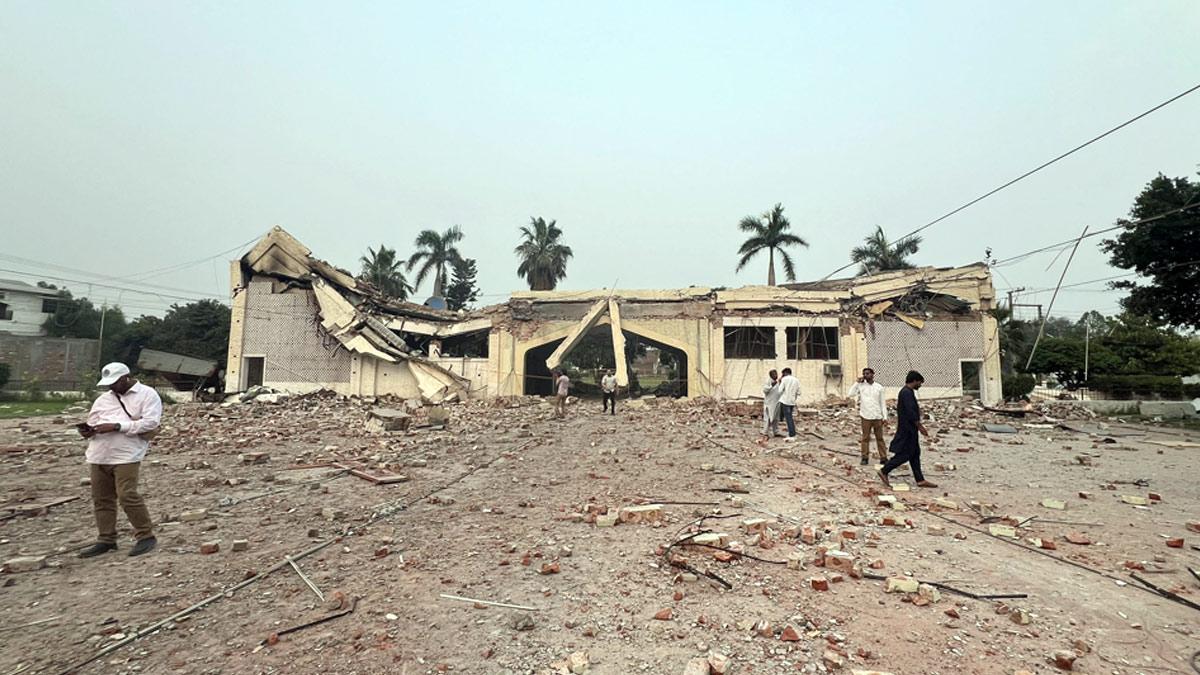
I can begin this with a trick question: If in a war, one side lost 13 aircraft to combat and the other five, who won? All of the active India-Pakistan wars and conflicts have been short, 22 days in 1965 being the longest.
Operation Sindoor was just over three days. Whenever a conclusive outcome like a capitulation and mass surrender is missing, there's scope for both sides to claim victory.
There is clarity in some situations, however. We Indians believe we won every war or skirmish, but accept that we lost 1962 to China. Similarly, the Pakistanis concede defeat in 1971.
So which air force lost how many aircraft to combat in 1971, just in the eastern sector?
The numbers, established, even by rival historians, with tail numbers and pilot names are: India 13, Pakistan 5.
These are losses in combat, not to accidents, or the 11 Sabres the PAF pilots abandoned on Day 5 of the war before making a daring escape to Burma in commandeered civilian transport.
Which brings us back to that trick question. At 13 to 5, the IAF lost about three times as many aircraft to combat than the PAF in the east.
So, who won that war? Is that even a question? And how did the IAF lose the 13 aircraft? Two were lost in air combat (as 5 of PAF's were) and the rest to small arms fire from the ground.
For the IAF, the war didn't end once the PAF was defeated. It redoubled ground support to the army, to hasten the victory, minimise the army's casualties, whatever the risk.
Eleven of the 13 aircraft were lost to ground fire, flying very low.
This is the essential difference between the two air forces.
One is obsessed with defensive air combat and self-preservation.
The other has an all-out aggressive approach as part of the larger national effort. The PAF is numbers obsessed, the IAF is overall outcome-oriented.
For the PAF and Pakistani public opinion, however, all that matters is how many aircraft they shot down.
The mood is so heady that, while it is the air force Pakistanis think 'won' them the war, it is the army chief who got that ridiculous fifth star.
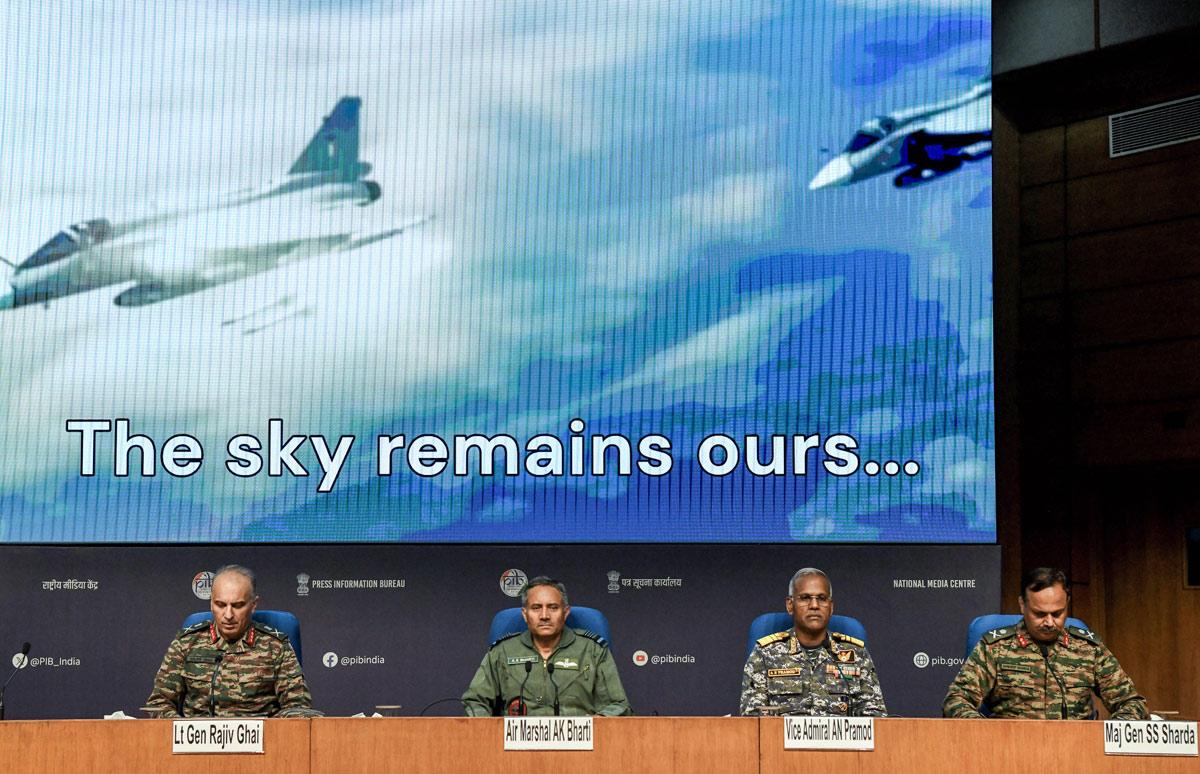
This demonstrates the essential doctrinal difference between the two air forces. The PAF is like a super defensive boxer who hangs back, face covered with gloves, waiting for the rival to attack and land a punch when an opening arises.
The IAF, on the contrary, has the doctrine of all-out strike, willing to take some punches. If the PAF believes in risk avoidance, the IAF is a risk-taker.
India's Operation Sindoor had three objectives. One, destroy the established and well-known headquarters of Lashkar-e-Taiba at Muridke and Jaish-e-Mohammed at Bahawalpur.
Second, deter and defend any counterstrike by Pakistan.
And third, if they persist, demonstrably deliver counterforce punishment.
All of the three boxes, the IAF checked. As several top military leaders have stated, there were some losses in the first.
For the first and the third, it also has high definition pictures and local videos as evidence.
The PAF won't talk about anything other than its claimed air-to-air 'successes' in the first 22 minutes on May 6/7. That's how the PAF psyche has evolved over time.
If you've been watching its briefings, 'situational awareness' has been its favourite buzzword.
It will, therefore, go on and on about its air-to-air claims. In the big picture, it failed to protect any of the predetermined IAF targets, despite 15 days of warning.
It never rose in combat to challenge scores of IAF aircraft that launched missiles to hit every PAF base, air defence location, and critical weapons storage across the entire length and breadth of their country east of the Indus and some across it.
The PAF was no longer up for a fight.
Indian military aviation historians and analysts Pushpindar Singh Chopra, Ravi Rikhye, along with Swiss-Australian expert Peter Steinmann, described this unique mindset in great detail in their 1991 book Fiza'ya: Psyche of the Pakistan Air Force.
The PAF, they wrote, has the psyche of a lonely David taking on the IAF Goliath.
Totally divorced from the big picture and that larger, situational awareness, their buzzword, I would add.

The PAF psyche they talk about is of seeing their role sharply limited to air-to-air warfare, accepting limitations of its size and counting the score of rival aircraft shot down as the only determinant of success.
And then conserving itself for that imagined final phase of the war.
This means the PAF fights the IAF in one dimension and stays on the sidelines of the larger national effort.
The country can lose the war, but the PAF would still claim victory because they 'shot down more aircraft'.
The PAF has produced not a scrap of evidence or picture after more than three months to back any of its claims.
Inexcusable when even commercial satellites are looking at everything.
Yet, Pakistan is celebrating victory.
Its media, mainstream and social, politicians across all parties and, of course, serving military leaders and veterans are all proclaiming a glorious victory, some even breathlessly claiming 1971 is avenged and awarding themselves promotions, medals, and honours.
There are multiple precedents, history, and a psyche to this doctrinal difference. Let's look at the data on our air engagements.
In each case, India has lost many more aircraft in combat than Pakistan.
Briefly, if we compile the list, by now authenticated by historians on both sides with unit, type, tail numbers, crew names, location, and crews taken POW, the numbers of purely combat losses would be India 52 and Pakistan 20 in 1965 and India 62, Pakistan 37 in 1971.
These are purely combat losses, shot in the air or destroyed on the ground by rival air force.
September 6 is when they celebrate their supposed victory in 1965 as Defence of Pakistan Day.
There is a unidimensional PAF element to this because they think that day they thwarted multiple, determined IAF raids on Sargodha and shot down many aircraft.
So fanciful is their folklore and so strong is the emotion that many rational Pakistanis also ask that if the PAF was so dominant, why did Pakistan not win the war? Good question.
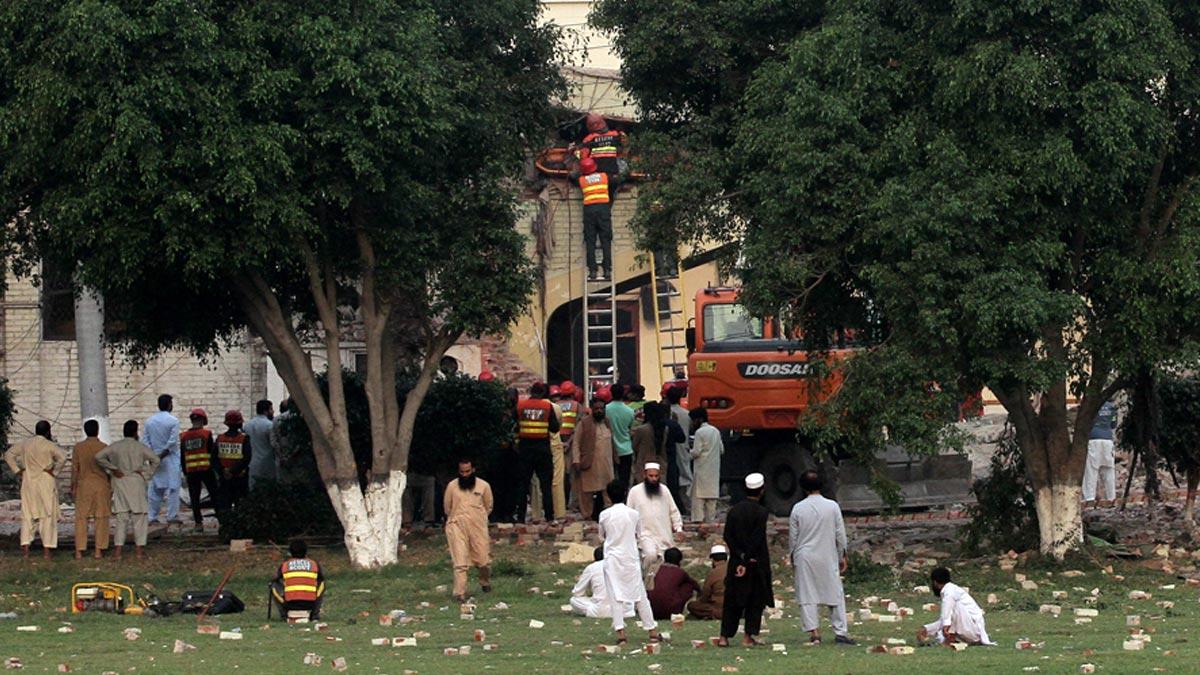
The tough fact is, September 6 was when Pakistan lost that war. What they had launched with impressive panache as a supposed one-two punch -- Operations Gibraltar and then Grand Slam -- to take Kashmir in a blitzkrieg had failed.
Roles reversed, the cause was lost; it was now a war for the defence of Pakistan across the entire frontier. Even in the air. That's why it is called Defence of Pakistan Day.
The 1971 War is better recorded and there's no doubt who won.
Can the PAF by itself claim victory because it lost fewer aircraft in action? On honest reflection, Pakistanis would ask: Had it continued going out to fight instead of hanging back in self-preservation, would it have contributed more to the national effort?
There isn't one instance of the PAF tilting the balance in a battle. If anything, it abandoned both its army and navy, reaffirming the reputation of the PAF only fighting for itself, by itself, and mostly in its own air space.
It is optimised for that limited role. This was also the story of Op Sindoor.
By special arrangement with The Print
Feature Presentation: Aslam Hunani/Rediff
