
'During the 5-day visit, Amir Khan Muttaqi would have, conceivably, bumped into our powerful security agencies one way or another and some interaction would have ensued, which, in turn, can lead to future dealings.'
'Indeed, this will be the one crucial template of the Indo-Afghan relationship that Pakistan will be monitoring closely,' points Ambassador M K Bhadrakumar.
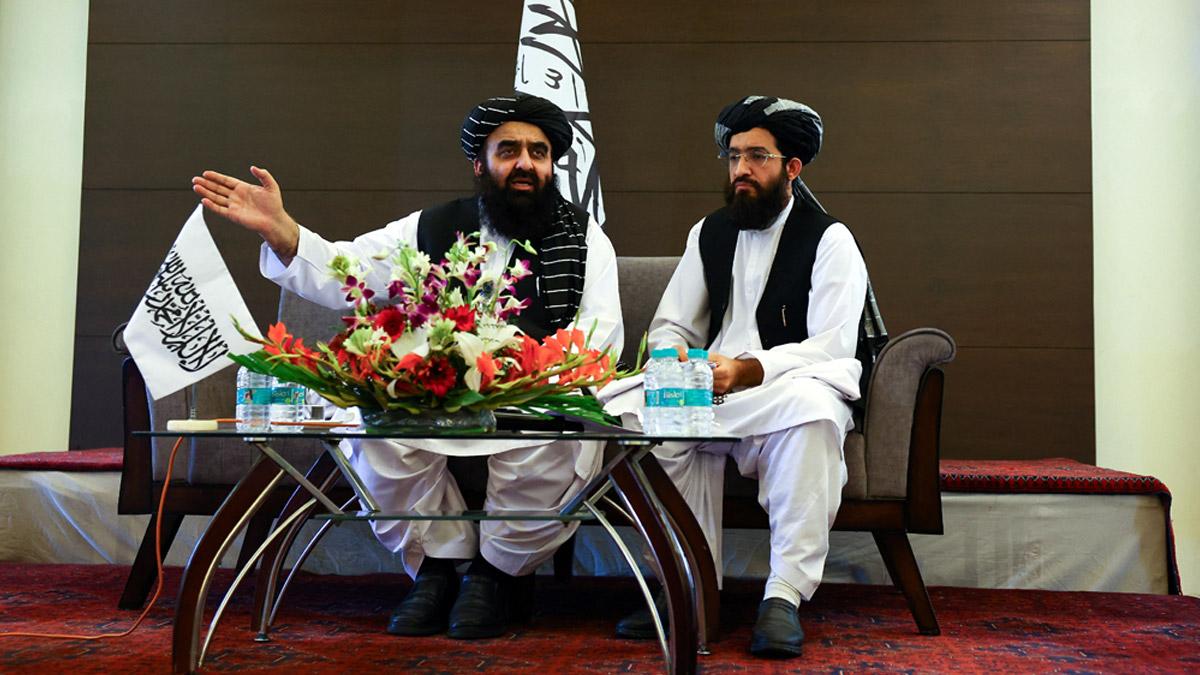
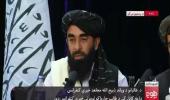
The visit to India by Amir Khan Muttaqi, the acting foreign minister of the Taliban regime ruling Afghanistan, can be seen through the India-Pakistan prism as a South Asian geopolitical event. But such a tunnel vision is deceptive and wrong ideas accrue against the backdrop of the march of history in contemporary world politics.
Hopefully, the government has a sense of proportion. For Prime Minister Narendra Modi didn't receive Muttaqi, a visiting foreign minister, while he had an 'incredible' meeting with the ambassador-designate of the US Sergio Gor who holds a middle-ranking title in the White House but remains a key political aide to Trump.
The Indian hosts treaded softly making sure that Delhi didn't ruffle American feathers at a time when Pakistan is Trump's preferred partner. In fact, Muttaqi had no scheduled meeting in his itinerary other than with External Affairs Minister S Jaishankar and National Security Advisor Ajit K Doval.
The tight-rope walking was also evident in that India would allow Kabul authorities to assign an ambassador to Delhi and even fly the Taliban's flag on the embassy compound but will not recognise the Taliban government unless there is an international consensus in this regard -- plainly put, until Washington is ready to accord recognition.
Nonetheless, the government kept mum on the human rights issue in Afghanistan, which is one of the stated reasons why Washington refuses to green light the UN recognition of the Taliban government.
Indeed, following Muttaqi's visit, the government will reopen its embassy in Kabul but at charge d'affaires level, presumably until Trump's envoy arrives. This timidity will be duly noted by the Afghans who are not only protocol conscious but also erudite enough to draw conclusions at the diplomatic level.
There will be some disappointment on Muttaqi's part that Delhi is not matching the level of importance that Russia, China, Iran or the Central Asian States or Turkey are showing.
But they will internalise their feelings. Delhi's best hope is that the US will allow international recognition to the Taliban government soon.
Meanwhile, Delhi should at least ease visa restrictions on Afghan nationals wanting to travel to India, which is a pressing demand of the Taliban.
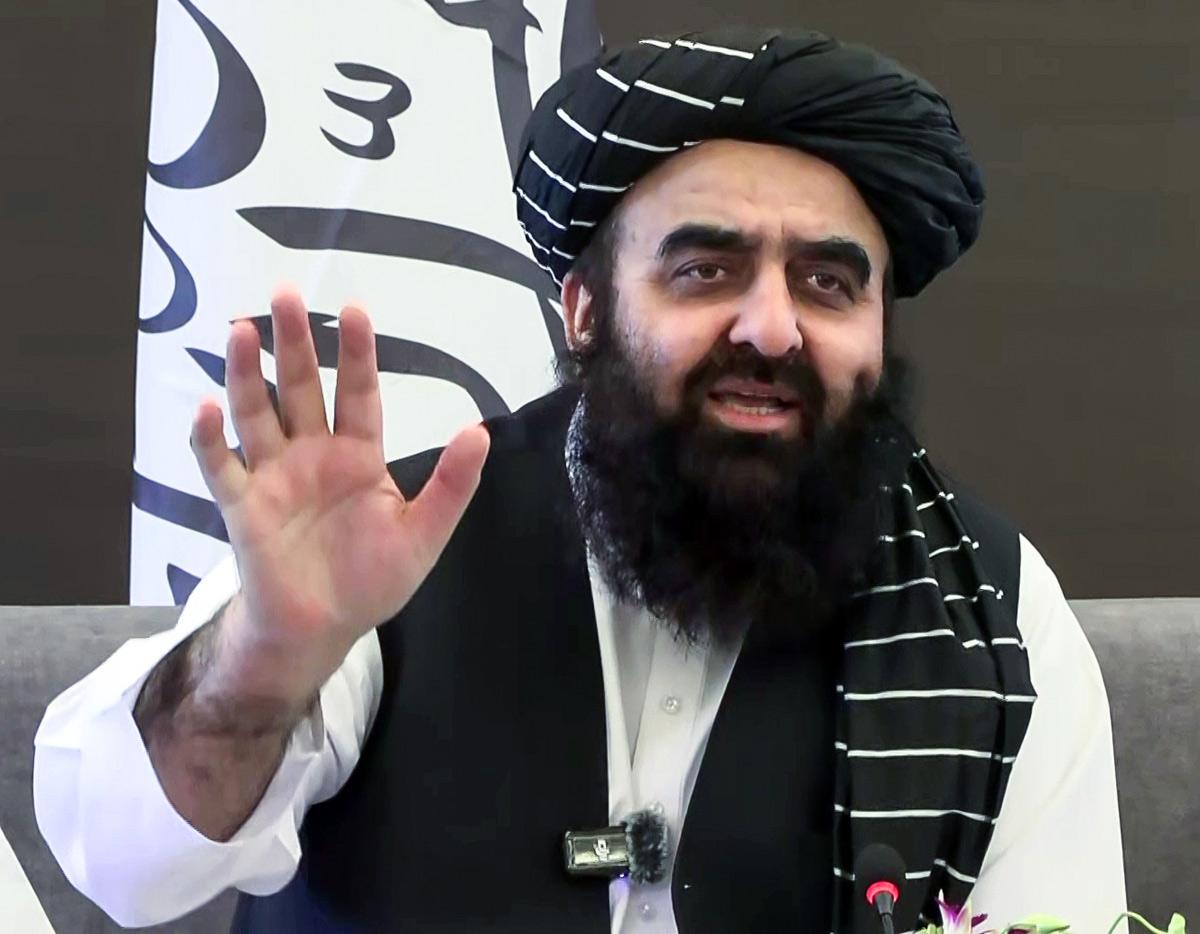
During the 5-day visit, Muttaqi would have, conceivably, bumped into our powerful security agencies one way or another and some interaction would have ensued, which, in turn, can lead to future dealings. Indeed, this will be the one crucial template of the Indo-Afghan relationship that Pakistan will be monitoring closely.
Coincidence or not, the Pakistani military chose Friday, even as Muttaqi met Doval, to conduct a series of retribution operations in Afghan territory. The military spokesman in Rawalpindi declined to say whether the operations included strikes on Kabul where explosions were heard.
Soon fighting erupted on the Pakistan-Afghan border, which is reportedly continuing, forcing Muttaqi to scuttle his planned visit to the Taj Mahal and rush home.
If Pakistan did strike Kabul, that would be a major escalation. Anyway, Pakistan has sent a message of warning to the Taliban leadership on their warming ties with India.
The Indian hosts while drawing up the itinerary of Muttaqi -- a follower of the puritanical and orthodox Islamic sect of Deoband, which is heavily influenced by the 18th-century Muslim reformer Shāh Walī Allāh and the early 19th-century Indian Wahhābiyyah -- included the Taj Mahal in it, the ultimate symbol of magical opulence and worldly pleasures and romance in all of mankind's history.
It was in bad taste. Evidently, Rawalpindi made it a non-event and sent Muttaqi packing home to Kabul without seeing the Taj. The visit is ending on a sour note with Pakistani and Afghan blood staining the Khyber Pass.
Curiously, Indian analysts, including an ex-foreign minister, are already predicting that Pakistan's break-up as a nation State is becoming inevitable. These dangerous notions are borne out of either naïveté or jingoism or plain opportunism.
The geopolitical reality is that none of the three superpowers -- the US, Russia or China -- will condone the fragmentation of Pakistan, leave alone its fraternal nations in the Gulf, Iran or Turkey.
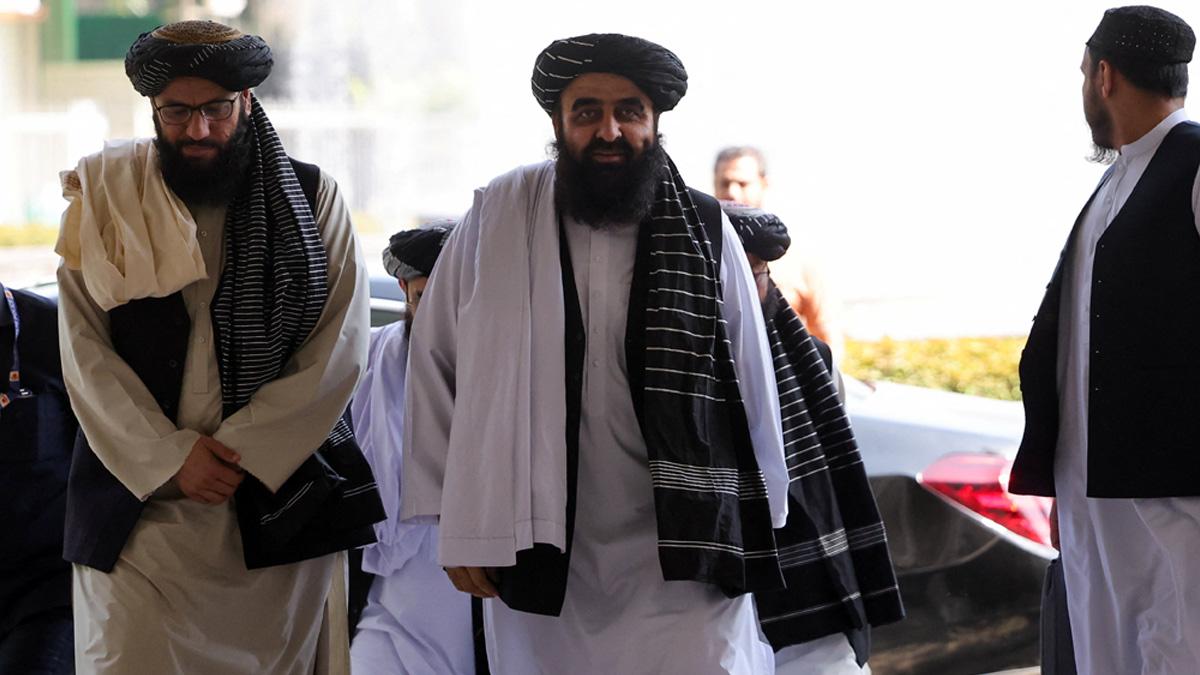
The Afghans are shrewd practitioners of diplomacy and, historically speaking, quite adept at playing India against Pakistan -- and vice versa -- to extract benefits. But their discerning power is never in doubt. We should respect their native intelligence to know what is good for them, and, more importantly, what is notgood for them.
That is the benchmark of our friendship for Afghans. They too are human beings entitled to live in peace, educate their children and dream of a better life for them.
A Pashtun general who also headed Pakistan's Inter-Services Intelligence once told me in a balmy evening in the Bosphorus, "Ambassador, you can never compete with us -- if an Afghan has toothache, he comes to Peshawar for treatment, such is the thickness of our blood."
Truly, Afghans are a deeply religious nation and we just wouldn't know what their innermost thoughts are toward present-day India, which is perceived as 'anti-Muslim'.
Much as the decision taken at the highest level in Delhi to host Muttaqi as a State guest is welcome, any hype to embellish it as a geopolitical event will be grossly improper even if it causes some irritation to Rawalpindi.
Look at the geography. We do not even have an access route to Afghan territory except through Iran, which is under US sanctions. Delhi complies with the sanctions and dare not make a test case of its 'strategic autonomy'. Muttaqi invited us to do mining. But how do we evacuate the rare earths?
Indeed, India will be drawing ridicule if any perception forms internationally that we are egging on Afghanistan, a desperately poor nation at subsistence level, to self-destruct by embarking on some esoteric great game.
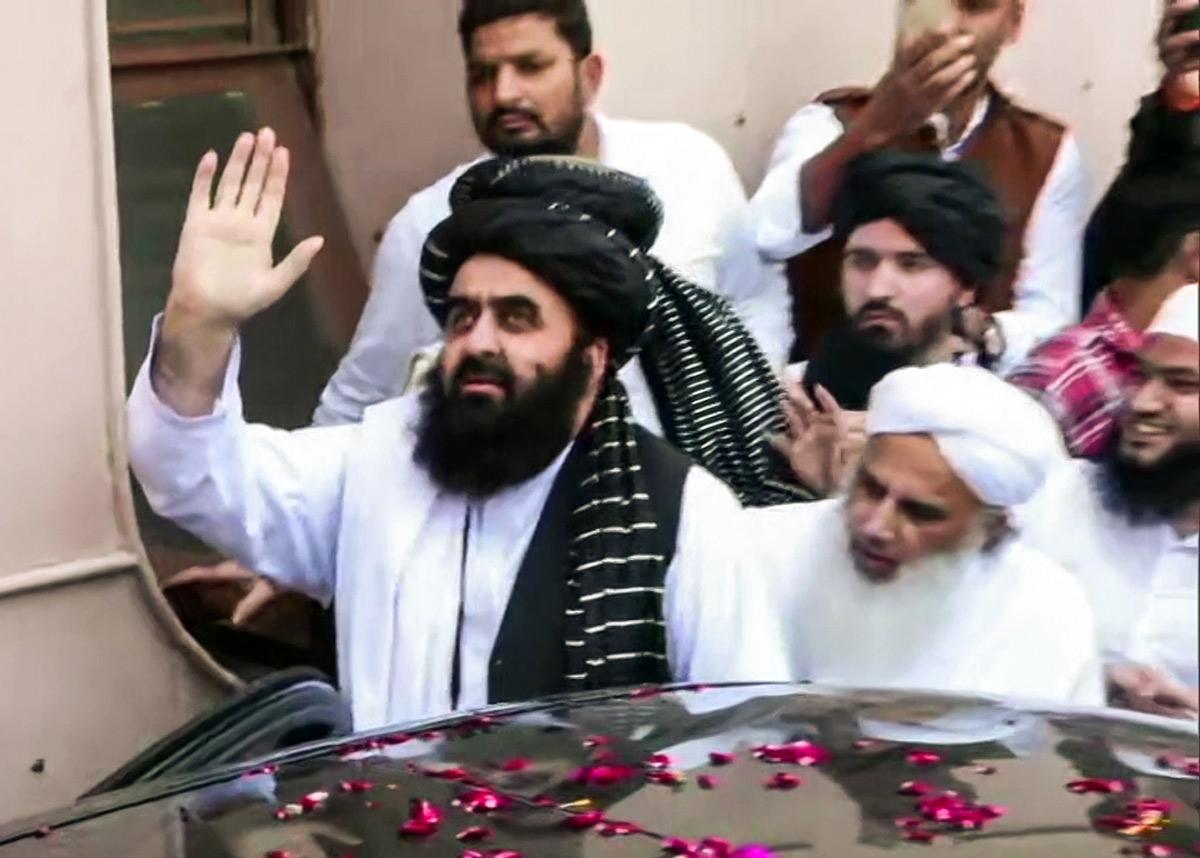
There is no great game in Central Asia. Russia and China are not only stakeholders in the stability and security of Afghanistan but also view Pakistan as a friendly partner whose concerns are taken seriously and whom they are courting for integration into Eurasia.
Equally, isn't it our exaggerated sense of self-importance to characterise China as a 'rival' in the Hindu Kush? China has a much higher sense of its destiny than that, and is far too busy to take note of India as a self-appointed 'influencer' in Kabul, having locked horns with the US and become a de facto participant, finally, in Russia's decisive Eurasian war against NATO.
Russia, China and Iran make a formidable alliance which is rooting for a neutral, independent Afghanistan that is at peace with itself and its neighbours. And they visualise such an outcome to be in their interests. Realism lies in India coordinating with the regional powers to garner the peace dividend.
We broke up Pakistan once; what came of it? Indeed, what came of the Afghan policy trajectory since the mid-1990s squandering away hundreds of millions of dollars? Be creative. Here lies right in front of us an opportunity to have a clean, cost-effective break. Take it.
As Russian Foreign Minister Sergey Lavrov eloquently put it at an event recently in Moscow in Muttaqi's presence, 'the security and well-being of our region depend on Afghanistan's active involvement in political processes, multilateral mechanisms, and joint economic initiatives'.
Ambassador M K Bhadrakumar, who served the Indian Foreign Service for 29 years, is a a former Indian envoy to Turkey and was assigned by Prime Minister P V Narasimha Rao to reach out to the Afghan Mujahideeen.
Photographs curated by Anant Salvi/Rediff








 © 2025