
Democracy in India is too important to be left to a leader with a limited appeal.
If Rahul Gandhi cares for India, he should step aside for a new crop of leaders, suggests Harishchandra.
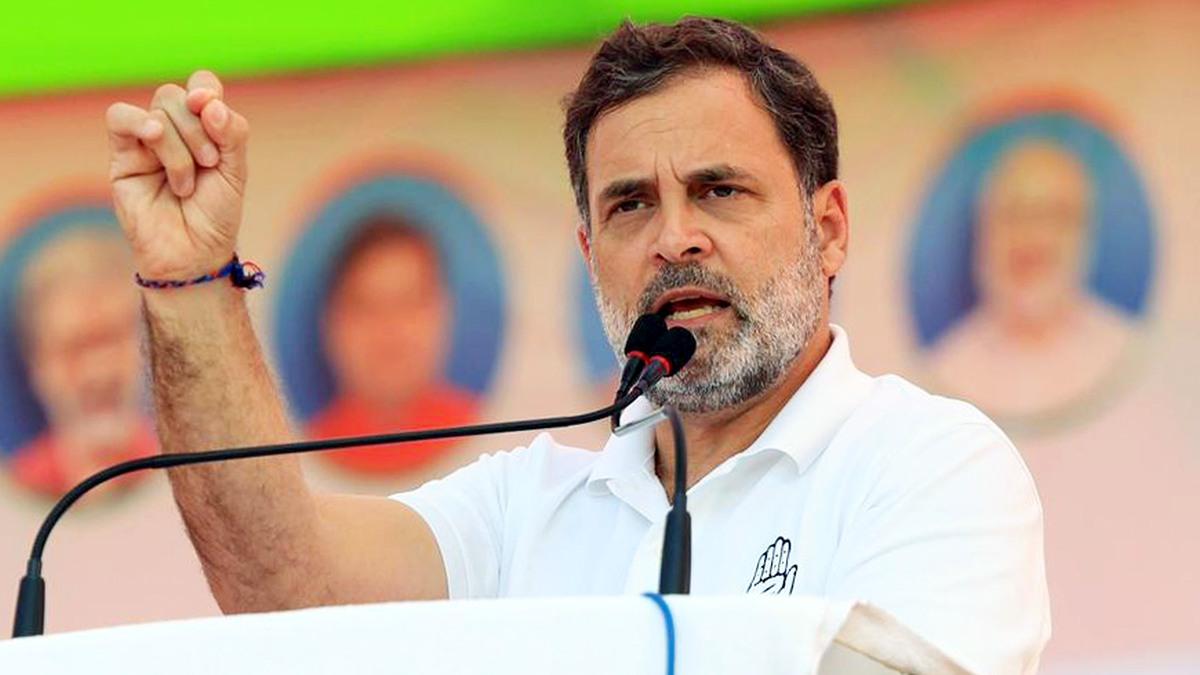
The Bihar assembly election results are in and it is time for the Congress to do some serious introspection.
The Bharatiya Janata Party-led National Democratic Alliance won the election by a huge margin, winning 202 seats out of 243 (that is about 83% of the seats).
The BJP emerged as the largest party with 89 seats, pushing the Janata Dal-United to second place with 85 seats.
The Mahagathbandan was trounced; the Opposition alliance, comprising the Rashtriya Janata Party, the Congress, the Communists and the Vikassheel Insaan Party, won just 34 seats.
The Congress won just six seats! This is beyond embarrassing; it is a disaster and needs some serious introspection.
A country can call itself democratic only if it has both a ruling party and an Opposition party. Democracy means that one party will win more seats and thus form the government while those who won less seats will sit in the Opposition.
Civics textbooks tell us that in the Westminister model that India adopted, as opposed to the US' presidential style, one votes for a candidate and party in the constituency where one is based.
The winning party then chooses its leader, who goes on to become the prime minister.
This is unlike the presidential model where one elects the president directly. But in India, our parliamentary style evolved to give primacy to one leader within every party.
Thus, Indians may vote for a particular party, but alongside they are also voting for a leader. In fact, more often than not, we in India put our electoral stamp on a party not because we even like the local candidate but because we want to see a particular leader as the PM (or CM).
Political theorists have noted that India has a parliamentary-presidential style, and that a popular leader can bring in more votes that the party normally would.
Millions in India voted for the BJP and millions voted for Narendra Modi even if they don't like the local BJP candidate.
In Bihar, it appears that the JD-U didn't draw as many votes as did Nitish Kumar. This is not to discount the role parties and their ideas play, all of which were also factors, but right now, we in India are seeing people vote for charismatic leaders over lackadaisical parties.
This brings us to the question regarding the Congress and its leader, Rahul Gandhi. The current reality is that along with the BJP, the Congress remains the only other party with a national presence, and which (still) has the ability to contest election in almost every state of India, though to varying extents.
It has formed the government in Karnataka and Telangana in the south and in Himachal Pradesh in the north, it is the main Opposition in Assam in the east and the main, albeit weak, Opposition in Gujarat in the west. The Congress' national footprint remains formidable.
Rahul Gandhi is the kind of a person that mothers would love their daughters to marry (his only weakness; he doesn't seem to have a full-time job!). He is decent, charming, and clearly popular with people.
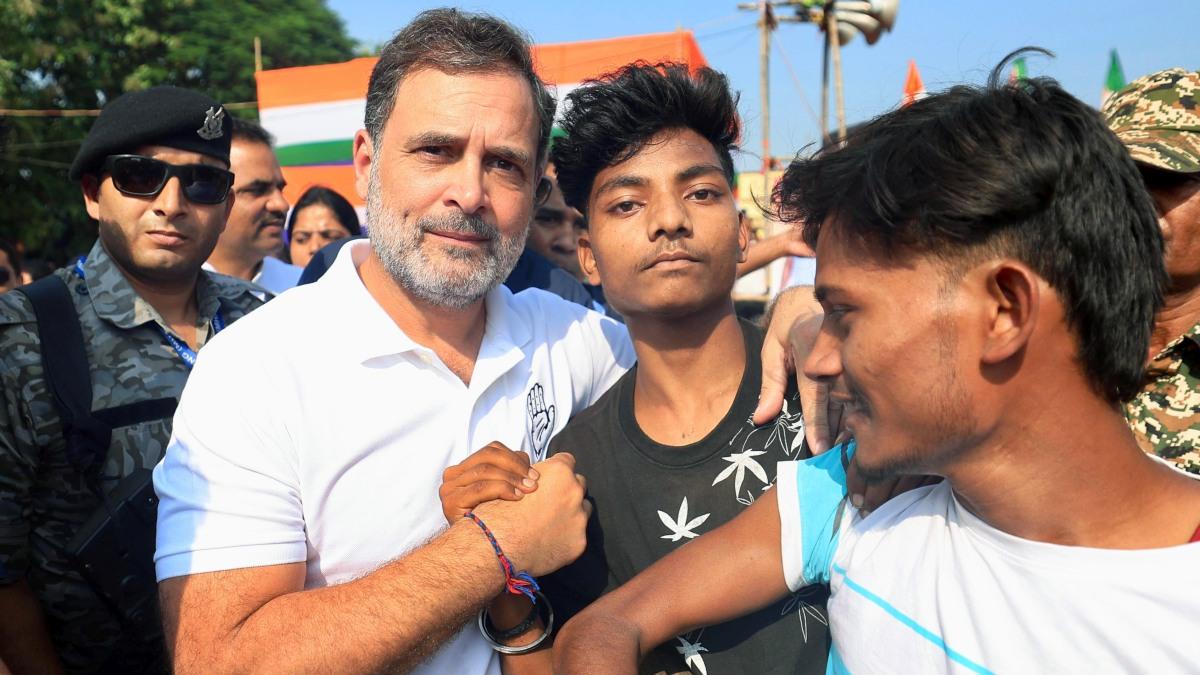
But here's the issue. Rahul Gandhi's popularity is at its best in small groups, or on a padyatra with a few thousands, or when visiting a village where the women, old and young, rush out to meet him with their litany of complaints.
To his eternal credit, he hears them patiently and does the best that he can. In a sense, he is urbane, non-communal, non-casteist, and a decent human.
It is not something that should ever be discounted. In gentler times, he would be a perfect leader, a representative of all that is right for India.
Unfortunately, we do not live in gentler times. Politics in India at present requires a leader who can inspire millions (for better or worse), and who people believe can lead them to a better future.
India is today at a grave crossroad, where its democracy is being systematically dismantled.
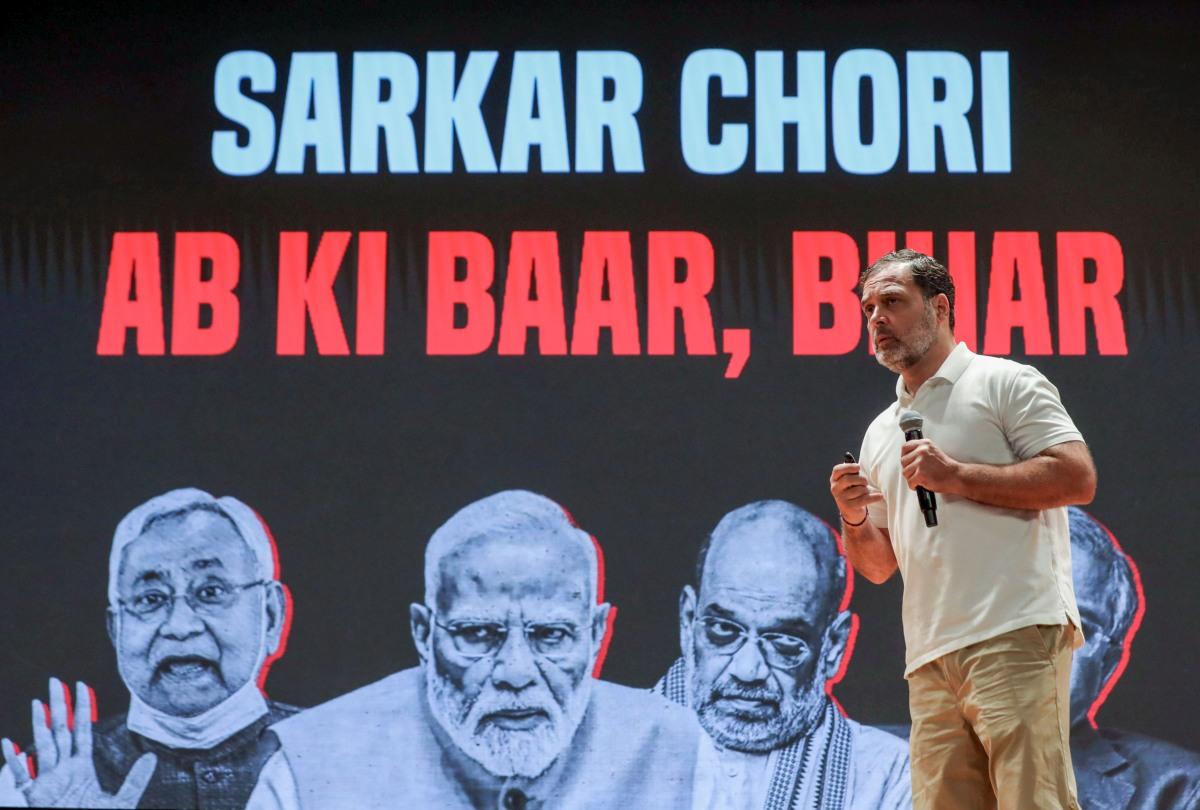
Few believe the Election Commission of India when it claims to be fair, even fewer believe Gyanesh Kumar when he insists everything is above board. But mere claims of 'vote chori' or appealing to the Election Commission is not going to resolve the issue.
Similarly, there are numerous issues that need to be taken up and for which the government must answer: Land lost to China, terrorist attacks (remember the promise of no more terrorism after demonetisation), rampantly growing corruption, Trump's treatment of India after the Indian PM endorsed him and Trump's kid gloves treatment of Pakistan...
But to do these successfully, to save democracy in India and to actually make the government answerable for its many sins of commission and omission, India needs a strong Opposition led by a strong and popular leader, a person who can bring millions of people out of their homes and on to the streets to make the government answerable. That is the job of the Opposition.
Sadly, Rahul Gandhi has shown he is unable to do so. He has been leading (or co-leading along with his mother Sonia Gandhi) the Congress for almost 20 years. He has had umpteen opportunities and he has been found lacking.
The bigger issue is that his looming presence at the apex of the Congress means no other leader can come up and lead the party as he or she deems fit.
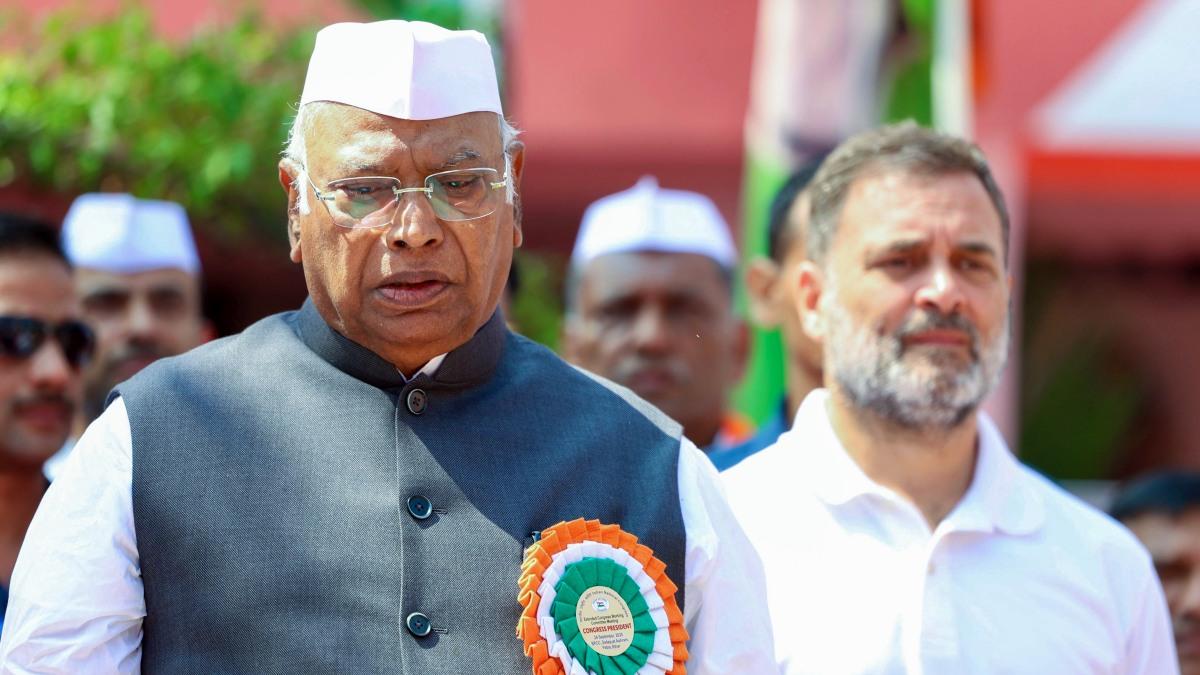
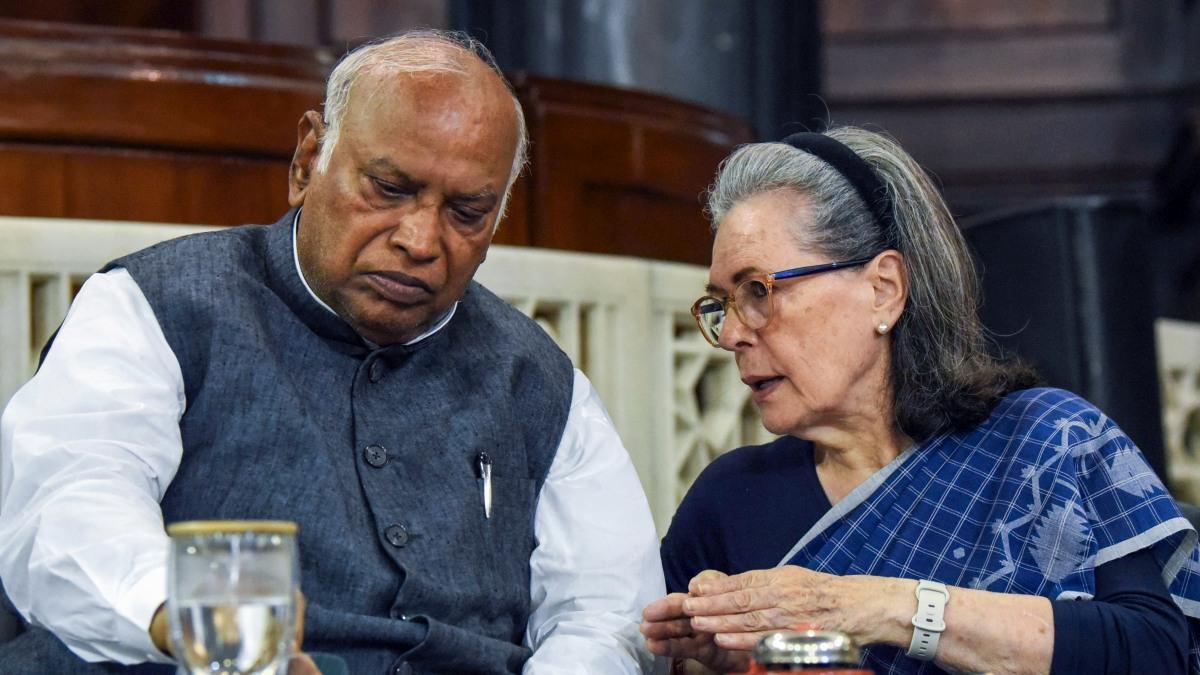
Mallikarjun Kharge is officially president of the Congress, but few believe he operates independently.
It is this very perception lends credence to the claims of dynasty and a leader who occupies the top chair only because of his lineage.
No one can operate with someone looking over the shoulder and this is unfair to all concerned.
Democracy in India is too important to be left to a leader with a limited appeal.
If Rahul Gandhi cares for India, he should step aside for a new crop of leaders. It may well be his greatest gift to the nation.
Feature Presentation: Rajesh Alva/Rediff