
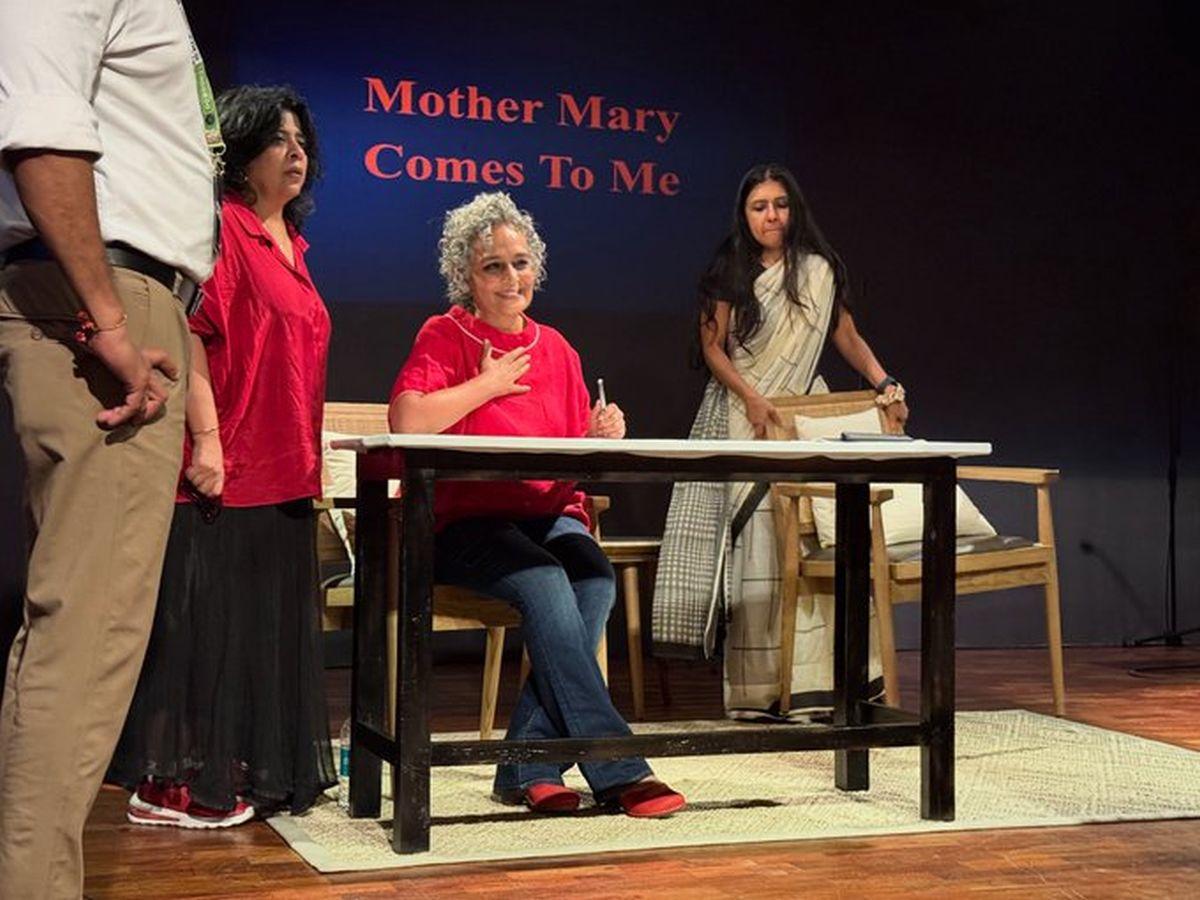
'Arundhati Roy is like a ballerina performing on a high wire, cool, supremely at ease but conscious of all the adoring eyes on her,' notes P Vijaya Kumar.
The Malayalam critic M P Manmadhan once described the pleasure of reading great poetry as lying, on a hot day, in a clear pool in a small depression in a gently flowing river, with clean sand below you and the blue sky above you.
It was an Omar Khayyamish image, adapted to Kerala. Reading Arundhati Roy's Mother Mary Comes to Me reminds one of that picture of exquisite pleasure.
The source of happiness is primarily the language -- lush, evocative, rich, suggestive in a thousand ways, all of them pleasure inducing.
The Malayalis' favourite daughter is at it again, providing unadulterated joy in sentence after sentence till you reach the end and feel slightly drained. Is it just a little cloying?
First, some context.
The Malayali Christian is the model community in Kerala. Prosperous, educated, politically and economically powerful, leaders in every field they choose to enter.
But they always give the feeling they are under-privileged, persecuted. They are masters at hunting with the hound and running with the hare.
This is not a measure of their hypocrisy; it is the smart survival technique of a minority cannily surviving in the midst of a potentially hostile majority.
Just contrast their attitude with that of the other significant minority in Kerala, Muslims.
Roy is superb at playing the underdog while being the overlord.
Christians in Kerala are bound together by religion and while a rocket scientist will not be able to analyse the differences between different factions of Christians -- apart from a broad avarna/savarna division -- they forget their differences and pull together when they sight a common enemy.
They were known for their courtesy and decency, not of the ritualistic Indian kind but one based on recognition of kinship and a feeling of compassion.
Roy might wear the mask of an atheist, but it is a mask that comes off easily.
Sprinklings of words like sin, blessed and so on show that the religious beliefs embedded in her have not been completely shrugged off.
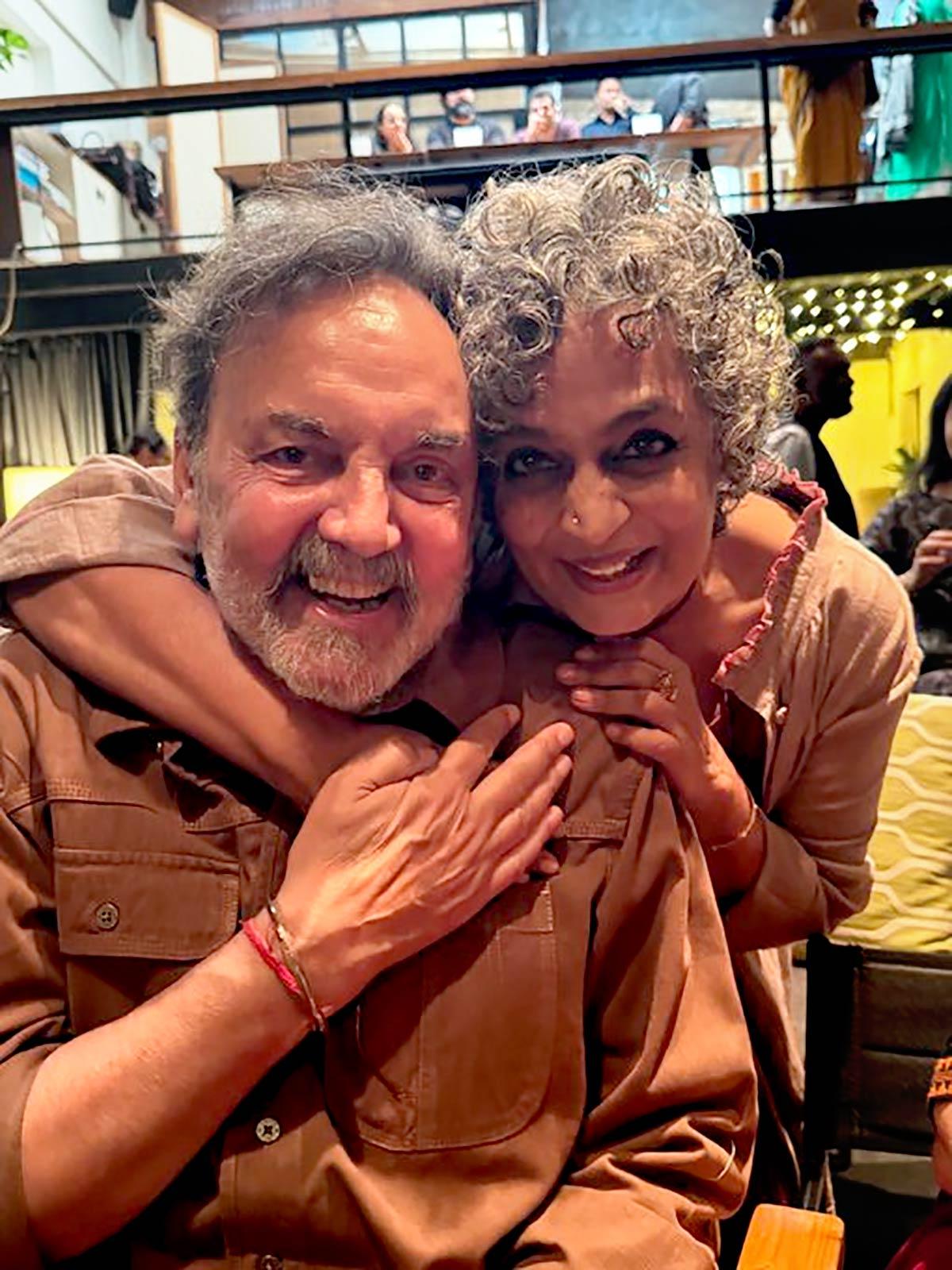
Roy is great at describing things.
For instance, so many things all kids then did, like having cuts and bruises all over one's legs -- Roy gives them a local habitation and a name.
Good writers describe them in ways that will make us sit up and take notice. When Roy does it we want to stand and applaud. Great writing demands we do that.
And Roy provides us great prose with an effortlessness that is awesome. She would not be able to write an ugly sentence if she tried.
There is a sprinkling of sugar on top of every sentence she conjures up. She is the master of the three word sentence. Or two.
She is like a ballerina performing on a high wire, cool, supremely at ease but conscious of all the adoring eyes on her.
The shocking attracts her.
She writes about an Italian friend in Delhi. His appeal increased when she knew that he had shat on the Persian carpet of a famous Italian writer, later revealed to be Alberto Moravia.
We do not know who did the cleaning up. She always had menials -- children of lesser gods -- around to do such tasks from the time she was a child to when the book ends, with Mary Roy's funeral.
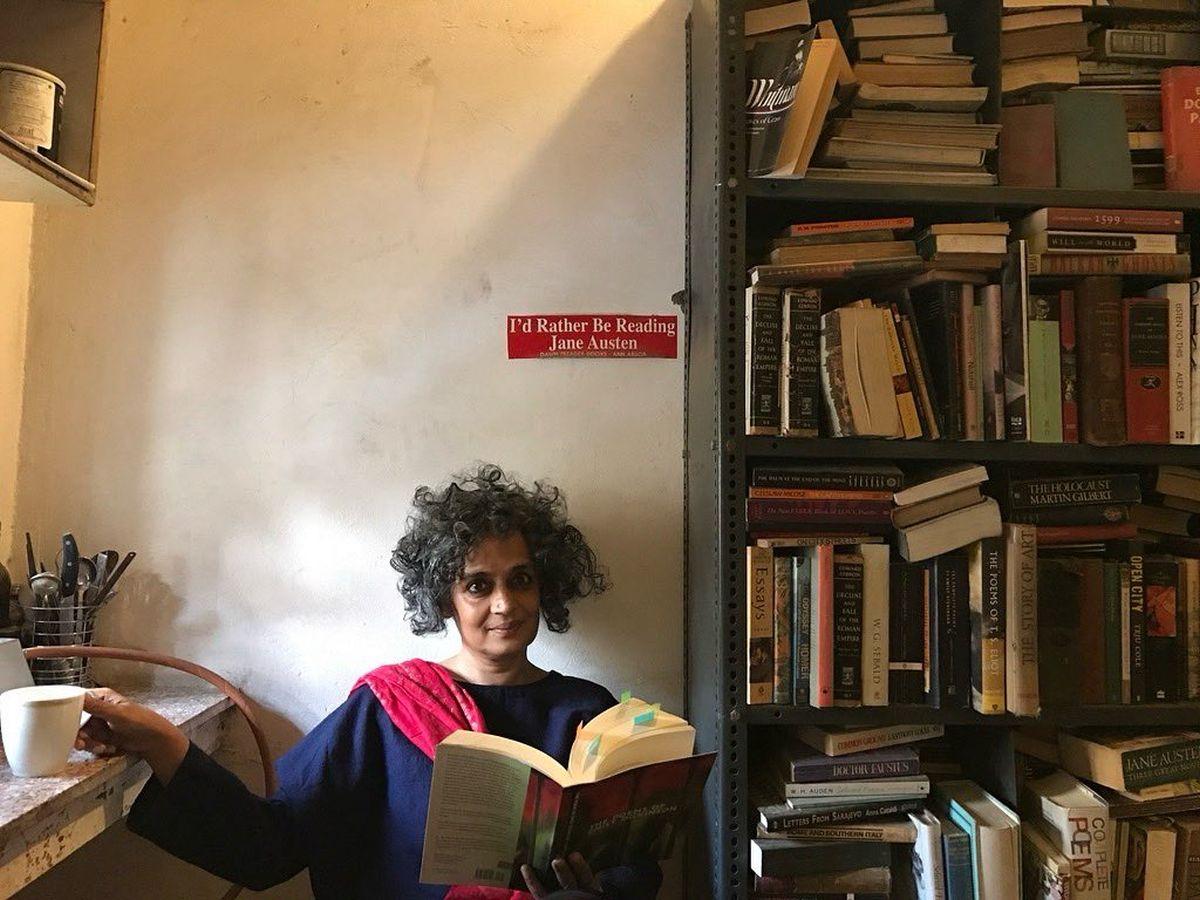
There is the style and the preening. She has written two world class novels, but she would have us believe that her most important work has to do with the environment.
Let's look at her record.
She did not endorse the fight against Mavoor Rayons in the late 1990s when the Chaliyar river in north Kerala was filled with toxic chemicals pumped out by the Birla owned factory.
Nor the agitation against endosulphan in Kasargod when the aerial spraying of that pesticide caused hundreds of malformed children to be born and more than one generation to be blighted.
They were too local, so she declined to join them unlike the Narmada agitation.
That probably was a good thing for her record suggests that her endorsement is often the kiss of death.
Medha Patkar did well at Narmada till glamour in the form of Roy entered the scene.
Roy talks a lot about her fighting the system. That needs to be taken with a pinch of salt.
True, she took on the Supreme Court and even spent a night in prison for contempt of court but, generally speaking, she was part of the system she was seen as fighting.
One strange tactic in her book is that Roy rarely names important people. Alphons Kannanthanam, M J Akbar and Vinod Mehta are examples. Why does she mask these names?
Kannanthanam was the District Collector who banned staging Jesus Christ Superstar in 1990; a ban the Supreme Court overturned in 2015.
This is in the public domain. Akbar was the first editor to publish her. Mehta filled an edition of Outlook magazine with her essay.
Their names are not mentioned but their roles are. Why do we need to Google to learn all this?
Read the book for pleasure, but if you are curious about names and other details, keep Google handy.
The first two -- Kannanthanam and M J Akbar -- are powerful in the BJP. Is Roy afraid of the BJP or of offending the two politicians? Surely not.
Is Roy scared of the really powerful? Hiding names behind euphemisms is a safe tactic.
Does she think that her readers will be satisfied by the beauty of her prose and not be curious about other people who are often hidden behind cryptic clues?
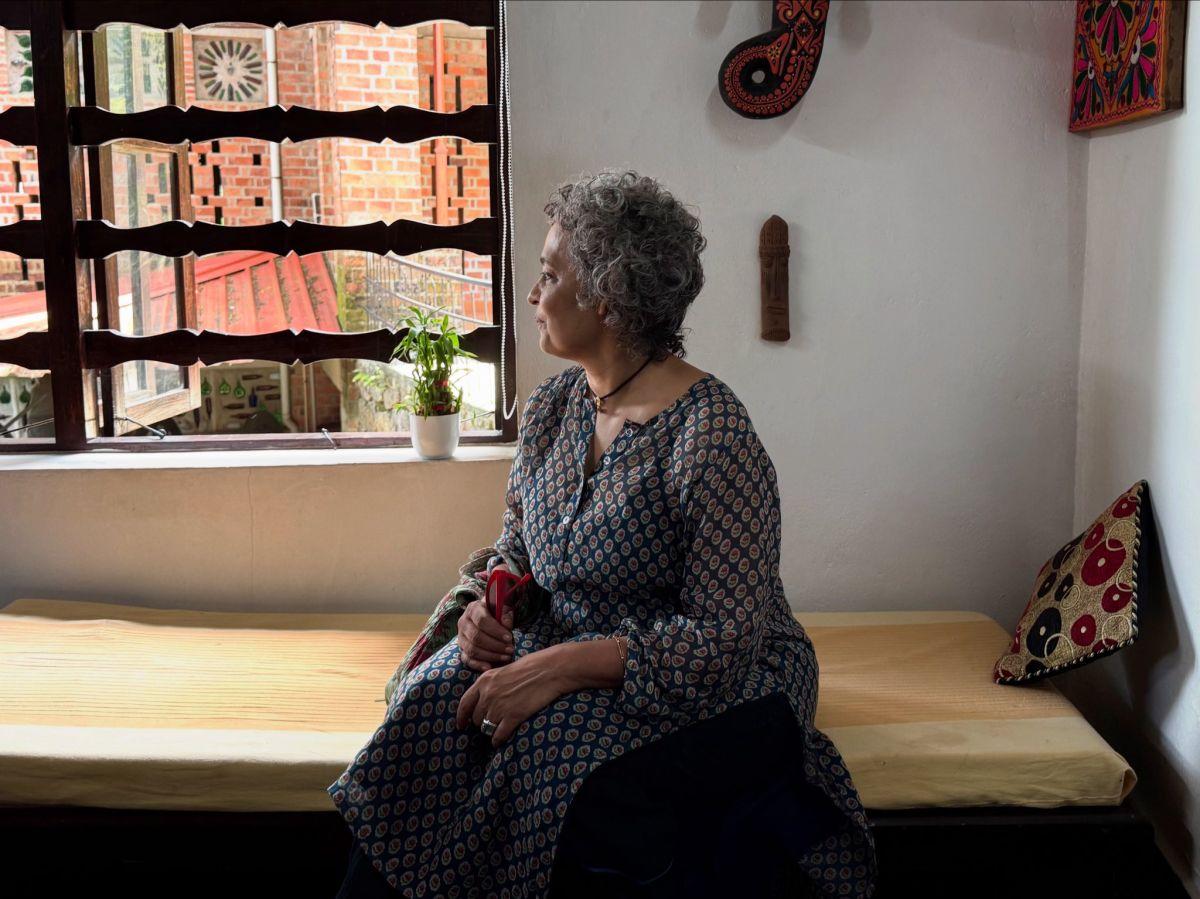
The strangest omission is not ever mentioning her lover and first husband's name. He was Gerard da Cunha. They were married for four years. But he is JC or Jesus.
This refusal to be direct indicates that she is in many ways unaware of the history of her own land.
Decades before Velutha her character became the lover of a rich lady, Malayalam literature was enriched by the story of Savitri, a Namboodiri lady, marrying a Pulaya Chathan.
But Roy thinks some of the shock of her book came from this transgressive relationship.
Gerard da Cunha was not just her lover but the partner who handheld her through four years of a demanding course at the Delhi School of Architecture.
Why fictionalise a real relationship?
Some gaps are inexplicable.
Roy joined the Narmada Bachao Andolan and says that it predated climate protests by decades.
What about the Silent Valley protests, led by K K Neelakantan or Induchoodan as he was known, from 1973 to 1983?
Induchoodan is the author of the authoritative Birds of Kerala and the professor of literature who with steely determination led the agitation against the dam in Silent Valley.
Among ornithologists in India he is second only to Salim Ali. Roy does not mention Sundarlal Bahuguna and the Tehri Dam protests he led in the 1980s.
One would like to direct her to Ram Guha's book on India's environmental history.
The prose does not sparkle but he gets the facts and analysis right. Aaya Ram, Gaya Roy.
Roy does have a point when she says to her nasty detractors that even if she used indigenous people as bonded labour (she did not) or she was not a virgin, those were not good reasons to build a dam.
Bullseye! Bravo, Roy! Ad hominem attacks only distract without addressing the real issue.
It could be that Roy is so used to fiction's ways, working with suggestions, fabulation and magic realism that she thinks and writes like a writer of fiction.
But this is a memoir and one would like a bit more fact-based narration.
One does not want to stop reading to refer to Google; that is research not reading for pleasure.
And there is so much top quality joy to be got from her prose which is delectable.
Those of us who lead bourgeois lives, are dependable parents, faithful partners, taxpaying citizens full of civic sense, observers of the rules that keep society ticking over, love our neighbours, do not dislike those who do not share our religious or political identity, keep our politics hidden but vote meaningfully -- Roy's book is an excellent example of how such champagne socialists cock a snook at lives more ordinary.
Let us indulge this mischievous child. Like reading good poetry, or prose in this case, this can also give us some vicarious pleasure.
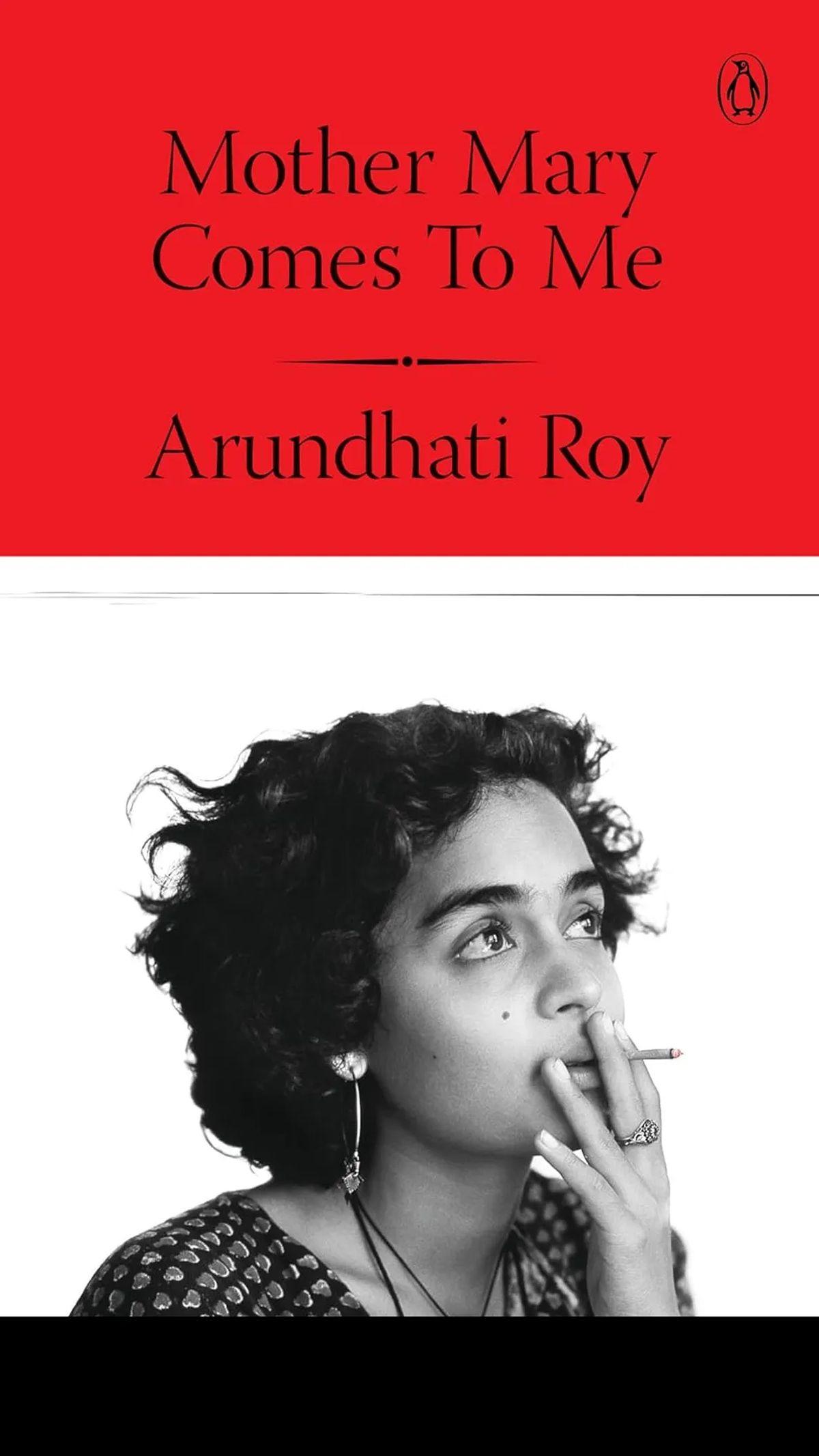
She is an artist who loves to perform for an audience. Even the cover photograph is a pose. If it were an advertisement for a cigarette it would have carried a statutory warning.
Perhaps it should have contained a warning in bold: 'Exquisite prose inside. Likely to cause addiction'.
Roy set up a trust to help citizens in India who were fighting good causes and would not accept international funding.
Most of her money came from sources abroad. Good if you cannot see the contradictions.
This blindness is most pronounced when she is writing about her mother Mary Roy.
Mary Roy, born with a silver spoon in her mouth, had a sense of entitlement that increased with her daughter's success.
She raised Cain in a hospital demanding special treatment because she was Arundhati Roy's mother.
A hospital is a public space with dedicated staff, other patients and bystanders none of whom are there for a holiday.
Would Roy tolerate such behaviour from a politician? Mary Roy is as wrapped up in herself as her daughter is.
That is what her daughter's book is telling us. Maybe it is not true.
When men line up before her offering things for sale she sees it as woman power.
It is actually money power. It goes to her head and she abuses Dalits and lower castes in a fit in the hospital.
Roy is another sucker for the St Thomas and Namboodiri origin myth Kerala Christians use to buttress their self image.
Roy is a little embarrassed and suggests that it was not characteristic of her mother to abuse the victims of historic discrimination.
Actually it came from her core sense of identity, one as fictional as her daughter's books.
Roy then speaks of '... the foetid threads of caste and feudal hierarchy that slithers into our souls'.
There is some valuable insight for the reader here. One must acknowledge her intelligence and her honesty.
Maybe inside the writer and the artist is an anthropologist's heart.
One that beats not just to the rhythms of rock music but also with compassion and humanity. But the narcissist in her keeps the anthropologist out.

Above all it is her language, her way with words that is outstanding. It is one so rich and evocative it creates multiple worlds all of which are full of colour and life and meaning.
She is so comfortable in English it is as if it were her mother tongue and she cannot restrain herself from crafting beautiful phrases and kneading old ones into new forms.
It is a privilege of the upper classes in India, yearned for by many, earned by some, but for Roy something that neatly fell into her lap.
After all, her real audience is in the UK and the USA.
Those of you who live in homes with manicured lawns please remember that if your grass needs some nourishment and Roy happens to be walking by and an urge comes over her.... your lawn will soon have a brown patch you could show off to your friends and neighbours.
She's like a lithe tight rope walker who can simultaneously juggle all seven parts of speech and not drop any one but arrange them in exquisite order, in sentence after beautiful sentence.
That ability does not come from privilege and inheritance; it is pure talent, talent she has perfected through practice. Genius we know is 99% hard work.
If reading pleasure is the sole criterion to judge a book Mother Mary Comes to Me is great. But if ethical and social concerns matter, we will find the book wanting.
However, for all its flaws, mostly relating to facts, the author and the book will win our respect, affection and admiration.
What a writer! What a book!
Mother Mary Comes to Me by Arundhati Roy is published by Hamish Hamilton and priced at Rs 899.
P Vijaya Kumar is a retired college teacher who was given birth to in Trivandrum, Kerala. He has spent practically all his life here in this city. He is a biophile and a bibliophile. He can be contacted at profpvk@gmail.com
Feature Presentation: Aslam Hunani/Rediff