
Where was the Board when a predictable regulatory change brought the country's largest airline to its knees? asks Dr Sudhir Bisht.
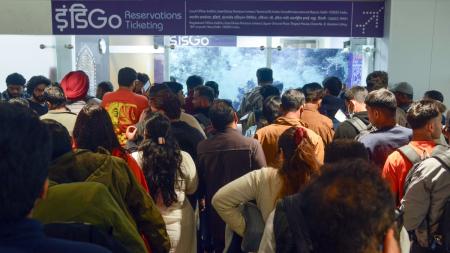
The recent disruption triggered by the Phase-2 implementation of the Flight Duty Time Limitations (FDTL) at IndiGo has exposed more than scheduling chaos and operational missteps.
It has opened an uncomfortable window into the airline's governance architecture --particularly the effectiveness, alertness and accountability of its board of directors.
When a regulatory change announced well in advance leads to mass cancellations, stranded passengers, and a nationwide embarrassment for India's most profitable and dominant airline, the first question is not simply what did the management do wrong?, but a deeper one: Where was the Board?
In a sector where safety, regulatory preparedness and manpower planning are existential concerns, a crisis like this is rarely an overnight development.
It is almost always the result of misjudged risks, ignored signals, delayed interventions or an overly passive Board.
IndiGo's FDTL debacle forces us to examine whether the airline's Board fulfilled its most essential duty -- anticipating risks and ensuring that management had both the plan and the capacity to manage foreseeable regulatory changes.

The Role of the Board: More Than A Procedural Oversight Body
The board of directors of any publicly listed company -- and especially one commanding over 60% of India's domestic aviation market -- exists not as a ceremonial supervisory body but as the guardian of strategic direction, risk governance and stakeholder protection.
The board's obligations extend far beyond the majority shareholders. At IndiGo's parent company, InterGlobe Aviation Limited, more than three lakh investors collectively own the airline, including:
But shareholders are only the beginning. In contemporary corporate governance, the Board's fiduciary duty is to all stakeholders, including employees, regulators, financiers, suppliers, unions, customers, business partners, and society at large.
Managing their diverse expectations ethically and transparently is at the heart of effective governance.
A responsible Board must ensure that:
Above all, the Board must insist on -- and actively verify -- management preparedness for known regulatory changes.
FDTL Phase-2 was no surprise. It was a phased, pre-announced regulatory tightening intended to improve pilot rest, reduce fatigue, and enhance safety.
These are precisely the areas where Board oversight must be strongest.
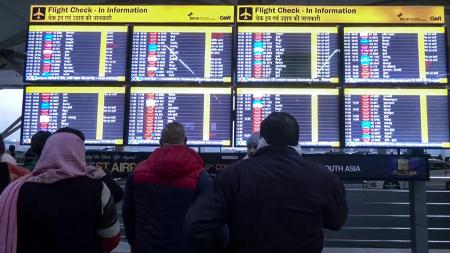
Was FDTL Phase-2 Ever Discussed by IndiGo's Board?
This is the question at the heart of IndiGo's governance crisis.
There is no visible public record that IndiGo's Board thoroughly deliberated the operational impact, manpower requirements or readiness gaps related to Phase-2 of the FDTL rules before the deadline came crashing down.
And yet, rival players -- Air India, still grappling with the bureaucratic inertia of its PSU past, and Akasa Air, a young entrant barely two years old -- managed to comply with the same regulatory change without imploding operationally.
How could IndiGo, the most experienced private airline in the country with unmatched scale, fail where even less efficient or less resourced competitors succeeded?
This contrast raises an uncomfortable suspicion: Did the Board fail to ask the right questions at the right time?
Because FDTL changes are not merely HR issues. They are safety issues, compliance issues, reputation issues and therefore Board-level issues.
A Board fulfilling its mandate should have demanded:
If the management was aware of manpower constraints or rostering vulnerabilities -- and surely, they must have been -- the Board should have been alerted months before the deadline. But no such preparedness was evident when the crisis hit.
The Complication of Structure: MD, CEO and Who Really Runs IndiGo?
IndiGo's leadership structure complicates the accountability narrative.
The company's managing director is not only the co-founder and promoter but also a member of the Board and part of the executive leadership team. This dual role blurs the line between management and governance.
Under such circumstances, two questions become unavoidable:
1. Who truly leads the day-to-day operations -- the CEO or the MD?
The CEO and COO are expatriate professionals, responsible for operational execution. But the MD, being both promoter and executive, wields enormous influence.
If he is part of the management team -- as IndiGo's web site suggests -- then he is effectively the Number One decision-maker, with the CEO in the Number Two position.
If that is so, why was the CEO summoned by the DGCA and even by the civil aviation minister as the primary accountable figure? Why not the MD? Why not the Non-Executive Chairman?
2. Was the CEO positioned as the 'fall guy'?
This is not a claim but a reasonable question. When promoters are part of management and also sit on the Board, accountability tends to get diffused.
In crisis situations, professional CEOs often become the public face of blame, while promoters retain strategic control behind the scenes.
Yet from a pure governance standpoint, both the Chairman (even if non-executive) and the MD should have been front and centre explaining the readiness gap, the remedial steps underway, and the timelines for recovery.
Their visible absence created a narrative vacuum -- and into that vacuum fell confusion, criticism and speculation.
A Test IndiGo's Board Did Not Pass
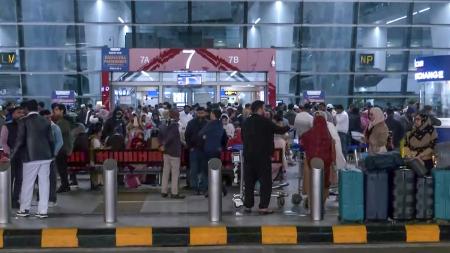
When a foreseeable regulatory change derails operations at the country's largest airline, the Board cannot credibly claim it was blindsided.
The Chairman, Mr Vikram Singh Mehta -- an experienced corporate leader -- and the Board comprising former SEBI chiefs, aviation experts, legal stalwarts and industry veterans should have been asking:
This is not a failure of operations alone. This is a failure of governance -- the one function that the Board cannot delegate to management.
Dr Sudhir Bisht, author and columnist, writes from New Delhi.
Feature Presentation: Rajesh Alva/Rediff