
'One Chinese interlocutor said India should realise that "China can do without India, but India could not do without China", pointing to its inability to do without Chinese intermediates and components,' former foreign secretary Shyam Saran discovers on a visit to China.
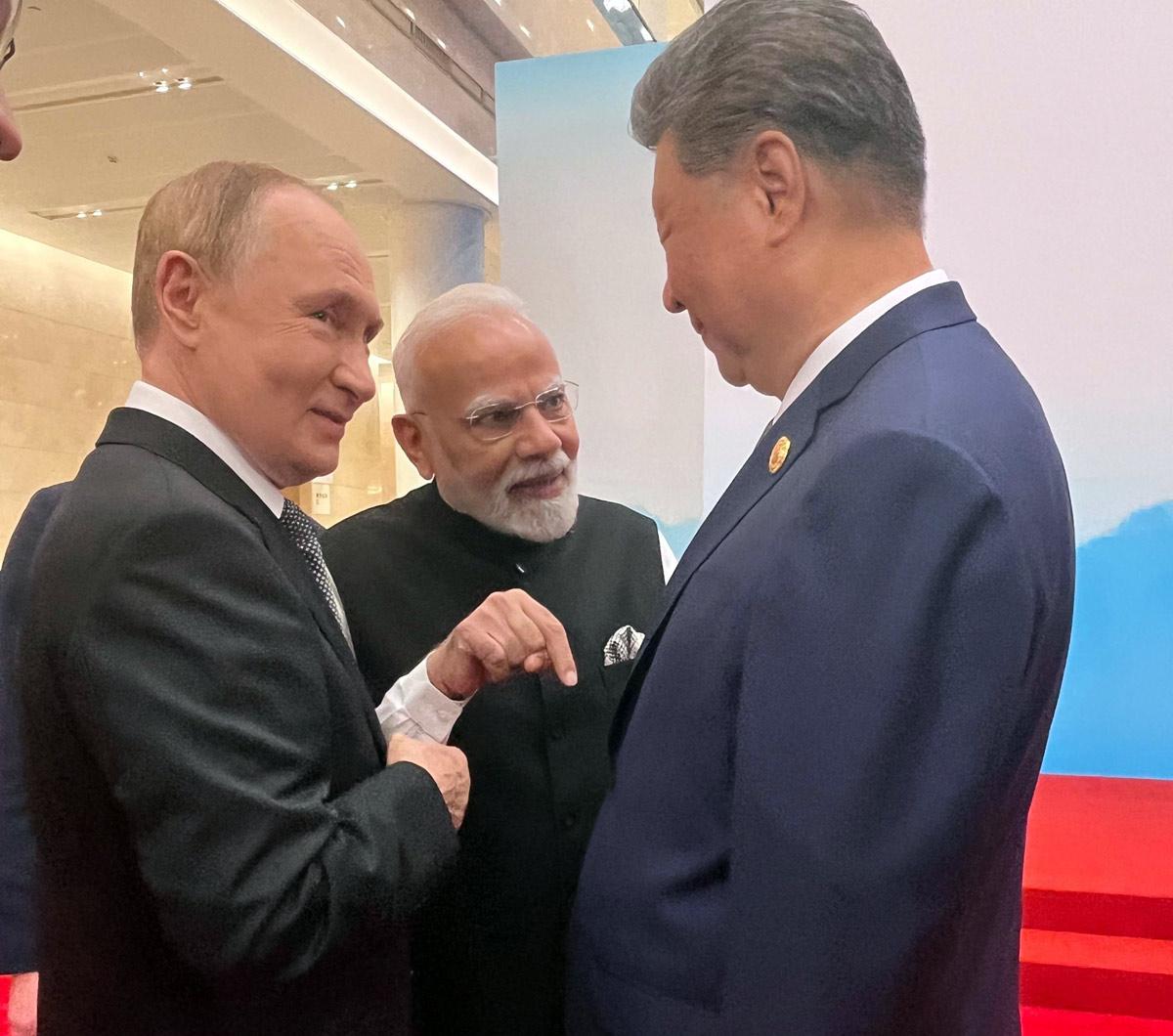
During my visits to China in 2023 and 2024, I encountered a subdued and even pessimistic mood among my Chinese interlocutors.
The Chinese economy was in the doldrums, thanks to a pervasive crisis in its property sector, which had been the main engine of accelerated growth for the past four decades.
The property sector constituted 30 per cent of the annual gross domestic product (GDP) growth and spawned many ancillary industries, supporting its rapid development.
When the property sector collapsed in 2021, the knock-on effects reverberated throughout the economy.
The economy is still facing deflationary pressures as consumption demand remains flat.
In the absence of decent returns from bank deposits and volatile returns from equity markets, property investment became a preferred route for investing personal savings because it promised sustained appreciation in property values.
The sharp decline in property values has wiped out the savings of a large property-owning segment of society, and this has depressed consumer demand.
There is also a shortage of employment opportunities for the younger and educated youth entering the labour market.
Over the past three years, unemployment in the age group 18 to 25 years has remained stubbornly at 25 per cent.
Last year, one respected Chinese interlocutor described the economic situation as 'dire', compounded by fears of an impending trade war if Donald Trump returned to power in Washington.
During my latest visit to Beijing, I asked the same interlocutor if the economic situation had improved. He said there were some early shoots of recovery but that it might take another two to three years for the economy to get back on track.
I asked why private investment was still stagnating despite President Xi Jinping himself reaching out to erstwhile star entrepreneurs like Alibaba's Jack Ma.
The answer was the lingering lack of trust in the party leadership -- 'once bitten twice shy'.
Yet the general mood appeared more confident, more upbeat, and optimistic than the previous year.
If the Chinese economy had not been able to shake off its structural malaise, the US economy was seen to be on a 'self-destruct course'.
There was pride in China having stood up successfully to American bullying, leveraging its stranglehold on rare minerals and metals and on other critical supply chains.
In the standoff on tariffs, the US had to climb down. Therefore, despite the Chinese economy still facing headwinds, China was believed to be in a relatively stronger position than its peer geopolitical rival.
The upbeat mood was also buttressed by the virtual ceding of the global economic cooperation and assistance space by the US, especially the gutting of USAID.
China was well positioned to walk in with its renewed Belt and Road Initiative and expanded presence in Africa.

Recently, there have been persistent rumours of Xi being ousted from the top leadership, and reports that there was growing resentment in the People's Liberation Army over the purging of several senior leaders.
The PLA was said to be spearheading a move to remove Xi from the party leadership.
This was dismissed by my Chinese interlocutors, who insisted that Xi was firmly in control.
They argued that the arrival of Donald Trump in Washington and the chaos he had unleashed had enabled Xi and his supporters to underscore the even greater need for strong, tested leadership in China.
The purges were dismissed as being 'quite normal' in Communist party history.
I do not think these latest purges are 'normal' and reflect a continuing concern about the PLA's personal loyalty to Xi Jinping.
The PLA could well emerge as the focal point of growing opposition to Xi.
On India-China relations, conversations were marked by a more aggressive tone and even arrogance compared to one's experience over the previous two years.
The resumption of high-level engagement between the two sides, interrupted since the Galwan clash of 2020, was welcomed and there was keen expectation that resumption of direct flights, the reciprocal posting of journalists, liberal issue of visas and more people-to-people contacts would follow swiftly.
There were complaints about the discrimination faced by Chinese companies in India and the campaign to denigrate China and to project India as a more trusted investment destination.
These were hostile acts against China, which were contrary to professions of friendship, it was argued.
In discussions relating to economic relations, one Chinese interlocutor said that India should realise that "China can do without India, but India could not do without China", pointing to its inability to do without Chinese intermediates and components.
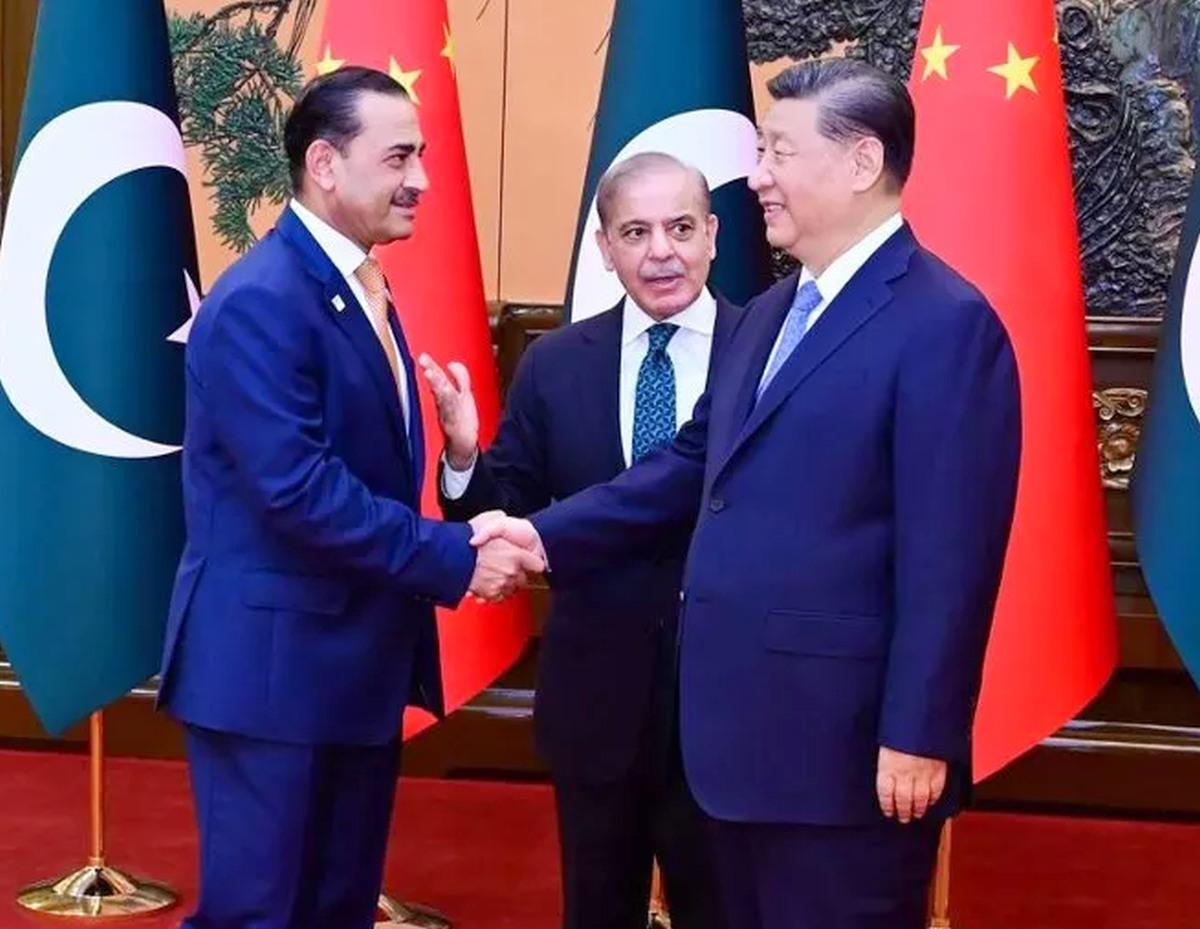
There was a different tone on Pakistan, which was described as an "iron brother."
Earlier, the Chinese were somewhat defensive about their country's longstanding relations with Pakistan, describing the partnership as 'normal' engagement and cooperation between any two countries.
Now there was no hesitation in owning up to China's commitment to Pakistan's security.
It reinforces one's assessment that China will do everything possible to upgrade Pakistan's military capabilities to the level that enables the latter to continue to serve as an effective proxy against India.
On the Indian Ocean, India was put on notice that possessing the largest navy in the world, China would inevitably expand its maritime presence into the Indian Ocean to safeguard its sea lines of communication to the South China Sea; and that the Indian side would do well not to extend the zone of confrontation from the land to the sea.
This more abrasive and assertive tone adopted by some interlocutors while others conveyed a more positive, friendly and cooperative attitude, is the standard Chinese approach, but one should take note of the more overbearing statements as they reflect a renewed geopolitical assurance, thanks to assumptions about the decline of the United States.
To the extent that China believes that India has allied with the US to contain China, the message to India is that its American connection is losing its efficacy.
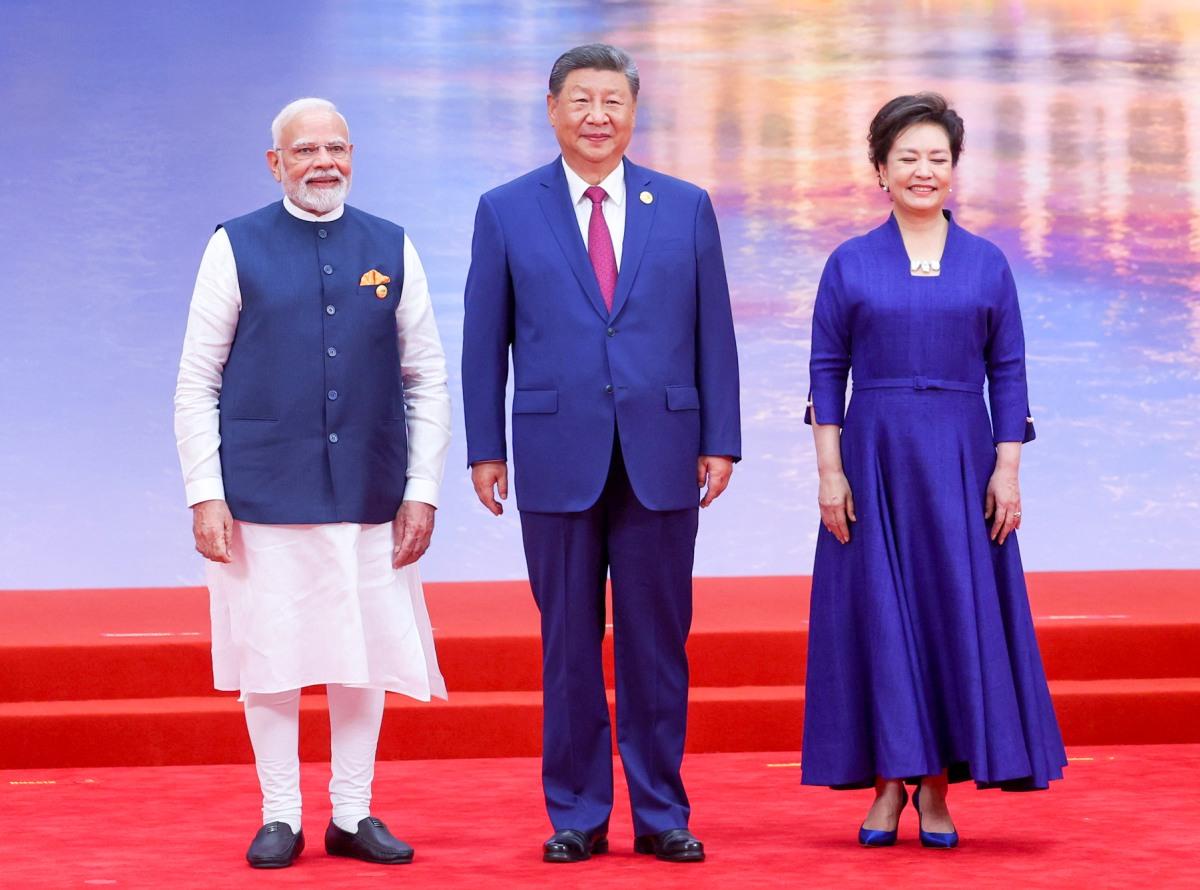
India should be prepared to face a steadily growing and multi-faceted security and economic challenges from China in the years ahead.
Given the power gap between the two countries, one should think of asymmetric capabilities and strategies to meet the China challenge, even while augmenting our capabilities at a faster pace than being achieved currently.
Two things are urgent -- one, an expanded and sustained engagement with our sub-continental neighbourhood to limit Chinese presence, and two, a renewed engagement with East and Southeast Asia to make Act East a reality, in particular strengthening economic and trade relations.
Without the economic pillar, our eastern flank will become a vulnerability rather than a shield.
Feature Presentation: Aslam Hunani/Rediff
