
'It's far-fetched to say that human thinking will become subservient.'

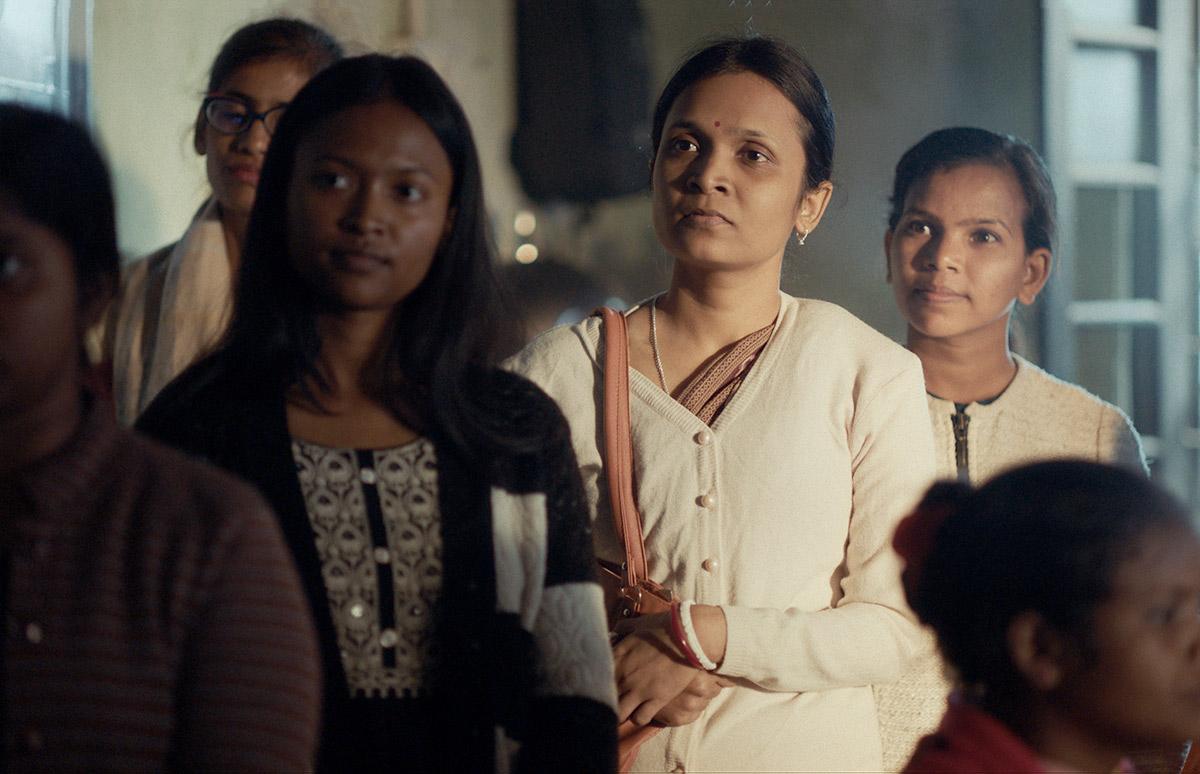
Grippingly narrated by writer-director Aranya Sahay, Humans In The Loop is making big waves.
The latest buzz is that after its American theatrical release, the film will now qualify for Oscars consideration in the Best Screenplay category. It is currently streaming on Netflix.
Dinesh Raheja interviews the articulate filmmaker, who says, "If independent cinema is emotionally resonant, we can break through and make very good films which reach audiences. Gradually. What I and other people in the independent space do now will resonate 10 years after us."
Your film is receiving accolades from reviewers, film festivals and from celebs like Shabana Azmi. What in particular are you enjoying about this high phase?
It has received immense love, to the extent that the partners in Los Angeles want to run it for a second week.
We won the Sloan Distribution Grant which is given to science-based films; Oppenheimer got it earlier.
Based on that grant, we were able to roll out the film theatrically. Our film also featured in The New York Times list of Top 5 international films streaming on Netflix.
It has been very exciting and eye-opening.
Of course, it's a great feeling, but because it's an independent film and I'm also wearing the producer's hat, in my mind what's running is: 'What's next? What task needs to be completed to move closer to what we're aiming for?'
That's the phase I am in.
Do you see promotions as a necessary part of the filmmaking process or are you impatient to get back to creating?
I am a little irritated with the fact that I'm not able to write and create as much as I would like to because right now, it's particularly logistics-driven and also strategy-oriented.
I'm getting a little impatient, but it's fine. Honestly, the film's entire run needs this and I'm happy to do that.
An independent filmmaker has to work doubly hard to ensure that his film finds an audience. What is the process of marketing the film, and how did Netflix and Kiran Rao get involved?
Not just doubly hard, an independent filmmaker has to work triply hard. You have to work 300x to get 50 percent of the eyeballs that a commercial film with a known face will get.
When we premiered at the MAMI film festival, 80-90 people of the 300 who attended wrote personal essays on their Instagram.
We realised that the film is receiving a lot of love so we need to consistently show the film.
But film festivals are once in two-three months, so this is where a community-driven roll-out came into play.
We screened the film 100 times across India and the US for us to reach a momentum where Kiran Rao saw the film. Then she joined us as an executive producer, and nudged us towards a theatrical release. Eventually, we got a Netflix release.
How and why did you decide to pursue independent film-making?
I'm not necessarily pursuing independent filmmaking, I'm pursuing filmmaking where I can exercise some amount of creative control.

What convinced you to go with an English title for a set-in-lush-green Jharkhand story revolving around a tribal mother of two whose knowledge of local flora clashes with the Artificial Intelligence company she works for?
Humans in the loop is actually an AI term.
It means that while training algorithms, the human will always be in the loop because there's always be a need to course-correct algorithms.
Your name Aranya means forest; and your film addresses ecological concerns. Coincidence?
It is a coincidence of sorts.
My mother was a sociologist, and my father was posted in Aizawl when she was pursuing sociology. I think the name comes from the forests around Aizawl.
I'm familiar with a lot of forest landscapes.
My father used to take me to a lot of treks when I was a child. Of course, I was able to discover the Jharkhand-specific locations only with the film.
What is the primary message you want to convey through the film?
We are at a cusp where we can train AI to imbibe values of humanity.
There's also a possibility for algorithms to represent with empathy all sorts of people and ideas and ideologies.

How real do you think is the danger that individualistic human thinking will become subservient to a predetermined algorithm or data set?
I think it's far-fetched to say that human thinking will become subservient.
It's a beautiful paradox.
We are limited by all the data that can be digitised.
I believe there's a lot of data which is not written, it's passed on through touch, smell, seeing your parents do something. That will make us special, not subservient.
I am glad you didn't choose a tragic end, conventionally considered more impactful by many.
It's a conscious choice as a filmmaker.
I don't want to leave people with misery. I want to leave people with hope every time that things can be better than they are.
Did the shoe-string budget decide the cast and production values?
Yeah, of course. We shot this in 12 days.
You have also acted in Humans In The Loop. Is that a Hitchcockian touch or are you also an actor?
It happened because of majboori.
The actor was not available on that day so I did it.
I enjoyed it a lot, so maybe I will pursue acting in the future... that is, if somebody gives me an acting job.

Your casting is on point. What gave you the confidence to cast Sonal Madhushankar, an immensely talented actress but a rank newcomer, as the protagonist?
The question why I went with a new face is very pertinent. It's because we needed such an absolutely splendid performer for the film.
I auditioned her close to five-six times and every time, she gave me a good output.
Sonal's performance is absolutely a revelation.
What are you working on next?
Mayapuri is one of the films that I'm doing.
Another idea I have is a superhero film. It's easier but the scale is bigger than Humans in the Loop, so it's a similar challenge.
What are the possibilities and limitations of independent filmmaking in India?
The greatest possibility is creative control.
You are answerable to yourself and like-minded people who you choose.
The pitfall is that it's not necessary that the film will be picked up for distribution even if it's beautiful. That's a big challenge and we all have to come together to address it.
I feel that if independent cinema is emotionally resonant, we can break through and make very good films which reach audiences. Gradually.
What I and other people in the independent space do now will resonate 10 years after us.
Photographs curated by Satish Bodas/Rediff
