
'What is it about the institution of faith that makes somebody get a sense of impunity, that they believe they can get away with anything?'
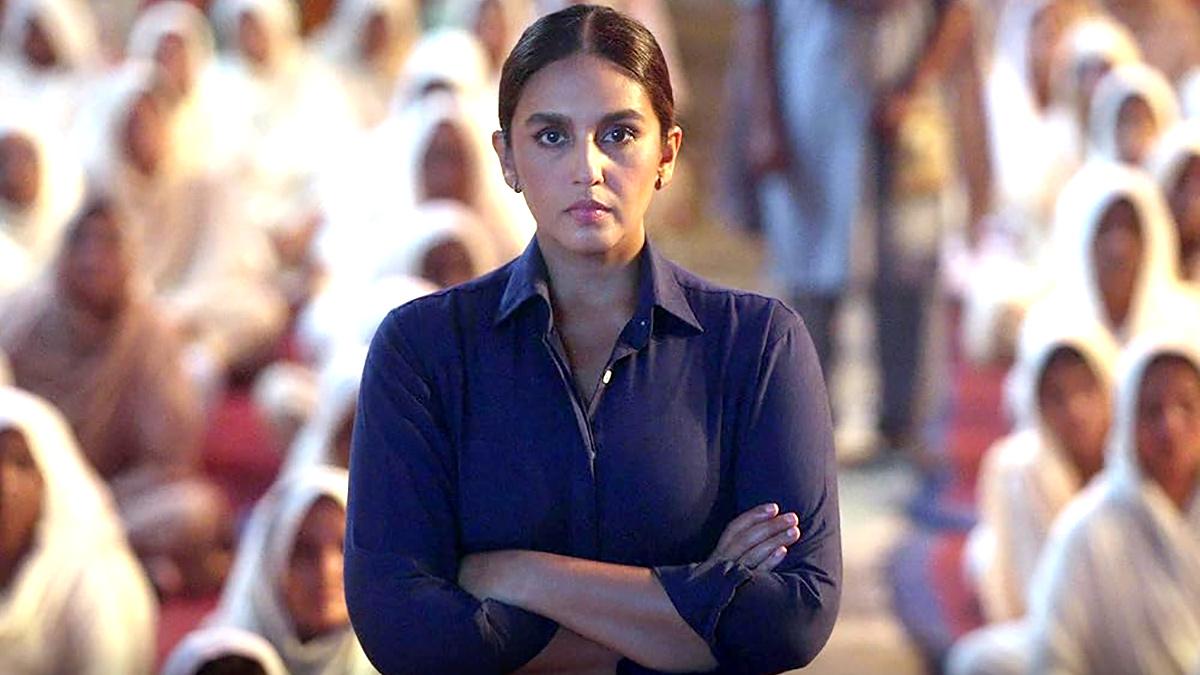
Journalist-turned-filmmaker Bikas Ranjan Mishra has followed up his 2014 caste-based crime drama Chauranga (Sanjay Suri, Tannishtha Chatterjee) with another project that explores the dark corners of our society.
His new film Bayaan examines why some religious cult leaders take advantage of the situation and prey on their followers.
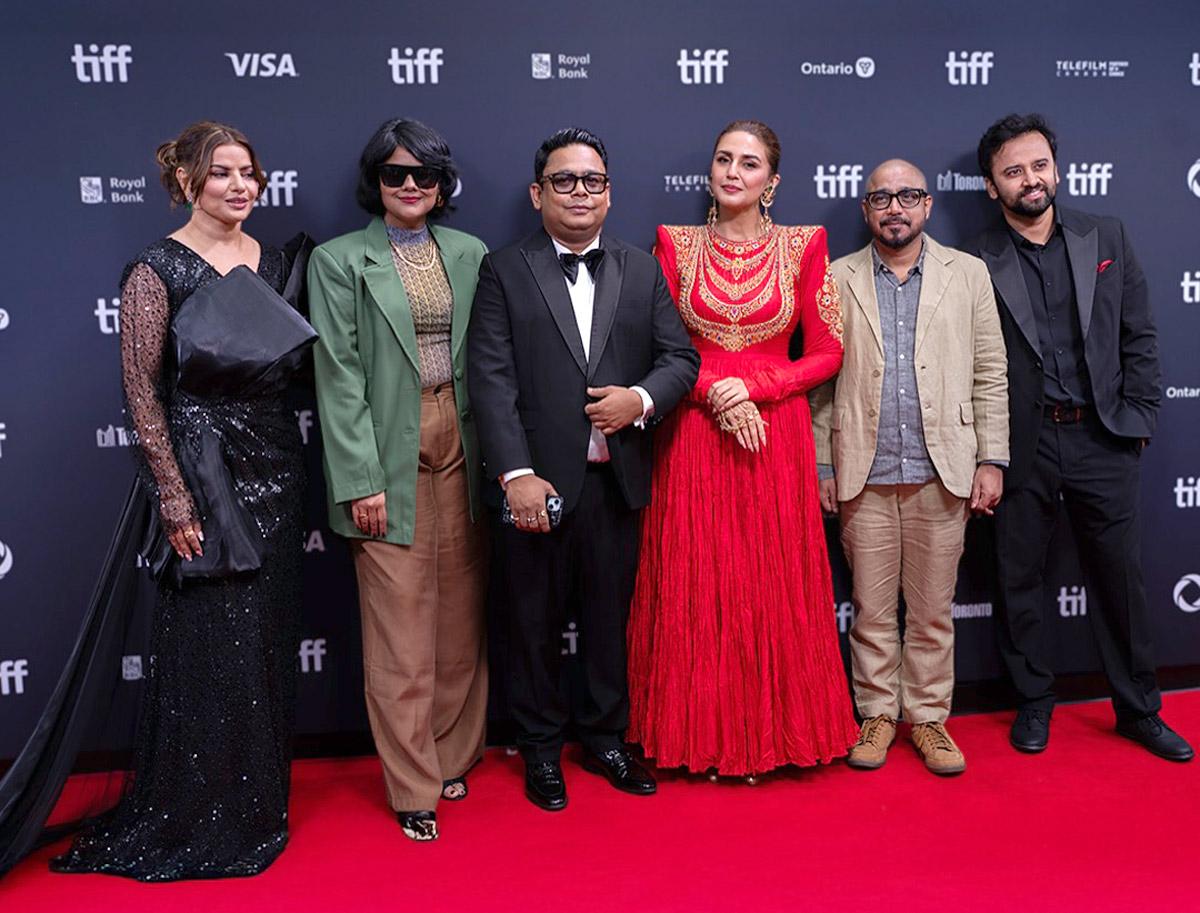
The film had its world premiere at the Toronto International Film Festival in September and shortly thereafter, its Asia premiere at Busan International Film Festival.
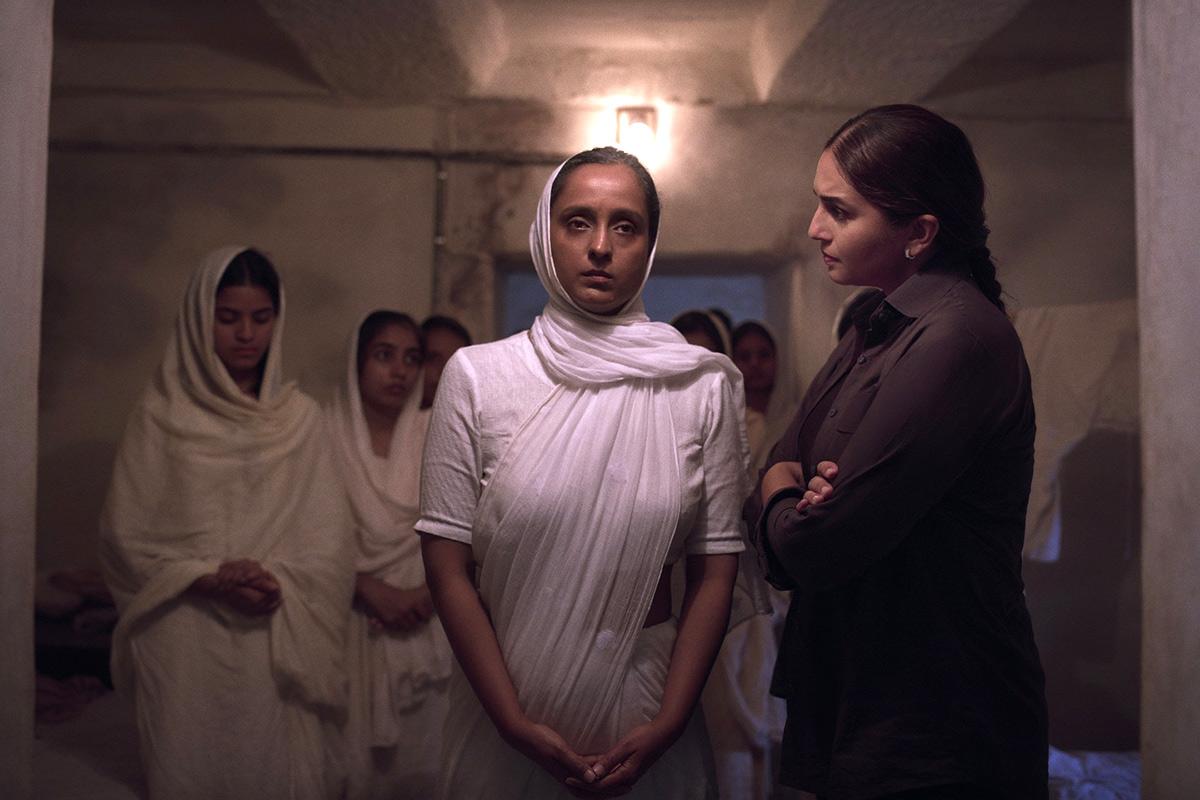
In Bayaan, Huma Qureshi plays Roohi, a female detective sent on a mission from Delhi to investigate accusations made against a cult leader (a quietly menacing Chandrachur Singh).
Along the way, Roohi has to confront the anger of an entire village who refuse to believe that their leader could do any wrong. Qureshi is caring, but determined, giving one of her best performances.
Aseem Chhabra spoke to Mishra about the challenges posed to him when he chose the theme of his film and his relentless quest to make it.
"It was not my plan to make a film against all gurus. Rather, I wanted to explore a certain way the system operates, where it can turn against the people. So it was about the dangers of the system," he says.
Bikas, congratulations on making a very powerful film and also your journey to Toronto and Busan. Can we say the film was somewhat inspired by two important cases of real-life gurus?
I don't want to talk too much about real world inspirations. It has taken me seven years to make this film and the journey has been extremely challenging.
It was almost 10 times more challenging than making my first film.
It started very differently as a police procedural.
I pitched to the big production houses and surprisingly, everybody was open to the idea. As an investigation drama with a cop, it sounded mainstream.
But then Delhi Crime and Paatal Lok dropped. Suddenly, cop dramas became the norm on OTT platforms.
Yes, it has real world inspirations, but not directly from any specific case.
Also, I do have a little bit of background in investigative journalism. I have covered crime.
I didn't know that.
I never talked much about it. In journalism, crime reporting is not looked up at. I used to write about independent films too but that was my main job.
While I was running Dear Cinema, I produced a crime show for CNBC. I have dealt with some of the agencies which are part of this film's world.
Here, it is a fictional agency, but something on the lines of the CBI.
While I didn't focus on a particular person, in my research I found that there are at least five or six prominent figures who are in jail or who have absconded from the country.
I even read there is the case of an Indian guru who was arrested in Texas.
Yeah, there are plenty of gurus. There is something common that at some point in time, many lose their mission and start behaving improperly.
That was the question I was more concerned about: What is it about the institution of faith that makes somebody get a sense of impunity, that they believe they can get away with anything?
They start abusing the very people who give them their power.
So this was the thematic core of the idea: Why do the people we give so much of power to, turn against us?
I started researching, and along the way, I stumbled upon an anonymous letter, which started an investigation into the affairs of one such cult leader.
The devotee had written about calling for an investigation into this cult leader's affairs. The cult leader had told his followers that once they get the diksha, they gave away their tan, mann aur dhan (body, soul and wealth) to the leader.
Your body is not yours, so nothing wrong is being done to you.
In many such instances, the parents of the young women who are victims are also devotees of the cult leader.
There is also an economic aspect, where some of the families are completely dependent on this man. They work in institutions or their kids study in schools run by the cult leader.
Not just the families, but the way you show in your film, the whole town is completely dependent and loyal to this man.
Yes, he controls the system. The institutions which are supposed to protect the citizens, they turn against citizens because they have to protect this man.
This man has become the system.
The police especially.
It would have been easy to show the cult leader as a demon -- Ravan ka avatar type. But it's not about one man. This is a recurring pattern.
Why does this happen? This happens because there is some systemic failure.
They fill in the gap, where the government should have taken care of the basic things. In return, they accumulate power and turn against the people who empower them.
Because once they are powerful, they don't need these people.

Did you face hesitation from actors in playing the lead role in Bayaan?
Before we approached Huma Qureshi, we talked to a few female actors. They had all kinds of explanations why they didn't want to play the role.
One said, 'But, you know, I follow a guru. So how can I do this role?'
I explained this is not about your guru. There are some good people.
It was not my plan to make a film against all gurus. Rather, I wanted to explore a certain way the system operates, where it can turn against the people.
So it was about the dangers of the system.
One person actually said, 'I am not a feminist.'
I called up Huma. I had met her in LA when I was there for a Film Independence residency. I narrated the story and she was very excited about it.
When she read the script, she instantly said, 'Let's do it.'
She had never been offered a detective role.
That was one of the breakthrough moments because many actors go through managers and agents, and then make excuses not to play such roles.
What did Huma do to prepare for the role? Did she follow any women detectives?
We found out that a common actor friend's mother worked with the CBI. I also gave her videos of female IPS officers.
It was more to study the body language because after you go through a rigorous physical training, it transforms you as a person.
But we also had long conversations trying to understand this woman, the character.
There is a belief in Hindi cinema that if you play the role of a cop, you will be in uniform and there will be shootout scenes.
But Huma's character is antithesis of any other policeman. We have a full cult of cop dramas, where police deliver instant justice, especially on the issue of sexual violence, where they are like brothers to project women. Bajirao Singham is the role model.
But here, the story turns everything on its head.
It's the system. All the men in the system, particularly are complicit, barring one character,
So we had long conversations and these went on even during the shoot, trying to understand how this film is different from rest of the cop dramas.
What is the politics of the film?
It's not about delivering just the villain. There is one key scene with Chandrachur Singh, but he is not the villain in the traditional sense.
We try to understand him as a person.
He was not born evil; he had a journey. It's the unchecked power that made him who he becomes.

Huma wears a shirt or a blouse and pants. Do all IPS women officers wear pants or is this some statement you are making?
This is a fictional agency in the film called NBI which has no formal uniform. All they need to wear is formals.
But the deeper, psychological motivation is that she is always trying to be like her father. She is not at peace with the feminine side of her life because she has no maternal presence.
She looks up to her father and it is the strongest interpersonal relationship in her life.
Gradually, you know, as the story will progress, we will see the feminine aspect of her.
She will also come at peace with the knowledge that being a woman, she doesn't necessarily have to act like a man to succeed.
You shot the film in Rajasthan.
Yes. A not much explored small but beautiful town.
In many of these towns, often the local people are sort of connected to some guru. Did you feel any resistance from the local people?
Local people didn't understand what the story was, and we were very careful with that.
We shot in a fort and over hundred girls would show up every day to be part of the secondary actors.
There was a temple in this nearly abandoned fort where every day and night there would be a puja.
The temple priest was a young man. He followed Huma on Instagram.
He was insistent that he wanted a photograph with her and asked me to bring her to the temple.
I was a little concerned. He gave some prasad for her, but I didn't offer it her. When she learned about it, her instant reaction was 'I wish you had told me.'
Then she visited the temple and got a picture with the priest.
Were there any other challenges making of the film?
There were a lot of challenges. After multiple failed attempts, even though I had made a film, I went back to my old friend Shiladitya Bora who stepped in as a producer.
In fact, he was the first person I spoke about the film, but then I went in a full circle.
While trying to get it made, I got hired to write a show.
I was working with Shazia Iqbal for a while on Dhadak 2. A mainstream producer came on board, but then dropped out. But I really wanted to make Bayaan.
If I hadn't, I would have had a massive sense of disappointment.
When I say it took me seven years to get the film made, 99 percent of the time was waiting when I didn't know whether it was even going to get made.
We were first planning to shoot the film in January. We thought the winter fog would give a dramatic feel.
But that got pushed to May and June, when it is 40 degrees plus in Rajasthan.
By the time we started to shoot, it was in the middle of rains. The landscape had changed completely and the look we were planning went out of the window.
It's beautiful looking film. Not just the outdoor sequences, but the indoors scenes were beautifully lit.
A lot of thought was given by Udit Khanna, the director of photography.
He made that wonderful short film Taak, which I showed at the New York Indian Film Festival this year.
Udit is a very talented guy. He shot the series The Hunt for Veerappan and a lovely Kannada film Mithya.
Also, we had a wonderful production designer, Vinay Vishwakarma.
