'You can't make art with a point of view of fear. You have to present the truth.'
'That's why such films are not being made these days.'
'You never put the truth in the script because you fear you might offend somebody.'
The Haq trailer has sparked mixed reactions. While many praised it, some felt it is unfairly targeting the Muslim community.
Emraan Hashmi clarifies that the film is about standing up for women's rights and not about pointing fingers at any community'.
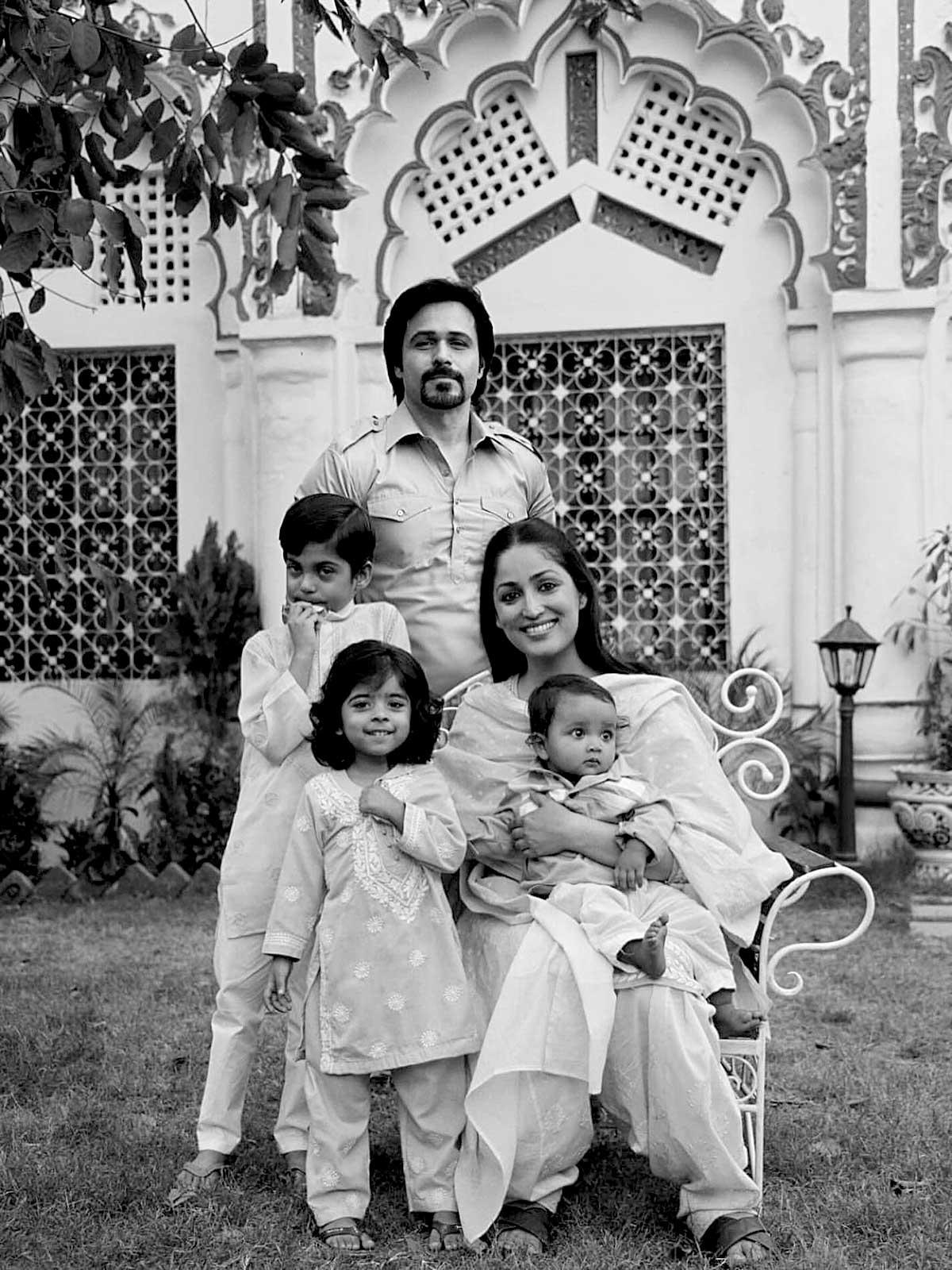
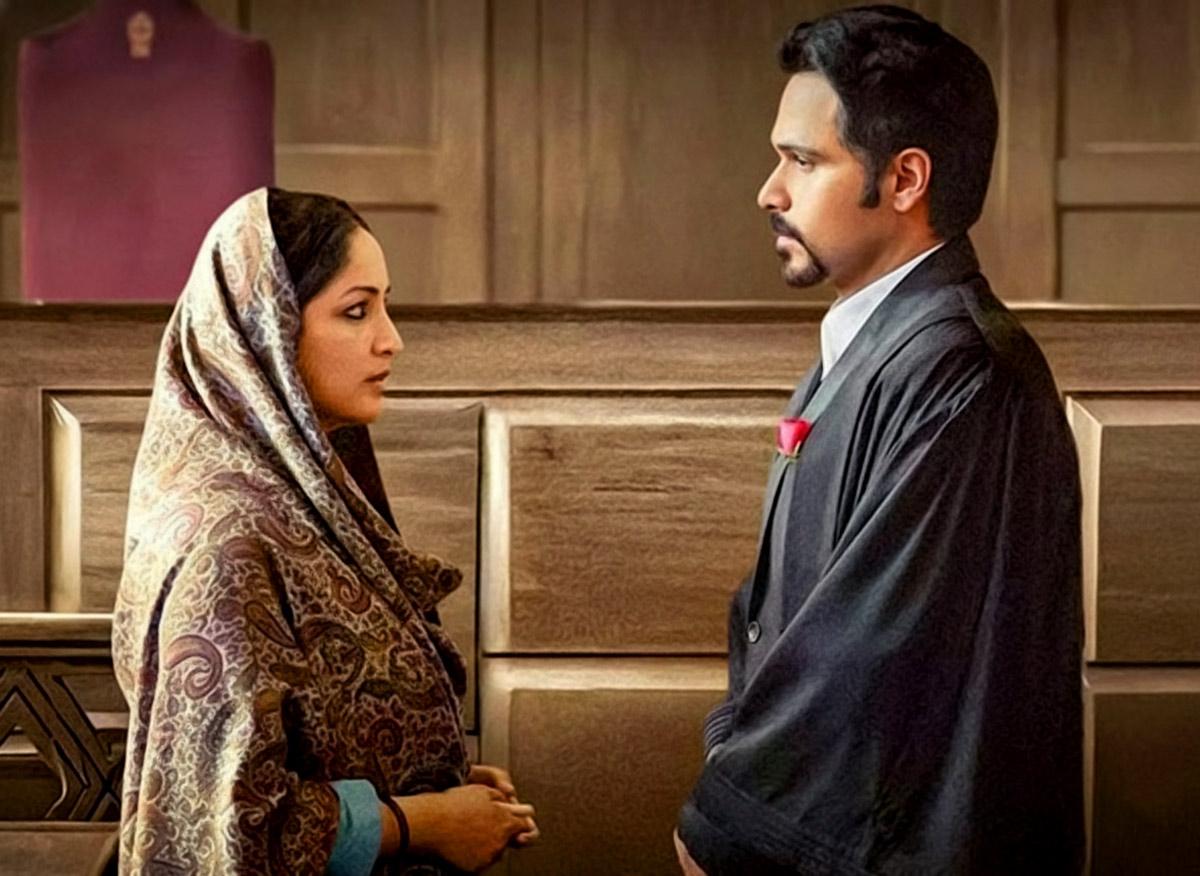
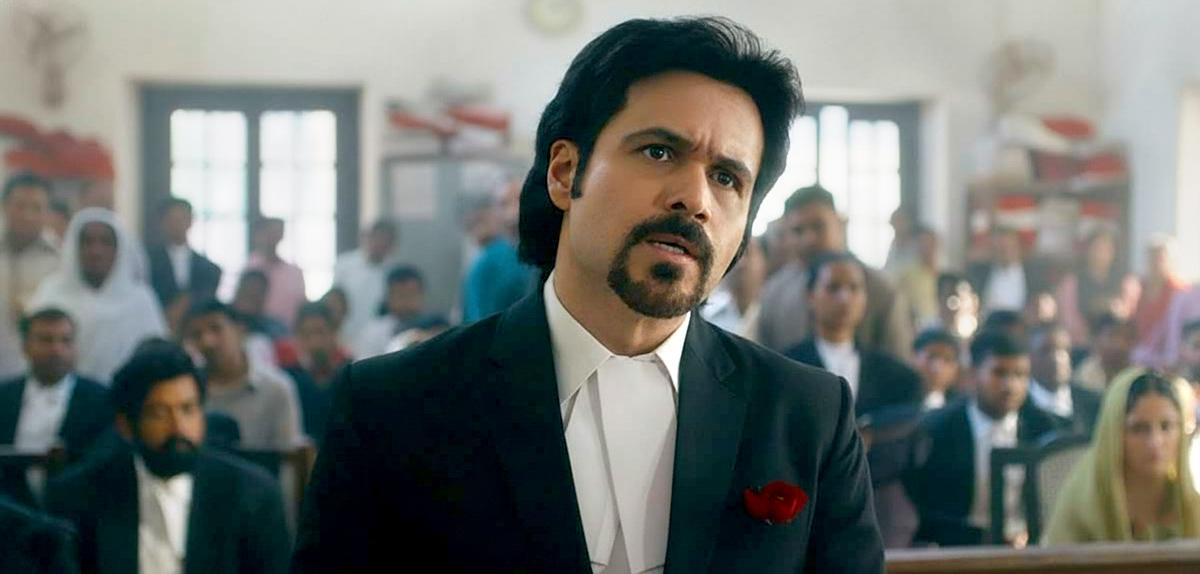
Directed by Suparn S Varma, the legal drama takes inspiration from the landmark Shah Bano case and stars Yami Gautam as a co-lead.
"Haq addresses male oppression which is not just in my community but in every community. I don't want to single out the Muslim community in this," Emraan says as Mayur Sanap/Rediff listens in.
The 1985 Supreme Court judgment caused a big uproar at that time.
I can say that we have taken an inspired context. We have taken the historical facts of the case.
The core truth is the same, but the nuances of the film have been dramatised. Obviously, if you are showing it to a theatrical audience, there has to be emotion, romance, songs, etc.
And then, there is a conflict between the couple at home.
This is such a sensitive topic. How challenging was it to play this character?
You have to be very responsible. Also, there must be a certain sensitivity towards the people whose point of view you are showing.
This man was fighting for his rights. He had a perception about his faith, about his tenets.
Shazia Bano, the role that Yami is playing in this film, was fighting for her basic maintenance.
Even at that time, the whole country was divided into two parts. There was a perception about religion. Of course, that is also a very sacred thing.
Your religion is your identity.
But along with that, when you talk about secular law, Constitutional law, that is also a sensitive issue. It's all-encompassing for every citizen.
As a Muslim man, what do you think of this subject?
We live in a patriarchy.
The film addresses male oppression which is not just in my community but in every community. I don't want to single out the Muslim community in this.
Shah Bano was fighting for her children, for the maintenance, which is beyond the period of iddat that lasts for three months.
She was sorting out the problems of her house, but she became an example for every future generation.
Women's dignity is compromised every now and then. You still see it.
It's not just a generational thing. It's been going on for centuries.
Also, women are left in the lurch after a divorce. Many women are not independent. They don't know the basic rights and qualities of seeking justice. So, it's a conversation starter.
Did you judge your character when you read the script?
No. I don't see my characters as grey, positive, black.
If I start judging my characters, I'll end up with the same tonality of performance.
He is fine from his point of view.
You can say that he has grey shades. But I can't view it that way.
He's the hero of his narrative, and he's the custodian of his tradition, and his perception about his faith.
He is fighting for that.
But I think a lot of men are in a position where we're devoid of our belief system, and we're so righteous that we can't see the other person's point of view.
That is Abbas' personality trait, but that doesn't make him a villain.
How did you prepare for your character?
First, like every script, you have to know what the writer and director want to say. What kind of tonality they want to make the film. This was a new character for me because it is based on historical facts.
I play characters to understand them. Abbas' ideology and my ideology are very different.
That's why I found it very challenging because sometimes when you don't understand the character, it becomes a challenge. Then you have to do a lot of work to get into the character.
A lawyer's character, which I've never played, was a different thing for me.
We have shown every court -- sessions court, high court, Supreme Court...
Suparn was very helpful. My tonality was a little different, but he told me that the referencing should be a certain way.
In Bollywood films, we pitch the courtroom a little more to make it melodramatic. But we have maintained the respect and dignity of the courtroom.
What did you think of the script when you first read it?
There are credible names behind this, so even before reading the script, I knew this wouldn't happen.
And that's what I saw, when I read the script.
We are not raising a finger at any community.
We're not showing people as black and white.
We are just showing how the case of Shah Bano and Ahmad Khan happened.
There are a lot of things in this. Love, betrayal, the resilience of a woman, a woman's right to dignity, a man fighting for his personal faith.
There are all these things, presented with a balanced viewpoint.
I'm seeing it from a very balanced point of view, as a liberal, progressive Muslim.
Yes, Haq is a sensitive topic, but we are leaving it to you to decide.
What questions did you ask your director and writer?
In the beginning, my thoughts were to humanise Abbas' character a little bit. He inculcated that in the script, and then it was fine.
My questions were endless.
Why is he doing this? Why is she doing this?
No matter how many discussions you have, you find the character when you're doing the scenes. That's when you see him and it starts talking back to you.
The good thing was that we shot the 40-45 day schedule in one stretch. There were no gaps, which is great for being in character.
This case startled the country back then. Do you fear the film might repeat history?
You can't make art with a point of view of fear.
You have to present the truth.
I can't say what the perception will be once the film is out, but fearlessness is important.
That's why such films are not being made these days. There's censorship on the paper only.
You never put the truth in the script because you fear you might offend somebody.
We haven't shown the political angle much.
It's very explosive material. I don't know how people will react on November 7 (when the film releases).
Do you have an issue that you want to fight or change within the film industry?
I think it's been functioning very well.
The shoots are happening smoothly.
The only issue is that we're a bit lost in our theatrical business in the last few years.
It's time that we reinvent ourselves and do bold films, not just safe films.
We have become very complacent as an industry. We need to play on the front foot and try different, riskier subjects.
Is that why you have become very choosy now?
Yes. I used to do four films a year but when you've done so much in your career, the risk and the fear of getting repetitive becomes a little more.
I've done close to 50 films. I don't want to get repetitive with characters.
Also, directors and writers have forgotten how to make a mass film.
You can count them, you won't find a single good mass director in Bollywood.
We have forgotten the art of connecting with the Hindi belt, which I was doing probably till 2016.
OTT changed that for us.
But I am getting back to that space.
There's Awarapan 2 coming out next year.
Then Gun Master and Goodachari 2, which is a Telugu film.