
Extending its nuclear power plant supply relationship with India to the non-nuclear sector, Russia's integrated atomic power major Rosatom State Corporation is in talks for a 50:50 additive technology joint venture, said a senior Rosatom official.
Rosatom's Additive Manufacturing Business Unit, he said, has signed several multi-year framework dealer agreements for supply of additive equipment and materials, with a total value of approximately 1.5 billion roubles to Indian clients.
Rosatom is also in talks with three universities to have this upcoming technology as part of their curriculum.
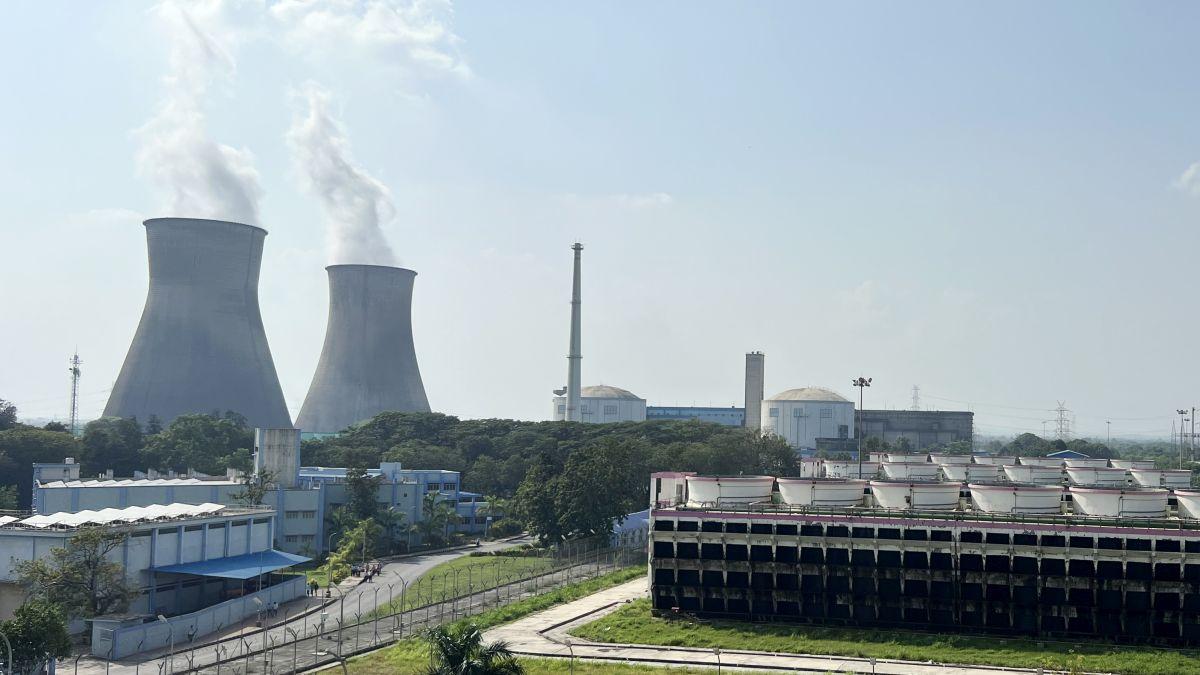
Rosatom is supplying six 1,000 MW nuclear power reactors to India. Out of the six, two 1,000 MW power plants are operational and four more are under construction at Kudankulam in Tamil Nadu.
Rosatom now wants to extend that relationship to other areas.
Additive technology manufacturing or 3D printing is a manufacturing process where an item is made layer by layer with the use of necessary material -- metal powder and others -- unlike the traditional casting, machining system which is subtractive technology, that is, removing unnecessary material from an already manufactured item.
The major advantage of additive manufacturing or 3D printing is that complex and intricate components or prototypes can be manufactured faster at a shorter time and with less material.
"We also think of producing the equipment and also metal powder in India. It will be a joint venture for India and also for neighbouring markets," Ilya Kavelashvili, director of the Additive Manufacturing Business Unit at Rosatom, told this reporter.
Declining to name the Indian partner in the proposed joint venture, Kavelashvili said: "It is a private company."
According to him, the two companies have decided to work out a roadmap for the project. There will be transfer of necessary technologies for making in India.
The main thing Rosatom got to know from the Indian side is that the potential for additive technology is immense in India and there will also be support from the Indian government for the proposed project.
Rosatom is an integrated player in additive manufacturing. The company makes metal powder of stainless steel, nickel, titanium alloy, aluminium alloy which are used in printing the components; develops the needed software for 3D printing and also develops the equipment and manufacturing of the needed products.
According to officials, the company also makes two-in-one printers -- it can print as well as weld.
Speaking further about the 1.5 billion rouble deal in India, Kavelashvili said, "It is a broad dealership contract for supply of 3D printers, materials and gradually Rosatom would like to localise production in India."
Towards the latter goal, the company is in discussions with its Indian business partners for a joint venture.
Meanwhile Kavelashvili said Rosatom will soon send its first large-format 3D printer to India, capable of producing components up to 2.5 meters in diameter but declined to disclose the Indian client's name citing the non-disclosure agreement.
Components made with additive technologies are basically used in high technology industries like nuclear, space, aviation, shipping, healthcare (implants, surgical instruments), power engineering industry, construction of concrete structures, prototype of art objects, architectural objects and others.
Rosatom also offers services like 3D printing, topological optimisation of a component, 3D scanning, audit of enterprises for the implementation/optimisation of additive technologies, training and education, service maintenance of equipment, additive technology research and development and post processing.
In Belarus, an additive technology centre was recently commissioned. Apart from India and Belarus, Rosatom is also looking at countries like Bangladesh and Egypt as markets for this advanced manufacturing technology.
Kavelashvili said Rosatom decided to look at 3D printing technology seven years ago and soon developed the capability to offer end-to-end solutions as in the case of nuclear power plant supplies. Now it makes extensive use of it throughout its entire production ecosystem.
"Today Rosatom is responsible for developing additive technology in Russia," he added.
Over the past year, more than 2,000 parts and products have been printed using this technology, and over 2,000 employees from Rosatom's subsidiaries have received training in additive manufacturing.
Venkatachari Jagannathan can be reached at venkatacharijagannathan@gmail.com
Feature Presentation: Aslam Hunani/Rediff