
As the years passed, joblessness in the region increased.
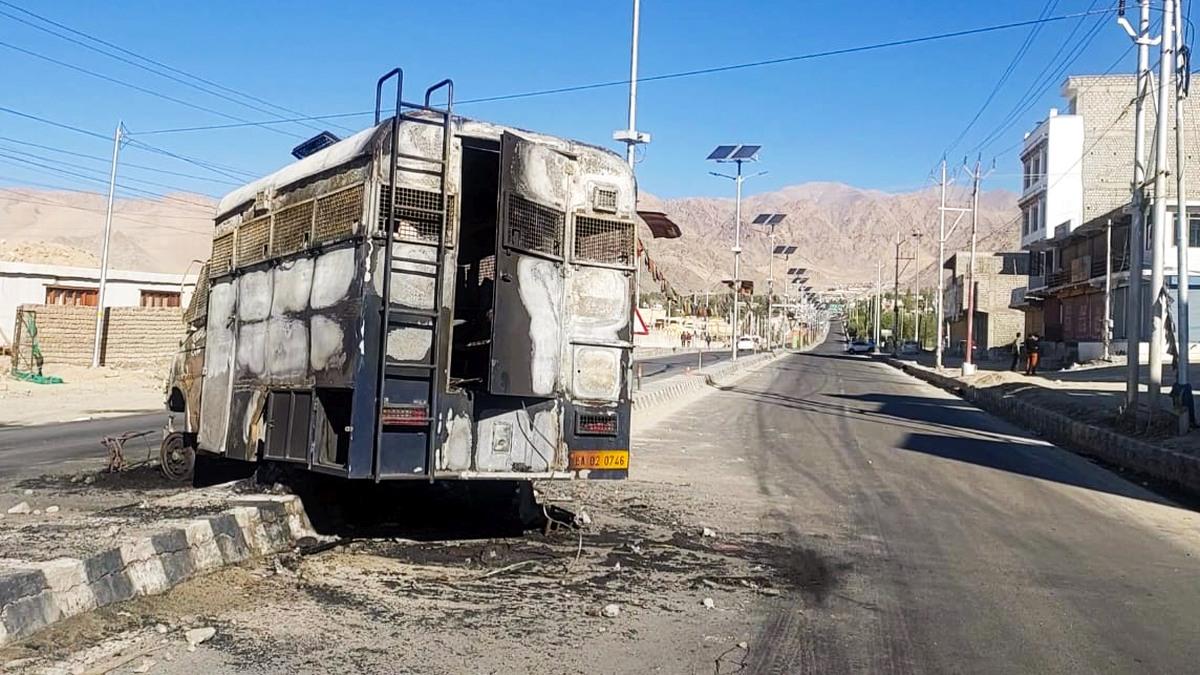
Two Ladakh outfits spearheading the statehood stir called off the October 6 talks with the Centre demanding Sonam Wangchuk's release.
Hundreds of youngsters took to the streets last month demanding statehood for the Union Territory.
Ladakh, with its estimated population of 310,000 (in 2020), was carved out as a Union Territory without a legislature on October 31, 2019.
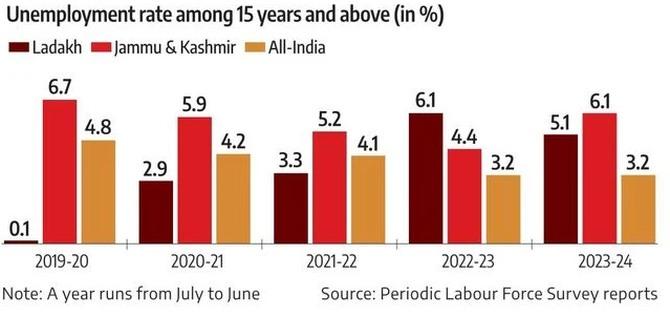
Since then, its unemployment rate has jumped manifold.
Tribals dominate Ladakh's demography
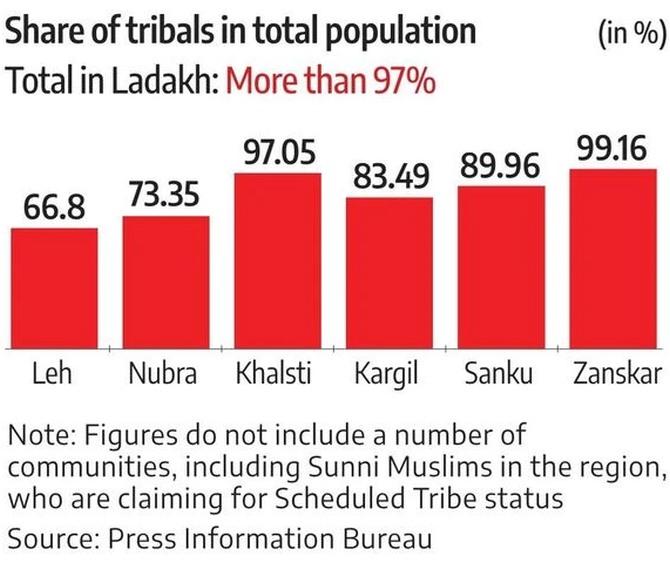
Tribals constitute over 97 per cent of the total population in Ladakh and local leaders are demanding its inclusion in the Schedule Six of the Constitution which gives tribals the right to manage affairs of the region to protect tribal culture, tradition and land.
So far, three councils each in Assam, Meghalaya, Mizoram and one council in Tripura have been included in this Schedule.
Unemployment rate on the rise since formation of UT
The other demand is to provide employment to the locals.
The year when the region was carved out as the Union Territory saw unemployment rate (15 years and above) at just 0.1 per cent against the national average of 4.8 per cent in 2019-2020 (July-June).
The data is culled from a periodic labour force survey (PLFS) report which understates unemployment rates since it does not capture disguised unemployment, particularly in the agriculture sector.
As the years passed, joblessness in the region increased. In 2022-2023, the unemployment rate in the region was 6.1 per cent, almost double of the rate at 3.2 per cent at all India level.
The next year, the unemployment rate declined to 5.1 per cent, while it remained the same at 3.2 per cent at the national level.
In comparison, the unemployment rate in J&K, another region carved out as UT but with a legislature at the very same time, stood as high as 6.1 per cent in 2023-2024.
Budget allocation slashed for Ladakh
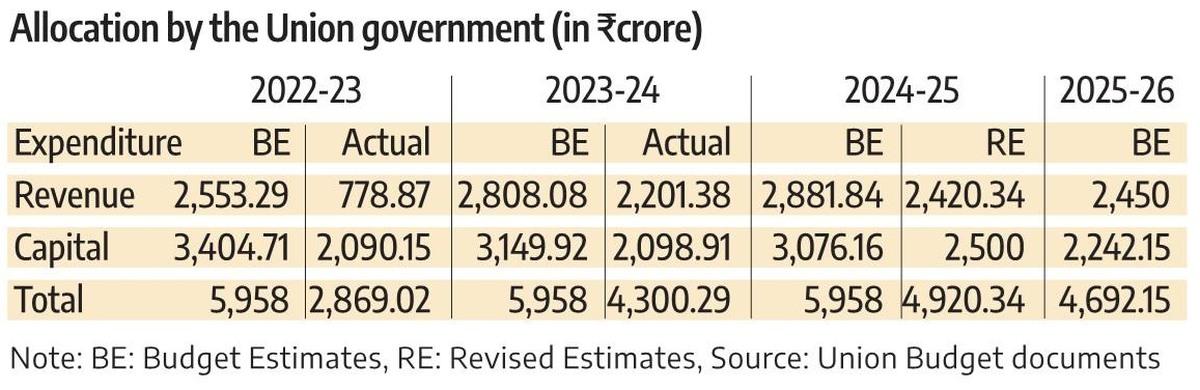
The actual allocation for the region for the last three years showed a decline compared to budget estimates.
For instance, ₹5,958 crore was allocated for the region in 2024-2025 (budget estimates). However, it was truncated to ₹4,920.34 crore in the revised estimates.
This was further reduced to ₹4,692.15 crore in 2025-2026 (budget estimates).
The axe has mainly fallen on capital expenditure, which means a hit on asset generation.
Feature Presentation: Rajesh Alva/Rediff
