
'Amazon, Meta, Google, Microsoft have large operations in India and rely on smooth trade and data flows.'
'Restrictions could raise their costs, limit AI chip exports, and complicate their India strategies.'
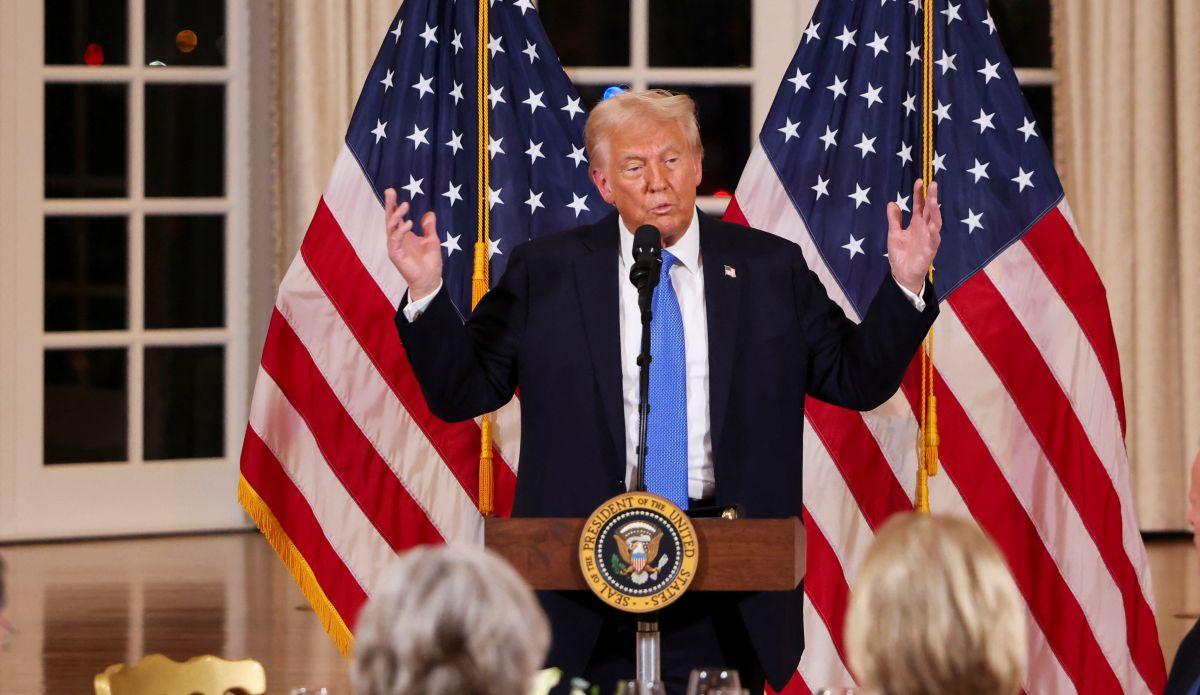
India faces a complex balancing act as US President Donald Trump threatens new tariffs and export restrictions against countries with digital taxes, which may potentially affect American tech giants that have made the country a cornerstone of their global operations, according to industry experts.
Though India recently scrapped its digital services tax to align with global standards, the broader threat of US trade retaliation could complicate the operational strategies of American tech firms that rely on India for everything from customer growth to artificial intelligence development, say experts.
"The crux of Trump's statement lies in the tension between sovereign governments exercising their regulatory powers in the digital economy and the US seeking to shield its technology giants from what it perceives as discriminatory trade practices," said Sonam Chandwani, managing partner at law firm KS Legal & Associates.
Trump on August 25 signalled a potential escalation in trade tensions, threatening to impose additional tariffs and tighten export controls on nations he accused of unfairly targeting American technology companies.
'Digital Taxes, Digital Services Legislation, and Digital Markets Regulations are all designed to harm, or discriminate against American Technology,' Trump wrote on his Truth Social platform.
The warning puts companies like Amazon, Meta, Google and Microsoft in an awkward position.
They have invested billions in India -- one of their fastest-growing markets -- while navigating the country's evolving digital regulations, according to experts.
"Giants like Amazon, Meta, Google, Microsoft have large operations in India and rely on smooth trade and data flows. Restrictions could raise their costs, limit AI chip exports, and complicate their India strategies," said Salman Waris, managing partner at TechLegis Advocates & Solicitors.
Countries, including India, have already introduced frameworks such as the equalisation levy, data localisation mandates, and proposed laws on competition in digital markets.
These measures, though positioned as tools for a fairer digital ecosystem, inevitably increase the compliance burden on US firms, who dominate India's digital economy.
"From the US perspective, such regulations amount to veiled protectionism, creating an uneven playing field and effectively taxing American innovation under the garb of digital sovereignty," said Chandwani.
"For India, however, the question is not one of discrimination but of balancing foreign investment with domestic interests, ensuring consumer protection, and nurturing homegrown digital players."
Kazim Rizvi, founder of policy think-tank The Dialogue, said that unlike the US-Europe standoff, where digital levies are often framed as punitive, India has pursued light-touch frameworks that safeguard user rights, encourage innovation, and maintain open market access.
"American tech companies have not only thrived in India but also expanded their deepest operations here. India remains one of their fastest-growing markets, with significant investments in data centres, AI research hubs, and cloud infrastructure," said Rizvi.
Unlike Europe, India has not adopted heavy-handed digital services legislation that fragments markets.
India scrapped its 6 per cent equalisation levy (digital ad tax), which applied to non-resident platforms, effective April 1, 2025, under the Finance Act 2025-- which has already come into force.
Ravi Mahajan, tax partner, EY India, said India withdrew the equalisation levy in 2024 as part of its commitment to the global consensus on digital taxation.
"This positions the country well to attract investments, with minimal disruption from renewed global discussions on digital taxation," said Mahajan.
The path forward will likely involve intense trade negotiations where India may be compelled to justify its digital tax regime and market regulations under World Trade Organization compatible grounds.
Trump's executive order imposed an additional 25 per cent tariff on Indian goods -- bringing the effective rate to 50 per cent on key exports.
The tariff escalation, which doubles existing trade barriers, threatens to disrupt India's $80 billion annual exports to the US and could particularly impact the country's technology and e-commerce sectors.
Feature Presentation: Ashish Narsale/Rediff
