
While UIDAI has given a nod for face authentication, banks need to join the process.
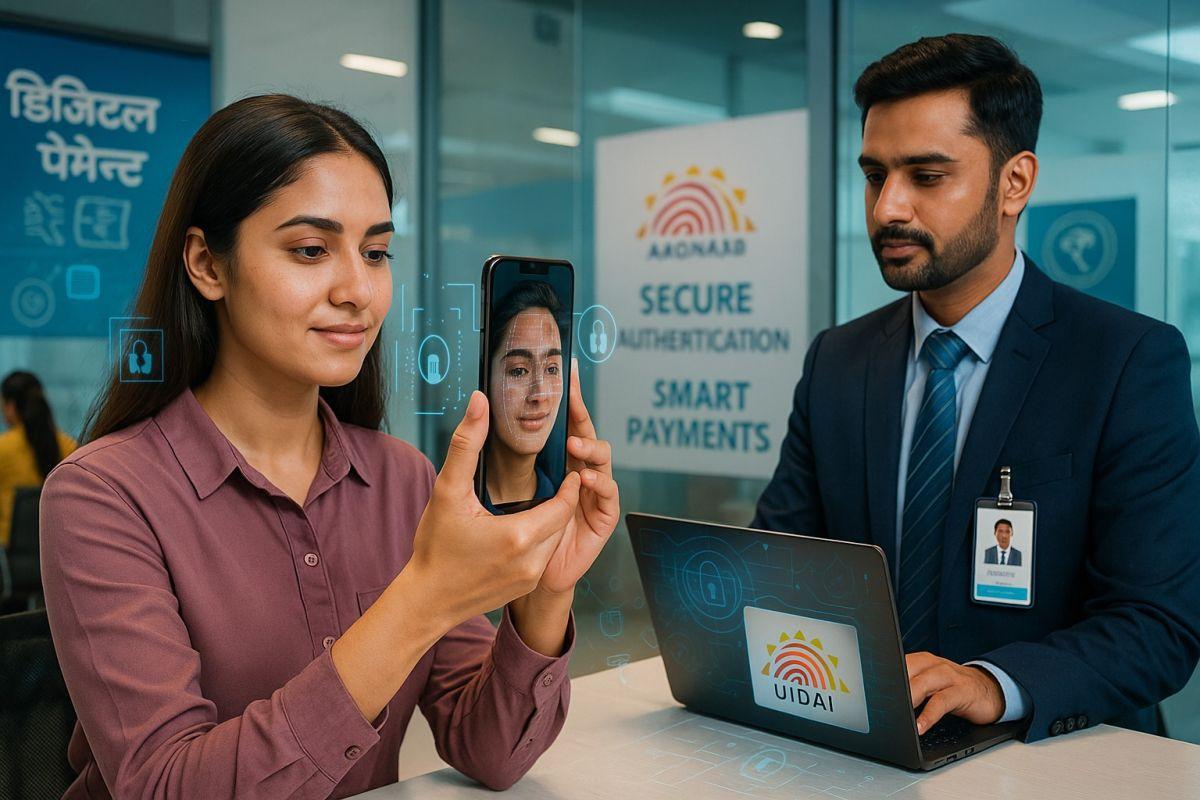
National Payments Corporation of India (NPCI) may soon enable an Aadhaar-based authentication of the face of a person transferring high amounts online, said a senior executive from the Unique Identification Authority of India (UIDAI).
"We have the world's largest biometric database, and we advocate the use of face authentication as a modality in multi-factor authentication," said Abhishek Kumar Singh, deputy director-general (authentication and verification division), UIDAI.
This modality is further getting a boost as the Reserve Bank of India (RBI) in its latest guidelines, announced in September, mandated stronger and smarter authentication.
Singh, who was part of a panel discussion at the Global Fintech Fest 2025, also added that the NPCI was on the same page in this matter.
"Happy to inform you that NPCI is on board with this. And it should be making this announcement in a few days," he added.
Singh added NPCI might begin with high-value financial transactions. It's the easiest and quickest way to authenticate an individual.
Singh was also of the opinion that with face authentication the reach of the financial segment can increase by multiples.
"Right now, the authentication infrastructure and framework is tied to devices. You need specialised devices to authenticate yourself if you are doing biometric authentication. The device ecosystem at present is something like four million.
"The moment we talk of face authentication your smartphone is your device, and then the device ecosystem suddenly jumps to over 640 million, which is the number of smartphones in India," he added.
Singh said while UIDAI had given a nod for face authentication, banks needed to join the process.
In August, the number of transactions involving face authentication through the Aadhaar crossed two billion, doubling in just six months, according to a media statement by the UIDAI.
Fintech player Razorpay recently announced a system of biometric card authentication. This is in partnership with Yes Bank.
Payment authentication now is done through the personal identification number (that comes with the debit card) and a one-time password (sent by SMS).
But for the first time in India, according to the RBI's latest guidelines, online card payments can be authenticated using facial identification, said the company in a statement.
In India, 35 per cent of payment failures are owing to things like sending delayed or incorrect OTPs.
At the same time, digital frauds are rising sharply, with losses exceeding Rs 520 crore in FY25, according to the RBI data.
Feature Presentation: Aslam Hunani/Rediff
