
'...not merely in managing fiscal mathematics, but in demonstrating conservatism and prudence within that framework.'
'Looking forward, we believe sufficient growth drivers exist -- ranging from government reforms to revival in consumption to favourable monsoons. Numerous factors support the Indian economy.'
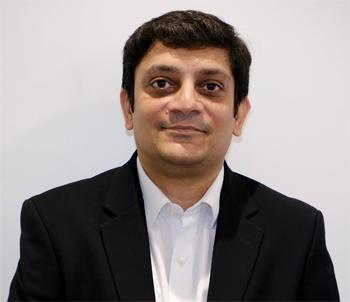
As Indian equity markets navigate global uncertainties, Sanjay Doshi, Head of Investments and Research at Abakkus Mutual Fund, offers a measured yet optimistic outlook on valuations, sectoral opportunities, and wealth creation strategies.
Speaking with Prasanna D Zore/Rediff on the sidelines of the launch of Abakkus's maiden Flexi Cap Fund, Doshi emphasises that current market valuations appear fair given the improved near-term outlook and visible demand recovery.
He highlights financials, healthcare, and manufacturing as sectors poised for alpha generation (beat the market's average return using skill, insight, or strategy), while advocating for disciplined, long-term investment approaches.
Doshi also underscores the positive impact of government reforms, particularly GST rationalisation, and projects sustainable medium-term returns of 13 to 14 per cent for Indian equities.
Indian equities have demonstrated resilience despite considerable global headwinds. Do you believe current market valuations reflect genuine earnings potential, or are we witnessing a sentiment-driven rally, particularly within large-cap stocks?
This question is particularly relevant in today's market environment. Indian markets have historically represented growth markets. While we encountered challenges over the preceding 15 to 18 months regarding growth momentum, there was also a degree of exuberance previously, which may have created perceptions of overvaluation.
However, what provides us with confidence today is that the near-term outlook has improved meaningfully. This improvement results from concerted efforts by the government on both fiscal and monetary fronts.
Given this context, demand recovery has become very visible. Earnings growth is projected to remain in double digits for the forthcoming year as well, which suggests that markets appear fairly valued and conducive for long-term wealth creation.
Given the sharp divergence in performance across market capitalisation in 2025, where do you identify better risk-adjusted opportunities for 2026 as we enter the new calendar year -- large caps, mid caps, or small caps?
This is precisely why we have selected a Flexi Cap structure for our inaugural product. It affords us the flexibility to assess market conditions and allocate across market capitalisations where the most appropriate opportunities exist.
That said, our portfolio will maintain a sound balance, with stable large-cap holdings forming the foundation, while we pursue selective, high-quality companies in the mid and small cap segments for alpha generation.
At present, within the overall context, one likely finds superior opportunities across the broader market. Consequently, the mid and small cap segments, particularly when evaluated from a growth perspective, considering the anticipated recovery and valuation context, should provide more attractive opportunities from a returns standpoint.

What would be the indicative allocation between large caps, mid caps, and small caps within the Abakkus Flexi Cap Fund?
Given current market conditions and our outlook, we are targeting approximately 40 to 50 per cent allocation to large caps, which will provide portfolio stability and ensure adequate liquidity. The remaining allocation will be distributed between mid and small caps.
It is important to emphasise that this is not a rigidly predefined rule; rather, it is based upon prevailing market conditions.
We remain a bottom-up, research-driven house, and within each market capitalisation segment, our focus will be on identifying superior investment opportunities characterised by excellent management, robust business models, and attractive growth potential relative to the price we are paying.
Which sectors do you believe are positioned to deliver alpha over the next two to five years? Are there particular themes you are monitoring closely?
We maintain a constructive view on financials as a sector -- not merely banks, but the broader landscape, including market participants, the surrounding ecosystem, and fintech companies. We remain quite optimistic about this space.
We are also positive on healthcare as an opportunity, particularly within contract research and contract manufacturing segments.
Manufacturing represents significant potential over the next five to seven years. Especially within engineering -- niche engineering and technology-involved manufacturing -- the dynamics have been evolving quite meaningfully.
We shall be selective, but we will also evaluate new-age companies or platform-driven enterprises in both financial and non-financial spaces.
Our focus will be on companies that are not burning cash, possess stable business models, and are now positioned for growth. We are prepared to consider companies that have demonstrated positive unit economics or profitability and are subsequently pursuing growth.
We remain positive on consumer discretionary as a segment, rather than basic consumption narratives. Within the global context as well, metals, minerals, and chemicals remain attractive. We shall also examine opportunities within applied material science and specialty chemicals within that space.
Will artificial intelligence feature as part of your thematic focus going forward, given that it represents an emerging theme, particularly in global markets?
As far as the Indian market context is concerned, this (AI) space is still evolving. I am not certain how many relevant investment opportunities one can identify within the listed equity space presently. However, it certainly represents a promising long-term theme that warrants attention.
Opportunities will emerge through derivative plays -- suppliers in areas such as power management, or pure AI-related companies such as data centres -- and we shall evaluate how these might be approached as investment opportunities within the listed space.
At present, we shall need to focus on these derivative plays, and as niche companies become available in the market, we shall evaluate them from a fundamental perspective.
With the government's continued focus on capex and fiscal discipline, what are the key macroeconomic indicators you are tracking that could influence market direction in the next 6 to 12 months?
The forthcoming Budget will be observed with keen interest for the balance you mentioned. The government has executed a commendable task -- not merely in managing fiscal mathematics, but in demonstrating conservatism and prudence within that framework, which has been most appropriate.
The expenditure allocation has been directed towards the right areas, encompassing both capital expenditure and consumption support. They have performed excellently in this regard.
Furthermore, they have provided frameworks and support beyond the Budget -- beyond purely fiscal measures -- in terms of ease of doing business and establishing the appropriate policies and environment for business maturation. This has been highly supportive.
We remain constructive regarding how the government is managing the overall economic perspective and directing resources appropriately.
Are you observing the recent GST rate reductions translating into tangible profit improvements for companies?
Absolutely. The government has provided substantial support on the consumption front. Rationalisation of GST was long overdue, given that it was designed to be a simplified tax structure. Considerable progress has been made regarding both rates and compliance requirements.
We believe this could serve as a long-term, sustainable driver of growth -- not merely a one-off intervention. It enhances affordability and places greater resources in the hands of end consumers. We are very positive regarding these reforms.
What is your medium-term outlook for Indian equities as we head into 2026? Do you anticipate a period of consolidation, or are we positioned at the cusp of another upward leg?
We have witnessed a substantial period of time consolidation over the preceding five to six quarters (18 months), to be precise. Looking forward, we believe sufficient growth drivers exist -- ranging from government reforms to revival in consumption to favourable monsoons. Numerous factors support the Indian economy.
We must also evaluate this from the perspective of sustainable inflation within the economy, as this influences both growth and earnings expectations.
A nominal GDP growth of approximately 10 to 11 per cent, with equity returns in the range of 13 to 14 per cent, represents a reasonable medium-term estimate.
Finally, what advice would you offer mutual fund investors seeking to create wealth over a two-to-fifteen-year time horizon?
The advice is straightforward: Be disciplined, commence early, and remain committed to your long-term objectives.
We firmly believe that equity as an asset class possesses the right characteristics to outpace inflation and support your long-term wealth creation journey.
One simply needs to remain invested and maintain discipline in one's approach. Market volatility is inherent to this asset class. However, in a growing economy such as India, where we firmly believe the next seven to eight years could prove exceptionally strong, equities represent the appropriate asset class from a wealth creation perspective.
Disclaimer: This article is meant for information purposes only. This article and information do not constitute a distribution, an endorsement, an investment advice, an offer to buy or sell or the solicitation of an offer to buy or sell any securities/schemes or any other financial products/investment products mentioned in this article to influence the opinion or behaviour of the investors/recipients.
Any use of the information/any investment and investment related decisions of the investors/recipients are at their sole discretion and risk. Any advice herein is made on a general basis and does not take into account the specific investment objectives of the specific person or group of persons. Opinions expressed herein are subject to change without notice.