
Investors may wait for six months and then take another look at the stock.
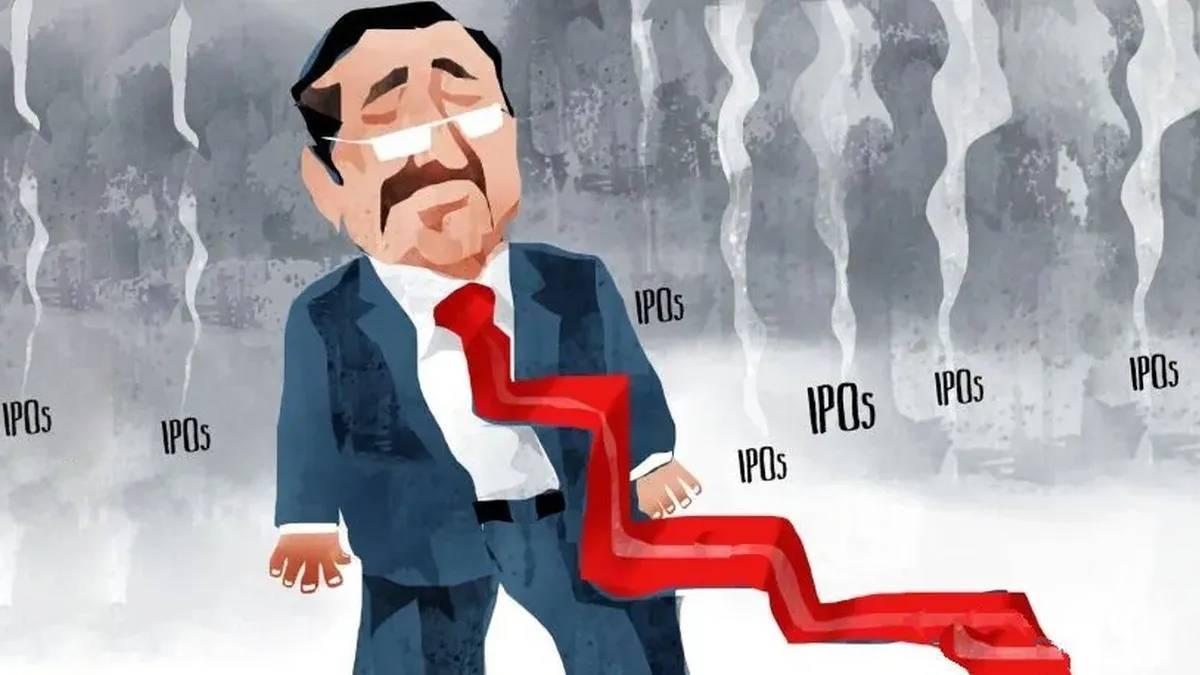
At an event in Kolkata, Securities and Exchange Board of India's Whole-time Member Kamlesh Chandra Varshney urged merchant bankers to adopt realistic pricing strategies for large initial public offerings (IPOs).
Excessively high valuations, Varshney said, often lead to post-listing slumps, eroding retail investors' trust.
Why IPOs are priced high
In 2024, 337 companies went public, raising nearly Rs 1.67 trillion.
"When market sentiment is euphoric, promoters frequently view these windows as an opportunity to unlock maximum value. In such conditions, and if the sector has an exciting story, investors almost always pay a premium," says Trivesh D, chief operating officer, Tradejini.
Not everyone agrees that IPOs are overpriced.
"The proof of realistic pricing is that the IPO gets subscribed. If the pricing was too aggressive or greedy, investors would reject it, as has been the case for several issues in the past. After all, no one is forced to buy an IPO," says Pranav Haldea, managing director, PRIME Database Group.
Risks arising from high valuations
Expensively priced IPOs can be risky even for short-term punters.
"Historically, aggressively priced IPOs lacking strong fundamentals have not delivered listing gains and even listed at a discount," says Yash Sedani, assistant vice president, investment strategy, 1 Finance.
Post-listing, many such stocks slip below the issue price, leading to losses even if investors extend their holding period.
"Stretched valuations leave little margin for appreciation," says Trivesh.
The hype created during an IPO rarely lasts.
"Once the excitement fades, the market realigns to fundamentals," says Riddhesh Dalvi, founder, Emerald Investments.
High pricing, he adds, puts pressure on companies to deliver.
The impact of overvaluation extends for at least six months, until the lock-in period for anchor investors and promoters expires.
"Volatility tends to remain elevated during this period. Unfavourable business updates or macro headwinds trigger selling," says Sedani.
Go beyond the numbers
Assess multiples alongside growth trajectory, customer base, margin profile, competitive positioning, and management quality.
"Combine quantitative and qualitative assessment and rely on multiple data points instead of just one," says Sedani.
Compare valuations with peers.
"A valuation above sector averages, without clear growth visibility, is a red flag...it must be justified by growth, returns, and cash flows," says Dalvi.
Do's and don'ts
A strong company with competitive edge and growth potential often comes at a high price.
"For a long-term investor, participating in such an IPO may be a viable proposition," says Jyoti Prakash Gadia, managing director, Resurgent India.
Alternatively, investors may wait for six months and then take another look at the stock.
Understand the end use of funds. It should ideally be for expansion.
"If the promoters are diluting their stake, study carefully from the regulatory angle and evaluate long-term strength of the corporate," says Gadia.
Most investors enter IPOs for listing gains.
"Mostly, they track whatever is happening in the grey market. If there is a premium, they invest," says Haldea.
Many lack the ability to carry out valuation.
"They should follow the anchor book and qualified institutional buyers (QIBs) who are participating and take cues from how they are responding," says Haldea.
Which valuation metric should you use?
Source: 1 Finance
Disclaimer: This article is meant for information purposes only. This article and information do not constitute a distribution, an endorsement, an investment advice, an offer to buy or sell or the solicitation of an offer to buy or sell any securities/schemes or any other financial products/investment products mentioned in this article to influence the opinion or behaviour of the investors/recipients.
Any use of the information/any investment and investment related decisions of the investors/recipients are at their sole discretion and risk. Any advice herein is made on a general basis and does not take into account the specific investment objectives of the specific person or group of persons. Opinions expressed herein are subject to change without notice.
Feature Presentation: Ashish Narsale/Rediff
