'I was so full of josh, with all my friends cheering me on, I gave it everything from the get-go.
'By nightfall, the pain had set in. My legs were aching, my back was on fire and I was in tears.'
'I turned to my mom and said, "I can't do this".'
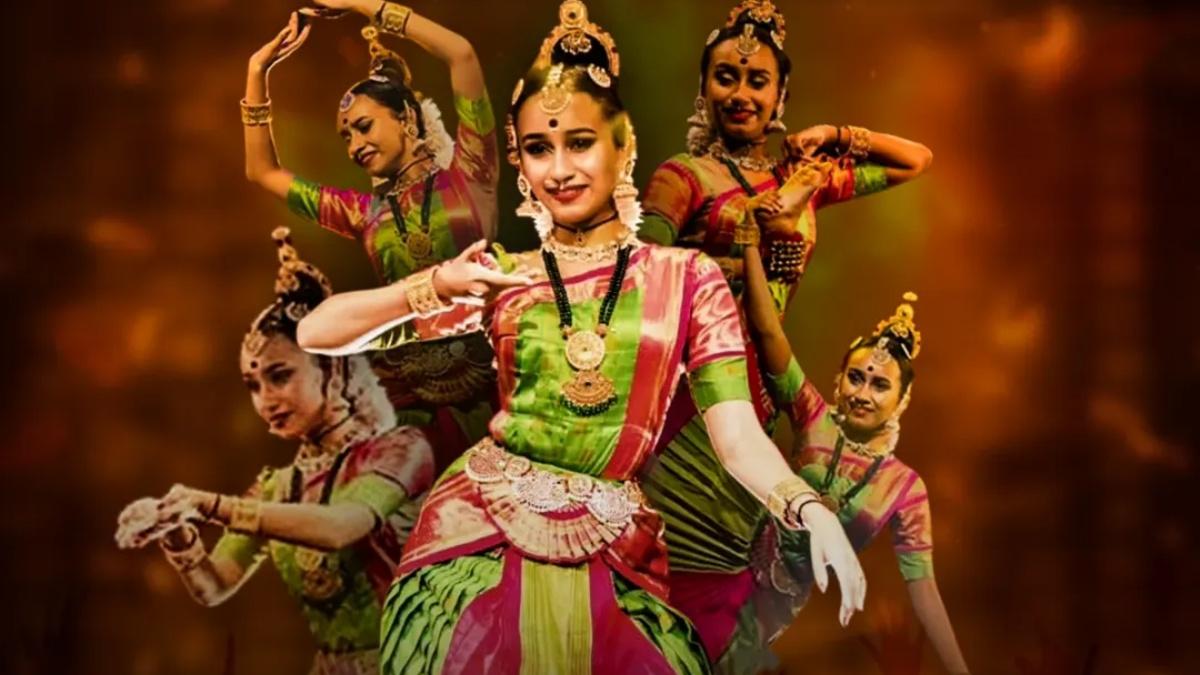
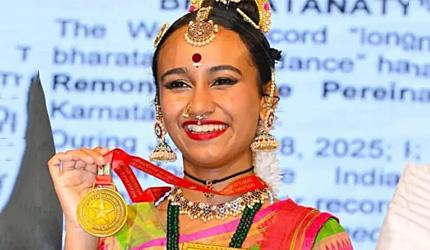
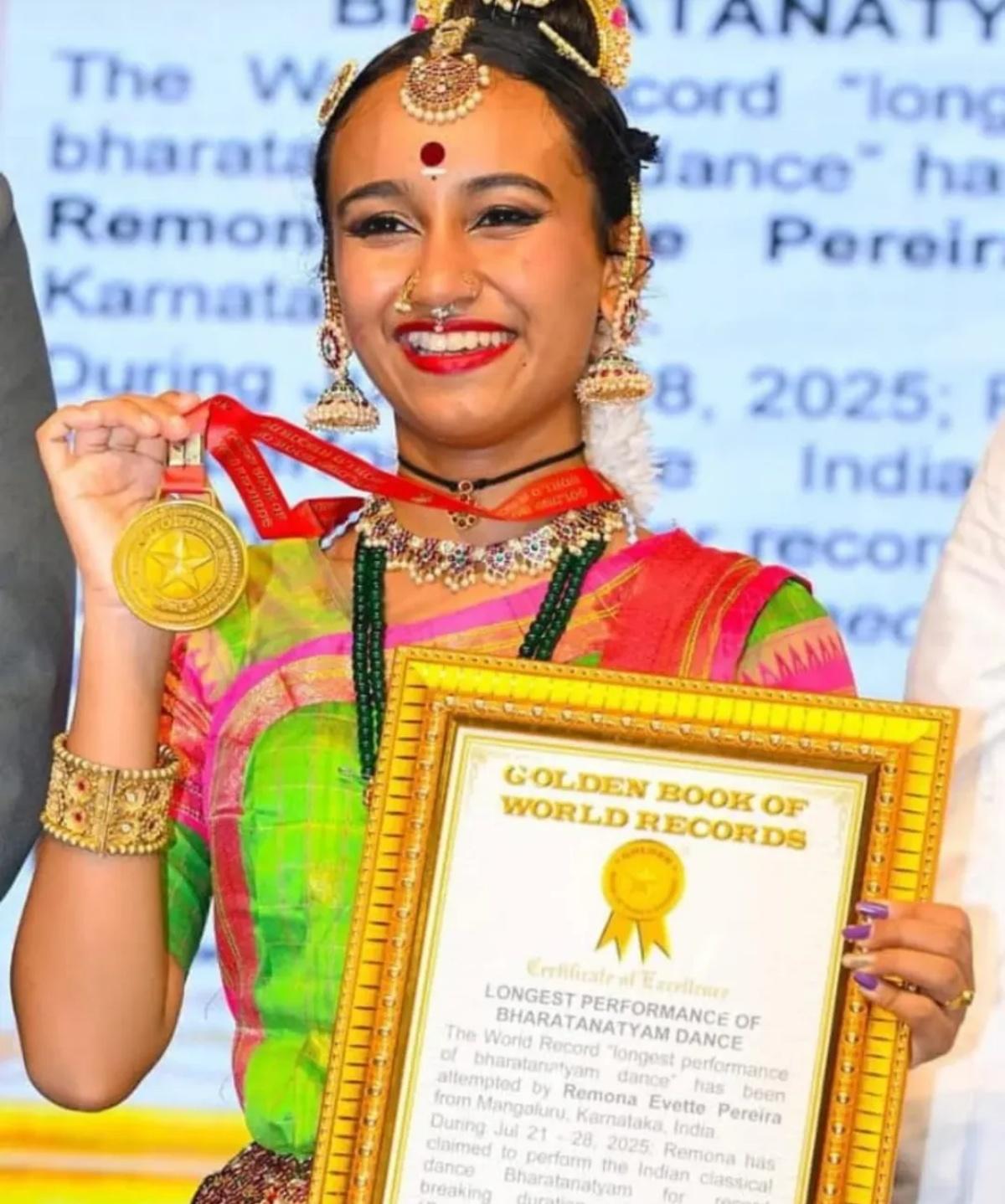
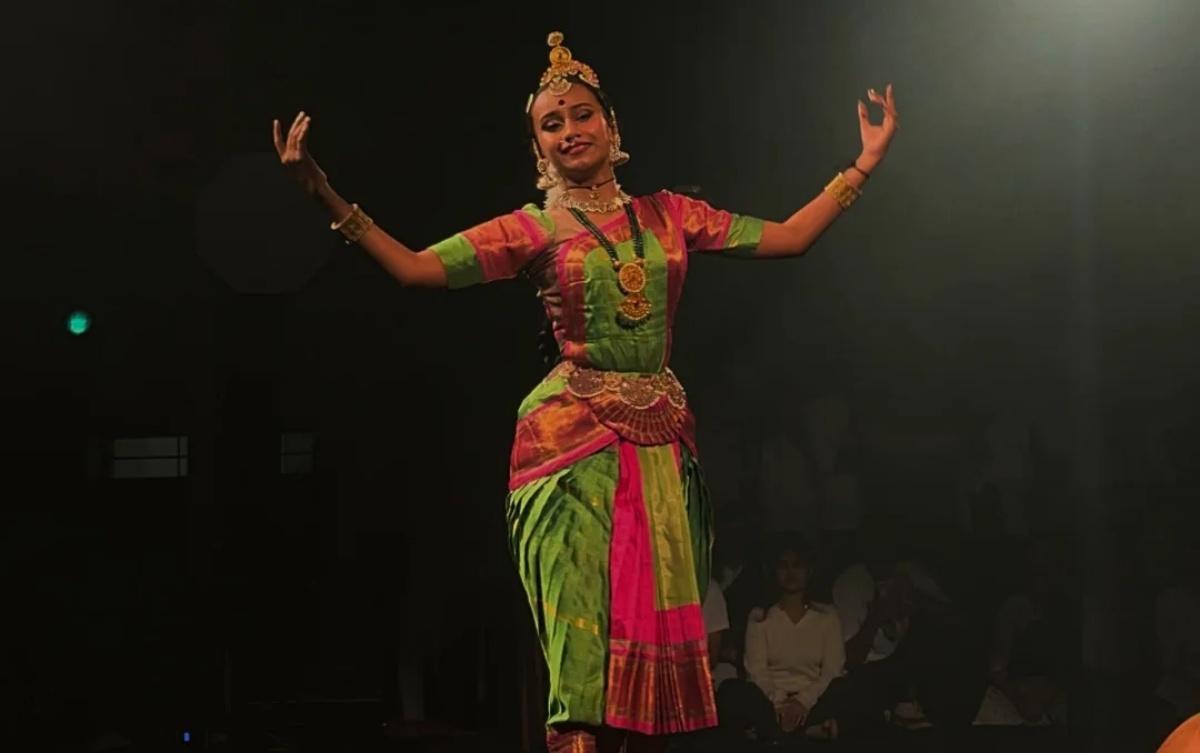
In a remarkable feat of endurance and artistic devotion, 20-year-old Remona Evette Pereira set a new world record.
Mangaluru's 'golden girl' completed a stunning 170 hour-long Bharata Natyam performance, earning her a place in the Golden Book of World Records.
Remona, who began her formal training when she was just two-and-a-half years old under Guru Shrividya Muralidhar's tutelage, has always seen Bharata Natyam as more than just a classical dance form.
Bharata Natyam, she says, is her first love, a form of spiritual connection and a language through which she expresses the inexpressible. "Dance is for everyone. It belongs to anyone who approaches it with devotion, discipline and love."
Remona's achievement also serves as a powerful statement on the intersection of art and faith. She firmly believes that "art has no religion" and her commitment to Bharata Natyam is testament to her belief.
Her landmark performance, held at St Aloysius College where she is a third year BA student, began on July 21 and concluded a week later on July 28.
This is not her first taste of national recognition; in 2023, Remona was honoured with the Pradhan Mantri Rashtriya Bal Puraskar, India's highest civilian honour for children, by Prime Minister Narendra Modi.
In this exclusive interview with Rediff's Laxmi Negi, she shares her journey, from her earliest memories of dance to the challenges and triumphs of her record-breaking marathon and her desire to make Bharata Natyam inclusive for all.
What first drew you to Bharata Natyam? How old were you when you began training?
My journey with Bharata Natyam began when I was just two-and-a-half years old, thanks to my mother.
There's a meaningful story behind it -- she wasn't allowed to dance as a child so, when I was born, she made it a point to introduce me to a range of art forms.
She never once pushed me toward Bharata Natyam; in fact, I explored painting and other dance styles as well.
But something about Bharata Natyam resonated deeply with me. From that moment on, my mother has been my strongest pillar of support, quietly encouraging me every step of the way.
Can you tell us about the role your mother played in nurturing your passion for dance?
My mother plays a huge role in my dance journey.
She stitches all my costumes, often adding her own creative touches.
She also helps me brainstorm ideas for props and presentation.
Her involvement goes far beyond just being supportive -- she's deeply invested in every aspect of my performances.
In many ways, she's my silent collaborator, always working behind the scenes to help bring my vision to life.
How did the idea of attempting a 170-hour Bharata Natyam marathon first come to you?
I was casually scrolling through Instagram when I stumbled upon something called a dance marathon. The idea instantly caught my attention, and I thought -- why not give it a try?
A few weeks ago, I went to my college office to fill out the registration form. I had already told my mother that I planned to dance for 24 hours.
But while I was filling out the form, something unexpected happened -- a number just popped into my head. I don't know how or why but 170 hours felt right. Before I wrote it down though, I knew I needed my mother's support.
When I told her I wanted to dance for 170 hours, she was stunned and immediately asked how many days that was. I told her it was seven days and two hours. She looked at me, asked if I was absolutely sure and when I said yes, she simply said, 'Then I'll be with you.'
And that's how this incredible journey began.
How did your gurus prepare you emotionally and artistically for this challenge? Did they offer any advice or conduct any rituals before you began?
What did your training and preparation for this feat look like, both physically and mentally?
The idea came to me just three weeks before the event.
Honestly, you can't really prepare for something like this.
I knew one thing for sure: I wouldn't be getting any sleep for seven straight days. So, in the week leading up to the marathon, I did the only logical thing -- I slept. A lot.
People often ask me how I trained for it. My answer? I prepared by sleeping!
You performed for seven days straight. What was the toughest moment emotionally or physically during those 170 hours? Did you ever break down? Were there moments when you wanted to stop?
Like I said, in the lead-up to the marathon, I was mostly sleeping. I was also imagining how the seven-day challenge would play out in my head.
I assumed the first day would be easy and things would only start getting tough around day three. But what actually happened was the complete opposite.
I wanted to give up on day one itself. Honestly, I brought it on myself.
I was so full of josh, with all my friends cheering me on, I gave it everything from the get-go.
By nightfall, the pain had set in. My legs were aching, my back was on fire and I was in tears. I turned to my mom and said, 'I can't do this.'
And she calmly replied, 'Okay, then don't.'
That shocked me.
I told her, 'What kind of supporter are you? You're supposed to tell me to push through -- not give up!' That moment changed everything. I had made a commitment and I wasn't going to back down.
From that point on, I decided I was going to fight through the pain.
Surprisingly, it got better after the third day. I found a rhythm. It became mechanical -- three hours of dancing, followed by a 15-minute break that always felt like five.
I survived mostly on fruits -- bananas, apples, guavas -- and sipped on coconut water. When sleep crept in, I took a few sips of coffee.
I had incredible support -- physiotherapy interns from my college helped with my ligaments and applied muscle tape to reduce damage.
My mother was with me every step of the way. She fed me, sat with me and, for the last five minutes of every break, I would close my eyes while she gently held my head.
The hardest part was sleep deprivation. After day three, I began hallucinating. I found myself speaking to imaginary people, completely out of it.
But my mom... she didn't sleep either. She barely ate. Whenever she noticed me slipping, she and my friends would start cheering loudly to bring me back.
I was dancing but it was her strength that kept me going.

How did it feel when you received the certificate of excellence after such a physically demanding performance?
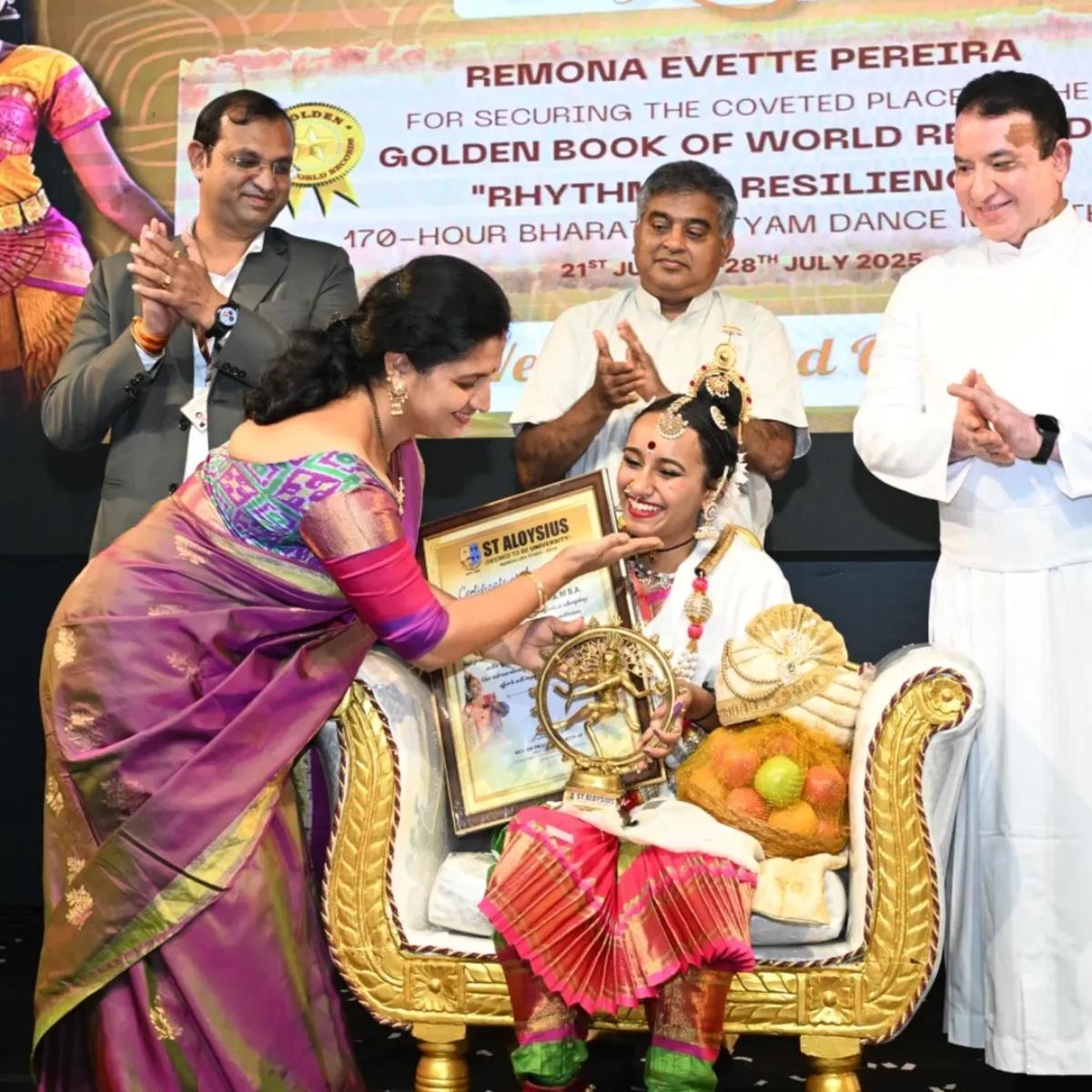
I had tears of joy.
But I want to make it clear -- this achievement isn't mine alone. It felt like the entire city stood behind me. I was truly overwhelmed by the support.
People kept showing up to cheer me on and their energy lifted me through the toughest moments. Even politicians came by to offer their encouragement.
It felt like all of Mangalore, along with people from Kerala and across Karnataka, came together to help me reach this milestone.
I will always carry that collective support in my heart.
Bharata Natyam is known for its storytelling. Over 170 hours, how did you choose your repertoire and what stories did you want to tell the audience?
We didn't plan anything; I just went with the flow.
How important was the support from your classmates and college during the performance? Any particular moment of support that really touched you?
There was this beautiful Malayalam song, Madu Meykkum Kanne -- a tender exchange between Yashoda and the young Lord Krishna.
It played over a hundred times during the dance marathon and each time felt special.
Some of my friends danced alongside me to this piece and, together, it felt like we were part of that divine conversation -- speaking not with words but through movement.
What role did spirituality play during the performance -- especially opening with Ganesha and ending with Surya?
How did you navigate that intersection of faith and art?
As a Roman Catholic, did you ever face questions or challenges about pursuing this classical form and how did you respond?
Yes, I've heard comments like, 'This is our dance form, why are you doing it?'
I've even received messages on Instagram saying, 'We're grateful to her Brahmin guru who allowed her to learn.'
But here's the truth -- my guru is not a Brahmin.
These people know nothing about me or my teacher, yet they feel entitled to pass judgment.
To them, my response is simple: Mangalore is a city rich in art and culture and art has no religion.
Dance and faith are not the same. Nowhere is it written that the dance of Lord Nataraja is reserved for a particular community. He never said this sacred art belongs only to a chosen few.
Dance is for everyone. It belongs to anyone who approaches it with devotion, discipline and love. And that includes me.
Has your understanding of Bharata Natyam evolved over the years from a dance form to something more personal or spiritual?
It's truly been a roller coaster ride.
There were many who tried to pull me down along the way but, strangely, I find joy in that. When someone tells me I can't do something, it only pushes me harder.
Bharata Natyam is my first love. Words fall short when I try to describe what it means to me but through every movement, every expression, I find a way to show just how deeply connected I am to this art form.
It's my way of expressing love -- pure and unwavering.
How did you balance your academic workload while training for something so intense?
My teachers have been very helpful. I can walk into the staff room and clear my doubts.
After setting this incredible world record, what's next for you as a dancer, a student and an artist? More performances? Teaching? Global stages? Or something entirely different?
I want to take Bharata Natyam with me wherever I go -- across cities, cultures and communities.
My dream is to pursue a PhD in Bharata Natyam and deepen my understanding of this art form.
I also feel strongly about making dance inclusive. I currently teach transgender individuals and children at a school for special needs.
Through Bharata Natyam, I want to create spaces where everyone feels seen, heard and empowered.