
How much protein is needed for a healthy daily diet?
A healthy adult needs a minimum of 0.80 gram of protein for every kilogramme of body weight per day.
The average consumption of protein in India is around 62 gm per day, which is way lower than the global average of 78 gm.
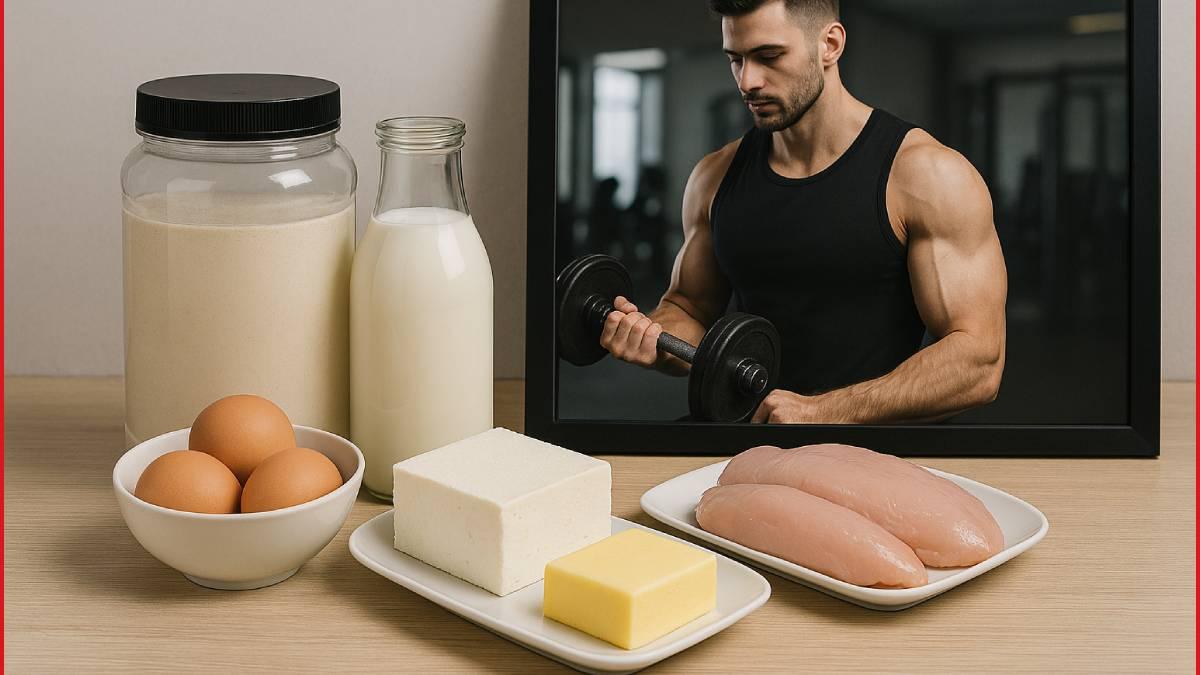
'McDonald's, Bollywood, cricket fuel wellness craze in India,' read the headline of a Reuters article published on August 27. The article drew attention to how the country was witnessing a huge demand for protein-loaded products.
Some years ago, the only place you saw 'protein' emblazoned boldly on was on special drinks that gym-going men, and women, slugged after a heavy workout.
It was seen as a special something that these six-pack aspirants consumed. Us mortals were not on the radar of such products.
But as with all innovative products, the diffusion of innovation curve kicked in.
The special ingredient managed to 'cross the chasm' to become accepted by the early majority, it seems.
This was brought alive to me when I saw an ad by Godrej Yummiez for its chicken nuggets.
The kid in the ad had drawn six-pack abs and wanted to eat protein. He was refusing to eat the noodles his loving father offered.
The child's argument was that he needed protein to become strong, and that only Godrej Yummies chicken nuggets had that.
The ad was counterintuitive, making the kid demand something healthy, breaking out of the 'healthy bhi, tasty bhi argument'.
Also, it was nice to see the dad playing the role of a caregiver, instead of the stereotypical mom.
To assuage taste fanatics and drive home the point that the kid actually loved the taste of the chicken nuggets, the ad's punchline went: 'Protein toh bas bahana hai (protein is just an excuse)....'
The point is that protein-packed products and protein-laden claims have made a giant leap from the gym to the refrigerator at home.
Amul probably pioneered the move to make protein the centre of a health offering by presenting it as a key ingredient in its range of products.
The brand has published full-page ads in leading dailies, presenting protein-packed products, including high-protein milk, whey protein powders (the gym-goers' favourite), protein lassi/butter milk, high-protein curd, cottage cheese etc.
While the likes of Amul and Godrej are going after the upper- and upper-middle-income segment, products such as energy bars are targeting the more affluent millennials.
These energy bars and breakfast snacks, like YogaBar, also declare the amount of protein a bar contains: 8 gm, 10 gm, 20 gm, and so on.
This brings us to the question: How much protein is needed for a healthy daily diet?
A healthy adult needs a minimum of 0.80 gram of protein for every kilogramme of body weight per day, say experts.
So, if you are 70 kg, you need 56 gm of protein.
Other reports indicate that the average consumption of protein in India is around 62 gm per day, which is way lower than the global average of 78 gm.
Data shows that we are consuming less protein than our global counterparts in the US and China.
Indian diets, largely vegetarian, incorporate protein needs through dals, curd and paneer.
Soya, tofu and quinoa add to the protein intake of the more evolved consumer.
But there are contradictions when it comes to understanding and interpreting our body's nutritional needs.
Animal protein, which is recommended, can cause cardiovascular diseases due to its saturated fat content, but at the same time offers us iron, B12, and more.
Plant-based protein gives us folate, fibre and more, but on a per-gram basis offers less protein.
Both non-veg and veg food as protein sources have positives and negatives.
Nutrition labelling on packaged food brands is supposed to help consumers make informed decisions, but often people cannot decode the table at the back of the pack.
All this noise around protein should be helping in some way.
Protein consumption in India has shown an 8 per cent increase over the last 10 years.
The spate of new products and advertising is bound to improve consumer awareness around protein.
In a country that does not consume meat with every meal, products like milk, paneer, and soya nuggets are good sources of protein.
Consumers, at least the nutritionally aware ones, are paying more attention to protein, thanks to all the noise.
Unfortunately, as with everything else, excess consumption of protein can have its own side-effects.
This leads me to the campaign the Egg Co-ordination Committee ran two or three decades ago.
The slogan crafted by the late advertising genius Anand Halve went as: 'Sunday ho ya Monday, roz khao andey (whether it's Sunday or Monday, eat eggs every day).'
Eggs are a great source of protein. So, maybe the campaign should now add protein to its catchy slogan: 'Sunday ho ya Monday, roz khao (protein-packed) andey.'
Ambi Parameswaran is an independent brand coach. His latest book Marketing Mixology presents four essential skills for marketing success.
Feature Presentation: Ashish Narsale/Rediff
Disclaimer: All content and media herein is written and published online for informational purposes only. It is not a substitute for professional medical advice. It should not be relied on as your only source for advice.
Please always seek the guidance of your doctor or a qualified health professional with any questions you may have regarding your health or a medical condition. Do not ever disregard the advice of a medical professional, or delay in seeking it because of something you have read herein.
If you believe you may have a medical or mental health emergency, please call your doctor, go to the nearest hospital, or call emergency services or emergency helplines immediately. If you choose to rely on any information provided herein, you do so solely at your own risk.
Opinions expressed herein cannot necessarily provide advice to fit the exact specifics of the issues of the person requesting advice.
