
The average Indian worker must labour for an extraordinary 160 full working days to afford Apple's latest iPhone 17 Pro.
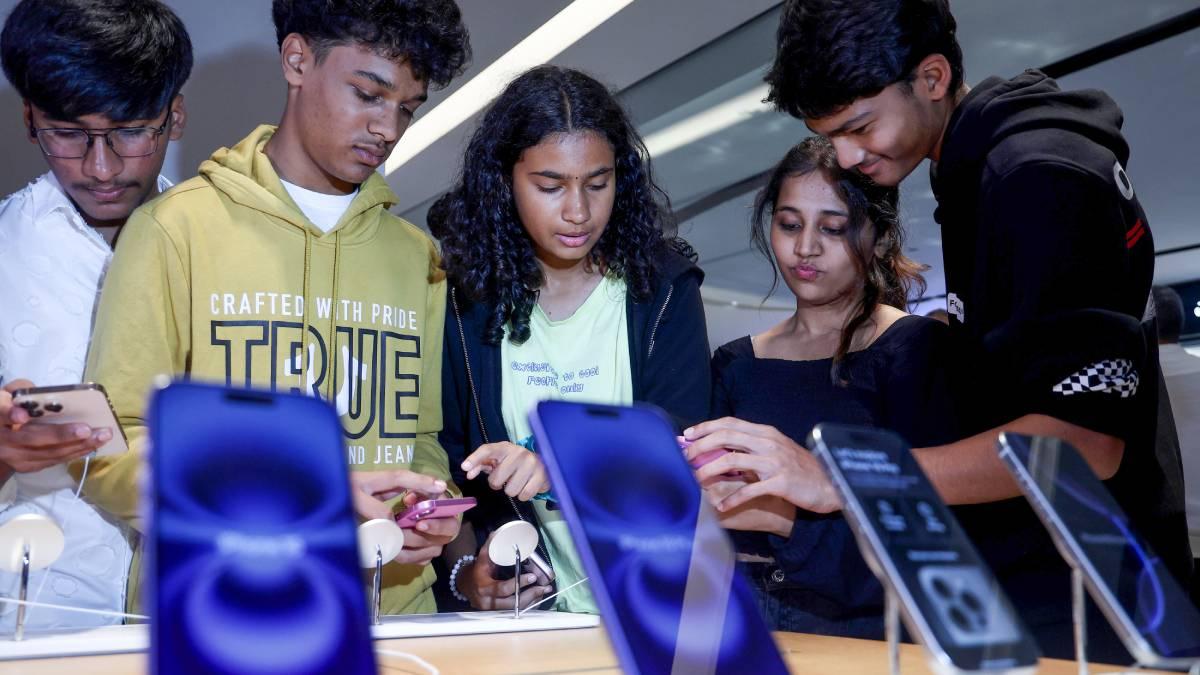
India faces a stark digital divide as the iPhone Affordability Index reveals a troubling truth: The average Indian worker must labour for an extraordinary 160 full working days to afford Apple's latest iPhone 17 Pro -- a figure that exposes the growing chasm between technological aspiration and economic reality in the world's most populous nation.
The Staggering Numbers
The iPhone Affordability Index paints a sobering picture for Indian consumers. Whilst workers in developed OECD economies need merely 3 to 5 working days to purchase the base iPhone 17 Pro, Indians must dedicate over five months of full-time employment without spending on any other necessities.
This translates to more than 160 working days -- a figure that ranks amongst the highest globally, where the international average stands at approximately 26 working days.
This disparity becomes even more pronounced when considering India's wage structure. Recent surveys indicate that regular salaried employees in India earn an average of Rs 19,010 monthly.
For someone earning this median salary, acquiring an iPhone 17 priced at Rs 82,900 would consume 4.3 months of their entire income -- an unrealistic proposition for most households managing essential expenses like housing, food, and healthcare.
The Price Premium Penalty
Indian consumers face a substantial pricing disadvantage compared to their international counterparts. The base iPhone 17 model costs Rs 82,900 in India, while the equivalent device in the United States retails for approximately Rs 70,512 -- making the Indian price roughly 15% higher.
This gap widens dramatically for premium variants: The iPhone 17 Pro Max costs Rs 1,49,900 in India compared to Rs 105,812 in the US, representing a staggering 29% premium that Indian buyers must absorb.
These price disparities stem from multiple factors including import duties, Goods and Services Tax (GST), local distribution mark-ups, and currency fluctuations. However, even accounting for these legitimate cost additions, Indian consumers bear a disproportionately heavy financial burden for accessing the same technology.
The Wage Reality Check

India's income distribution reveals why the iPhone affordability crisis runs deeper than mere pricing. For casual and informal workers -- who constitute a significant portion of India's labour force -- the situation becomes even dire. Labour Bureau under the ministry of labour and employment, Government of India, data indicates that daily wages for non-agricultural casual labour often amount to just a few hundred rupees, particularly outside metropolitan areas.
This wage structure means that for millions of Indians, an iPhone represents not merely a luxury purchase but a major financial commitment equivalent to 40% of India's per-capita income. The affordability index thus reflects broader economic inequalities, where technological aspirations far exceed financial capabilities.
Geographic and Social Divides
The affordability challenge varies significantly across India's diverse economic landscape. Urban centres like Delhi, Mumbai, and Bengaluru, with their higher average incomes and more flexible employment markets, offer residents better prospects for managing iPhone purchases through financing schemes, trade-in programmes, or promotional discounts.
However, in rural India and smaller towns, where wages remain substantially lower and employment less stable, the iPhone 17 remains largely inaccessible. This creates a technology divide that mirrors and potentially amplifies existing socio-economic disparities.
The Debt Trap Dynamic

The aspirational nature of Apple products has spawned a concerning trend among Indian consumers: The increasing reliance on extended financing options, credit cards, and buy-now-pay-later schemes. Even as these mechanisms ostensibly improve accessibility, they often entrap buyers in debt cycles, particularly first-time or low-income purchasers who underestimate the long-term financial implications.
Social media platforms frequently feature discussions from Indian users expressing regret over iPhone purchases that have strained their finances, highlighting how the pursuit of status symbols can become economically counterproductive.
Looking Forward
The iPhone Affordability Index for India serves as more than a consumer metric -- it functions as an economic indicator revealing the fundamental disconnect between global technology pricing and local purchasing power.
Unless wages, particularly in informal and low-skilled sectors, experience substantial growth, this affordability gap will likely continue expanding.
For millions of Indians, the iPhone 17 represents an economic reality check, demonstrating that in an interconnected world, digital equality remains constrained by local economic circumstances.
The 160-day work requirement isn't merely a statistic; it's a stark reminder that technological progress and economic accessibility don't always advance in tandem.
Photographs curated by Manisha Kotian/Rediff