
'It doesn't matter where you come from or what college you studied in. None of it defines your future. Just don't give up.'
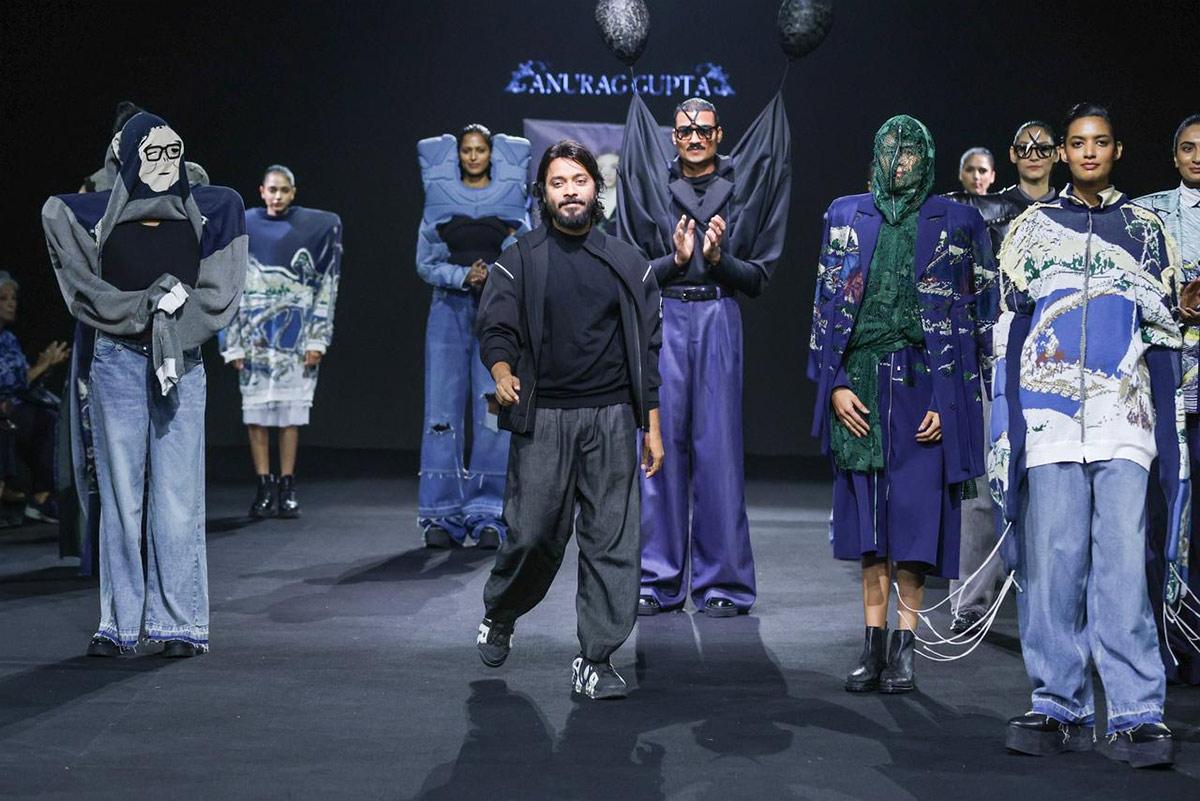
The electricity in his village still flickers on and off. But somewhere in that darkness, a young boy once found light.
In a chat with Rediff's Rishika Shah, Designer Anurag Gupta -- who is now based in Delhi -- remembers how small the world looked then and how a single TV headline changed everything.
Anurag grew up in Biskohar, a small village near Ayodhya, where the Internet didn't exist, television was a luxury and newspapers were his only window to the outside world.
"I was always that newspaper-reading kid," he says. "Not all kids like reading. I would read and that was how I knew there was a world beyond my village."
One evening, as the Doordarshan headlines rolled by, a word caught teenage Anurag's attention -- NIFT.
"I quickly noted it down and ran to my English teacher the next day," he remembers. "That was the first time I realised fashion could be studied."
He had no mentors, no Internet to Google what fashion meant. In fact, the people of his village found him 'weird' due to his unique clothing choices and long hair.
But the judgement didn't stop Anurag. His curiosity took him further than any textbook could.
"I think what drew me to NIFT was the idea that clothes could tell stories," he says. "I didn't even know what a 'designer' was back then; I just knew I wanted to create things that made people feel something."
When Anurag first told his family he wanted to study fashion, they thought he'd lost his mind.
His father ran a small medical store and expected his son to take over.
"My father was furious," he recalls. "He couldn't understand why I wanted to leave everything and do something called 'fashion'. Everyone thought I was wasting my life."
He laughs now, but back then it was anything but funny. There was no one to guide him, only criticism existed.
"My family didn't even know what a fashion designer was. For them, it meant tailoring festive wear."
Anurag began teaching himself. With the help of a kind school teacher in Allahabad, he picked up basic English, learnt how to write, and held onto a dream no one else could see.
When he heard about NIFT's entrance exam, he travelled to Lucknow and entered an Internet cafe for the first time.
"I didn't even know how to use a computer," he laughs. "I told the cafe guy to help me type NIFT on Google. He printed out the entire website -- pages and pages of it! I carried them home like treasure."
He still had no money for coaching.
When an SSC coaching centre refused to return his fees, he did something few 18 year olds would dare -- he went to the senior superintendent of police's office.
"I told them my story. They called the centre and made them return my money right there. That day, I learnt what standing up for yourself feels like."
It was that money that helped him apply for NIFT Mohali. "When the admission letter came, it was my first 'This was worth it' moment," he says.
Life at NIFT, however, wasn't easy. Anurag struggled with English, culture, and confidence.
"I used to tell my friends to correct me every time I said something wrong," he recalls. "I wasn't ashamed, I just wanted to learn. I used to pronounce words like 'shoes' and 'Saturday' wrong in my accent and my friends would help me. That's how I learnt."
"I skipped classes, did only what was needed to pass," he laughs. "Eventually, they blacklisted me for attendance and told me I couldn't sit for placements. They thought I'd ruin the college's name.
"I challenged them -- I told them to just wait and see what I'd do with my life. Looking back, it was childish. But that fire kept me going."
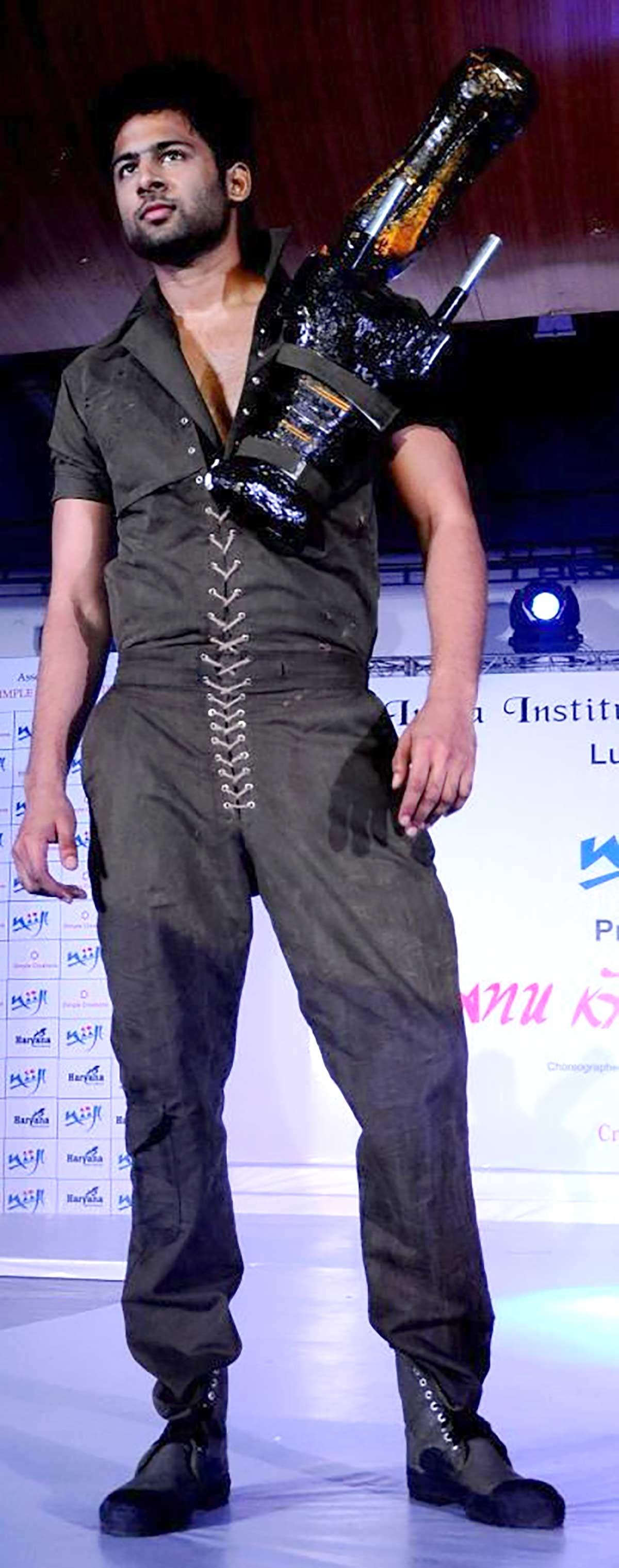
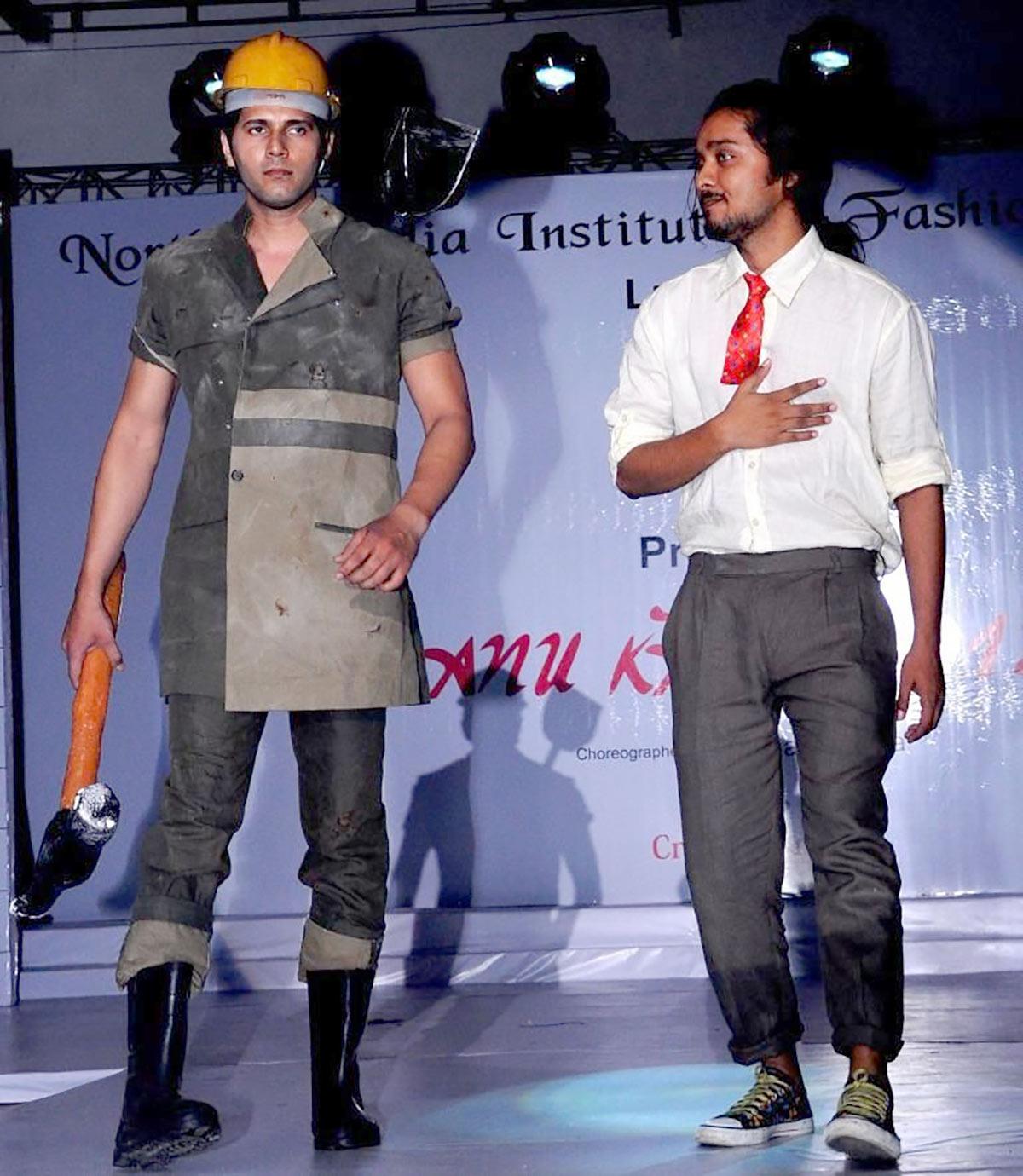
During his final year, Anurag created a collection that would define his artistic conscience, inspired by the plight of construction workers.
"It was about how our construction workers build our cities and roads but when one of them falls and dies, nobody cares, he says. "The work continues, the buildings rise but their stories are buried under the concrete.
His turning point came when he joined Manish Arora as a junior designer.
"That was my real education," Anurag says. "Manish Arora gave me complete creative freedom. I learnt construction, colour, innovation, everything. I consider him one of fashion's biggest giants."
He worked hard, saved harder.
"I started with Rs 18,000 a month. Every month, I'd buy one small thing like a sewing machine, a spool of thread, some fabric. Slowly, I built my own studio from scratch."
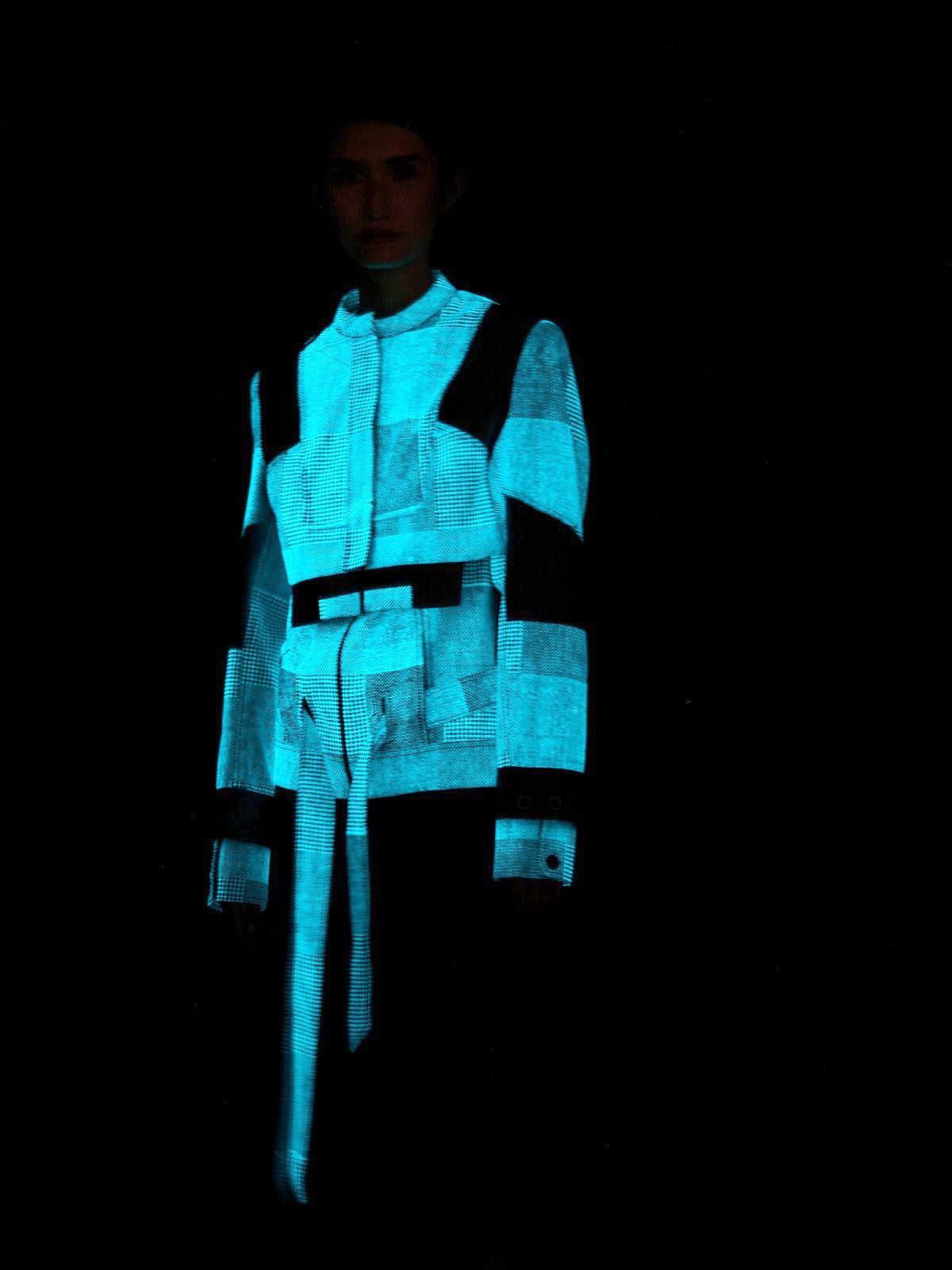
In 2018, all those sleepless nights paid off when Anurag was selected as a GenNext designer at Lakme Fashion Week.
"When I got that call, it felt like holding my NIFT admission letter again. Everything I'd fought for suddenly made sense," he says.
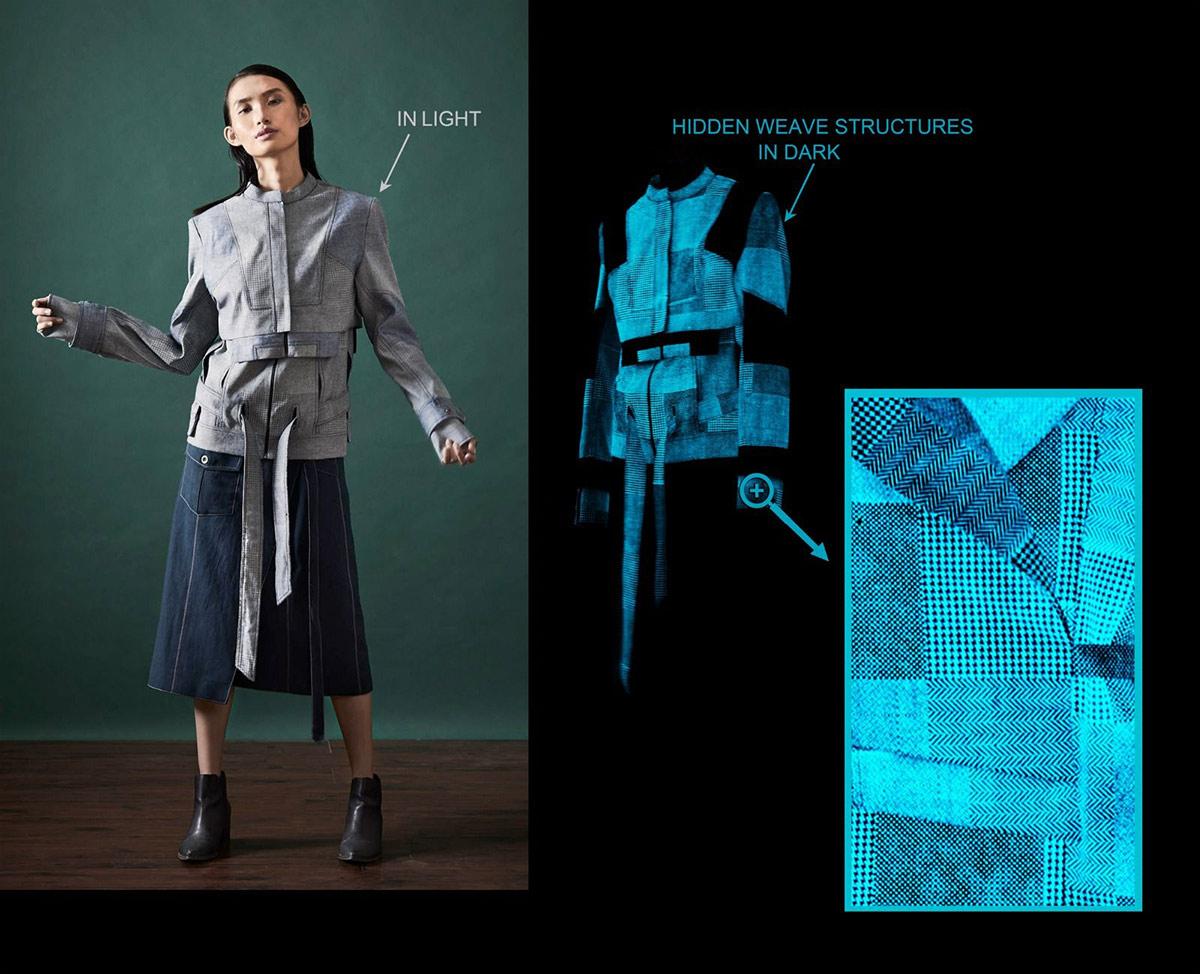
His debut collection quite literally lit up the runway. "It glowed in the dark," he says proudly. "People thought it was glow-in-the-dark paint, but it wasn't. The fabric changed itself under light, and you could see its weaves in the dark with your naked eyes."
The collection announced the arrival of a new kind of a designer, one who believed that rebellion and innovation could coexist.
Over the years, Anurag's designs began to blend craft and science.
"I've never believed in doing things the traditional way," he says. "In my studio, we plan everything through software. There's no manual embroidery. The only human work is stitching. My main reason to use technology isn't to reduce costs, but just to see what else I can create with it."
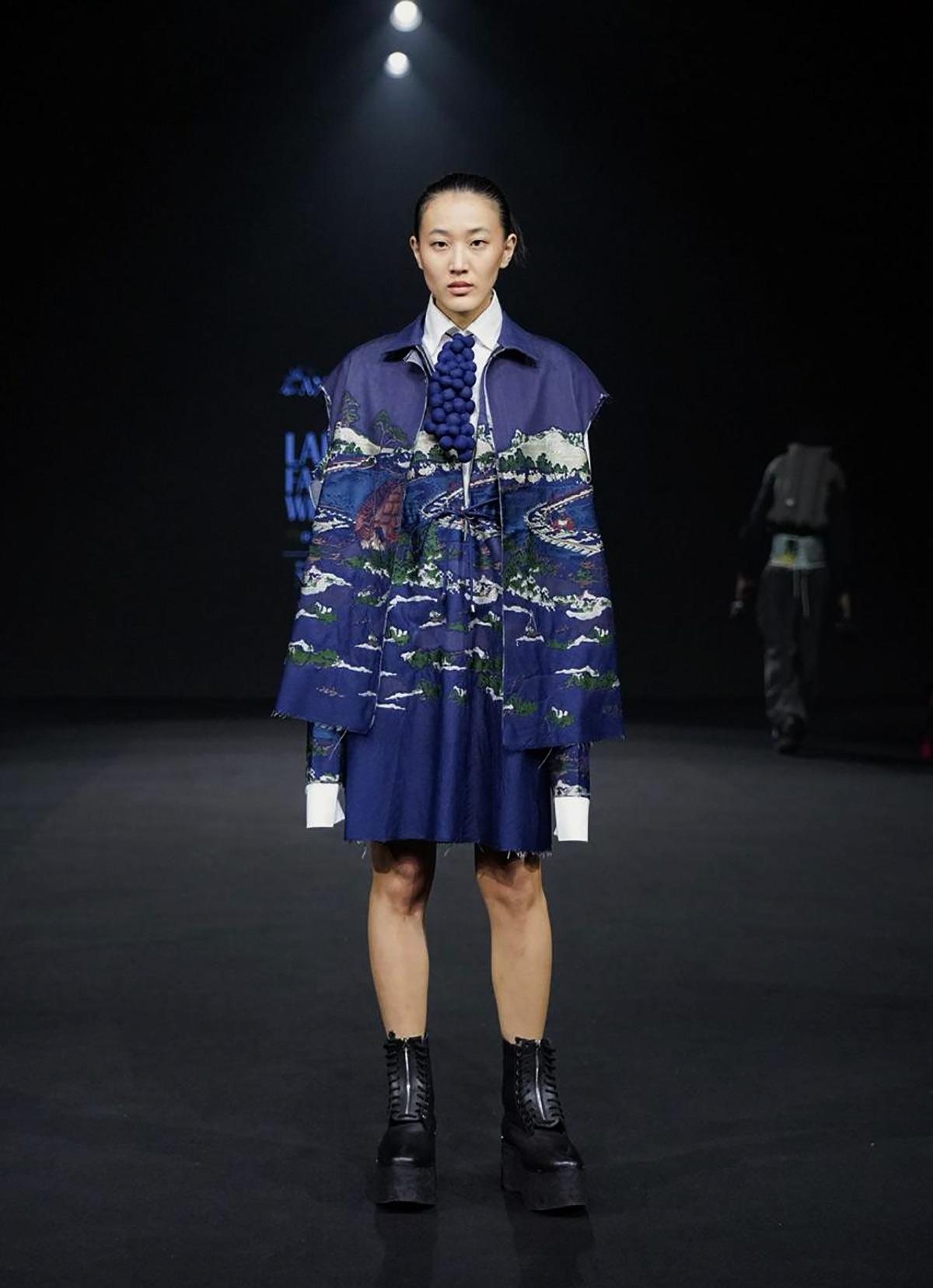
He was the first to introduce IndiWool Denim, the world's first 100 per cent indigo-dyed wool denim, created in collaboration with IIT Delhi.
His collection, Ode To Hokusai, inspired by the Japanese artist Hokusai, was showcased at the 2025 Lakme Fashion Week in Delhi.
"I wanted to merge technology with creativity," he explains. "So when I heard about IIT's textile innovations, I asked them to meet me. They had the technology, and I had the platform, hence, we decided to collaborate."
Their creation -- a plasma-based, waterless technology -- softens Indian wool by cutting its rough spikes, making it as comfortable as imported wool.
"Earlier, we had to import soft wool from Australia. Now, we can use Indian wool. The best part? A cotton shirt is created using 3,000 litres of water; our wool shirt uses just seven. And you can wear it in -30 degrees Celsius!'
The collaboration also meant fewer sheep going to slaughterhouses.
"Seventy per cent of Indian sheep are killed because their wool isn't used. This changes that. We can now give artisans work and make the process sustainable."
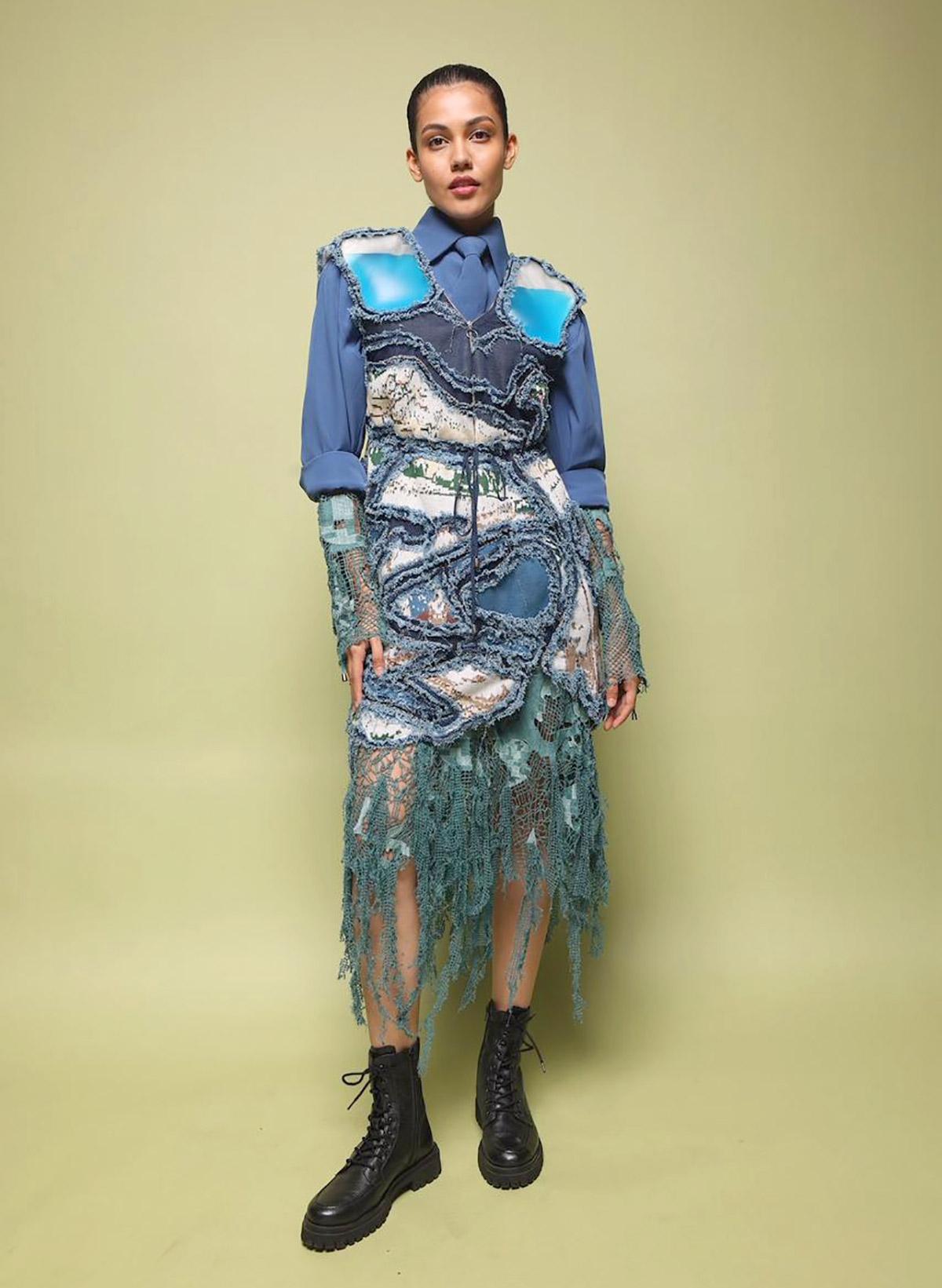
Today, Anurag's voice carries the calm of someone who has seen both failure and fulfilment.
"I've become slower now," he says. "Earlier I was restless. Now I think more about why I'm doing something. I'm an atheist so I don't have a superpower to rely on. Maybe that makes it harder. But it also keeps me grounded."
His next goal? "To make my brand global," he says simply. "Not as Anurag Gupta but as a label that lives beyond me with its own philosophy and aesthetics."
For every young dreamer sitting in a small town, unsure if they belong, he has only one message: "It doesn't matter where you come from or what college you studied in. None of it defines your future. Just don't give up."
Anurag Gupta started with nothing. Not even reliable electricity in his village. And yet, somewhere in that darkness, a boy built a dream bright enough to light up the runway.










 © 2025