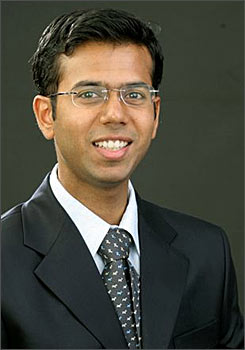
Name: Kailas Karthikeyan
Age: 29 years
Educational qualifications:
~ BA, LLB (Hons), National Law School of India University, Bangalore
~ Schooling at Rishi Valley School, Andhra Pradesh
Why an MBA?
I'm a trained lawyer, but prior to joining ISB, I worked with the United Nations Conference on Trade and Development (UNCTAD) on a project titled "Strategies and preparedness for trade and globalisation in India" for 4 years, which involved:
~ Providing technical and research assistance and advice to India's Commerce Ministry in its negotiations in the WTO and in its FTAs with other countries / regions (eg Thailand, ASEAN, SAFTA)
~ Interacting with 3 key stakeholders to assist in pro-development formulation of national trade policy -- ie I had extensive interactions with academic experts, industry and NGOs on their concerns about India and globalisation. This involved both understanding their concerns and also objectively informing them on the basis of our own research about the upsides and downsides associated with different types of trade policy measures.
~ Making detailed recommendations to India's commerce ministry on what positions would be in India's national economic and developmental interest.
From my interactions with stakeholders during my stint at UNCTAD, I realised that industry's ability to successfully engage with globalisation also depended on competitiveness -- a lot of which had to come from the strategies that companies adopted from themselves.
The external policy environment that the government regulated, could at best provide a facilitative environment or a protective sheath for a while.
All in all, I viewed an MBA as a get a quick but intense way to receive general management skills, to understand from the inside, the nuts and bolts of what goes into a successful economy.
I prepared for the GMAT using the KAPLAN guide. Adequate and disciplined practice are perhaps the only two pre-requisites for doing well on the GMAT. One should also remember that while it's important to do one's best in the GMAT, every individual reaches a certain plateau in performance even after plenty of practice – it is best to stop the GMAT preparation when one reaches this plateau.
We all have limitations in terms of the skills that the GMAT tests us on -- and it is important to be realistic and accept these limitations. In any case, the GMAT is only one of the inputs that the Admissions Committee considers while reviewing applications.
If a candidate brings other valued skills and attributes that ISB seeks, these do lead to a favourable consideration of candidacy, even if the GMAT score isn't so strong.
Also read: The lorry driver's son who topped the civil services exam in Tamil Nadu Advertisement