
After a slew of programmes to facilitate electric-vehicle (EV) adoption in India, the NITI Aayog has said the government has done enough on incentives and now it’s time to take the programme a step further with “strong signals” through regulations and mandates.
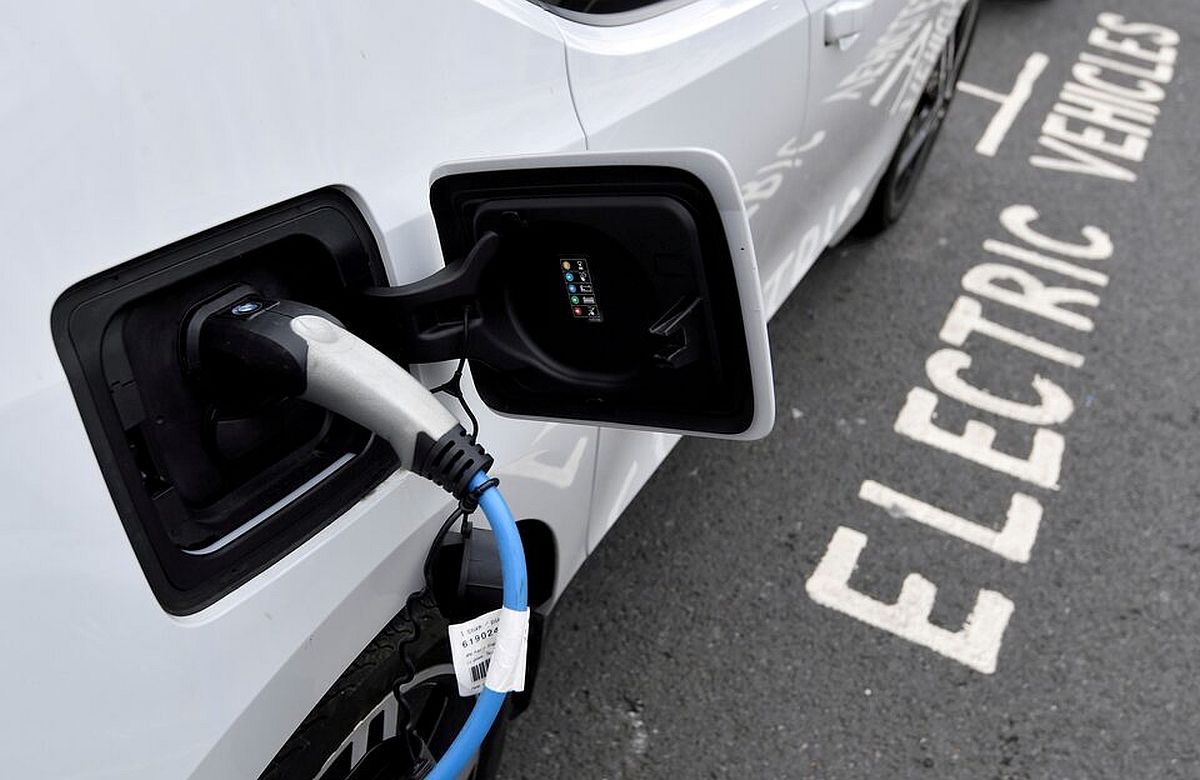
“While over Rs 40,000 crore has been spent by way of incentives over the last 10 years, it has only reached a level where 7.6 per cent of annual vehicle sales are electric.
"It is evident that continuation of incentives alone may not help reach the target of 30 per cent EV sales in the next five years.
"As such it is time to give a stronger push for the shift by introducing some gentle mandates and disincentives which will help signal the required direction more firmly.
"These could be over and above the incentives that currently prevail,” the NITI Aayog said in its report “Unlocking a $200 Billion opportunity: Electric Vehicles in India”, released on Monday.
The Aayog has recommended to the government announcing a policy with target timelines for adopting zero-emission vehicles (ZEVs) and designing a progressively more stringent plan for mandating the production and purchase of EVs and disincentivising the continued use/production of ICE (internal combustion engine) vehicles.
It also sought a mechanism for an effective implementation and expansion of corporate average fuel efficiency (CAFÉ) norms to a wider segment of vehicles.
In his address, NITI Aayog Member and former cabinet secretary Rajiv Gauba said the mandates should be “soft” as the government did not want disruption.
The Aayog suggested the initial mandates be limited to only a certain segment of the vehicle fleet and need not be extremely stringent to begin with to avoid any strong backlash.
“Apart from pushing a certain segment towards EV, they would signal a strong direction and nudge speedier action.
"They should become progressively more stringent, and have wider application with time,” it said.
The think tank recommended starting with vehicles like public-transport buses, para-transit vehicles, government vehicles, and the rapidly increasing number of urban freight vehicles.
“These are fewer in number and would be easier to manage, besides offering higher public benefits.
"Limiting mandates and disincentives to such vehicles to begin with may not attract opposition but would at the same time, signal the future direction for all,” it said.
On demand-side mandates, the Aayog recommended a certain share of the fleet be ZEVs, stringent standards on vehicle emission, higher registration fees for ICE vehicles, and higher taxes on ICE fuels.
It also advocated a certain share of the production to be of ZEVs, setting stringent emission standards for all vehicles manufactured, and a higher input price for ICE vehicles.
In other measures to boost EV adoption, the Aayog recommended the government focus on a subset of the vehicle fleet, based on the potential benefits from transitioning such vehicles to electric and the ease of providing the required eco-system for them.
Additionally, it sought model cities to be adopted to focus on saturation in limited geographies rather than an even distribution across the country.
It suggested enabling finance for ebuses and etrucks, focusing on services delivered rather than assets procured, shifting capital costs to operating costs, scaling up research & development on new battery technologies, strategically scaling up charging infrastructure, and enhancing awareness and information systems.
