
I learn that success isn't measured in metres gained but in how we handle the moment when plans dissolve.
The mountain doesn't grade on completion -- only on presence and effort, discovers Manoj Mohanka.
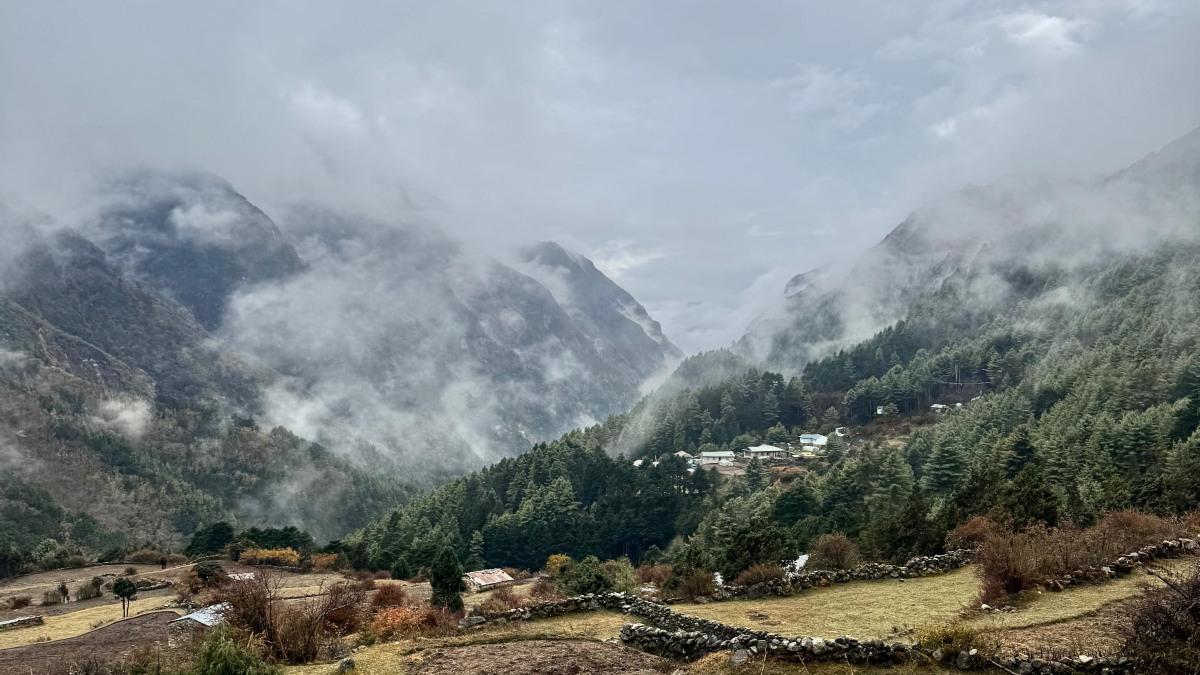
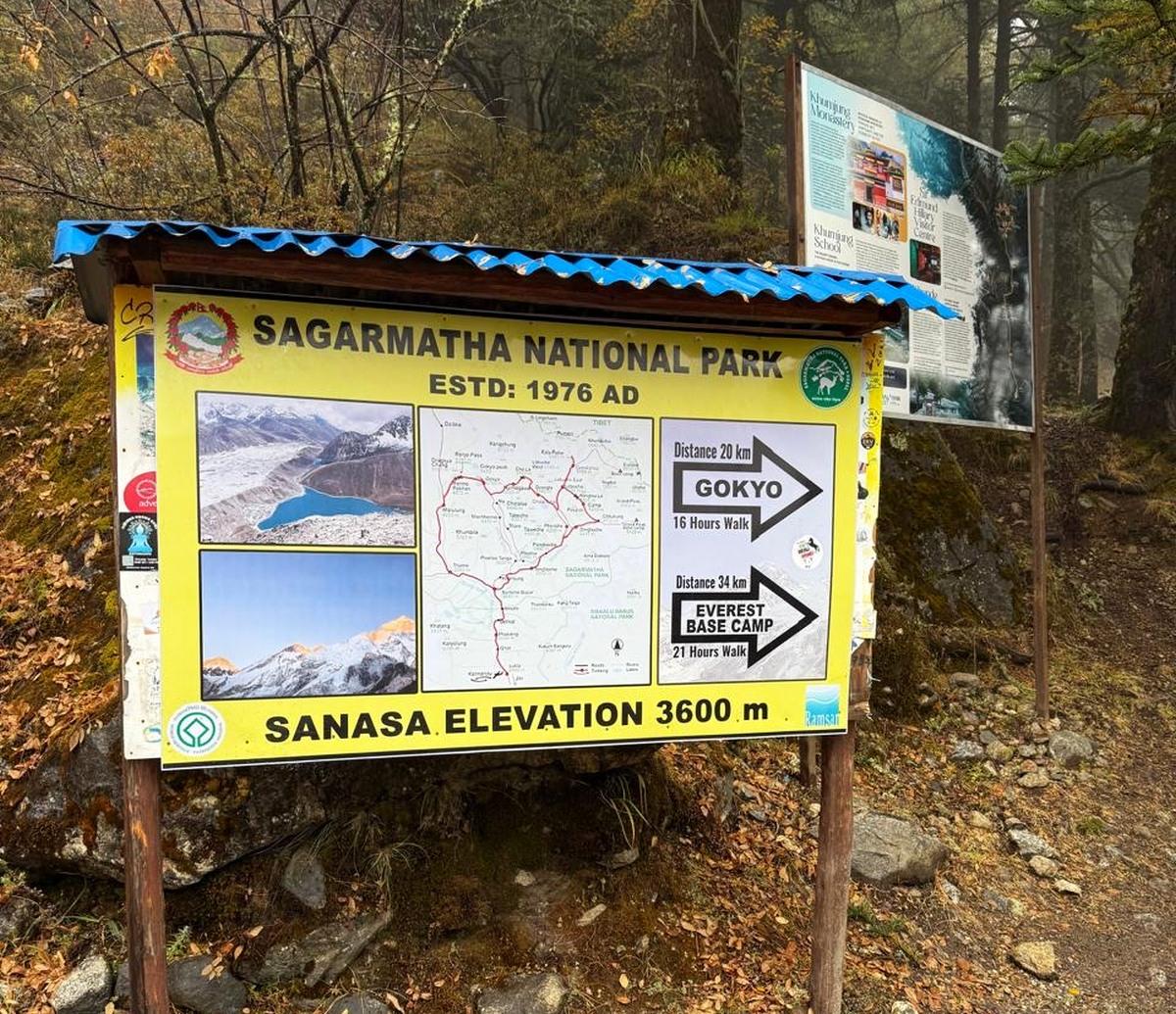
The mountains, ever the patient teachers, rewrite every itinerary. I had imagined the Everest trail as a straightforward ascent -- Phakding to Namche, Namche to the next halt, and onward finally to EBC, the lap of the world's roof.
Instead, I learned that the path can meander, loop, and fold back on itself. In the Himalayas, no progress is linear or straightforward.
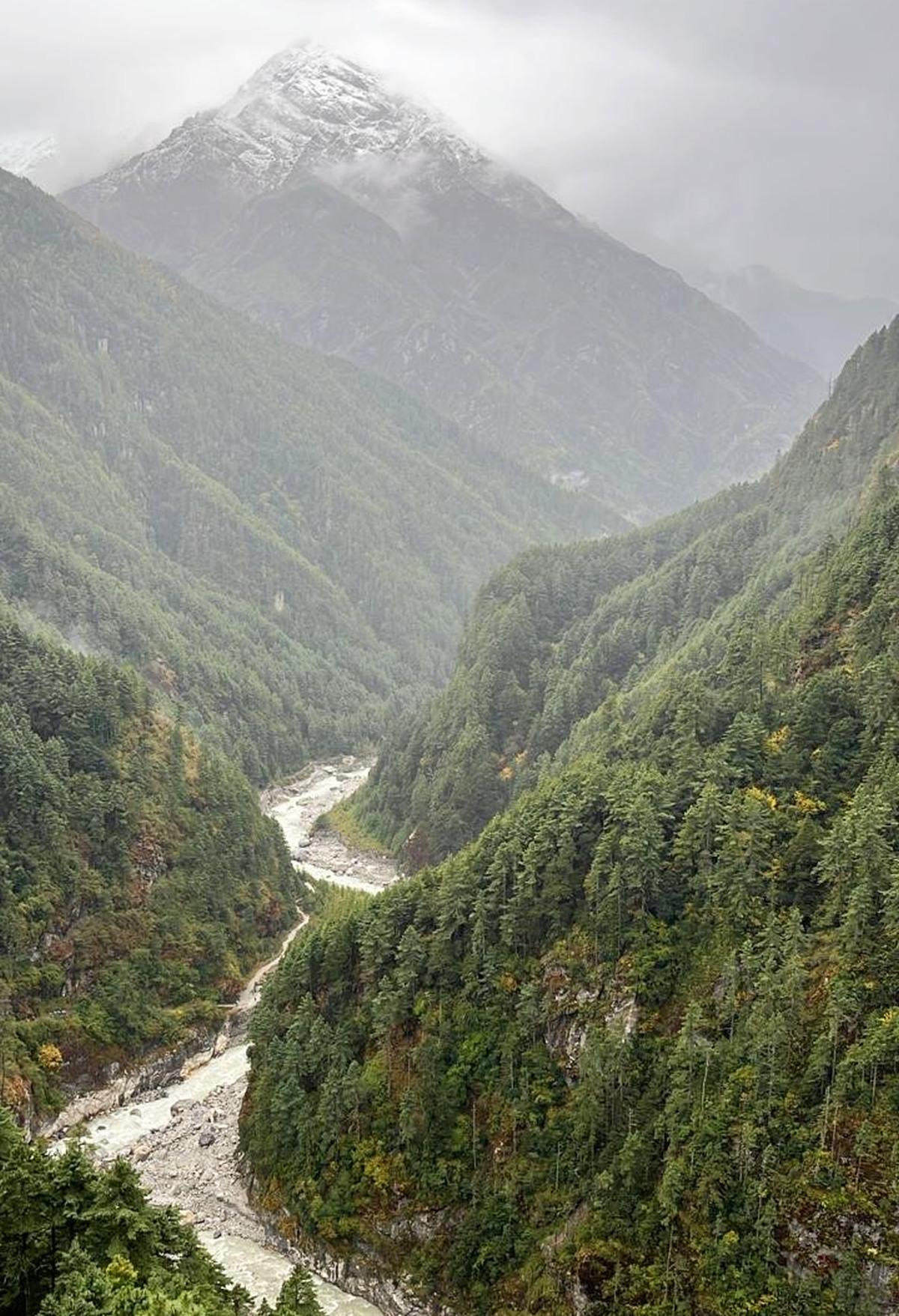
From Phakding at 2,610 metres to Namche Bazaar at 3,450 metres, the trail gains nearly 850 vertical metres -- but with all the descents and climbs along the Dudh Kosi, it felt like twice that and more.
My own body issued the first correction: A headache and nausea pulsing with each heartbeat, lungs rebelling at altitude, a coughing spasm every minute -- making every step painful.
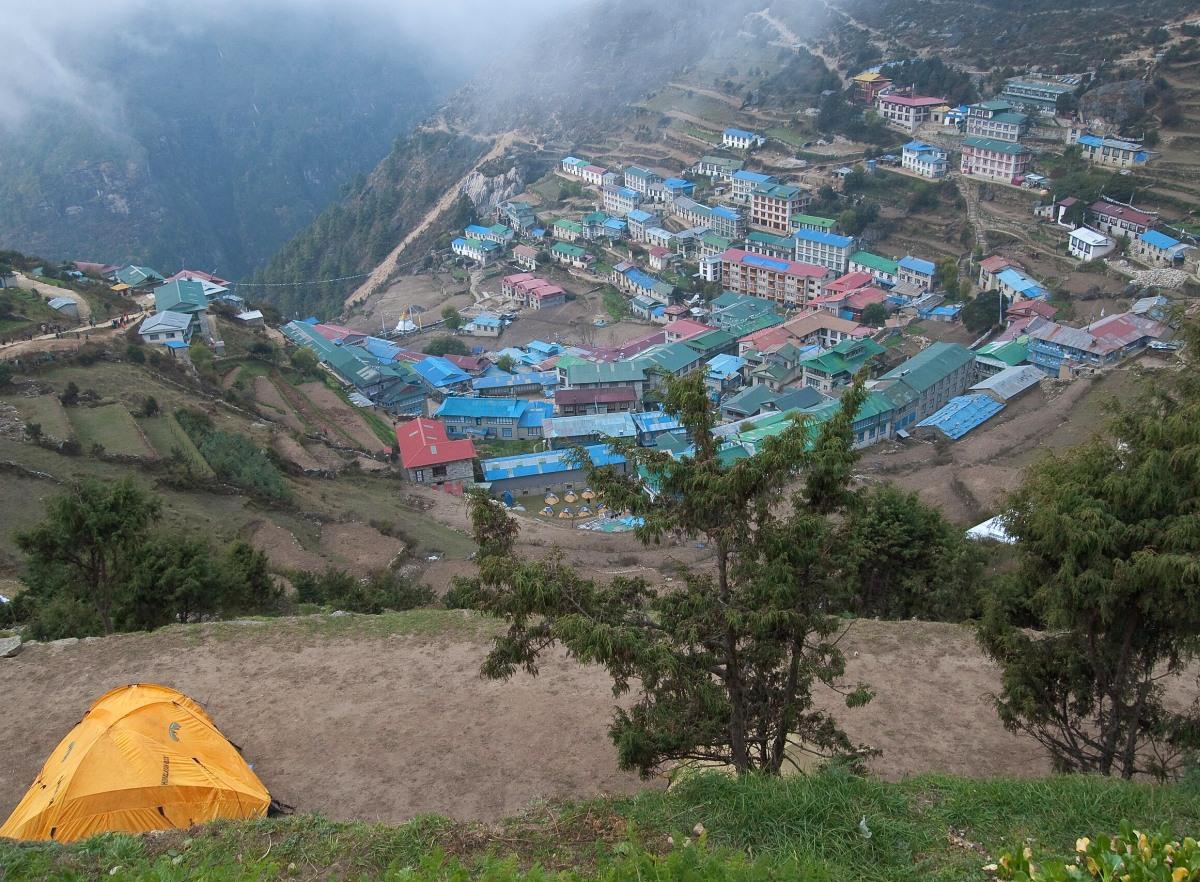
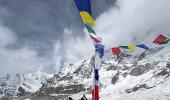
A mild case of High Altitude Mountain Sickness hit me. Somehow, I made it to Namche Bazaar -- that amphitheatre of stone and prayer flags -- which became my involuntary summit.
I came into the Khumbu not just with boots and a rucksack -- but also with the memory of a yatra to Mount Kailash, where the spiritual and the physical blend into one.
That journey taught me that altitude is more than metres above sea level -- it is measured in patience, presence, and quiet attention to the now.
While my companions moved early the next morning into the mist toward higher levels, I surrendered to a day spent mostly horizontal -- letting my exhausted body negotiate with thin air.
A Tibetan lady worked her hands across my shoulders with oil that smelled of juniper and forgotten monasteries -- coincidentally the same oil we use at home, courtesy of the Tibetan Centre in Kolkata.
"Breathe slow," she said in her mix of Nepali and English. "Mountain no hurry."
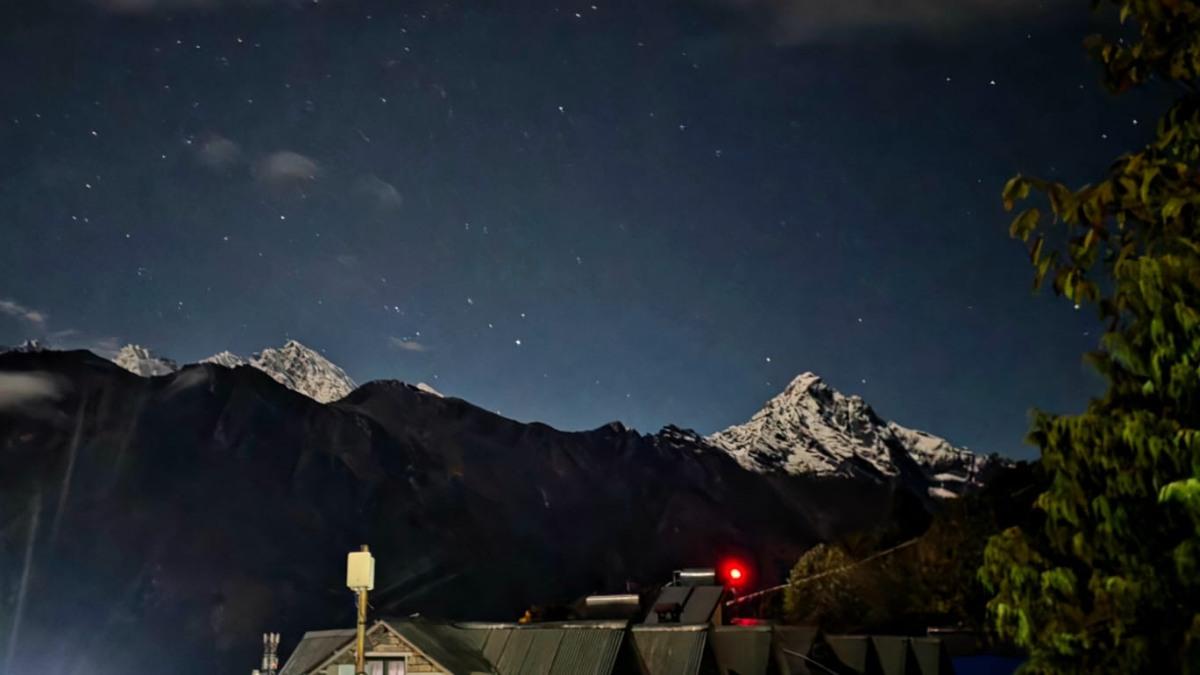
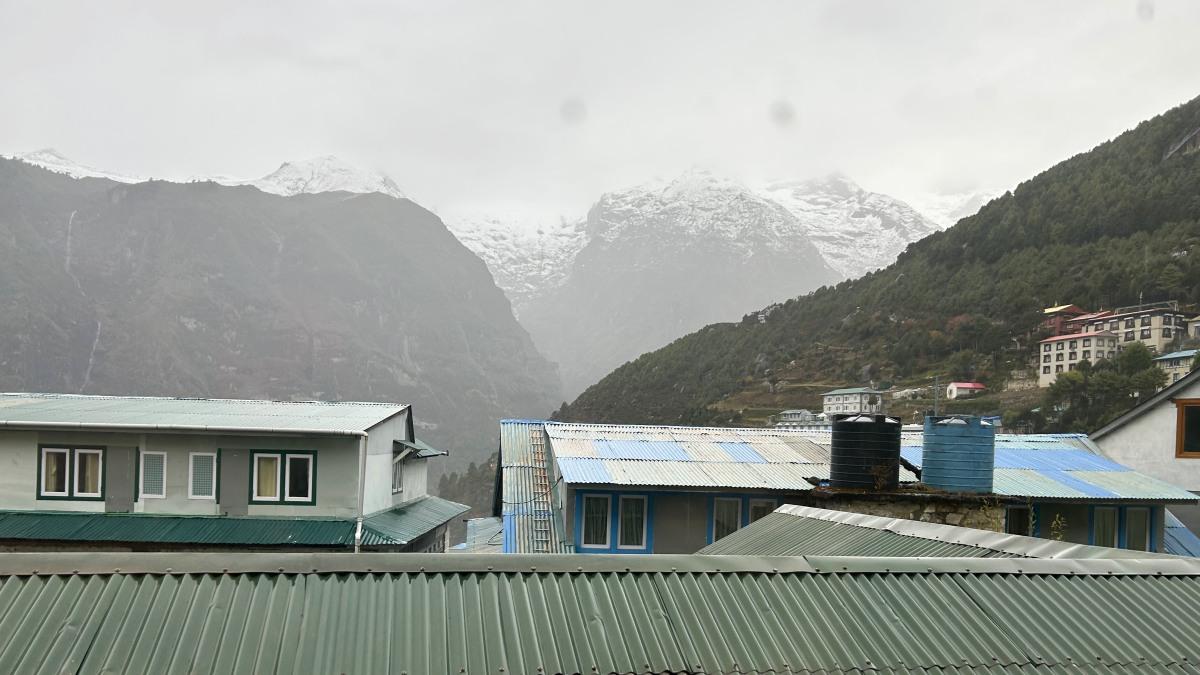
I obeyed, watching clouds devour Ama Dablam through the massage room window -- each peak appearing and vanishing like thoughts during meditation.
Locals call it 'Mother's Necklace' -- Ama meaning mother, Dablam referring to the sacred pendant worn close to the heart.
Its ridges are her outstretched arms protecting the Khumbu; the hanging glacier, her sacred ornament. A mountain of elegance and warning -- a silent deity keeping watch over Namche.
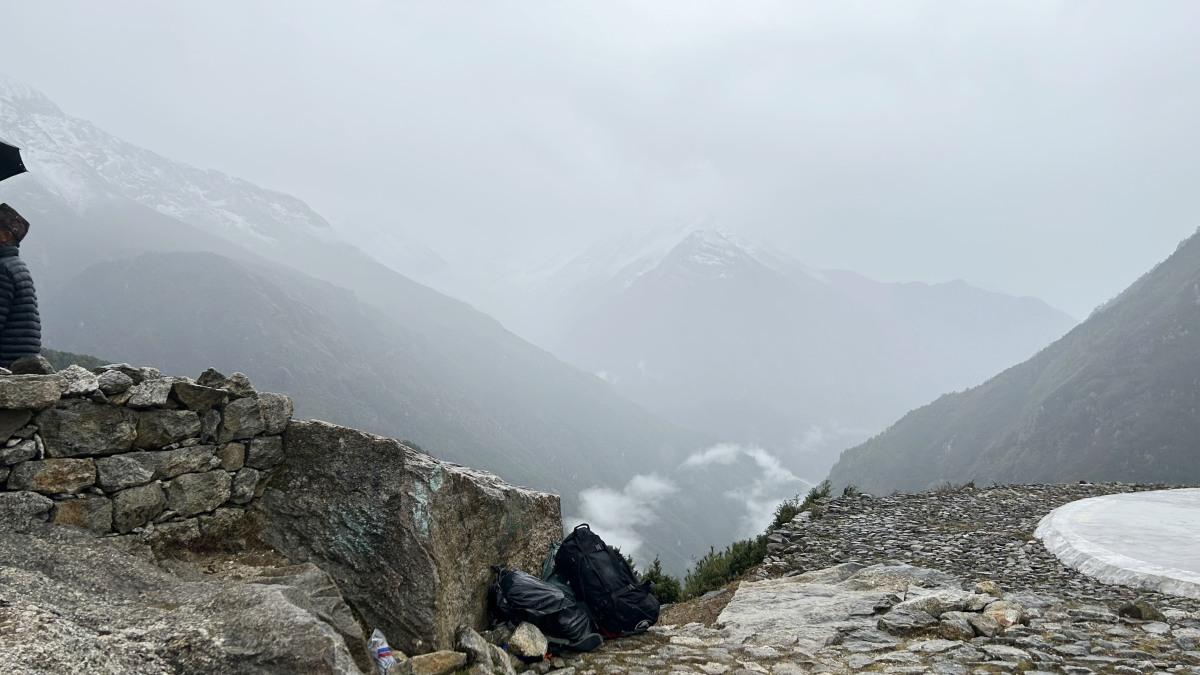
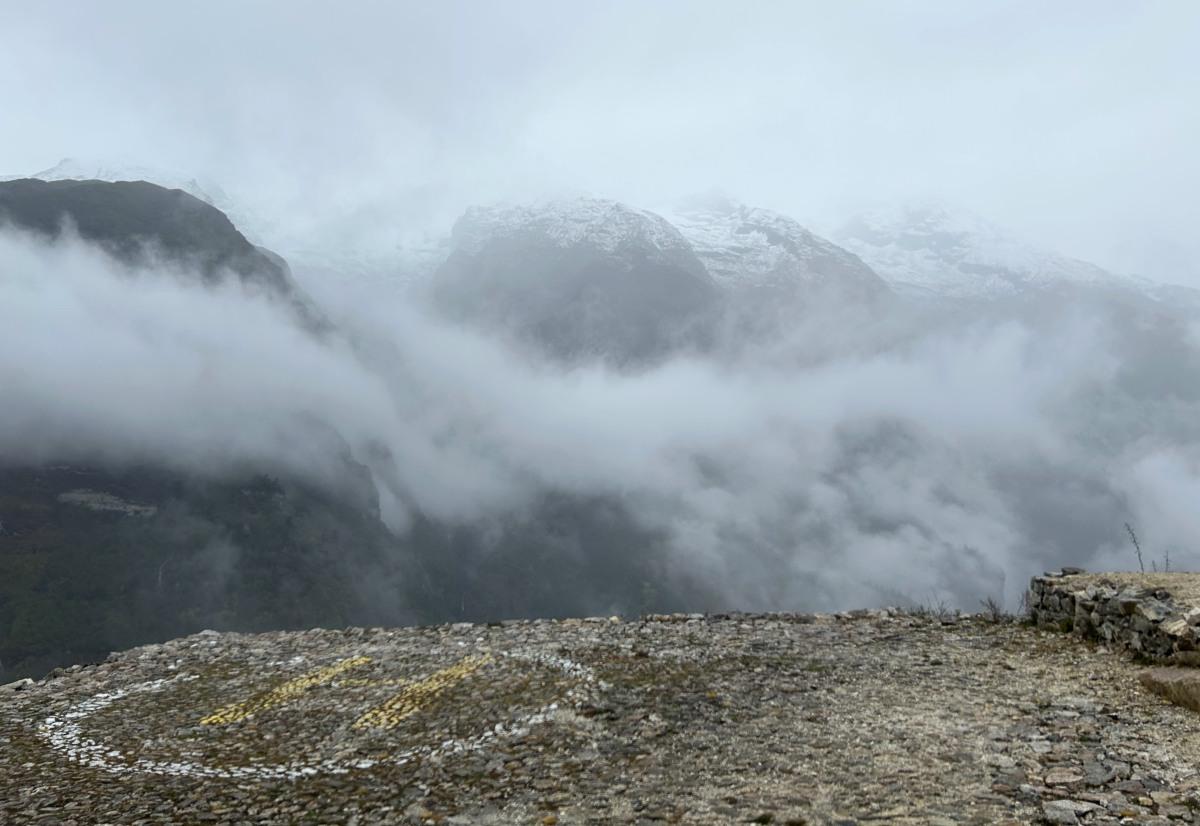
The following day, Thursday, dawned with the same theatrical gloom. The helipad -- a circular concrete patch perched high above the village -- hosted a micro-mini waiting room overflowing with trekkers enjoined by circumstance.
We were a United Nations of postponement: Sherpas, Japanese photographers with fogged lens caps, a Franco-German group, Italians who had traversed the Alps and now sought the Himalayas, some Americans, and five from Bangladesh -- with whom I happily conversed in Bengali, a language akin to mine in Kolkata.
Among us stood a Gujarati man in his forties from Dallas clutching his medical evacuation papers like a losing lottery ticket.
His lips were the colour of glacier ice. He looked frighteningly unwell.
I pressed a handful of cashews and nuts into his palm. "Protein," I said -- then made him sip water. He managed a smile that caused him visible effort.
It reminded me -- as Kailash had -- that even the smallest gestures can change the shape of a day. Or a life.
When the cloud ceiling lifted just enough for rotors to slice through, we moved like startled yaks -- instinct over planning.
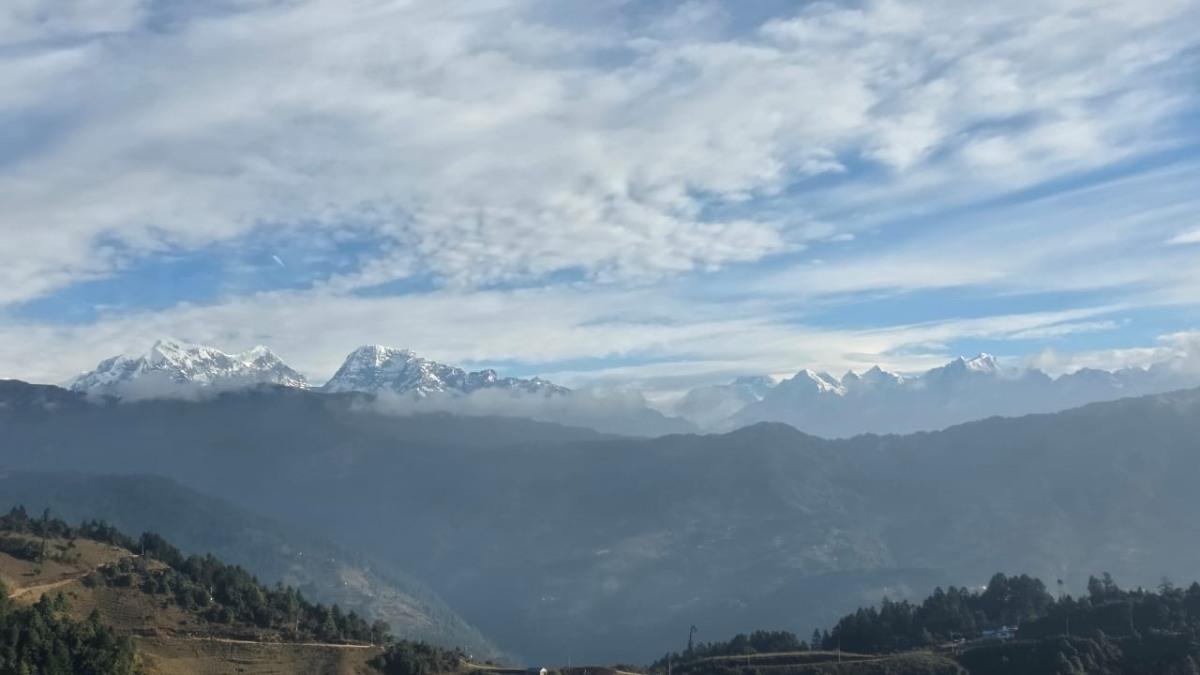
The helicopter rose above Namche's terraced bowl and, for thirty seconds, the entire Khumbu revealed itself -- a geography of impossible angles, prayer flags stitching earth to sky.
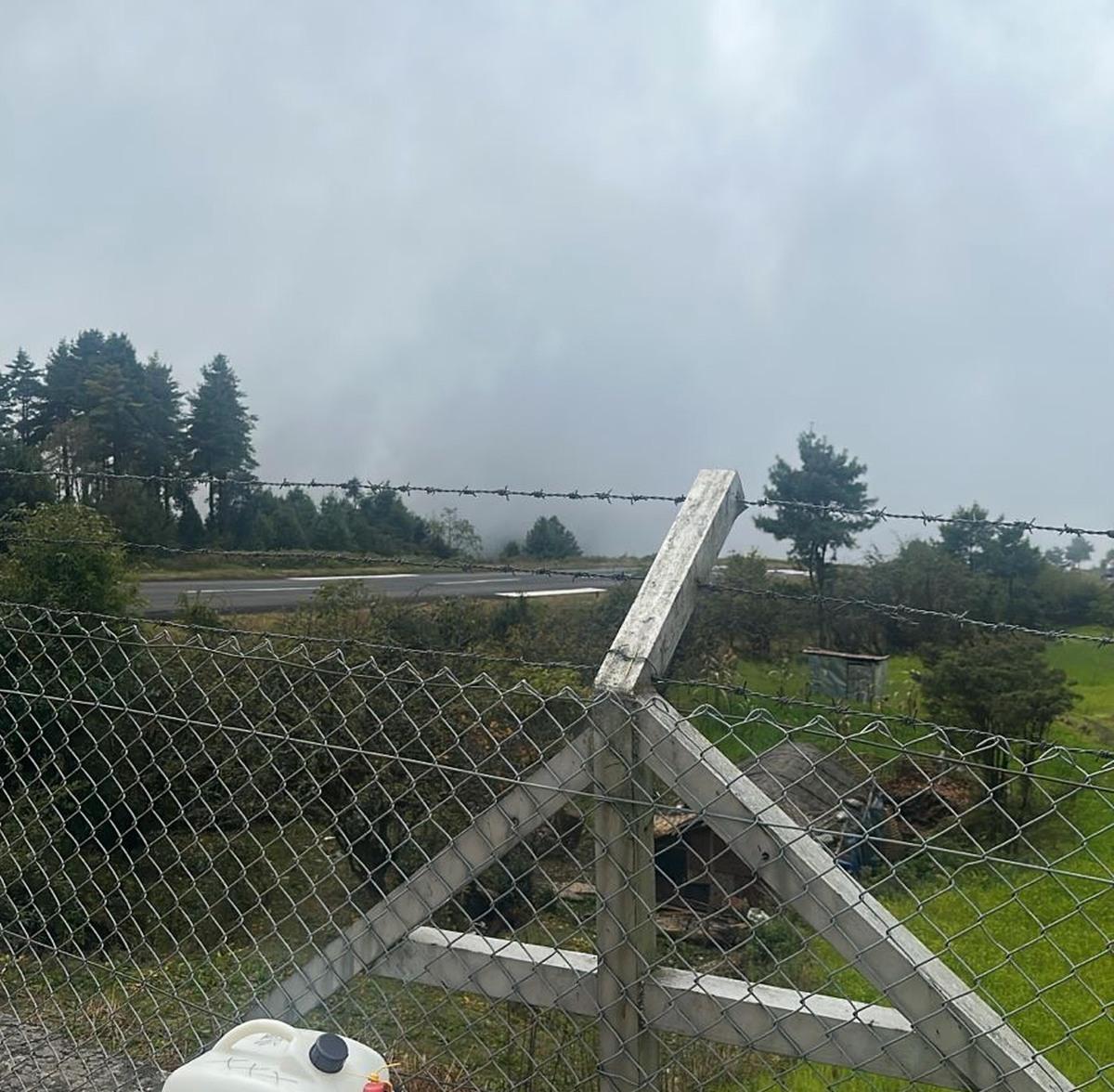
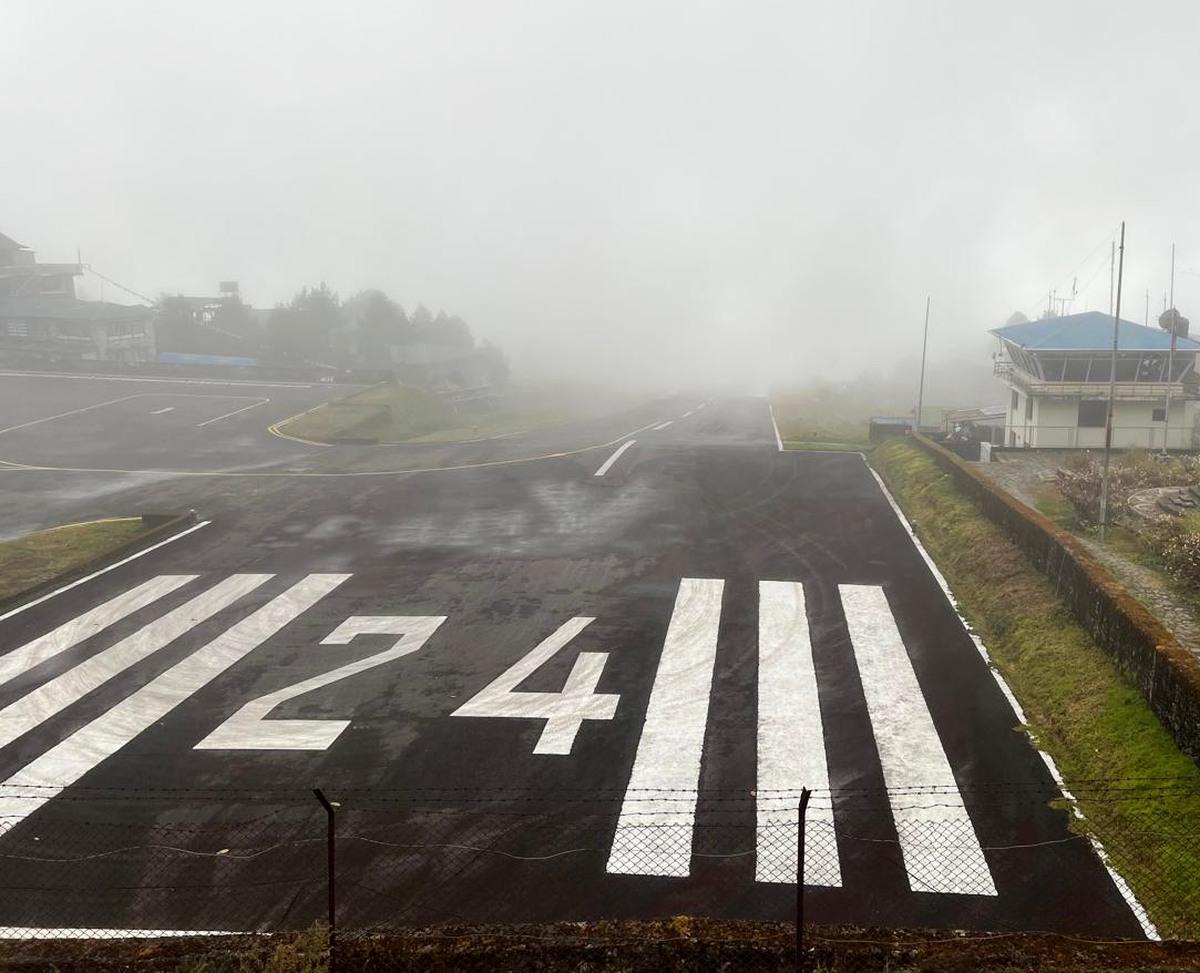
Lukla's runway -- that infamous 12% gradient where planes flirt dangerously with physics -- greeted us with its usual nonchalance.
The Tenzing Norgay airport terminal, a structure seemingly assembled from spare parts and optimism, remained closed.
"Weather in Kathmandu also bad," airport personnel announced with the finality of a judicial order.
We retreated to the Everest Summit Lodge, where the owner served steamed pork momos with a spicy chutney that tasted of woodsmoke and resilience.
In the common room that evening, stories circulated like chang in a cup. A European woman recalled turning back at Dingboche after her partner's cerebral edema.
An American couple from Washington celebrated their successful ascent -- photos of themselves dwarfed by the Khumbu icefall lighting up their screens.
I listened -- realising every trek contains its invisible base camp -- the place where ambition or goal meets its limit and transforms into something else entirely.
I learn that success isn't measured in metres gained but in how we handle the moment when plans dissolve. The mountain doesn't grade on completion -- only on presence and effort.
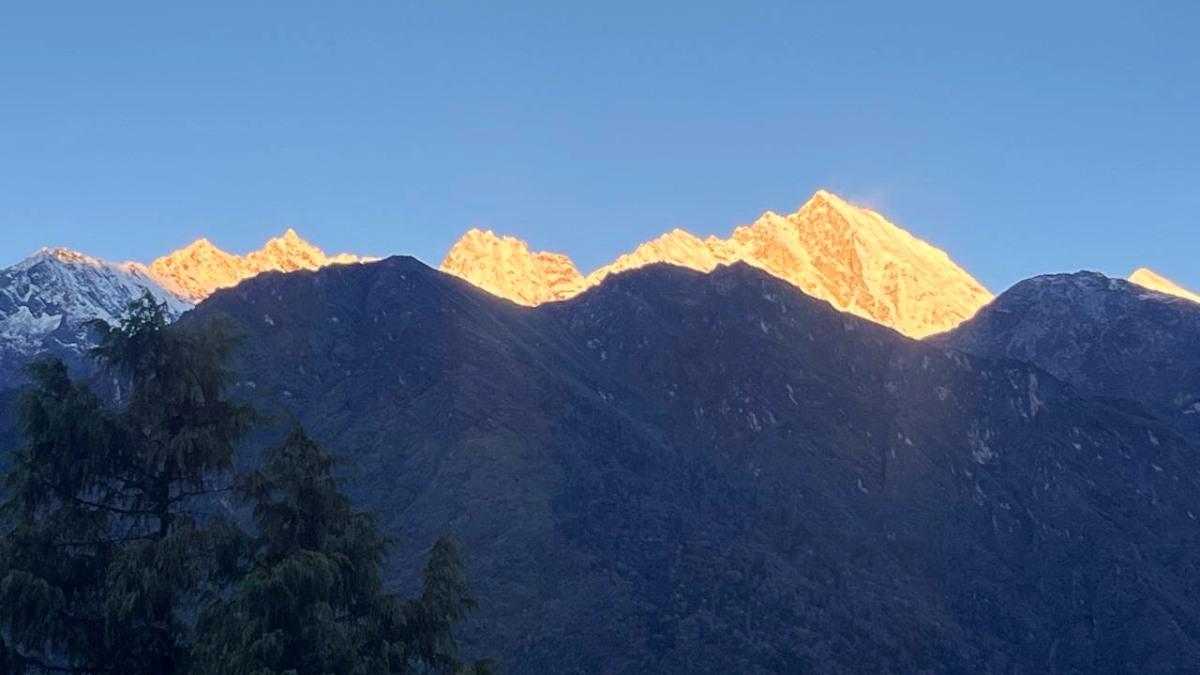
My own certificate of achievement is the memory of making it to Namche, a therapeutic massage resurrecting me, the taste of honey-lemon-ginger tea at dawn, and a stranger's grateful nod as the helicopter doors closed.
Much like the Kailash Yatra, I learned again that we carry more than gear uphill -- we carry patience, humility, and the quiet awareness that mountains teach in their own time.
Tomorrow, perhaps, the choppers will roar toward Kathmandu. Or perhaps not. Maybe the day after.
Who can predict the imponderable uncertainties of Himalayan weather? Irrespective, I've already reached a different altitude -- one where failure and success share the same breath and bow to the will of the mountains.
Manoj Mohanka serves on several corporate boards and follows geopolitics closely.
Feature Presentation: Rajesh Alva/Rediff






 © 2025